Guitar in Worship Music | Why It’s the Most Popular Instrument
There’s something deeply moving about the sound of a guitar in a worship setting. Whether it’s the gentle strum of an acoustic filling a quiet sanctuary or the soaring swell of an electric guitar during a powerful chorus, the instrument seems to carry both intimacy and energy in equal measure. Across churches, prayer gatherings, youth meetings, and large conferences around the world, the guitar has become a defining sound of modern worship music.
But how did this six-stringed instrument rise to such prominence? And why, among so many beautiful instruments, has the guitar become the most popular choice for worship? The answer lies in history, accessibility, emotional expression, and its unique ability to bridge tradition and modernity.
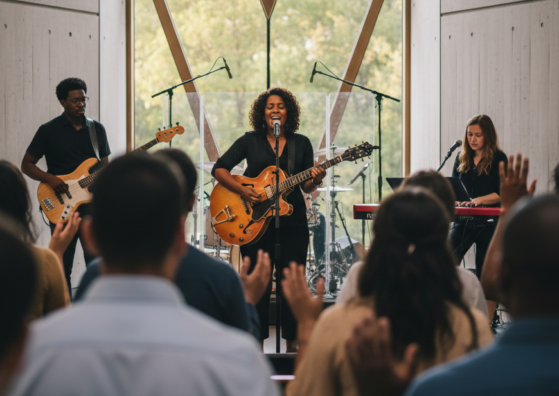
From Tradition to Transformation | How the Guitar Entered Worship Spaces
For centuries, worship music was dominated by instruments like the organ, piano, and choral arrangements. In many traditions, especially in Western churches, the pipe organ symbolized reverence and grandeur. However, as worship styles began to evolve in the 20th century, music inside sacred spaces also transformed.
The cultural shifts of the 1960s and 1970s, influenced by folk and contemporary music movements, opened the doors for new instruments. Artists and worship leaders began incorporating acoustic guitars into gatherings, creating a more personal and participatory atmosphere. Movements like those led by churches such as Hillsong Church and later Bethel Church helped popularize guitar-driven worship music globally.
As contemporary Christian music grew, so did the influence of bands like Hillsong United and Elevation Worship. Their songs, often built around acoustic and electric guitar foundations, reshaped what congregational worship could sound like. The guitar was no longer just an addition—it became central.
This transition didn’t erase traditional instruments; rather, it expanded the musical vocabulary of worship. And in that expansion, the guitar found its home.
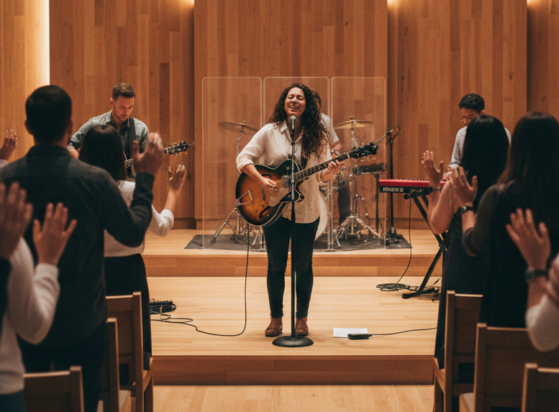
Guitar in Worship Music | Accessibility and Simplicity for Everyone
One of the most compelling reasons for the guitar’s popularity in worship music is its accessibility. Compared to large instruments like pianos or organs, guitars are portable, affordable, and relatively easy to learn at a basic level.
A beginner can learn a handful of chords and begin leading simple worship songs within weeks. This democratization of music-making aligns beautifully with the spirit of congregational worship. Worship is not meant to be performed for an audience; it is meant to be shared. The guitar supports this ethos because it allows individuals—youth leaders, small group facilitators, or even families at home—to lead songs without elaborate equipment.
Moreover, the guitar adapts effortlessly to different environments. It can be played unplugged in a small prayer circle or amplified in a large auditorium. This versatility makes it ideal for both intimate devotion and large-scale gatherings.
In many ways, the guitar empowers participation. It invites more people into leadership and musical expression, which strengthens the sense of community within worship spaces.

Emotional Expression | The Guitar’s Unique Voice
Beyond practicality, the guitar possesses an emotional range that few instruments can match so easily. An acoustic guitar can sound warm, reflective, and tender—perfect for moments of confession, gratitude, or quiet adoration. In contrast, an electric guitar can swell with reverb and delay, creating expansive soundscapes that elevate triumphant or celebratory songs.
This dynamic versatility allows worship music to mirror the full spectrum of human emotion. Joy, lament, hope, surrender—all can be articulated through subtle changes in strumming patterns, chord voicings, or melodic riffs.
Contemporary worship songs often rely on simple chord progressions, yet within that simplicity lies immense expressive potential. The guitarist can soften the mood with gentle fingerpicking or build anticipation with rhythmic strumming. During climactic moments, electric guitar textures can create a sense of transcendence, almost as if the music is lifting the congregation beyond the physical space.
Because worship is deeply emotional and spiritual, the guitar’s ability to respond to these shifts makes it uniquely suited to the setting.
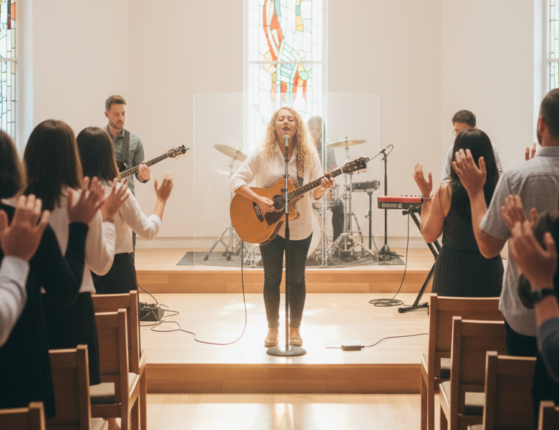
Guitar in Worship Music | Bridging Generations with Sound
Another reason the guitar dominates worship music is its ability to connect generations. While older worship traditions may lean toward hymns accompanied by piano or organ, younger congregations often resonate with contemporary band-driven arrangements. The guitar sits comfortably between these worlds.
An acoustic guitar can gently accompany a traditional hymn, giving it a fresh yet respectful tone. At the same time, electric guitars can drive modern worship anthems that appeal to younger audiences. This adaptability helps churches maintain continuity while remaining relevant.
In multicultural contexts, the guitar also integrates easily with local instruments and styles. Whether blended with percussion, keyboards, or traditional instruments, it complements rather than competes. That flexibility allows worship teams to reflect their cultural identities without losing the cohesive sound that contemporary worship music often embodies.
Thus, the guitar becomes more than an instrument—it becomes a bridge.
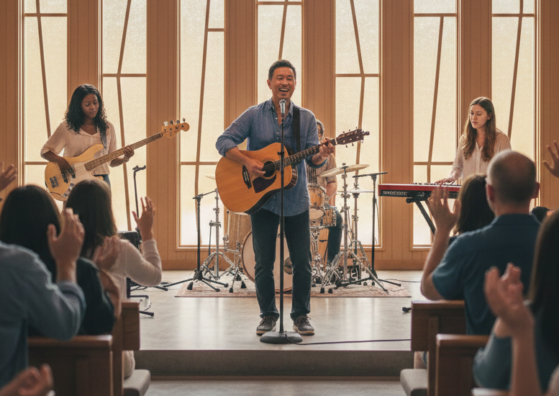
The Influence of Contemporary Worship Bands
The global reach of worship music in recent decades cannot be overstated. Through recordings, streaming platforms, and international conferences, guitar-centered worship songs have traveled far beyond their places of origin.
When bands such as Hillsong Worship release new songs, churches around the world quickly adopt them. The guitar parts in these songs are often integral to their identity, shaping how congregations learn and experience them.
Similarly, the atmospheric guitar tones popularized by worship collectives in the United States and Australia have influenced local worship teams everywhere. The shimmering delays, ambient swells, and rhythmic builds have become a recognizable hallmark of modern praise music.
As a result, aspiring worship leaders frequently learn guitar not only because it is practical, but because it represents the contemporary sound they admire and wish to emulate.
Guitar in Worship Music | Portability and Presence Beyond Church Walls
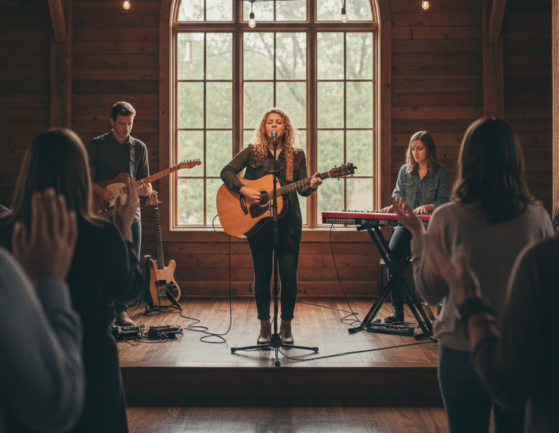
Worship is not confined to formal church services. It happens at camps, retreats, mission trips, and informal gatherings. In these settings, the guitar truly shines.
Its portability means it can travel anywhere—strapped over a shoulder, carried into a park, or brought along on a trip. There is something almost symbolic about this mobility. The guitar suggests that worship can happen anywhere, not just within sacred architecture.
When a small group gathers around a campfire and someone begins to strum familiar chords, the atmosphere changes. The simplicity of the instrument strips away performance pressure and invites authenticity. In these moments, the guitar feels less like an instrument and more like a companion in devotion.
That presence outside traditional church spaces has reinforced its role as the instrument of choice for worship leaders worldwide.
Simplicity That Serves the Message
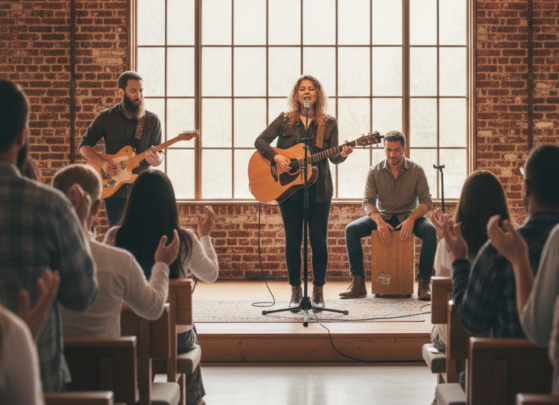
At its heart, worship music is not about instrumental virtuosity. It is about focusing hearts and minds on something greater than the music itself. The guitar, with its straightforward chord structures and rhythmic consistency, supports this goal beautifully.
Unlike highly technical instruments that might draw attention to the performer, the guitar often blends seamlessly into the background while still guiding the song. Its patterns are easy for congregations to follow, making it easier for everyone to sing along.
This simplicity keeps the emphasis on the lyrics and the collective act of worship rather than on musical complexity. In that sense, the guitar serves the message rather than overshadowing it.
Guitar in Worship Music | A Symbol of Modern Worship Identity
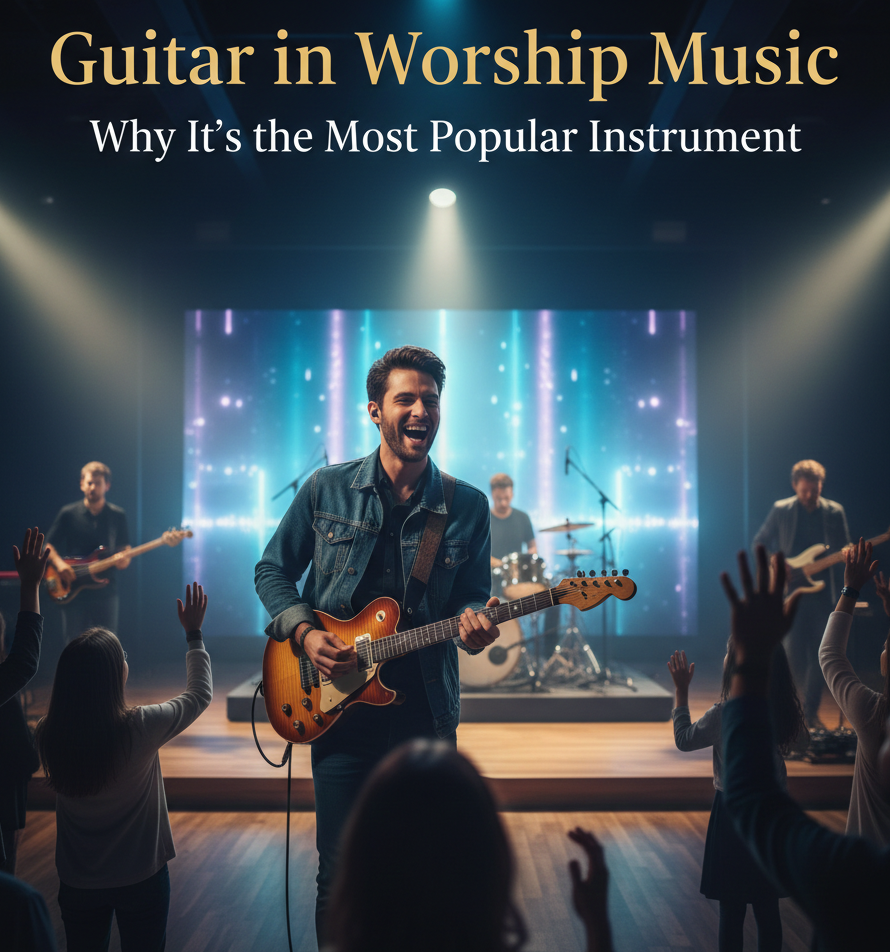
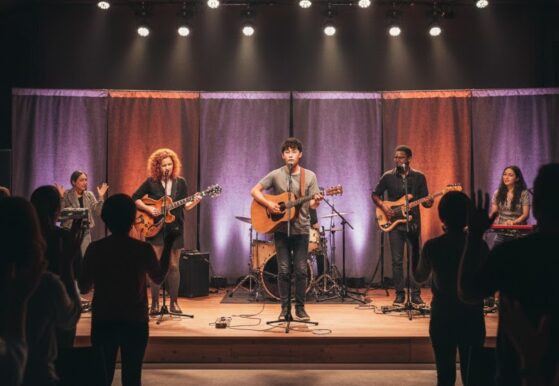
Over time, the guitar has become more than just a tool—it has become symbolic. When people think of contemporary worship music, they often imagine a worship leader with a guitar strapped across their shoulder, eyes closed, leading a congregation in song.
This image reflects decades of cultural development within Christian music. It represents accessibility, emotional connection, and communal participation. It also reflects a shift from formal performance to relational leadership.
As worship continues to evolve, new instruments and styles will undoubtedly emerge. Yet the guitar’s legacy is firmly established. Its role in shaping modern worship music has been profound, and its influence shows no signs of fading.
Conclusion | Why the Guitar Remains Unmatched in Worship
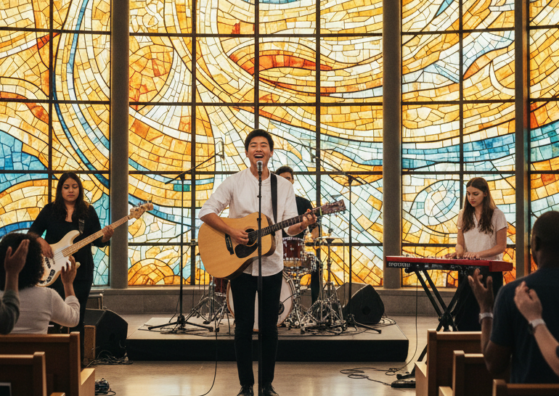
The guitar’s popularity in worship music is not accidental. It is the result of historical shifts, practical advantages, emotional depth, cultural relevance, and global influence. It bridges generations, travels effortlessly, and adapts to any environment. Most importantly, it supports the central purpose of worship: bringing people together in shared expression.
In sanctuaries and living rooms, at conferences and campfires, the guitar continues to lead hearts in song. Its strings carry melodies of hope, gratitude, surrender, and praise. And as long as worship remains a living, breathing expression of faith, the guitar will likely remain its most beloved companion.
For those inspired to be part of this musical journey, learning the instrument has become more accessible than ever. Institutions like The Mystic Keys offer structured Guitar Lessons Online, helping aspiring worship musicians build strong foundations and confidently lead in any setting.
For more information and exciting resources about learning music, visit our website at The Mystic Keys. For more music content and exciting offers follow us on
Facebook, Instagram, YouTube, LinkedIn, Twitter, Pinterest, and Threads.