
Guitar in Indian Film Music Industry
Indian film music is celebrated for its rich melodies, expressive compositions, and diverse musical influences. From soulful romantic songs to energetic dance numbers, the industry has continuously evolved by embracing different instruments and styles. Among them, the guitar has established a distinctive place in shaping the sound of Guitar in Indian Film music industry.
While traditional instruments such as the sitar, tabla, flute, and sarangi remain important, the guitar has introduced a different dimension to film music. Its versatility and expressive qualities have made it a favourite among composers, arrangers, and musicians.

The Introduction of the Guitar into Indian Film Music
The guitar gradually entered Indian film music as composers began experimenting with Western musical influences. During the early decades of Indian cinema, songs were largely influenced by Indian classical, folk, and theatrical traditions.
However, the growing popularity of jazz, swing, and rock and roll introduced new possibilities. Composers started incorporating Western instruments, and the guitar soon became an important part of their arrangements.
By the 1950s and 1960s, its sound was becoming increasingly familiar in Hindi film songs. Whether accompanying a vocalist or adding rhythm to an instrumental passage, the guitar brought a fresh musical character to Indian cinema.
The Golden Era: Guitar and the Evolution of Hindi Film Songs
The golden era of Hindi cinema witnessed remarkable developments in musical arrangements. Composers experimented with Western instruments while retaining the melodic richness that defined Indian film music.
One memorable example is Aaja Aaja Main Hoon Pyar Tera from Teesri Manzil (1966). Its energetic, rock-and-roll-inspired arrangement demonstrated how effectively the guitar could complement fast-paced rhythms and expressive vocals.
Similarly, Mere Sapno Ki Rani from Aradhana (1969) showcases how guitar-based arrangements can create a breezy and youthful atmosphere.
Music directors such as R. D. Burman played a significant role in this transformation. His experimental approach combined rock, jazz, Latin music, and Indian musical elements, expanding the possibilities of guitar-based compositions.
Consequently, the guitar moved beyond simple accompaniment and became an essential part of a song’s musical identity.
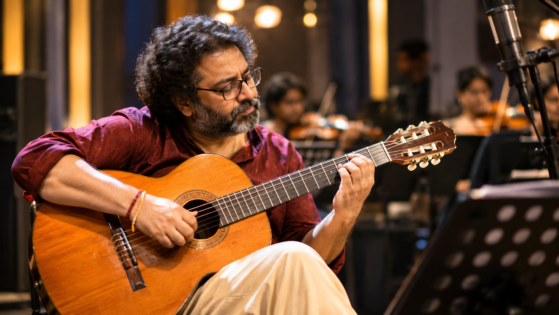
The Guitar as a Symbol of Romance and Youthfulness
One of the most recognisable associations of the guitar in Indian cinema is romance. Filmmakers have frequently used the instrument in romantic sequences to express affection, longing, and youthful charm.
Its warm chords, gentle arpeggios, and expressive melodies make it particularly suitable for romantic compositions. The instrument creates an intimate atmosphere without overpowering the vocals.
Songs such as Pehla Nasha from Jo Jeeta Wohi Sikandar (1992) demonstrate how guitar arrangements enhance the dreamy quality of a melody. Similarly, Tujhe Dekha Toh from Dilwale Dulhania Le Jayenge (1995) reflects the seamless combination of Western instrumentation and Indian musical sensibilities.
Beyond its musical contribution, the guitar has also become a visual symbol of creativity and youthful expression. Its association with memorable film characters has inspired generations of listeners to explore the instrument.
Different Guitar Styles and Their Contribution to Film Music
As Indian film music evolved, composers began exploring different types of guitars and playing techniques. Each style offered distinctive sounds that could complement different musical moods.
The acoustic guitar is particularly popular in romantic songs, unplugged arrangements, and soft melodies. Its warm tone provides a beautiful foundation for vocals, while strumming and fingerpicking add rhythm and texture.
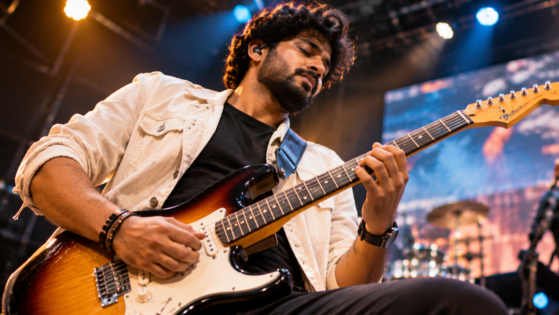
In contrast, the electric guitar brings energy and intensity to compositions. Its amplified sound, distortion, and sustain make it suitable for rock-inspired songs, energetic tracks, and dramatic instrumental passages.
The bass guitar also plays an important role by providing the low-frequency foundation of a composition. It connects the rhythm section with the harmonic arrangement, adding depth and groove to the overall sound.
Lead and slide guitar techniques further enhance film compositions through expressive melodies, instrumental interludes, and memorable solos. Together, these styles demonstrate the instrument’s remarkable versatility.
The Influence of Rock, Pop, and Western Music
The growing popularity of international music genres has significantly influenced Indian film soundtracks. As rock, pop, jazz, and electronic music gained wider audiences, Indian composers began incorporating their characteristics into mainstream cinema.
The guitar naturally became central to this transformation. Rock-inspired electric guitar riffs introduced energy, while acoustic arrangements added warmth and melodic appeal.
Composers such as A. R. Rahman have explored diverse musical influences, blending Indian classical elements with contemporary instrumentation and global sounds.
Similarly, Shankar–Ehsaan–Loy have incorporated guitar-driven arrangements into numerous compositions, combining rock and pop influences with strong Indian melodic structures.
This musical fusion has helped Indian film music reach wider audiences. Rather than replacing traditional instruments, the guitar has become part of a broader musical language where different sounds complement one another.
The Guitar in Regional Indian Film Industries
The influence of the guitar extends well beyond Hindi cinema. Tamil, Telugu, Malayalam, Kannada, and Bengali film industries have also incorporated the instrument into their soundtracks.
Tamil film music has frequently explored guitar-driven arrangements across romantic, experimental, and energetic compositions. A. R. Rahman’s work demonstrates how guitar textures can blend with classical influences, electronic sounds, and regional musical traditions.
Telugu cinema has embraced the guitar in romantic melodies, dance tracks, and contemporary soundtracks. Its rhythmic versatility allows composers to combine traditional musical elements with modern arrangements.
Meanwhile, Malayalam cinema often uses acoustic guitar arrangements to complement emotional storytelling and expressive vocals. Kannada and Bengali film music have also incorporated guitar-based compositions, creating distinctive sounds influenced by both regional traditions and global musical trends.

The Role of Guitarists and Session Musicians
Behind many memorable film songs are talented instrumentalists who bring a composer’s musical vision to life. Guitarists and session musicians play an important role in developing the sound and character of a soundtrack.
Their contribution goes beyond playing chords. They create riffs, perform instrumental interludes, experiment with different tones, and adapt their techniques to suit the mood of a composition.
During recording sessions, guitarists may perform multiple versions of the same passage to achieve the desired effect. This requires a strong understanding of rhythm, harmony, melody, and musical dynamics.
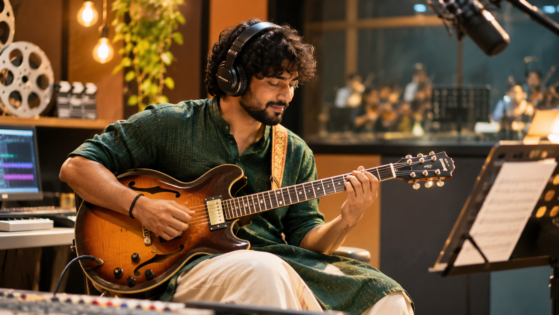
Modern recording technology has further expanded their creative opportunities. Digital audio workstations, effects processors, and amplifiers allow musicians to experiment with sounds and contribute to both performance and music production.
The Guitar in Contemporary Indian Cinema
Modern Indian cinema has embraced an increasingly diverse musical landscape. Film soundtracks now incorporate hip-hop, indie pop, electronic dance music, alternative rock, and international pop influences.
Within this evolving environment, the guitar continues to maintain its relevance. Acoustic guitars create intimate and emotional arrangements, while electric guitars add intensity to dramatic sequences and energetic compositions.
The popularity of unplugged versions and acoustic covers has further strengthened the instrument’s connection with film music. Many listeners enjoy familiar songs performed with minimal instrumentation, allowing the guitar to become the primary harmonic and rhythmic foundation.
Independent Indian musicians and bands have also influenced mainstream soundtracks through alternative rock, indie pop, and acoustic styles. This interaction continues to introduce fresh musical ideas into Indian cinema.
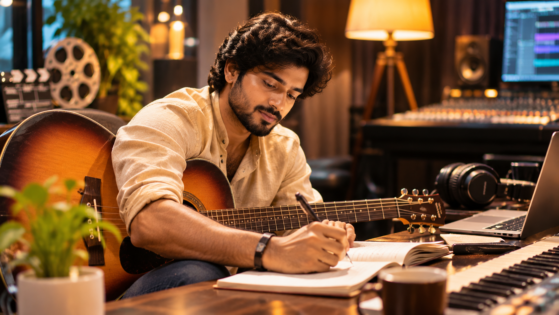
How Film Music Has Inspired a New Generation of Guitar Learners
Popular film songs have played an important role in encouraging people to learn the guitar. For many aspiring musicians, the journey begins with a favourite movie song or an instrumental passage they wish to recreate.
Familiar melodies and chord progressions make film songs enjoyable for beginners. While practising them, learners gradually develop essential skills such as chord transitions, strumming patterns, fingerpicking, rhythm, and timing.
Learning through familiar compositions also helps students understand how musical concepts work in real songs. They begin recognising chord progressions, identifying rhythmic patterns, and exploring the relationship between melody and harmony.
As their confidence grows, learners can experiment with lead guitar, improvisation, instrumental solos, and different musical genres. These foundations can also open opportunities in performance, composition, recording, and music production.
The Future of Guitar in the Indian Film Music Industry
The Indian film music industry continues to evolve with changing audience preferences, new technologies, and emerging musical influences. Despite these developments, the guitar remains valuable because of its versatility and expressive potential.
Future compositions are likely to explore more creative combinations of acoustic and electric guitar sounds with Indian classical instruments, electronic arrangements, and regional musical traditions.
The growth of independent music, live concerts, and digital platforms is also creating opportunities for skilled guitarists. Musicians can explore careers in film recording, studio performance, music production, teaching, and independent composition.
Ultimately, the guitar’s lasting appeal lies in its ability to communicate emotions through simple chords, expressive melodies, and powerful instrumental passages.
Conclusion
The journey of the guitar in the Indian film music industry reflects the continuous evolution of Indian cinema. From its early appearances in Western-inspired arrangements to its prominent role in contemporary soundtracks, the instrument has contributed to countless memorable musical experiences.
Whether creating a gentle romantic melody or adding energy to a rock-inspired composition, the guitar offers endless creative possibilities. Its ability to blend with traditional Indian instruments while adapting to modern musical styles ensures its continued importance.
For aspiring musicians, exploring the guitar through Indian film songs can be an enjoyable way to develop musical skills and discover different styles.
At The Mystic Keys, we believe learning an instrument is about more than mastering notes and chords. It is about developing creativity and building confidence through music. Through our online and one-on-one guitar lessons, students receive personalised guidance, explore different musical styles, and learn to play the songs that inspire them. Whether you are a beginner or an aspiring guitarist, your musical journey can begin with a single chord.
For more information and exciting resources about learning music, visit our website at The Mystic Keys. For more music content and exciting offers follow us on
Facebook, Instagram, YouTube, LinkedIn, Twitter, Pinterest, and Threads,