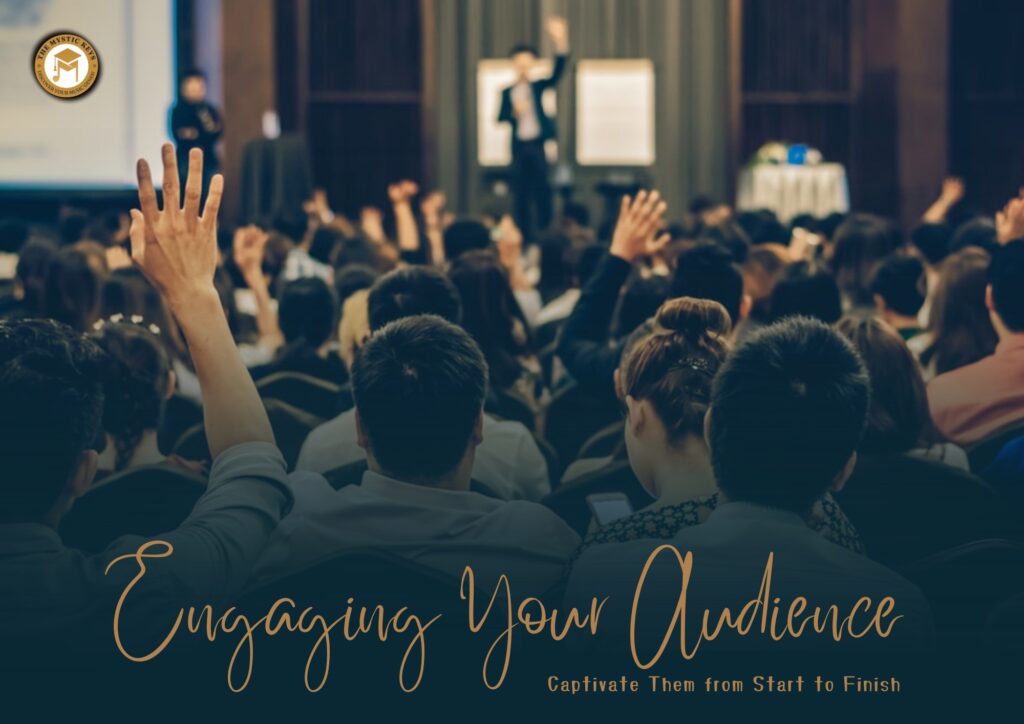
Engaging Your Audience | Captivate Them from Start to Finish
Capturing your audience’s attention is one of the most essential skills in any form of communication, whether you are delivering a speech, hosting a webinar, giving a presentation, or creating content online. Engaging your audience is not just about having great material—it’s about creating an experience that keeps people interested, emotionally invested, and eager to absorb what you have to say. In this guide, we’ll explore effective strategies to maintain audience engagement from the first moment until the very last word.

Begin with a Strong Opening
The moment you start, your audience begins to form an impression of you and your message. Starting with impact is crucial. Consider opening with:
A compelling story: Personal anecdotes or relevant stories immediately draw listeners in because humans are naturally wired to connect with narratives.
A surprising fact or statistic: Presenting an unexpected piece of information can grab attention and spark curiosity.
A thought-provoking question: Inviting your audience to think or reflect from the start makes them active participants in your message.
A bold statement: Starting with a confident declaration sets the tone and positions you as an authority on the topic.
Your opening should create an emotional or intellectual hook that encourages your audience to stay engaged.

Engaging Your Audience by Understanding Their Needs
Engaging your audience begins with truly understanding who they are. To start with, take the time to research their interests, backgrounds, and the challenges or needs they face. Once you have this insight, you can craft content that directly speaks to their experiences and expectations. In addition, by using examples, language, and humor that feel familiar and relatable, you create a stronger connection. Consequently, your audience becomes more receptive and attentive, which is essential for maintaining engagement throughout your presentation. Ultimately, engaging your audience is about aligning your message with their perspective, making them feel involved and valued at every stage.

Structure Your Content for Maximum Engagement
Well-organized content helps your audience follow your ideas smoothly. Use a logical sequence that guides them naturally from one point to the next. A simple framework you can follow includes:
Introduction – Set the stage, provide context, and outline what the audience can expect.
Core Content – Deliver the main points, supporting them with stories, examples, and data.
Interactive Moments – Include questions, polls, or activities to involve your audience.
Conclusion – Summarize key takeaways and leave them with a memorable thought or call to action.
Breaking content into digestible segments prevents information overload and keeps your audience focused.

Engaging Your Audience Through Stories and Examples
Engaging your audience is greatly enhanced through the power of storytelling, as stories naturally evoke emotion and make your message relatable. To begin with, incorporating stories that clearly illustrate your points immediately draws listeners in and captures their attention. Furthermore, stories provide context, humanize your message, and give your audience a reason to care about what you are saying.
In addition, using concrete examples strengthens engagement by showing concepts in action rather than merely explaining them abstractly. For instance, sharing a personal experience, a case study, or a relevant anecdote demonstrates your points in real life, making them more tangible and memorable.
As a result, weaving stories and examples throughout your presentation keeps your audience focused and attentive. Consequently, they are more likely to understand your ideas, retain the information, and connect with your message on a deeper level. Ultimately, engaging your audience through storytelling transforms your presentation from simply informative into genuinely compelling and memorable.

Vary Your Delivery Style
Monotony can quickly disengage an audience, which is why it is crucial to vary your tone, pace, and gestures throughout your presentation. For example, speaking with enthusiasm during key moments while simultaneously slowing down for emphasis at important points ensures that your audience recognizes what deserves extra attention. In addition, strategically pausing not only gives listeners time to absorb your ideas but also reinforces the significance of your message. Furthermore, by altering your rhythm, expression, and physical presence, you convey energy and dynamism, which naturally keeps the audience alert and invested. Ultimately, these subtle variations guide your listeners through the content, making every point feel deliberate, engaging, and memorable.

Incorporate Visual and Interactive Elements
Visual aids, slides, props, or demonstrations can significantly enhance comprehension and retention. In fact, people tend to remember what they see just as much as what they hear, so by combining visual stimuli with verbal explanation, you can reinforce understanding and strengthen engagement. Moreover, encouraging participation—whether through questions, hands-on activities, or group discussions—helps your audience feel involved rather than passive. Consequently, this combination of seeing, hearing, and doing keeps attention high and creates a more interactive and memorable experience.

Pay Attention to Non-Verbal Communication
Your body language, facial expressions, and eye contact play a crucial role in connecting with your audience. For instance, open gestures, confident posture, and genuine expressions not only convey your message clearly but also help establish trust and maintain interest. At the same time, moving around the space or pointing to relevant visuals naturally guides the audience’s focus. Additionally, these actions create a sense of energy and involvement, making your presentation feel dynamic rather than static. Together, these elements ensure that your audience remains attentive, engaged, and fully connected to your message.
Engaging Your Audience by Connecting Emotionally
People remember how you made them feel, and for this reason, acknowledging your audience’s emotions is crucial. To begin with, showing empathy allows you to establish a sense of understanding and trust. Next, by celebrating shared experiences, you strengthen the connection and make your audience feel included in the journey. At the same time, incorporating humor and moments of excitement captures attention and keeps engagement high. In addition, sparking curiosity encourages active listening, while consistently demonstrating empathy reinforces the emotional bond, ensuring that your message resonates long after it’s delivered.

Engaging Your Audience by Signaling Progress
Throughout your presentation, subtly indicate that you are moving forward and that new insights are coming. Phrases like “Now that we’ve explored this, let’s look at…” or “Building on that idea…” help your audience anticipate what’s next without needing abrupt breaks. These cues provide a sense of journey and keep listeners oriented and engaged.

End with Impact
A strong ending ensures your message lingers in the audience’s mind. Avoid simply stopping; instead, leave them with:
A call to action: Encourage them to apply what they’ve learned.
A memorable quote or story: Give them something meaningful to reflect on.
A thought-provoking question: Leave them curious and engaged even after you finish.
Ending with clarity and purpose reinforces the value of your message and ensures your audience departs with a lasting impression.

Practice and Adapt
Even the best strategies require practice. Rehearse your delivery, experiment with timing and phrasing, and seek feedback. Notice how audiences respond and adjust accordingly. Engagement is a dynamic process—being attentive to the energy in the room (or online environment) allows you to fine-tune your approach on the fly.

Conclusion
Engaging your audience from start to finish is a combination of preparation, awareness, and adaptability. By crafting a compelling opening, understanding your audience, structuring content thoughtfully, and using stories, visuals, and expressive delivery, you can create a presentation or communication experience that resonates deeply. Remember, the key to engagement is creating a connection—intellectual, emotional, and experiential—that guides your audience effortlessly through your message from beginning to end.
At The Mystic Keys, we emphasize the art of engaging your audience in every lesson and performance. Through our Public Speaking Course Online, you’ll learn how to connect, inspire, and communicate with confidence. With these strategies, you can transform any talk, webinar, or presentation into an immersive experience—leaving your audience informed, inspired, and eager for more.
Intersted in learning music with us? Register now
For more information and exciting resources about learning music, visit our website at The Mystic Keys. For more music content and exciting offers follow us on
Facebook, Instagram, YouTube, LinkedIn, Twitter, Pinterest, and Threads.