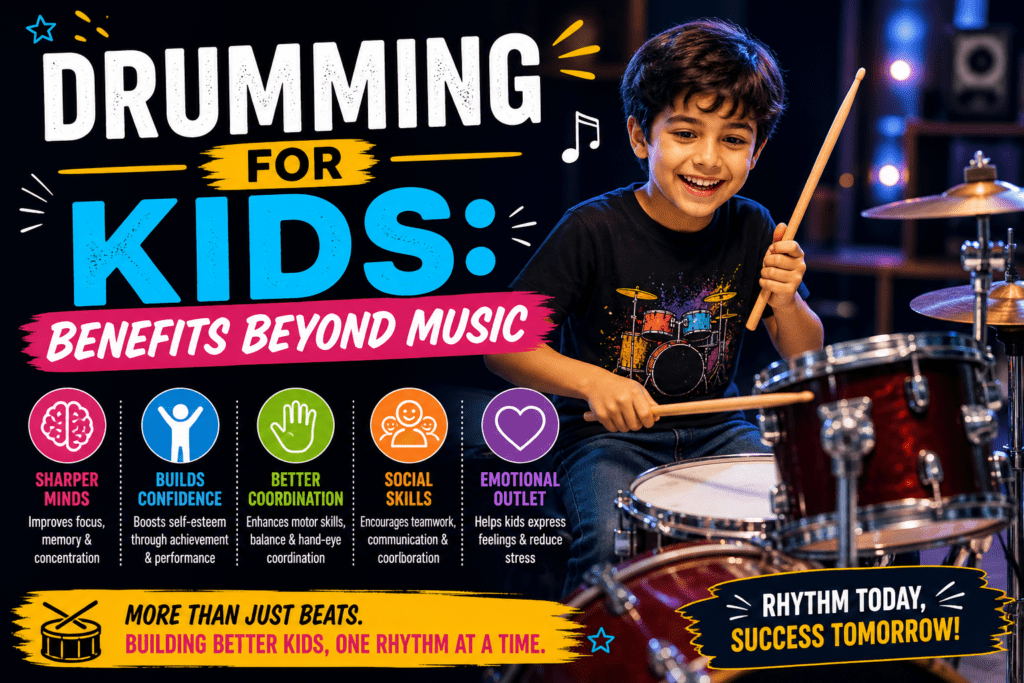
Drumming for Kids: Benefits Beyond Music
Drumming for kids is more than just a fun musical activity—it is a powerful tool for overall development. Many parents introduce music to their children to build creativity, but drumming offers benefits that go far beyond learning an instrument. From improving coordination to enhancing focus and emotional expression, drumming for kids supports both mental and physical growth.
Children naturally respond to rhythm. Even at a young age, they enjoy tapping, clapping, and moving to beats. Structured drumming lessons channel this natural interest into skill development, discipline, and confidence. At The Mystic Keys, we observe that children who learn drums often show improvements not only in music but also in academics and personal behavior.
In this blog, we explore how drumming helps children grow in multiple areas beyond music.
Why Drumming for Kids Is More Than Just Music

While many parents think of drumming as simply playing beats, it actually involves coordination, listening, timing, and discipline. Drumming engages both the body and the brain at the same time.
Key developmental areas include:
- Motor skills
- Cognitive ability
- Emotional expression
- Social interaction
This makes drumming one of the most comprehensive activities for child development.
Physical Benefits of Drumming for Kids
Drumming requires movement of both hands and sometimes feet, making it a full-body activity.
Improved Coordination
Children learn to use both hands independently, improving coordination and balance.
Better Motor Skills
Holding drumsticks and controlling movements strengthens fine motor skills.
Increased Energy Release
Drumming provides a healthy outlet for energy, especially for active children.
Cognitive Benefits of Drumming for Kids

Drumming has a strong impact on brain development.
Enhanced Focus and Concentration
Following rhythm patterns improves attention span and mental discipline.
Improved Memory
Remembering beats and sequences strengthens memory skills.
Better Problem-Solving Skills
Learning new patterns encourages logical thinking and pattern recognition.
Emotional Benefits of Drumming for Kids
Music is a powerful emotional outlet, and drumming is especially effective.
Stress Relief
Drumming allows children to release stress and tension.
Emotional Expression
Children can express feelings through rhythm without using words.
Increased Confidence
Learning and performing builds self-esteem.
Social Benefits of Drumming for Kids

Drumming often involves playing with others, which develops social skills.
Teamwork and Collaboration
Group drumming teaches children how to play together and listen to others.
Communication Skills
Children learn to follow cues and interact through music.
Sense of Belonging
Being part of a musical group boosts confidence and social comfort.
How Drumming Improves Academic Performance
Drumming supports skills that are useful in academics.
These include:
- Improved concentration
- Better memory retention
- Stronger discipline
- Enhanced listening skills
Studies have shown that musical training can positively impact learning ability.
Developing Discipline Through Drumming
Learning drums requires regular practice and patience.
Children develop:
- Time management skills
- Consistency in practice
- Goal-setting habits
These qualities are valuable in all areas of life.
Creativity and Self-Expression
Drumming encourages creativity by allowing children to create their own rhythms and patterns.
Creative benefits include:
- Musical exploration
- Improvisation skills
- Personal expression
This helps children develop a unique sense of identity.
Safe and Structured Learning for Kids
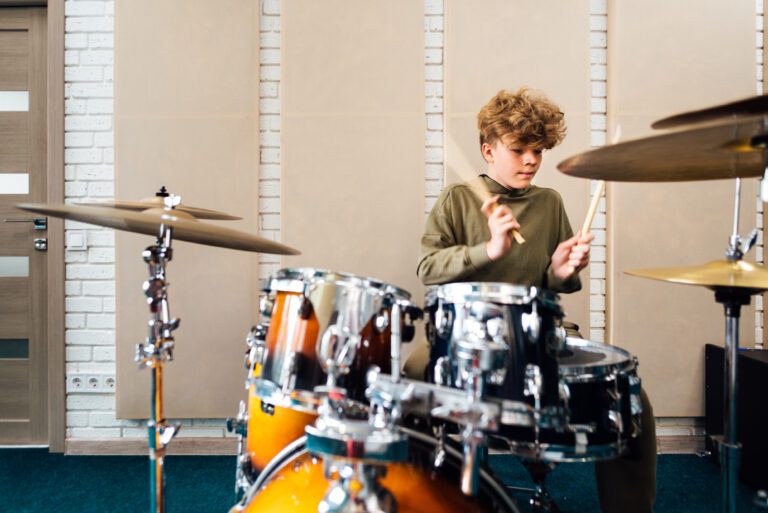
It is important for children to learn drums in a safe and structured environment.
Key considerations include:
- Proper technique to avoid strain
- Age-appropriate lessons
- Balanced practice sessions
At The Mystic Keys, children are guided with structured methods that ensure both safety and effective learning.
When Should Kids Start Learning Drums?
Children can begin learning drums as early as age 5–6, depending on their interest and coordination level.
Early exposure helps:
- Develop rhythm naturally
- Build confidence
- Improve learning ability
However, the right teaching approach is more important than age.
How Parents Can Support Their Child

Parents play an important role in their child’s musical journey.
Ways to support include:
- Encouraging regular practice
- Providing a positive environment
- Celebrating small achievements
- Avoiding pressure
Supportive parenting helps children stay motivated.
Common Challenges and How to Overcome Them
Children may face challenges while learning drums.
These include:
- Difficulty with coordination
- Lack of focus
- Initial frustration
Solutions include:
- Short practice sessions
- Fun learning activities
- Encouragement and patience
Long-Term Benefits of Drumming for Kids
The benefits of drumming extend into adulthood.
These include:
- Strong confidence
- Better communication skills
- Creativity and discipline
- Stress management
Drumming becomes a lifelong skill that supports personal growth.
Conclusion
Drumming for kids is much more than learning an instrument. It is a powerful activity that supports physical, cognitive, emotional, and social development. Through rhythm and movement, children build skills that positively impact their overall growth.
At The Mystic Keys, structured drum lessons help children develop confidence, coordination, and creativity in a supportive environment. With the right guidance, drumming becomes not only a musical journey but also a foundation for lifelong learning and development.
If you want your child to experience the benefits of music, structured guidance through Drum Lessons Online can help them grow with confidence and skill.
For more information and exciting resources about learning music, visit our website at The Mystic Keys. For more music content and exciting offers follow us on
Facebook, Instagram, YouTube, LinkedIn, Twitter, Pinterest, and Threads.