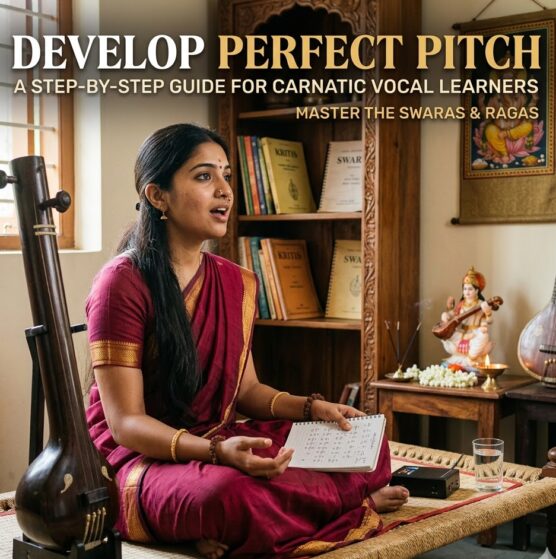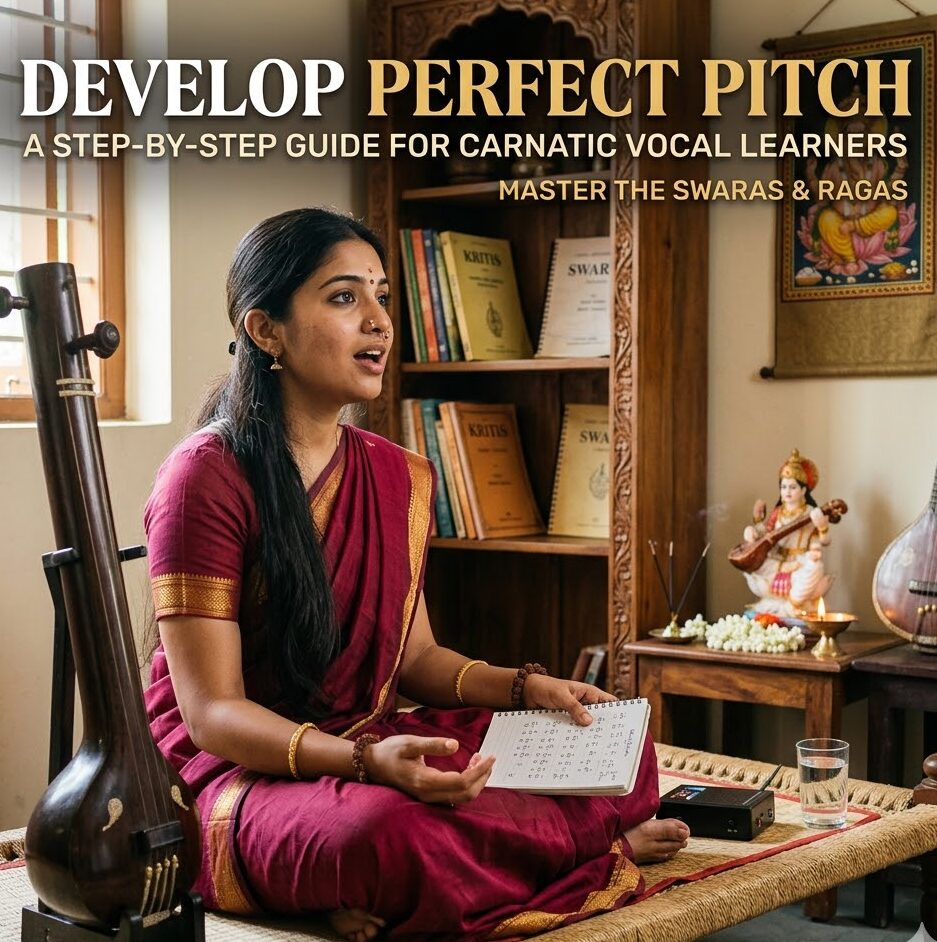
Develop Perfect Pitch | Guide for Carnatic Vocal Learners
Carnatic music is deeply rooted in precision, discipline, and listening awareness. Among its many essential skills, the ability to develop perfect pitch holds a very special place in shaping a confident and expressive voice. A singer who maintains steady alignment with shruti creates music that feels balanced, expressive, and emotionally powerful. Without strong pitch control, even well-learned compositions can sound uncertain or incomplete.
Many learners assume that perfect pitch is something only a few people are born with. In reality, Carnatic vocal training shows us that pitch sensitivity can be developed gradually through structured listening, guided practice, and regular voice work. As the ear becomes more attentive and the voice more responsive, the connection between hearing and singing begins to strengthen naturally.
Developing perfect pitch in Carnatic music is therefore not about quick results. Instead, it is a journey that builds awareness step by step, allowing singers to internalize shruti and produce notes with confidence and stability.

Understanding Perfect Pitch in Carnatic Vocal Music
In Carnatic singing, perfect pitch does not simply mean identifying notes instantly. Rather, it refers to the ability to stay aligned with the chosen shruti consistently while moving smoothly between swaras. This alignment gives clarity to ragas and preserves their emotional identity.
Unlike some Western approaches that focus on fixed note recognition independent of context, Carnatic pitch training emphasizes relative listening within a tonal framework. Singers learn to recognize how each swara relates to the base note and how those relationships shape the raga’s character.
As learners become more familiar with these relationships, their singing starts sounding stable and intentional rather than hesitant. Over time, this awareness turns into instinctive pitch control.

Why Carnatic Students Should Develop Perfect Pitch Early
Strong pitch control forms the foundation of expressive Carnatic singing. Without it, gamakas lose their depth and phrases lose their direction. When shruti alignment becomes steady, the music begins to sound authentic and confident.
Listeners naturally respond to voices that stay centered around the tonic note. A stable pitch allows ragas to unfold clearly and helps singers communicate emotion more effectively. Confidence also improves when singers know their voice will remain connected to the shruti throughout a performance.
Because of this, developing pitch awareness early in training supports progress in every other aspect of Carnatic learning.

Starting with Strong Shruti Awareness
The first step toward developing perfect pitch begins with listening carefully to the shruti itself. Whether using a tambura or electronic shruti box, learners benefit greatly from spending time absorbing the tonic sound before singing.
Rather than starting immediately with exercises, it helps to sit quietly with the shruti and hum along gently. This simple habit strengthens the connection between the ear and the voice. Gradually, the tonic begins to feel like a natural resting point.
As shruti awareness improves, singers begin recognizing when their voice shifts away from alignment. That awareness marks an important turning point in pitch development.

Training the Ear First to Develop Perfect Pitch Naturally
Pitch accuracy grows more quickly when listening skills develop alongside vocal control. Carnatic music relies heavily on internal hearing, which allows singers to imagine notes clearly before producing them.
Listening attentively to varnams, sarali varisais, and simple geethams helps learners recognize pitch movement patterns within ragas. Instead of copying mechanically, they begin understanding how swaras travel within melodic structures.
Once the ear becomes familiar with these patterns, the voice follows more naturally. This connection reduces strain and improves confidence during practice.

Practicing Sarali Varisais to Develop Perfect Pitch Stability
Sarali varisais play a central role in early Carnatic training. Although they appear simple, they provide powerful support for developing pitch accuracy when practiced thoughtfully.
Singing these exercises slowly helps learners observe how each swara connects with the tonic. Careful repetition strengthens muscle memory and improves tonal consistency. Gradually, the voice begins landing on notes with greater certainty.
When practiced with attention to shruti alignment instead of speed, sarali varisais become an essential tool for strengthening pitch awareness.

Using the Tambura as a Constant Pitch Guide
The tambura creates a continuous tonal background that supports accurate singing. Its steady resonance helps singers remain anchored to the shruti throughout practice sessions.
Practicing regularly with tambura accompaniment encourages the ear to stay connected to the tonal center. Over time, singers begin adjusting their voices automatically whenever pitch shifts slightly.
Because the tambura provides such a stable reference, it becomes one of the most effective tools for developing pitch consistency in Carnatic music.
Developing Voice Control to Help Develop Perfect Pitch
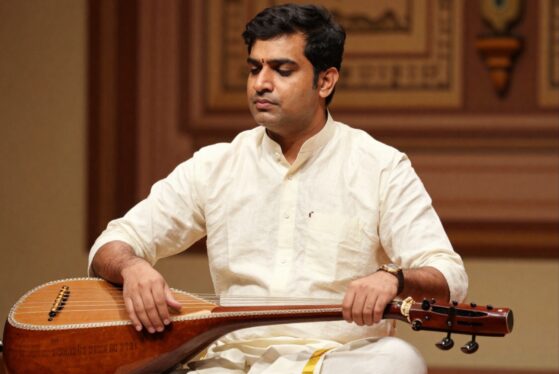
Pitch accuracy depends not only on listening but also on voice stability. Breath control, posture, and relaxed vocal production all contribute to steady note placement.
When the voice feels supported and comfortable, it responds more easily to pitch adjustments. Controlled breathing allows phrases to remain even, while relaxed throat movement supports smoother transitions between swaras.
As vocal comfort increases, maintaining shruti alignment becomes more natural and less effortful.

Recognizing the Role of Gamakas in Pitch Development
Gamakas give Carnatic music its expressive beauty, yet they also require careful pitch awareness. Each oscillation must remain connected to the shruti while moving between swaras.
Practicing gamakas slowly helps singers understand how pitch travels within each phrase. Instead of sounding decorative, these movements begin to feel structured and meaningful.
With regular attention, gamakas strengthen both listening ability and voice flexibility at the same time.
Building Consistency Through Daily Listening Habits
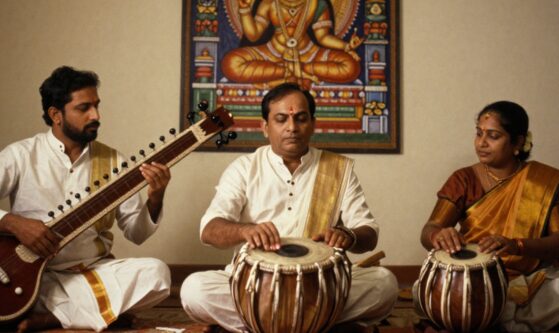
Listening regularly to experienced Carnatic vocalists strengthens pitch awareness in subtle but powerful ways. Exposure to well-rendered ragas helps learners absorb tonal patterns naturally.
Rather than focusing only on memorizing compositions, attentive listening encourages singers to notice how phrases begin, develop, and resolve around the tonic note. Gradually, these observations influence their own singing.
Over time, listening becomes one of the most effective ways to internalize pitch stability.

Practicing with Patience and Structured Guidance
Developing perfect pitch requires steady effort rather than quick shortcuts. Progress becomes visible when learners practice regularly with attention to shruti alignment and tonal clarity.
Structured lessons help identify small pitch deviations early and correct them before they become habits. With guidance, learners develop awareness more efficiently and build confidence in their singing voice.
Because Carnatic music depends so strongly on tonal precision, consistent mentorship plays a valuable role in shaping long-term pitch accuracy.

Strengthening Internal Pitch Memory Over Time
As practice continues, singers begin carrying the shruti internally even when accompaniment is not present. This stage marks an important milestone in pitch development.
Internal pitch memory allows learners to begin phrases confidently and maintain tonal balance throughout longer passages. Instead of depending entirely on external references, they start trusting their musical instinct.
Gradually, this internal awareness transforms the overall quality of singing.

Final Thoughts
Developing perfect pitch in Carnatic vocal music is a gradual and rewarding journey that combines listening awareness, shruti alignment, and consistent voice practice. With patience and structured learning, singers begin recognizing swaras more clearly and producing them with greater confidence.
Each stage of training strengthens the connection between ear and voice, allowing ragas to unfold with clarity and emotional depth. As this connection becomes stronger, singing starts to feel more natural and expressive.
At The Mystic Keys, our Carnatic Vocal Lessons Online are designed to help learners strengthen shruti alignment through guided exercises, attentive listening practices, and personalized feedback from experienced instructors. With the right support and regular practice, developing strong pitch accuracy becomes an achievable and fulfilling part of every student’s musical journey.
For more information and exciting resources about learning music, visit our website at The Mystic Keys. For more music content and exciting offers follow us on
Facebook, Instagram, YouTube, LinkedIn, Twitter, Pinterest, and Threads.