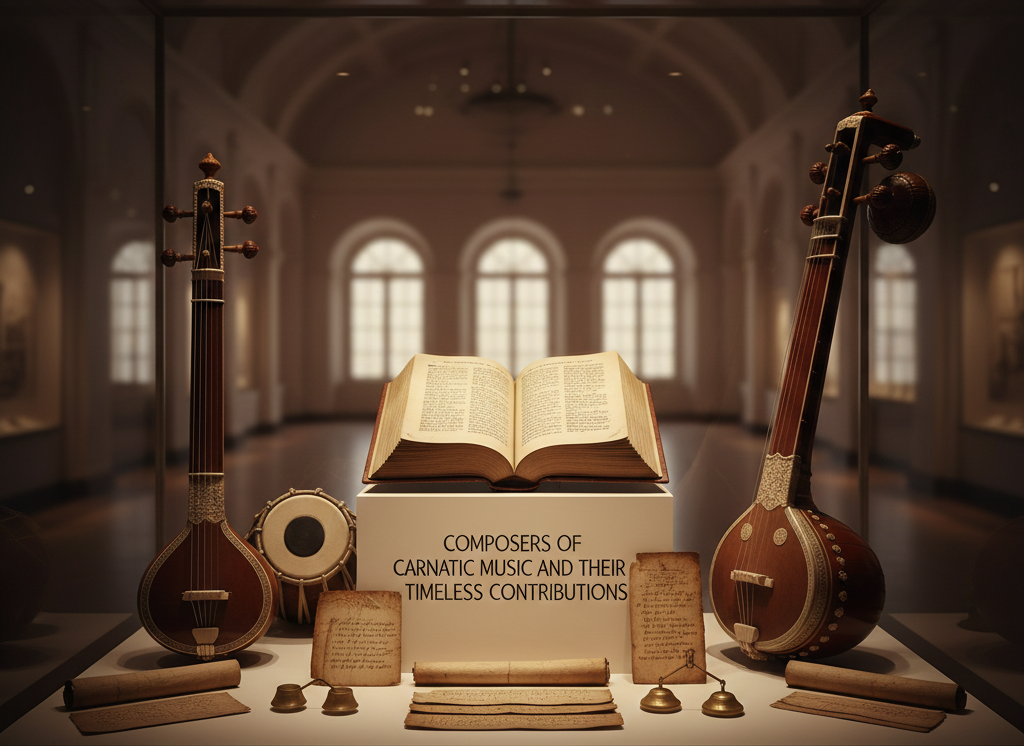
Composers of Carnatic Music and Their Timeless Contributions
Carnatic music transcends a classical system—it thrives as a living tradition shaped by inner purpose, emotional depth, and lifelong discipline. The famous composers of Carnatic music did more than create melodies; they demonstrated how motivation drives creativity when artists align their work with devotion and meaning. Their compositions continue to guide musicians and listeners alike, offering lessons both musically and philosophically. Each raga, tala, and lyric reflects their commitment to perfection and their relentless pursuit of artistic expression. By observing their dedication, we see how focused effort transforms talent into timeless artistry.
By exploring their lives and creative journeys, we can understand how sustained motivation fuels timeless creativity. These composers faced challenges, personal struggles, and societal expectations, yet they continued to compose with unwavering passion. Their work shows that motivation grows when purpose and discipline intersect. Every composition they left behind serves as both a musical treasure and a blueprint for cultivating perseverance. Through their example, we learn that true inspiration comes from commitment, devotion, and the courage to pursue one’s calling fully.
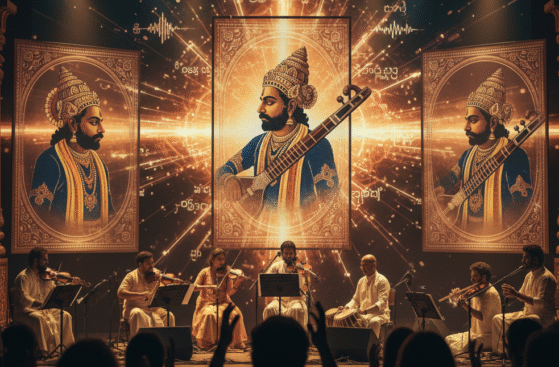
The Spiritual Foundation of Carnatic Music and Its Composers
At its core, Carnatic music is devotional. For its composers, music was a spiritual language rather than a performative act. The composers of Carnatic music were deeply rooted in bhakti, where every raga and lyric became a form of prayer.
This spiritual grounding shaped their motivation. Instead of external rewards, they were driven by inner fulfillment and surrender. When creativity is anchored in belief and discipline, it transcends time—this is why their compositions still resonate centuries later.
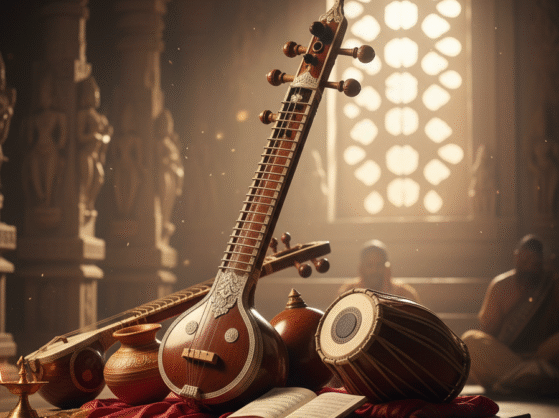
Composers of Carnatic Music and Motivation Through Devotion | Saint Tyagaraja
Saint Tyagaraja stands as one of the most influential composers of Carnatic music, embodying devotion-driven motivation. His kritis reflect an intimate, emotional relationship with Lord Rama, filled with longing, gratitude, and humility.
What makes Tyagaraja’s journey remarkable is his conscious rejection of wealth and royal patronage. His motivation came from faith, not comfort. Even in personal struggle, his creative output remained unwavering, teaching us that when motivation is rooted in values, it becomes resilient.
Through Tyagaraja, we see that motivation flourishes when purpose outweighs pressure.
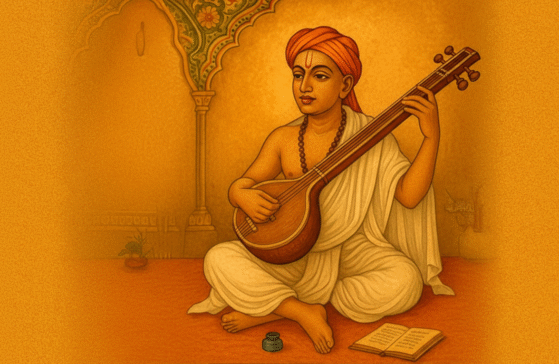
Intellectual Depth and Discipline Among Composers of Carnatic Music | Muthuswami Dikshitar
While Tyagaraja’s music flows with emotional warmth, Muthuswami Dikshitar represents the scholarly dimension among composers of Carnatic music. His motivation was driven by curiosity, knowledge, and exploration.
Dikshitar’s compositions are rich with Sanskrit lyrics, rare ragas, and intricate melodic structures. His work reflects patience and precision—proof that motivation can also be quiet, methodical, and sustained through lifelong learning.
His legacy teaches us that motivation deepens when nurtured by discipline and intellectual engagement, reminding us that mastery is built through thoughtful persistence.
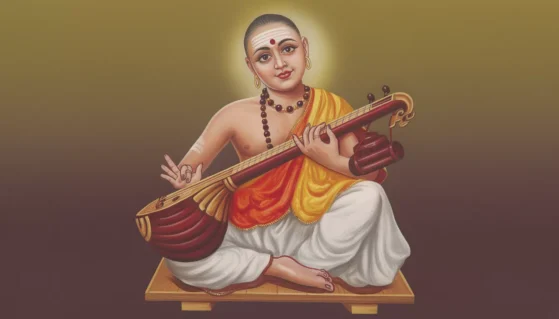
Emotional Intensity in the Works of Composers of Carnatic Music | Syama Sastri
Among the composers of Carnatic music, Syama Sastri displayed profound emotional intensity and rhythmic sophistication. His devotion to Goddess Kamakshi shaped the emotional core of his musical expression.
Although he composed fewer kritis than his contemporaries, each piece conveys immense depth. This demonstrates an important truth about motivation: authenticity matters more than quantity.
Syama Sastri’s life shows that motivation aligned with emotion produces art that leaves a lasting impact, regardless of scale.
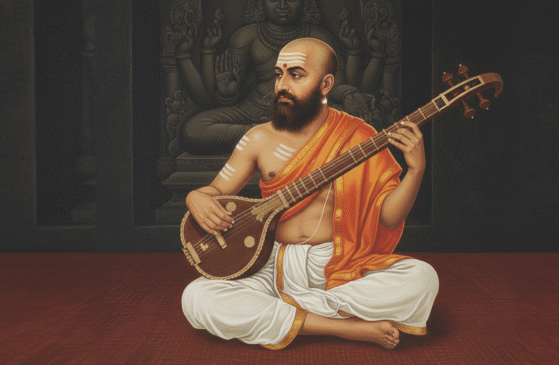
The Carnatic Trinity | How Composers of Carnatic Music Shaped Sustainable Motivation
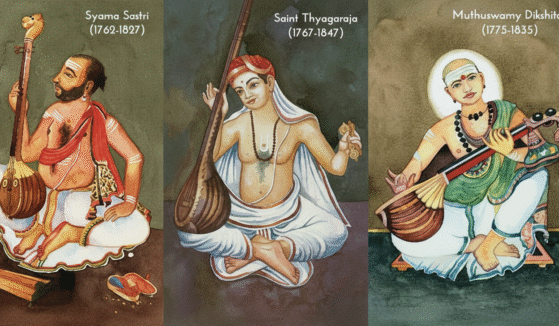
The Carnatic Trinity—Tyagaraja, Dikshitar, and Syama Sastri—leaves a powerful legacy that teaches us how motivation works. Each composer embodies a unique motivational force: Tyagaraja inspires through devotion, Dikshitar through intellect, and Syama Sastri through emotional depth.
Together, these composers of Carnatic music show that motivation grows from personal purpose and flourishes through daily discipline and routine. Their lives prove that inspiration does not happen by chance; they cultivate it every day through steadfast commitment to their art.
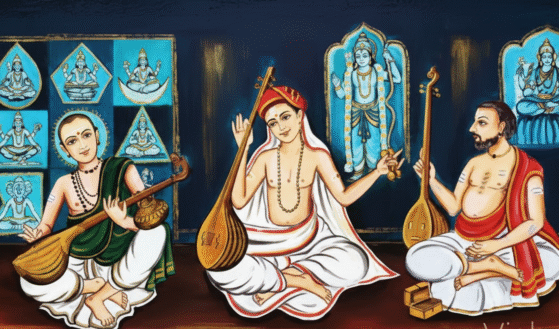
The Trinity’s Collective Legacy | A Blueprint for Sustainable Motivation
The tradition did not end with the Carnatic Trinity. Purandara Dasa built the foundation of Carnatic pedagogy, designing structured compositions that guide beginners and spark musical motivation. He made learning accessible, disciplined, and devotional, ensuring students connect deeply with the art from the start.
Swati Tirunal and Papanasam Sivan carried this legacy forward. They preserved classical purity while innovating with evolving musical expression and lyrical richness. These composers of Carnatic music demonstrate that motivation thrives when we honor tradition and actively adapt it to changing times.
How Motivation Really Works | Lessons from Carnatic Music Composers
Across generations, composers of Carnatic music demonstrate a shared truth: motivation is not a fleeting emotion but a disciplined way of life. They cultivate it through devotion, intellectual curiosity, emotional honesty, and consistent daily practice. Instead of waiting for inspiration, they commit themselves to their art every single day. This steady dedication allows creativity to deepen over time. Through their lives, motivation emerges as a habit, not a moment.
Their journeys show that true motivation does not rely on recognition or external rewards. They draw strength from purpose, faith, and inner conviction rather than applause. Even during personal struggle or isolation, their creative spirit continues to grow. By staying aligned with meaning, they allow motivation to renew itself naturally. Their legacy proves that purpose sustains passion far longer than praise.
Conclusion | Timeless Music, Timeless Motivation
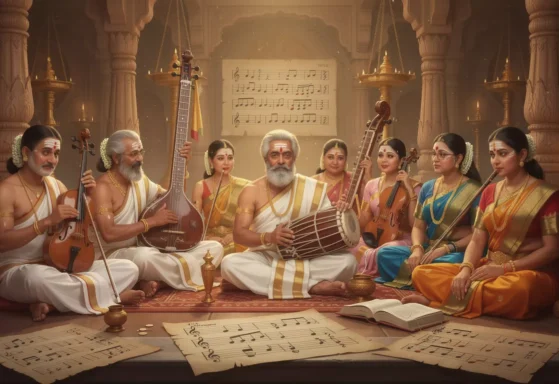
The famous composers of Carnatic music lived with purpose, not for legacy, and their timeless creations continue to inspire through genuine inner motivation. When we study their journeys, we understand that motivation grows through daily effort—built note by note, practice by practice. At The Mystic Keys, our Carnatic Vocal Lessons Online carry forward this spirit, treating Carnatic music as both an artistic treasure and a living lesson in how true motivation works.
Through guided training and structured practice, learners connect with the same discipline that shaped the great composers. Each lesson encourages consistency, emotional expression, and steady musical growth. Students actively develop patience, focus, and confidence through regular riyaaz. This approach turns Carnatic learning into a purposeful journey rather than a short-term achievement.
Intersted in learning music with us? Register now
For more information and exciting resources about learning music, visit our website at The Mystic Keys. For more music content and exciting offers follow us on
Facebook, Instagram, YouTube, LinkedIn, Twitter, Pinterest, and Threads.