
Why Coldplay Still Matters
Some bands make noise.
Some make history.
Coldplay’s Timeless Sound makes connection.
In an era when attention spans last seconds and musical fads come and go overnight, Coldplay has sustained more than two decades of global resonance. Their music—anchored in melody, vulnerability, and hope—has become a kind of emotional shorthand for modern humanity. Whether through the soft ache of The Scientist or the anthemic swell of Viva La Vida, their sound transcends borders, genres, and generations.
To call Coldplay merely a “rock band” would undersell their impact. They are architects of feeling, shaping soundscapes that invite every listener into a shared chorus of belonging. From small London stages to sold-out stadiums across five continents, their mission has remained constant: make the world sing together.
Their journey is not simply about commercial triumph or record-breaking tours—it’s about the rare power of music to unify emotion and imagination. Coldplay’s story is a reminder that sincerity, when fused with sonic curiosity, can echo forever.
1. Origins & Early Influence | Coldplay’s Timeless Sound (1996–2000)
1.1 University Beginnings
It all started in 1996 at University College London, where Chris Martin met guitarist Jonny Buckland. They bonded over a mutual love of melodic simplicity—Radiohead, Jeff Buckley, and U2 were their touchstones. Bassist Guy Berryman and drummer Will Champion soon completed the circle. Before Coldplay, they called themselves Starfish—a name as tentative as their early gigs.

1.2 Shaping the Sound
The late ’90s Britpop wave—led by Oasis, Blur, and Travis—dominated UK airwaves. Yet Coldplay’s approach felt quieter, more intimate. Where Britpop swaggered, they whispered; where others chased irony, they offered heart. That difference became their secret advantage.
By 1998 they had released the EP Safety, drawing industry whispers for Chris Martin’s pure vocal tone and the haunting simplicity of Bigger Stronger. The deal with Parlophone soon followed, paving the way for Parachutes (2000).
1.3 The Breakthrough Moment: Yellow
When Yellow hit radio, it didn’t just climb charts—it altered atmospheres. Its open-chord guitar shimmered like starlight, Martin’s falsetto reached skyward, and audiences everywhere felt the invitation to sing along.
“Look at the stars / Look how they shine for you.”
The lyric was simple but cosmic. That duality—everyday tenderness wrapped in celestial imagery—would become the Coldplay signature.
📚 Read more:
Coldplay Biography – Britannica
2. The Anatomy of Coldplay’s Timeless Sound
2.1 Melody: The Emotional Compass
Coldplay’s songs orbit around melody. Unlike bands that prioritize rhythmic complexity or lyrical density, they use melody as narrative. The piano arpeggio of Clocks, the ascending guitar line of Fix You, and the syncopated synth riff of Adventure of a Lifetime all serve one function—to lift emotion into motion.
In production terms, their melodies often use pentatonic scales (five-note patterns common in folk and world music), which create a sense of universal familiarity. That’s why audiences in Mumbai, Madrid, or Montreal can hum along instinctively.
2.2 Harmony & Dynamics
Coldplay’s harmonic choices are deceptively simple. They rarely stray far from diatonic chords, yet they manipulate dynamics—volume, texture, and timbre—to make each song swell like a wave. The quiet verse–explosive chorus pattern (The Scientist, Viva La Vida) mirrors human conversation: intimacy expanding into revelation.
Brian Eno, who produced Viva La Vida, once said Coldplay understood “how silence and sound can talk to each other.” Their restraint is musical empathy—knowing when not to play.
2.3 Lyrical Universality
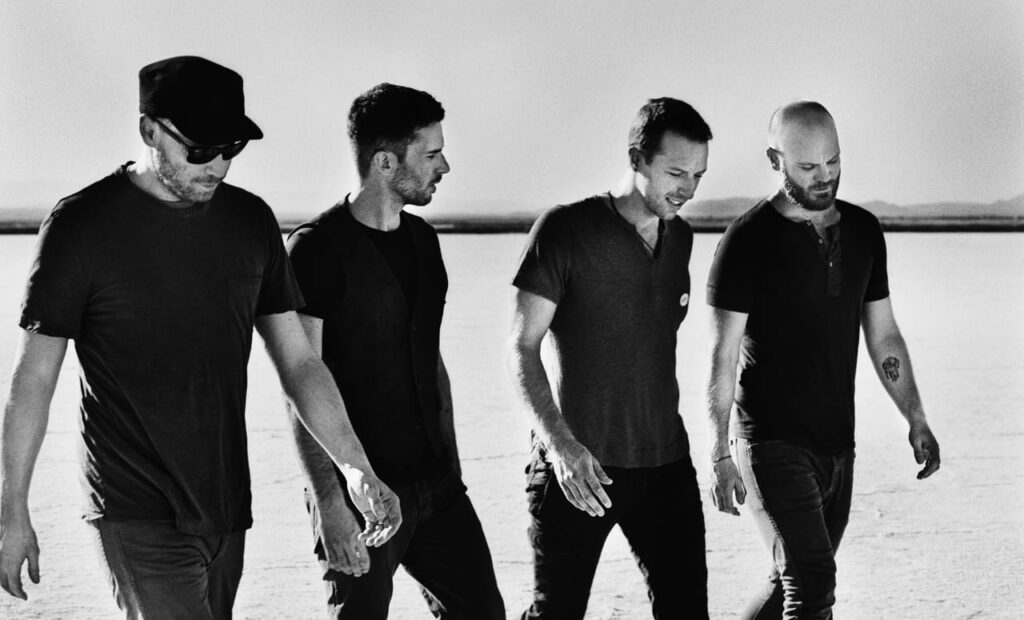
Chris Martin’s lyrics lean on elemental imagery—light, stars, colors, sky. This minimalism invites listener projection. The line “Lights will guide you home” from Fix You can mean faith, friendship, or self-forgiveness, depending on who’s listening.
2.4 Production Evolution
Early albums favored warm analog textures: acoustic guitars, upright piano, reverb that felt cathedral-like. Post-2008, Coldplay adopted digital layering—synth pads, sampled percussion, orchestral loops—without losing organic warmth.
Their producers (Ken Nelson, Brian Eno, Rik Simpson, Max Martin) helped evolve the band’s sonic DNA while retaining emotional clarity. Each record feels like an expansion of color, a bigger canvas painted with the same brush.
3. Album by Album: A Sound in Motion (2000 – 2008)
3.1 Parachutes (2000): The Gentle Revolution
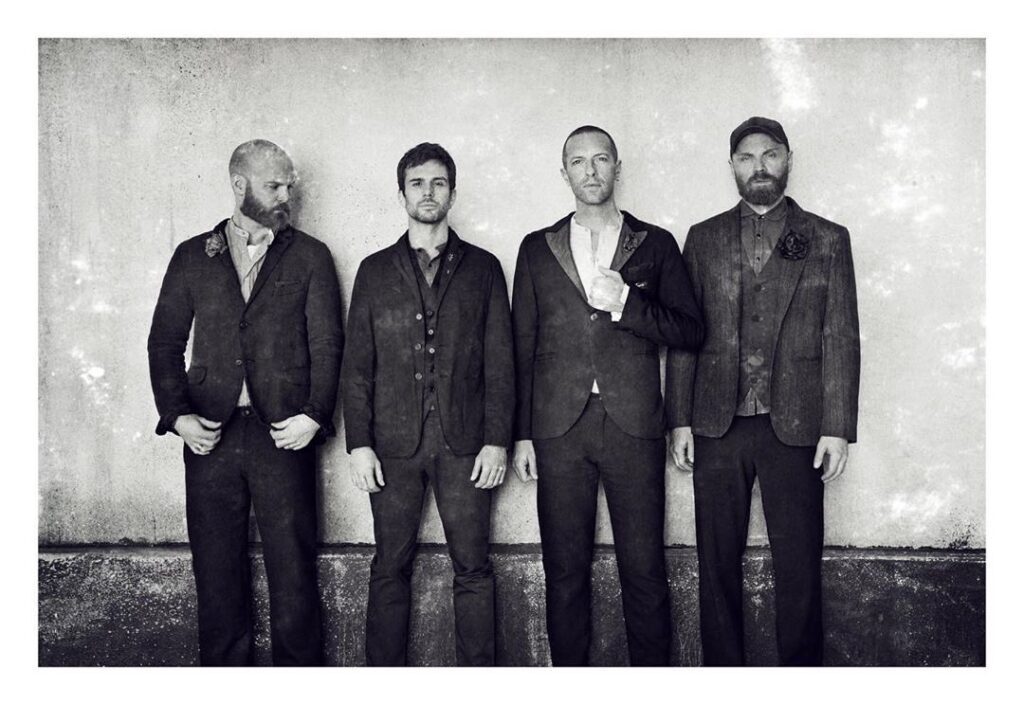
Running at just under 42 minutes, Parachutes (2000) introduced a quieter revolution in British rock. Tracks like Shiver, Trouble, and Sparks built intimacy instead of grandeur. Critics compared them to Radiohead, but fans sensed something warmer—a reachable tenderness.
The production, minimal and unpolished, let Martin’s falsetto float atop Buckland’s tremolo guitar. The result was emotional gravity with pop accessibility—a formula countless indie bands would emulate.
3.2 A Rush of Blood to the Head (2002): Courage and Clarity
Coldplay’s sophomore album turned vulnerability into victory. The Scientist became an anthem for regret; In My Place shouted forgiveness into stadiums. Here the band matured: sharper lyrics, bolder dynamics, richer harmonies.
Rolling Stone hailed it as “a rare case of a second album bigger and better than the first.” The record won the Grammy for Best Alternative Album and cemented Coldplay as the emotional epicenter of early-2000s pop-rock.
3.3 X & Y (2005): The Digital Dawn
If A Rush of Blood to the Head (2002) was human, X & Y (2005) was cosmic. Built on analog synths and textured guitars, it sought infinity. Tracks like Speed of Sound and Talk (which samples Kraftwerk) hinted at the digital age ahead.
Critics were divided—some found it too grandiose—but fans embraced its vastness. The band later admitted X & Y was a lesson in scale: how to balance technology with emotion. That tension would birth their next transformation.
3.4 Viva La Vida or Death and All His Friends (2008): Reinvention with Brian Eno
Working with Brian Eno changed everything. Eno encouraged experimentation, layering ambient sounds, African percussion, and orchestral instruments.
Viva La Vida or Death and All His Friends (2008), with its baroque strings and marching rhythm, redefined what a pop anthem could be—historical yet immediate. The record explored revolution, mortality, and faith, earning multiple Grammys and massive worldwide tours.
4 – Expanding the Universe of Coldplay’s Music (2008 – 2015)
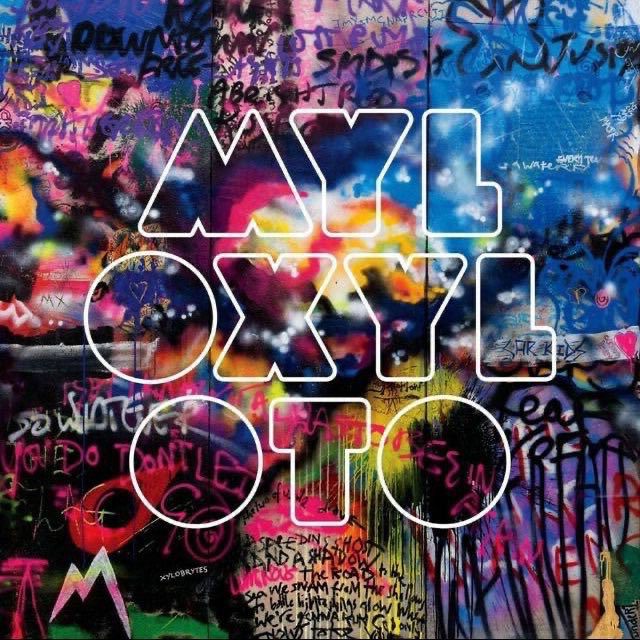
4.1 Mylo Xyloto (2011): A Burst of Color and Concept
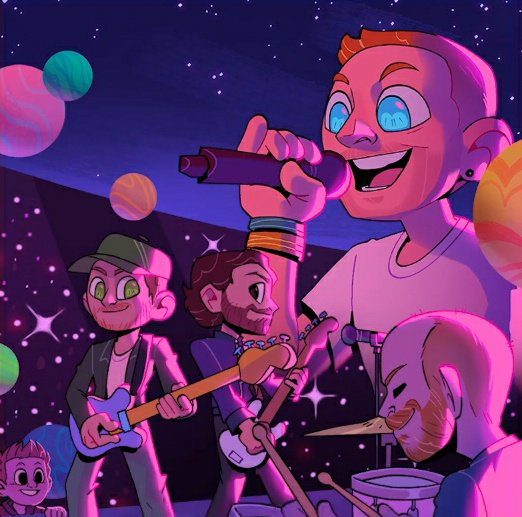
After the introspection of Viva La Vida or Death and All His Friends, Coldplay entered a new era defined by neon optimism. Mylo Xyloto (2011) wasn’t just an album — it was a concept world. The band imagined a dystopian city of silence, where two lovers rebelled through sound and color. It was part music, part mythology.
From the first pulsing synths of Hurts Like Heaven to the ethereal fade of Up with the Birds, the record shimmered with electronic textures, layered guitars, and Chris Martin’s voice soaring like a flare in night sky. Collaborations with Rihanna on Princess of China and continued mentorship from Brian Eno created a fusion of pop immediacy and ambient atmosphere.
Critics initially debated whether Coldplay had gone too “mainstream,” but history proved otherwise. The album became a soundtrack of resilience for a post-recession generation craving color after global grey. Concerts turned into kaleidoscopic spectacles — confetti, LED wristbands, and shared catharsis.“Every Teardrop Is a Waterfall,” Martin sang — a manifesto of turning pain into possibility.
4.2 Ghost Stories (2014): Intimacy After the Storm
If Mylo Xyloto was an explosion, Ghost Stories was a whisper. Following Chris Martin’s public breakup with Gwyneth Paltrow, the band retreated into quiet reflection. Gone were the stadium drums; in came ethereal electronics and emotional transparency.
The songs felt like private confessions caught on tape:
“Magic” — tender and uncertain.
“Midnight” — glacial and hypnotic.
“A Sky Full of Stars” — a collaboration with Avicii that merged heartbreak and hope on a cosmic dance floor.
Each track balanced vulnerability with transcendence. It was as if Coldplay had opened a window into their collective soul, showing that even global icons bleed the same blues.
For Mystic Keys readers, Ghost Stories is the hinge between inner healing and outward celebration — an aural example of music as therapy.
🔗 Read next: BBC Future – The Science Behind Why Music Connects Us
4.3 A Head Full of Dreams (2015): Rebirth in Technicolor
Coldplay’s next chapter erupted with joy. A Head Full of Dreams was an antidote to sorrow — an album built on gratitude, unity, and sonic celebration.
Tracks like “Adventure of a Lifetime”, “Up & Up”, and “Hymn for the Weekend” (featuring Beyoncé) shimmered with life-affirming energy. The record pulsed with optimism and funk influences, produced by pop heavyweight Stargate and Coldplay’s long-time collaborator Rik Simpson.
Behind the scenes, the band nearly split after Ghost Stories. Instead, they chose light over retreat. Chris Martin described the album as “a dream of inclusion — a reminder that everyone is invited to the party.”
Live, this vision became tangible. LED wristbands bathed arenas in color; fans from over 100 countries sang in unison; the shows incorporated biodegradable confetti and low-carbon touring initiatives — setting a new precedent for eco-friendly concerts.🌱 Fun fact: The A Head Full of Dreams Tour grossed over $500 million while pioneering sustainable concert practices — proving conscience and celebration can coexist.
4.4 Sonic Themes: From Earth to Orbit
By 2015, Coldplay had covered nearly every human emotion — introspection, heartbreak, joy, faith, renewal. What came next would take them beyond Earth itself.
Their journey from Parachutes (2000) to A Head Full of Dreams (2015) mirrored the arc of the human condition — from uncertainty to awakening.
The next albums would attempt something even grander: to sing not just to the world, but for it — expanding themes of unity, cosmic wonder, and shared humanity.
🎥 Watch: Coldplay – Up & Up (Official Video)
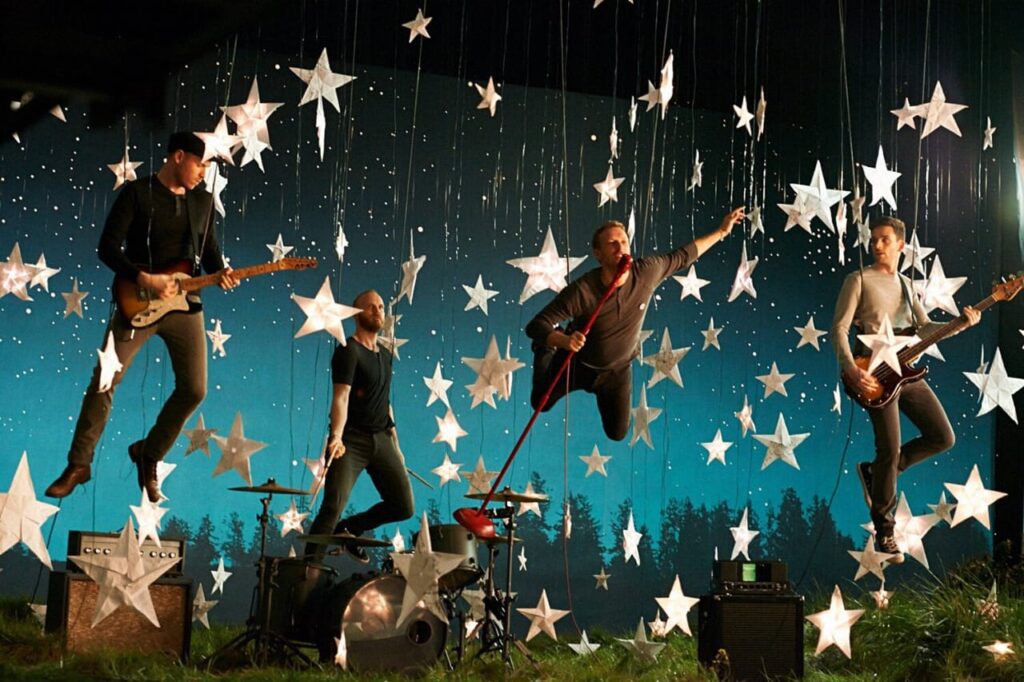
Conclusion: A Symphony Without End
Coldplay’s journey is not just the story of a band — it’s the chronicle of how music evolves alongside the human spirit. From the tender melancholy of Parachutes (2000) to the cosmic optimism of Music of the Spheres (2021), their sound has continuously reflected the pulse of its time — always personal, yet profoundly universal.
Through every phase, they have redefined what it means to feel music:
Emotionally, by reminding us that vulnerability is a strength.
Sonically, by blending organic instruments with cutting-edge technology.
Culturally, by transcending borders and languages to unite millions.
Few bands have managed to evolve without losing their essence. Coldplay did — not by clinging to the past, but by listening to the world around them. Their sound grows with us. It mirrors our heartbreaks, our hopes, and our endless search for meaning.
✨ The Secret to Their Timelessness
At its heart, Coldplay’s music is about connection — the invisible bridge between artist and listener.
Whether it’s a whisper in The Scientist,
a cry in Fix You,
or the celestial lift of Higher Power,
every song carries the same message:
You are not alone.
Their concerts are more than performances — they’re rituals of unity.
In glowing wristbands and shared refrains, strangers become choirs, and cities become symphonies.
Coldplay’s world tours prove that music, when rooted in sincerity, can heal both people and planet.
The Legacy They’re Building
As of 2025, Coldplay’s legacy stands on three enduring pillars:
| Pillar | Meaning |
|---|---|
| Artistic Reinvention | Constant exploration without ego |
| Global Responsibility | Sustainability, inclusivity, and mindful touring |
| Emotional Truth | Songs that outlive charts because they speak to the human condition |
Every chord they strike, every lyric they release, is a reminder that music is not bound by time — it’s bound by feeling.
That’s what makes Coldplay timeless.
They have turned sound into something sacred: a vessel of love, loss, and light.
Intersted in learning music with us? Register now
For more information and exciting resources about learning music, visit our website at The Mystic Keys. For more music content and exciting offers follow us on
Facebook, Instagram, YouTube, LinkedIn, Twitter, Pinterest, and Threads.