Carnatic Vocal Practice | Role of Voice Culture in Better Singing
Carnatic music is often described as a deeply spiritual and disciplined art form, and Carnatic Vocal Practice plays a central role in shaping that discipline into expressive artistry. While listeners usually notice the beauty of ragas, the complexity of gamakas, and the emotional depth of compositions, what truly supports all of these elements is the singer’s voice itself. A trained voice becomes the bridge between musical imagination and musical expression.
Voice culture therefore plays a vital role in shaping a Carnatic vocalist’s journey. It strengthens clarity, improves endurance, enhances tonal richness, and allows singers to explore musical ideas with confidence and control. With thoughtful and consistent practice, voice culture gradually transforms singing from effortful execution into effortless expression.
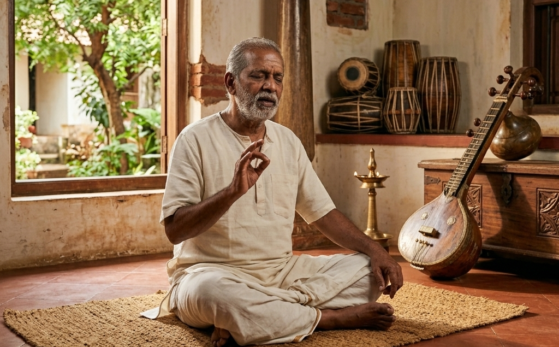
Carnatic Vocal Practice & Understanding Voice Culture
Voice culture refers to the systematic training of the voice so that it functions efficiently, comfortably, and expressively. In Carnatic music, this training is not separate from musical learning. Instead, it grows alongside the study of sruti, laya, and raga bhava.
Unlike casual singing, classical performance demands precision across multiple octaves, sustained phrases, and subtle oscillations within notes. A properly cultivated voice supports these requirements naturally. Over time, the singer learns how to produce sound with stability rather than strain, allowing musical phrases to flow smoothly and confidently.
Such preparation also ensures that the voice remains flexible enough to adapt to the intricate movements characteristic of Carnatic music. As a result, singers gain greater ease in handling both simple exercises and advanced compositions.
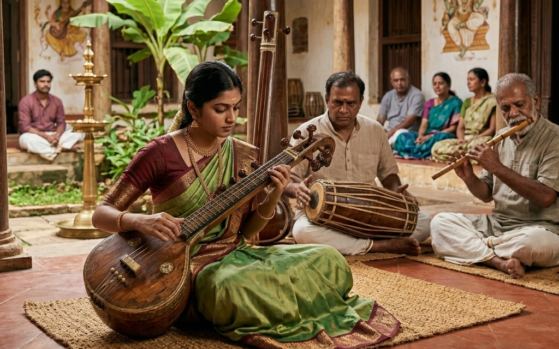
Building a Strong Foundation Through Daily Practice
Consistent vocal practice is the backbone of Carnatic training. Exercises such as sarali varisai, janta varisai, and alankaras may appear simple at first glance, yet they quietly develop essential vocal strength and accuracy.
Through repetition, these exercises help the voice settle into the correct pitch and improve tonal steadiness. Gradually, singers begin to notice improved breath coordination and clearer articulation. The connection between ear and voice becomes stronger, which is crucial for maintaining pitch alignment with the tambura or electronic sruti support.
As practice deepens over time, even complex musical passages begin to feel more approachable. This transformation highlights the importance of patience and discipline in classical training.
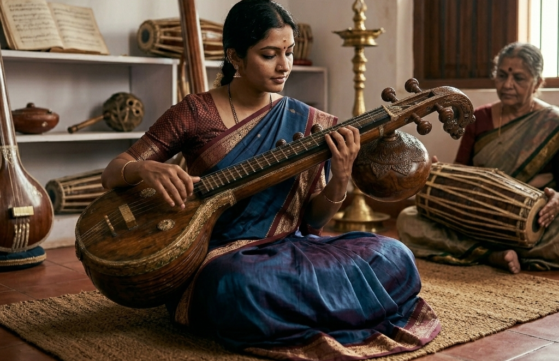
Carnatic Vocal Practice and the Importance of Breath Control in Singing
Breath is the unseen support behind every musical phrase. Without proper breath management, even the most melodious voice may struggle to maintain stability during longer passages.
Voice culture training encourages singers to develop controlled inhalation and steady exhalation. This control makes it easier to sustain notes, execute smooth transitions between phrases, and maintain tonal consistency across registers. Gradually, singers learn how to distribute breath intelligently throughout a composition rather than exhausting it too early.
With improved breathing habits, singing begins to feel more relaxed. Musical ideas can then be expressed with clarity rather than interruption.
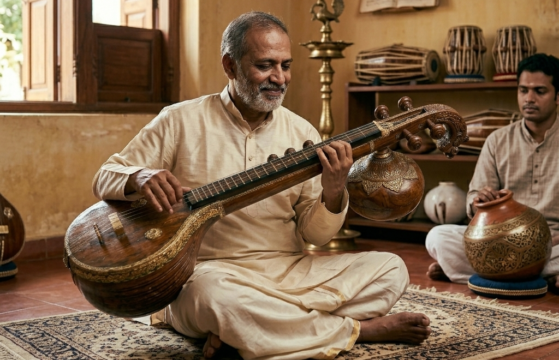
Developing Sruti Alignment and Pitch Stability
Carnatic music places great emphasis on precision in pitch. Singing in alignment with the sruti is not merely a technical requirement; it forms the emotional center of the music itself.
Voice culture strengthens the ability to recognize subtle pitch variations and reproduce them accurately. As listening skills improve alongside vocal control, singers begin to experience a deeper connection with the tonal framework of each raga. The voice gradually learns to settle naturally into pitch instead of searching for it.
This stability allows performers to explore improvisational sections such as alapana and neraval with greater confidence and musical sensitivity.
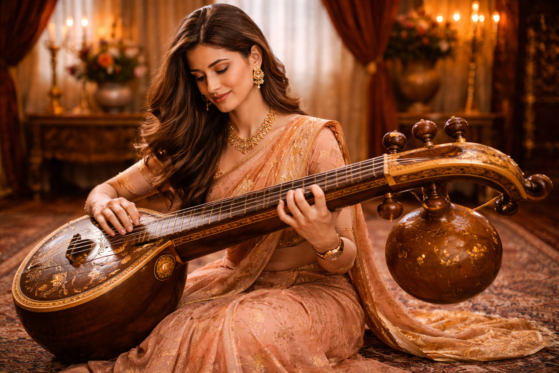
Enhancing Flexibility for Gamakas and Raga Expression
Gamakas are among the defining features of Carnatic music. These delicate oscillations bring life and identity to ragas, transforming plain notes into expressive musical gestures.
Developing flexibility in the voice makes it easier to execute gamakas smoothly and accurately. Voice culture exercises strengthen the muscles involved in controlled movement between notes while maintaining tonal beauty. Over time, the voice becomes capable of responding quickly to subtle shifts required by different ragas.
As flexibility increases, singers find themselves better equipped to communicate the emotional essence of compositions. The connection between technique and expression becomes more natural and intuitive.
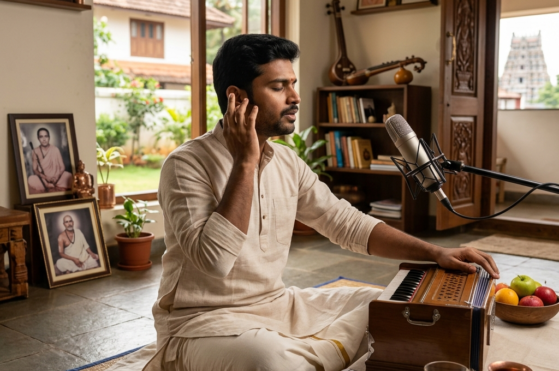
Carnatic Vocal Practice for Expanding Vocal Range with Confidence
A comfortable vocal range allows singers to explore compositions without hesitation. While range expansion should always happen gradually, voice culture provides the tools needed to approach higher and lower notes safely.
Through guided exercises and attentive listening, the voice learns how to transition smoothly between registers. Instead of forcing notes beyond natural limits, singers discover how to support them with proper breath placement and resonance.
This balanced approach ensures that vocal development remains healthy and sustainable. Greater range then becomes a source of freedom rather than tension.
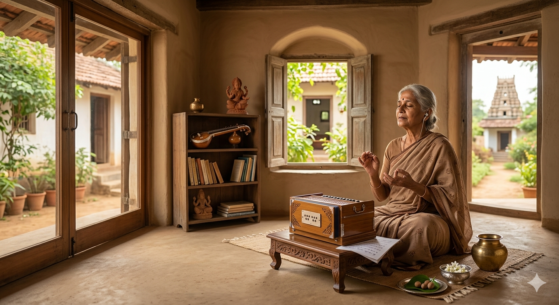
Improving Clarity of Pronunciation and Sahitya Expression
Carnatic music is deeply connected to lyrical expression. Compositions often carry devotional meaning, poetic imagery, and philosophical depth. Clear pronunciation therefore plays an important role in conveying their emotional content.
Voice culture supports articulation by encouraging relaxed jaw movement, proper tongue placement, and steady airflow. As clarity improves, listeners can appreciate both the melody and the meaning of the composition more fully.
When sahitya is delivered with precision and sensitivity, musical storytelling becomes more engaging and memorable.
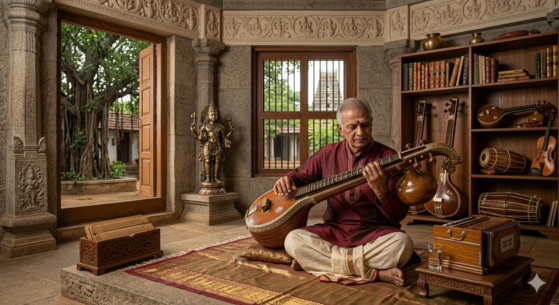
Carnatic Vocal Practice for Building Stamina in Longer Practice and Performance
Carnatic training often involves extended practice sessions and elaborate concert presentations. Without proper voice conditioning, fatigue can limit both learning and performance.
Regular voice culture practice gradually increases vocal endurance. Singers learn how to distribute effort evenly across phrases and maintain tonal quality throughout longer sessions. Over time, this stamina allows musicians to approach concerts with confidence and composure.
Such preparation also reduces the likelihood of strain, supporting long-term vocal health.
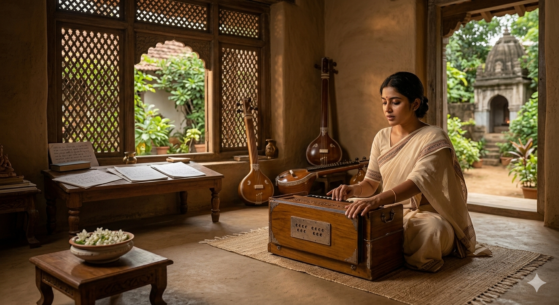
Creating a Mindful Connection Between Body and Voice
Voice culture is not limited to vocal cords alone. Posture, relaxation, and mental focus all contribute to effective singing.
A balanced sitting position supports breathing and resonance. Relaxed shoulders and steady alignment allow sound to travel freely without unnecessary tension. At the same time, attentive listening helps singers remain connected to sruti throughout practice.
This awareness transforms practice sessions into moments of focused musical exploration rather than mechanical repetition.
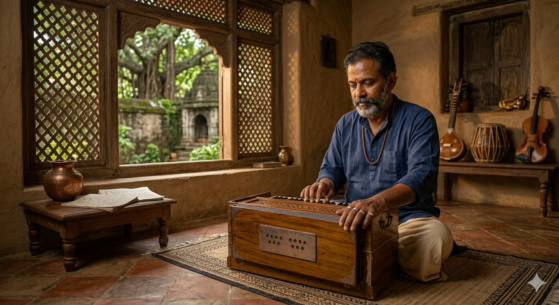
Carnatic Vocal Practice and the Role of Consistency in Long-Term Vocal Growth
Meaningful progress in Carnatic music develops gradually. Voice culture strengthens the voice step by step, shaping both technical ability and musical sensitivity over time.
Even short daily practice sessions can bring noticeable improvement when approached with sincerity. Regular engagement with foundational exercises keeps the voice responsive and stable. Gradually, these small efforts accumulate into lasting confidence and expressive freedom.
Consistency therefore becomes one of the most valuable companions on a musician’s journey.
Conclusion
Carnatic vocal practice is far more than learning compositions or mastering ragas. It involves nurturing the voice so that it becomes a reliable and expressive musical instrument. Voice culture supports every aspect of this process, from pitch accuracy and breath control to flexibility and emotional communication. With structured guidance through Carnatic Vocal Lessons Online at The Mystic Keys, students can develop these essential skills in a supportive and systematic learning environment.
With patience and dedication, singers begin to experience greater comfort, clarity, and confidence in their music. Over time, the voice evolves into a powerful medium for artistic expression and spiritual connection. Through thoughtful practice and guided training, voice culture continues to remain an essential foundation for every aspiring Carnatic vocalist, and platforms like The Mystic Keys help make this journey accessible to learners across different age groups and locations.
For more information and exciting resources about learning music, visit our website at The Mystic Keys. For more music content and exciting offers follow us on
Facebook, Instagram, YouTube, LinkedIn, Twitter, Pinterest, and Threads.