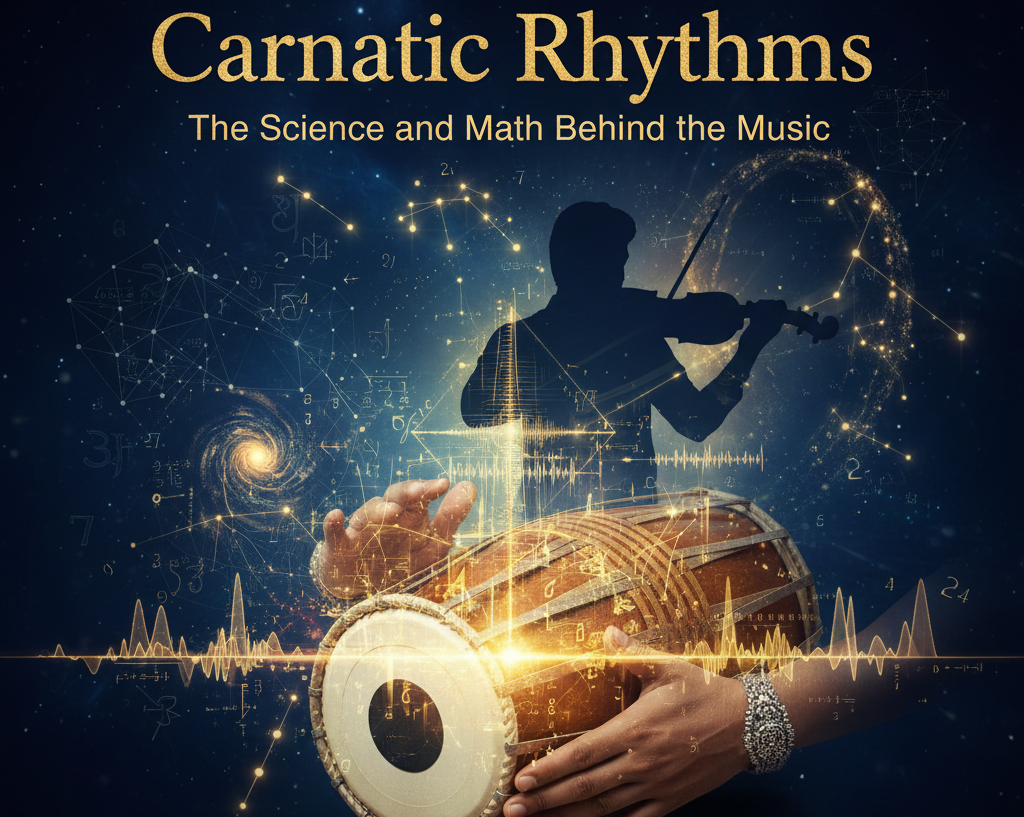
Carnatic Rhythms | The Science and Math Behind the Music
People often experience Carnatic rhythms as instinctive and spiritual, yet its foundation relies on one of the most mathematically refined systems in the world. Beneath its expressive surface, the music follows a precise language of numbers, cycles, and timing. Interestingly, these same principles also reveal how motivation works—not as a sudden burst of inspiration, but as a disciplined, rhythm-driven process shaped by consistency and structure.
By exploring the science and math behind this rhythmic system, we can see how music mirrors the ways the human mind learns, focuses, and sustains motivation over time.
Carnatic Rhythms as a Mathematical Framework of Order
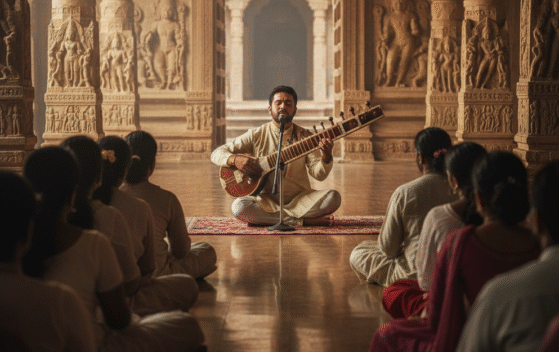
Musicians build Carnatic rhythms on tala, a cyclical system that organizes time into clearly defined patterns. They construct each tala using specific counts and subdivisions, forming a repeating structure that anchors the music. While listeners experience this as seamless flow, performers remain constantly aware of the precise numerical relationships beneath the surface.
This mathematical organization stabilizes the music. The brain naturally seeks patterns, and when it recognizes a rhythmic cycle, it feels oriented and in control. Motivation works in the same way. When we structure our efforts—through routines, schedules, and measurable progress—our minds feel secure enough to engage deeply. Chaos drains motivation, but rhythmic order sustains it.

The Neuroscience Behind Listening to Carnatic Rhythms
Listening to Carnatic rhythms engages the brain’s prediction and reward systems. As the tala cycle repeats, the brain actively anticipates rhythmic resolutions. Each correct anticipation strengthens neural connections and triggers dopamine release, sharpening attention and deepening engagement.
Carnatic percussion deliberately delays or reshapes these expectations before resolving precisely on the samam. This resolution delivers intense psychological satisfaction. Motivation operates through the same neurological process. When progress unfolds in predictable stages, the brain remains engaged and committed. The true reward lies not only in achievement, but in the rhythmic anticipation of growth itself.
Korvais in Carnatic Rhythms and the Psychology of Planning
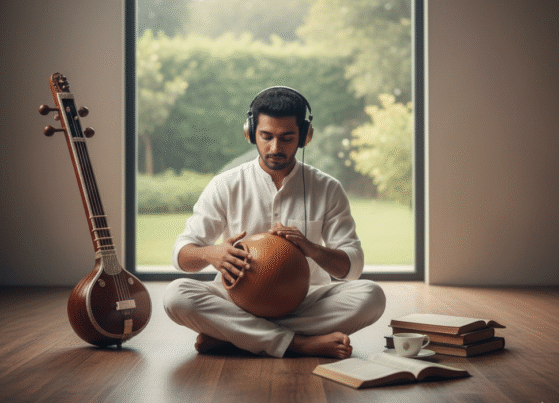
Korvais represent one of the most intricate mathematical aspects of Carnatic rhythms. These rhythmic compositions rely on careful calculation—phrases are repeated, expanded, or compressed so that they land precisely on the samam. A single miscalculation can disrupt the entire structure.
This disciplined planning closely resembles how motivation operates in real life. Long-term motivation requires foresight, adjustment, and an understanding of how small efforts accumulate. Just as a korvai demands alignment between creativity and calculation, sustainable motivation depends on balancing vision with realistic, consistent action.
Laya and the Human Sense of Time
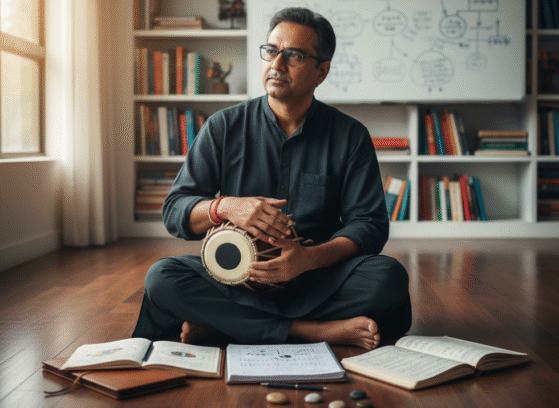
Laya, or tempo, actively shapes how Carnatic rhythms move through time. Musicians train rigorously to absorb tempo so completely that they no longer rely on external counting. This strong internal sense of time helps them maintain precision even while navigating complex improvisations.
Psychologically, humans also perform best when they honor natural pacing. Rushing or forcing effort weakens motivation, while stagnant progress causes it to fade. Carnatic rhythms actively cultivate patience and timing, encouraging steady progress without losing control. True motivation emerges when effort flows in harmony with time rather than working against it.

Discipline, Freedom in Creative Growth
One of the most striking features of this music is that improvisation becomes possible only after the underlying structure is firmly internalized. Creative freedom does not happen by accident; musicians earn it through discipline and repetition.
Motivation follows the same principle. Waiting for inspiration often leads to inconsistency, but when disciplined routines take hold, resistance diminishes and creativity flows naturally. This music shows that structure does not restrict expression—it enables it. Similarly, disciplined habits do not suppress motivation; they sustain it.

Why Carnatic Rhythms Feel Alive, Not Mechanical
Despite their mathematical precision, Carnatic rhythms remain fluid and expressive. Musicians shape emphasis, tone, and timing with subtle variations that add emotional depth to the structure. This balance between precision and expression keeps the rhythm alive rather than mechanical.
Motivation also thrives when emotion works alongside structure. Discipline without meaning drains energy, while emotion without structure creates inconsistency. Carnatic rhythms clearly show how logic and feeling can operate together, producing both stability and vitality.
Conclusion | Carnatic Rhythms as a Blueprint for Motivation
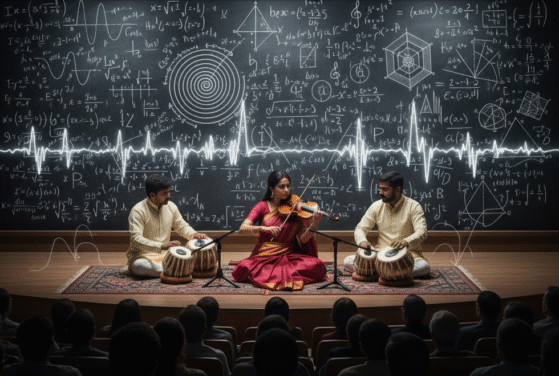
The science and math behind Carnatic rhythms reveal far more than musical sophistication; they show us how the human mind sustains focus and motivation. Rhythm teaches us to recognize progress as cyclical, align effort with time, and use discipline as a path to freedom.
At The Mystic Keys, this understanding shapes the approach to Carnatic Vocal Lessons Online, where students learn not only compositions but also the rhythmic discipline that builds focus, patience, and long-term motivation. Just as musicians resolve Carnatic rhythms through patience and precision, learners develop motivation through consistent, well-timed practice. When we learn to stay in rhythm—whether in music or in life—growth becomes not just possible, but inevitable.
For more information and exciting resources about learning music, visit our website at The Mystic Keys. For more music content and exciting offers follow us on
Facebook, Instagram, YouTube, LinkedIn, Twitter, Pinterest, and Threads.