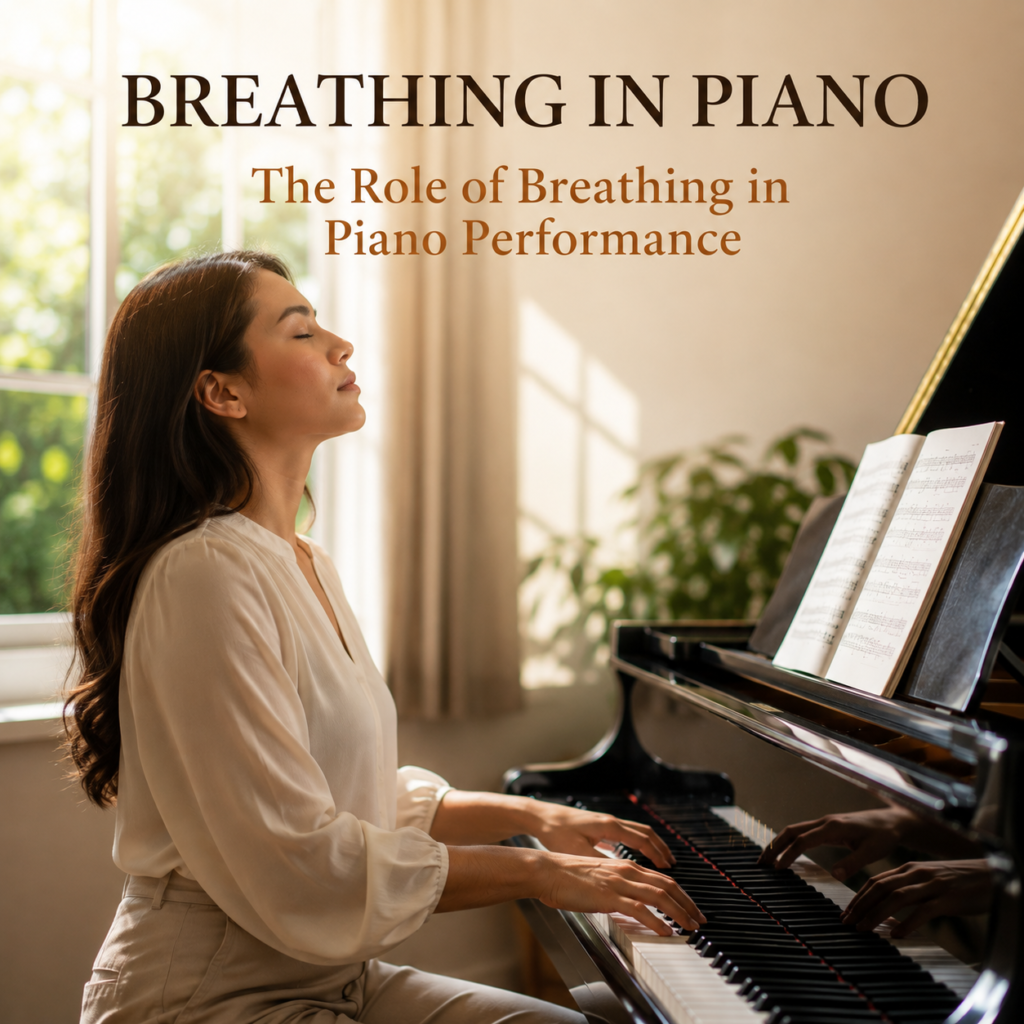
Breathing in Piano | The Role of Breathing in Piano Performance
When we think about piano technique, our minds usually go straight to finger placement, scales, chords, posture, dynamics, and rhythm. However, there is another essential element that often goes unnoticed: breathing in piano performance. Although the piano is not a wind instrument, the way a pianist breathes can have a significant influence on relaxation, posture, phrasing, timing, concentration, and musical expression. In fact, breathing in piano can help create a natural connection between the pianist, the instrument, and the music, allowing each phrase to feel more fluid, intentional, and expressive.
Although the piano is not a wind instrument, breathing plays a surprisingly important role in how a pianist performs. The way you breathe can influence your posture, relaxation, phrasing, timing, concentration, and even the emotional quality of your music. A pianist who learns to breathe naturally can often play with greater freedom and musical expression.
In fact, breathing can become an invisible connection between the pianist and the music. It helps the body stay relaxed while giving the mind a moment to listen, anticipate, and respond.
Why Is Breathing Important for Pianists?
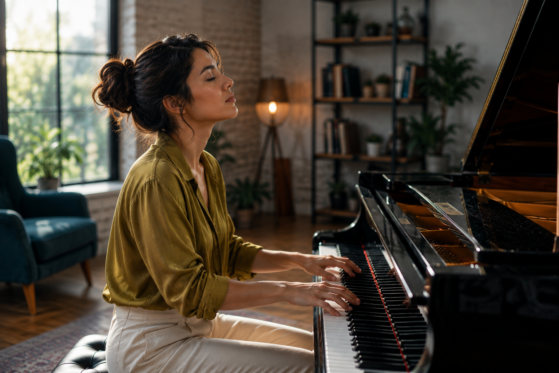
Playing the piano involves much more than moving the fingers. Your entire body participates in the performance. The shoulders, arms, wrists, back, neck, and even facial muscles can become involved, particularly during demanding passages.
When a pianist becomes nervous or overly concentrated, breathing may become shallow or irregular. Some players even unconsciously hold their breath while playing difficult sections. As a result, unnecessary tension can build up in the shoulders, arms, and hands.
On the other hand, natural breathing encourages relaxation. As the body becomes more comfortable, the hands and arms can move more freely. This becomes especially valuable when playing fast passages, expressive melodies, large chords, or technically challenging pieces.
Therefore, breathing should not be treated as something separate from piano technique. Instead, it can become part of the technique itself.
Breathing and Relaxation at the Piano
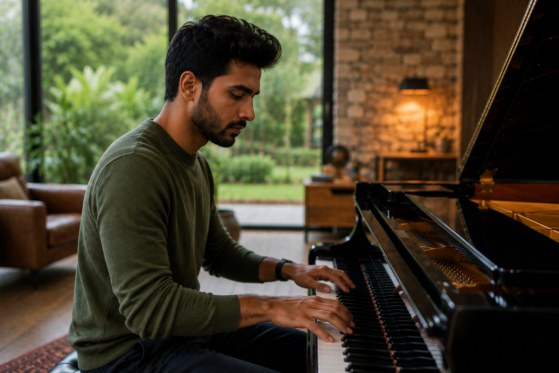
One of the biggest benefits of conscious breathing is its ability to reduce physical tension.
Imagine sitting down to play a difficult piece. You know that a challenging passage is coming, so your body automatically prepares for it. Your shoulders may rise slightly, your jaw may tighten, and your fingers may become more rigid. Without realizing it, you might even stop breathing for a moment.
That tension can make the passage more difficult than it actually is.
A slow, natural breath can interrupt this cycle. As you inhale, you become more aware of your body. When you exhale, the shoulders and arms can release unnecessary tension. Consequently, your fingers can approach the keys with greater freedom.
This does not mean taking exaggerated breaths throughout a performance. The goal is simply to maintain natural, continuous breathing rather than unconsciously holding your breath.
Breathing in Piano and Musical Phrasing
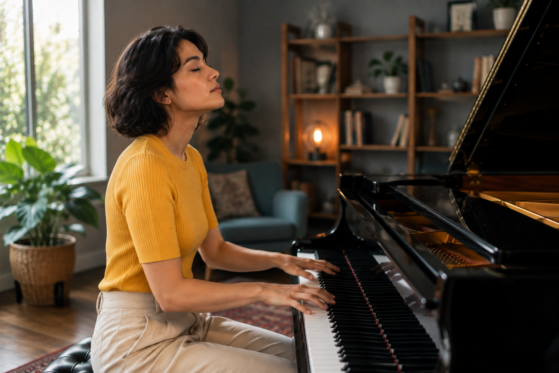
Breathing is also closely connected to musical phrasing.
Think about a singer performing a beautiful melody. A singer naturally breathes between musical phrases because the breath helps define the shape and direction of the music. Although pianists do not need to breathe to produce sound, they can use the same musical principle.
A pianist can imagine where a musical phrase would naturally breathe. Before beginning a phrase, a gentle inhalation can create a sense of preparation. As the phrase unfolds, the pianist can imagine releasing the breath toward the musical destination.
This approach can make melodies feel more natural and expressive.
For example, when playing a lyrical passage, imagine yourself singing the melody internally. Where would you breathe if you were singing it? Where would the phrase naturally rise, pause, or resolve?
Once you begin thinking this way, musical phrases can become less mechanical. Instead of simply playing a series of notes, you begin to communicate a musical thought.
Breathing and Rhythm
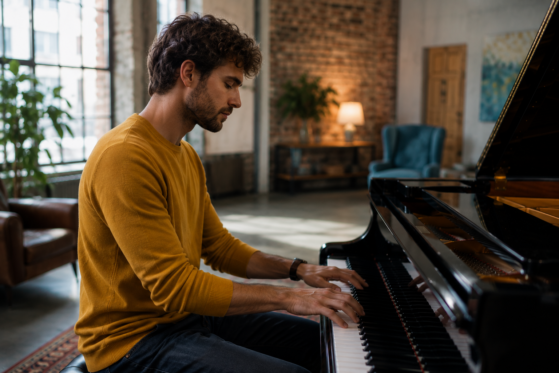
Breathing can also support a pianist’s sense of rhythm.
A steady breath creates a natural feeling of continuity. It can help prevent the performance from becoming stiff, particularly during slower music where timing and phrasing are closely connected.
During repetitive rhythmic patterns, breathing can provide an internal sense of movement. Rather than feeling that every note must be individually controlled, the pianist can experience the passage as a flowing musical gesture.
Furthermore, breathing can help during moments of silence. A rest is not necessarily an empty space in music. It can be a moment of anticipation, reflection, or preparation.
Taking a natural breath during or around such a moment can help the pianist maintain the musical pulse instead of mentally stopping.
Breathing in Piano Before You Begin Playing
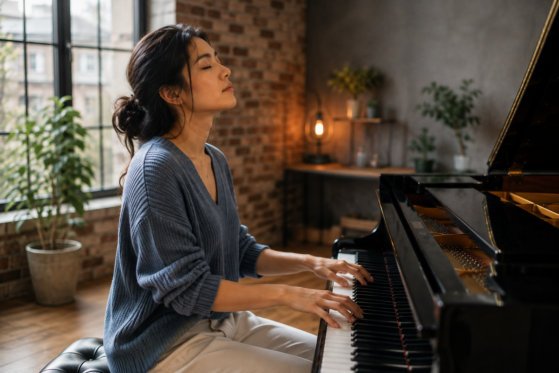
Breathing can be particularly useful even before the first note is played.
Many performance problems begin before the music actually starts. A pianist may sit down feeling nervous, immediately place their hands on the keyboard, and begin playing without giving themselves a moment to settle.
A simple breath can change that experience.
Before starting, allow yourself a moment to sit comfortably. Take a calm breath, release unnecessary tension, and listen internally to the first phrase. Imagine the tempo and character of the opening before touching the keys.
Then begin.
This small pause can create a clear transition between everyday distractions and focused musical performance.
Breathing During Difficult Passages
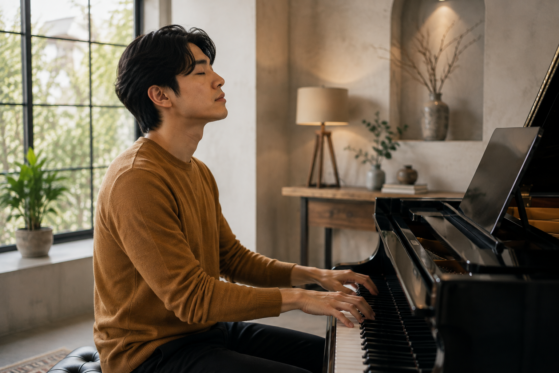
Technical passages often create the greatest temptation to hold the breath.
When the fingers have to move quickly, the brain becomes highly focused on accuracy. As the difficulty increases, the body may respond by becoming tense. Breathing can become shallow, and the pianist may try to control every movement with excessive effort.
Instead, try connecting the breath to the structure of the passage.
A pianist might take a natural breath before a difficult run and allow the exhalation to accompany the movement. Longer phrases can be divided into manageable musical sections, with comfortable breathing points between them.
The objective is not to create a strict breathing pattern. Rather, it is to prevent the body from becoming rigid while the mind concentrates on technique.
With regular practice, this can make demanding passages feel more fluid and less physically exhausting.
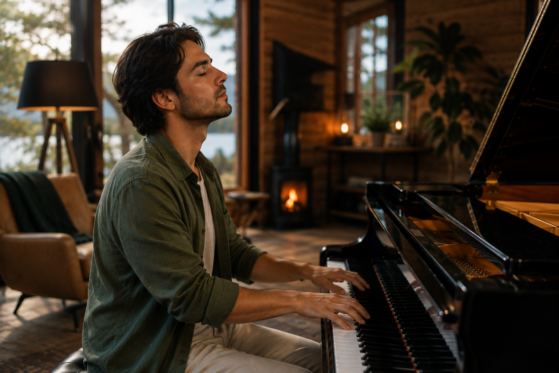
Breathing in Piano and Piano Dynamics
Dynamics are another area where breathing can influence expression.
A crescendo, for instance, can be imagined as a musical expansion. A gentle inhalation can create a feeling of preparation and openness, while the phrase can then move toward its emotional peak.
Similarly, an expressive diminuendo can feel like a gradual release.
This does not mean that breathing physically controls volume. Instead, it provides the pianist with an internal image that can influence musical intention.
As a result, dynamics become more than markings on a page. They become part of the emotional movement of the phrase.
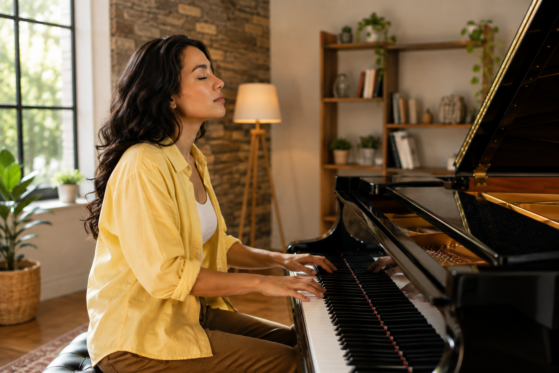
Breathing Helps With Performance Anxiety
Performance anxiety can affect pianists at every level. Even experienced performers may experience nervousness before playing in front of others.
One common response to anxiety is rapid or shallow breathing. Unfortunately, this can increase physical tension and make concentration more difficult.
A few calm breaths before performing can help create a greater sense of control. Rather than thinking, “I must not make a mistake,” the pianist can focus attention on breathing, posture, sound, and the first musical phrase.
During the performance, returning attention to natural breathing can also help if nervousness begins to appear.
Of course, breathing alone does not eliminate performance anxiety. However, it can provide a simple physical anchor that brings the pianist back into the present moment.
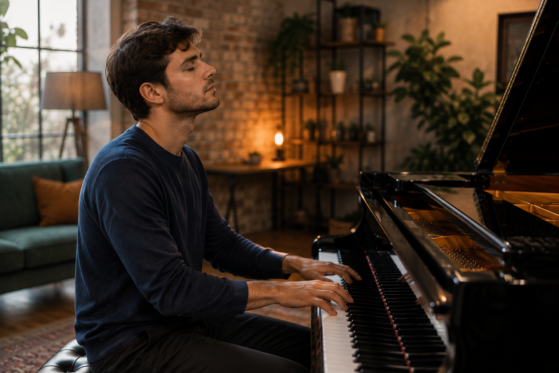
Breathing in Piano and Body Coordination
Good piano playing depends on coordination between different parts of the body. The fingers may perform the most visible movements, but the larger muscles of the arms and torso contribute significantly to efficient playing.
Breathing encourages awareness of this whole-body coordination.
When the breath is relaxed, the pianist may notice unnecessary tension more easily. A raised shoulder, clenched jaw, stiff wrist, or rigid forearm becomes easier to recognize and release.
Over time, this awareness can help develop a healthier relationship between movement and sound.
Instead of forcing the fingers to produce every musical effect, the pianist can allow movement to travel naturally through the body and into the keyboard.
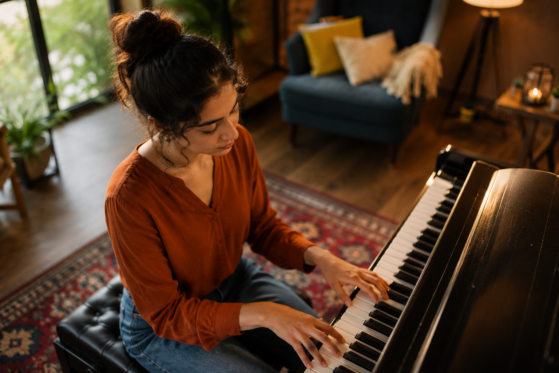
Breathing Can Improve Musical Expression
Technical accuracy is important, but expressive piano playing requires something beyond correct notes.
Music needs direction.
Breathing can help create that direction because it naturally encourages the pianist to think in phrases rather than isolated notes. A melody can have a beginning, a rise, a peak, and a release, much like a spoken sentence.
When the pianist mentally breathes with the music, these elements can become clearer.
A phrase may feel as though it is asking a question. Another may sound like an answer. Some passages may need space, while others should move forward without interruption.
Consequently, breathing becomes a tool for musical storytelling.
How to Practice Breathing in Piano
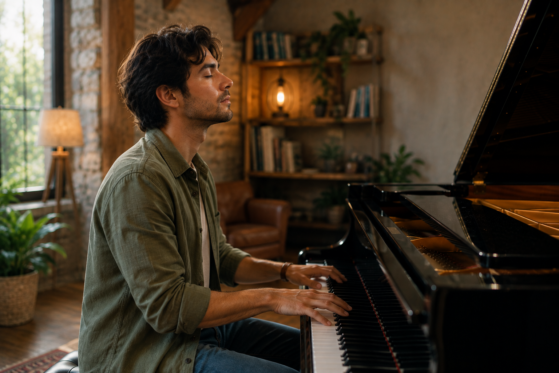
Breathing awareness does not require a complicated exercise routine. It can be incorporated into regular piano practice.
Begin by sitting comfortably at the instrument and noticing your natural breathing. Play a simple scale slowly while keeping your breathing relaxed. Then try a familiar melody and identify natural points where the musical phrase seems to breathe.
Afterward, play the same passage again while consciously avoiding breath-holding.
For more advanced practice, choose a piece you are currently learning. Mark the beginnings, climaxes, releases, and natural pauses in the phrases. Then experiment with imagining an inhalation before important musical ideas and an exhalation as the phrase moves forward.
The purpose is not to make breathing noticeable to the audience. Ideally, it becomes so natural that it quietly supports the performance without distracting from it.
Breathing, Listening, and Musical Awareness
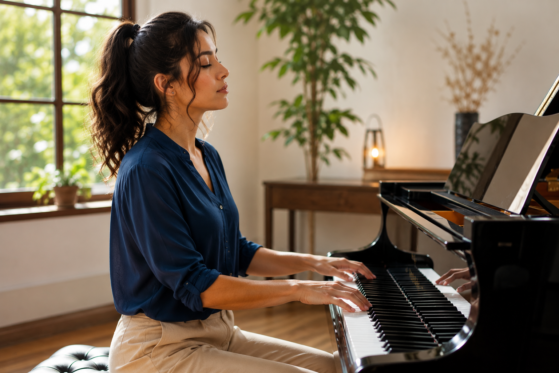
Perhaps the most interesting connection is between breathing and listening.
When pianists rush through a piece, they sometimes focus almost entirely on producing the correct notes. Breathing can encourage them to slow down internally and listen more carefully.
A calm breath creates a tiny space between intention and action. Within that space, the pianist can hear the sound, anticipate the next phrase, and respond more musically.
As a result, breathing can support not only physical relaxation but also active listening.
The pianist is no longer simply executing instructions written on the page. Instead, they are continuously listening and responding to the music.
Breathing in Piano Does Not Mean Playing Slowly
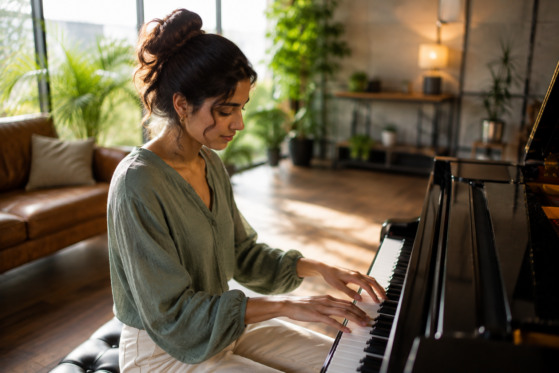
It is important to understand that breathing does not mean slowing down every performance.
Fast music can still involve natural and continuous breathing. In fact, maintaining relaxed breathing during fast playing can help prevent unnecessary tension.
The key is flexibility.
A rapid scale, energetic arpeggio, or virtuosic passage may require different physical coordination from a slow lyrical melody. Nevertheless, the underlying principle remains the same: avoid unnecessary breath-holding and allow the body to remain responsive.
The breath should support the music rather than dictate it.
Common Breathing Mistakes Pianists Make
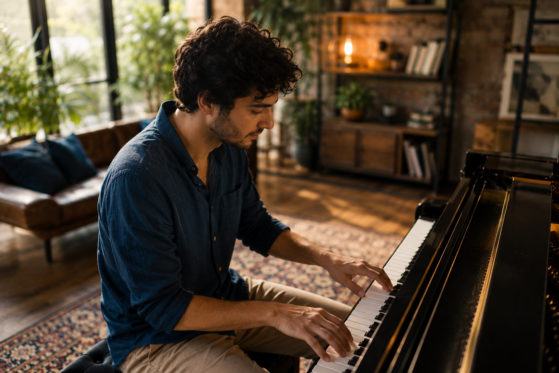
One of the most common mistakes is unconsciously holding the breath during difficult sections. Another is taking overly large or deliberate breaths that feel unnatural.
Some pianists also become so focused on breathing that it turns into another task they believe they must control. That approach can create more tension rather than less.
Instead, breathing should gradually become automatic.
Start by noticing it. Then connect it to musical phrases. With consistent practice, the awareness can become part of your normal playing without requiring constant conscious attention.
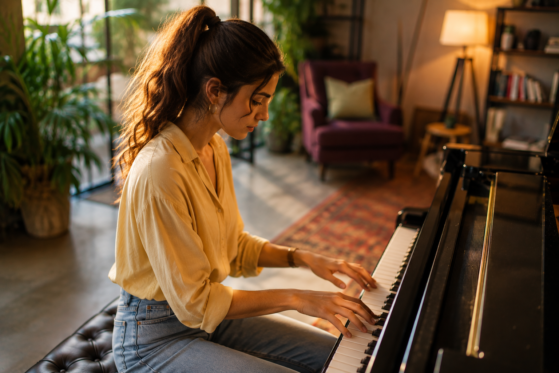
A Simple Breathing in Piano Exercise
Before your next practice session, sit quietly at the piano for a moment.
Take a comfortable breath and allow your shoulders to remain relaxed. As you exhale, release any tension you notice in your hands, arms, neck, or jaw.
Now play a very simple melody.
Rather than focusing only on the notes, imagine that you are singing the melody. Notice where the musical line naturally seems to inhale, move forward, reach a high point, and release.
Repeat the passage once more. This time, allow your breathing to follow the musical shape without deliberately forcing it.
You may notice that the melody begins to feel more connected and expressive.
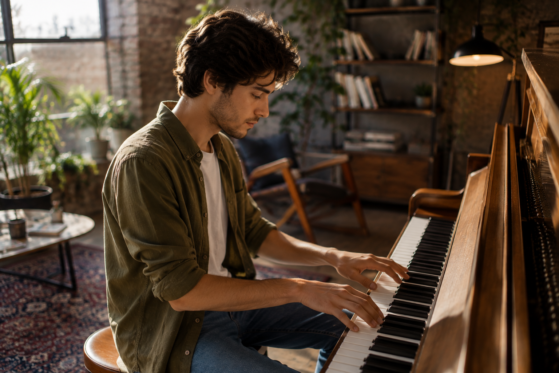
Final Thoughts | Let the Music Breathe
Breathing may seem like a small detail in piano playing, yet it can influence almost every aspect of a performance—from relaxation and posture to rhythm, phrasing, concentration, and expression. The pianist’s fingers may create the notes, but the body gives those notes movement, direction, and life.
By learning to breathe naturally, you can reduce unnecessary tension, approach difficult passages with greater freedom, and develop a stronger sense of musical phrasing. More importantly, breathing can help you move beyond simply playing the notes and toward communicating the musical ideas and emotions behind them.
At The Mystic Keys, piano lessons online go beyond learning notes and techniques. A well-rounded approach to piano playing also encourages students to develop musical awareness, expression, confidence, and a natural connection with the instrument.
So, the next time you sit at the piano, don’t focus only on your fingers. Take a breath, listen to the music, feel the phrase, and allow your playing to flow naturally.
Take a breath. Listen. Feel the phrase. And let the music breathe with you.
For more information and exciting resources about learning music, visit our website at The Mystic Keys. For more music content and exciting offers follow us on
Facebook, Instagram, YouTube, LinkedIn, Twitter, Pinterest, and Threads.