Basic Guitar Chords for Beginners
Learning basic guitar chords is one of the most important first steps for anyone starting the guitar. Chords allow you to accompany songs, play with other musicians, and begin understanding how harmony works on the instrument. The good news is that you do not need to learn dozens of chords before you can start playing music. A small collection of common open chords can already allow a beginner to play hundreds of songs.
When you first pick up a guitar, chord shapes can feel uncomfortable. Your fingers may struggle to stretch across the fretboard, some strings may buzz, and changing from one chord to another may seem surprisingly slow. This is completely normal. Your fingers are developing new coordination, strength, and muscle memory.
The key is to start with a manageable group of basic guitar chords, practice them consistently, and gradually learn how to move between them smoothly.
Why Learn Basic Guitar Chords First?
Chords are the foundation of rhythm guitar and accompaniment.
Instead of playing individual notes, chords allow you to produce several notes together and create the harmonic foundation of a song.
Chords Help You Play Songs Quickly
One of the biggest advantages of learning beginner chords is that you can start playing recognizable songs relatively early.
Many popular songs use a small number of recurring chord progressions.
Once you know several common chords, you can begin experimenting with different combinations.
Understanding Basic Guitar Chords Diagrams
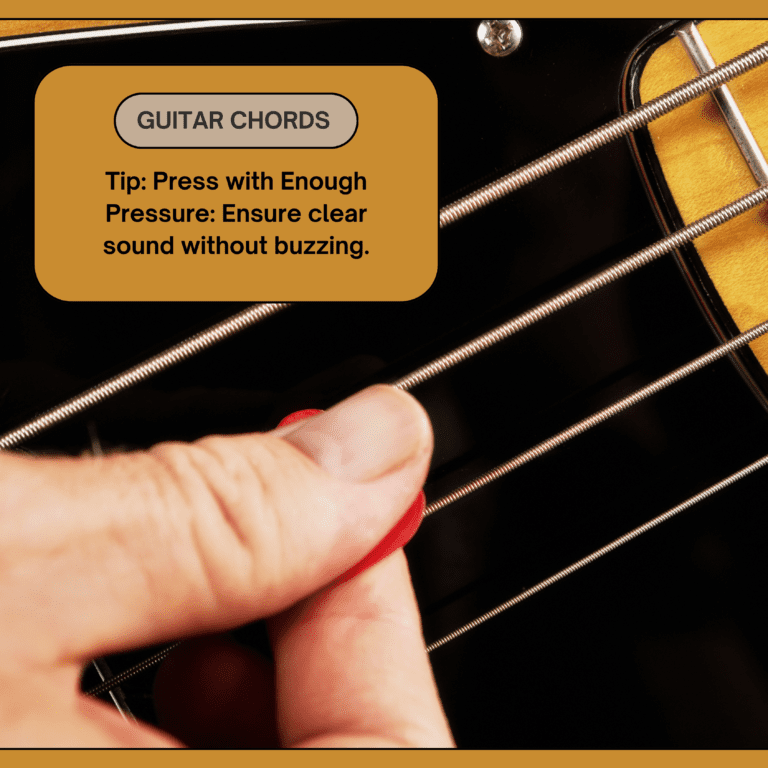
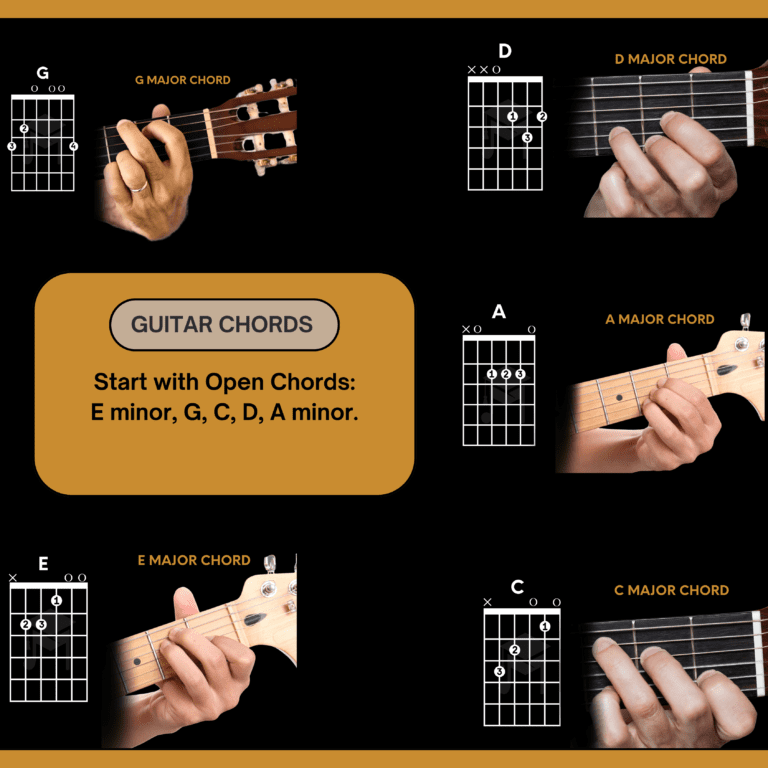
Before learning individual chords, it helps to understand how chord diagrams work.
A chord diagram represents a small section of the guitar neck.
What the Symbols Mean
Typically:
- Vertical lines represent the guitar strings.
- Horizontal lines represent frets.
- Dots show where fingers should be placed.
- An X means the string should not be played.
- An O means the string is played open.
The thickest string is usually shown on the left in many chord diagrams, representing the low E string.
Take a moment to understand the diagram before placing your fingers on the guitar.
E Minor Chord
Em is one of the easiest beginner chords and is an excellent place to start.
It has a simple shape and uses open strings, making it relatively comfortable for new players.
Why Em Is a Great First Chord
Em is useful because it requires only a couple of fretting fingers.
Practice placing your fingers down together rather than one at a time.
Then strum slowly across the strings.
Listen carefully to make sure each note sounds clear.
A Minor Chord
Am is another essential beginner chord.
It is common in many songs and introduces a slightly more complex finger arrangement.
Practice Am Slowly
Place your fingers carefully and strum one string at a time initially.
Check whether every note rings clearly.
If a string sounds muted, adjust your finger position rather than pressing excessively hard.
C Major Chord
The C major chord is one of the most important basic guitar chords.
It appears in countless songs and chord progressions.
C Major Requires Finger Coordination
Beginners often find C major slightly challenging because the fingers need to occupy different strings and frets.
Do not worry if the shape feels awkward initially.
Practice forming the shape, releasing it, and forming it again.
The goal is to make the movement increasingly automatic.
G Major Chord
G major is another essential chord for beginners.
It is particularly useful because it appears in many common song progressions.
Practice G With Patience
There are different ways to finger a G chord.
Your teacher may introduce the version that best suits your current level and the songs you want to play.
Focus on producing a clean sound before worrying about playing quickly.
D Major Chord
The D major chord has a compact shape and is another extremely useful beginner chord.
It frequently appears alongside G, A, and other common chords.
Keep Your Fingers Curved
When playing D major, try to keep your fingers curved so they do not accidentally touch neighboring strings.
Play the strings individually at first.
Once the chord sounds clean, practice strumming it rhythmically.
A Major Chord
A major is another important chord shape.
Beginners sometimes find it difficult because several fingers need to fit into a relatively small space.
Don’t Squeeze the Neck Too Hard
You do not need to grip the guitar neck with excessive force.
Place your fingers close to the frets while keeping your hand relaxed.
A relaxed hand generally makes chord changes easier.
E Major Chord
The E major chord is an important open chord and a useful foundation for learning additional guitar shapes.
Listen for Clear Notes
Play each string individually after forming the chord.
If one note is muted, identify which finger is causing the problem.
Small adjustments can make a significant difference.
The Most Useful Beginner Basic Guitar Chords
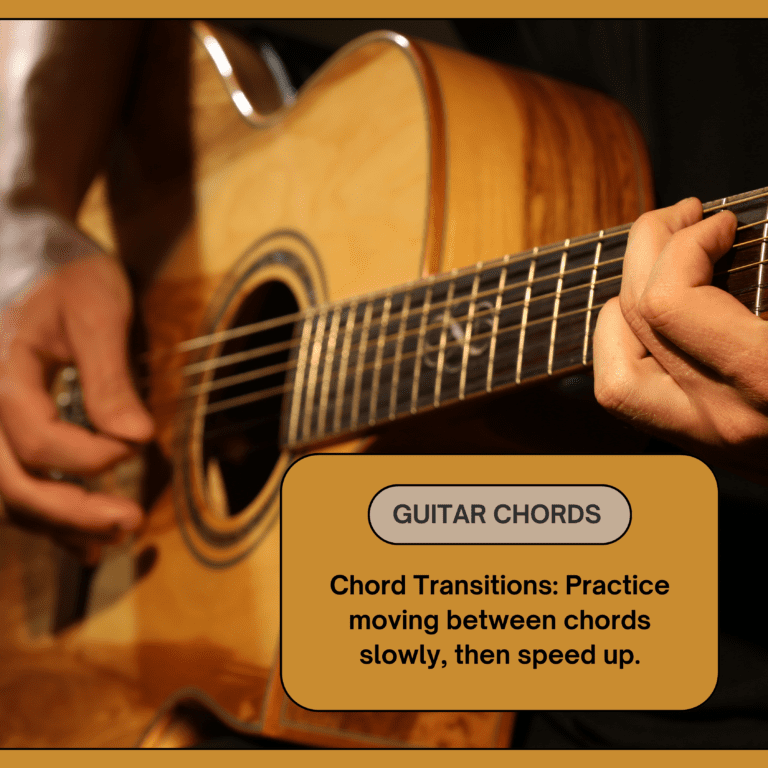
Once you are comfortable with the individual shapes, focus on these common chords:
- C major
- G major
- D major
- A major
- E major
- A minor
- E minor
These chords provide an excellent starting vocabulary for a beginner guitarist.
Practice Basic Guitar Chords Changes
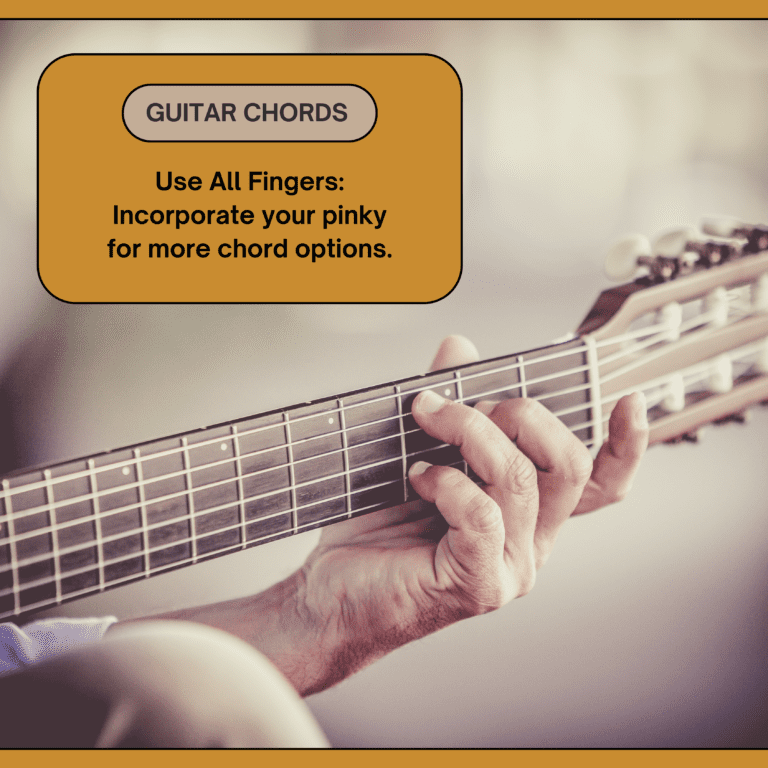
Knowing individual chords is only the first step.
The real challenge begins when you need to move between them.
Start With Two Chords
Choose two chords.
For example:
G → C
Practice switching between them slowly.
Do not worry about rhythm initially.
Form the first chord, release it, move to the second, and repeat.
Gradually Increase Your Speed
Once the movement becomes comfortable, introduce a steady strumming pattern.
Use a metronome if appropriate.
Increase the tempo only when you can maintain accuracy.
Develop Finger Strength Naturally
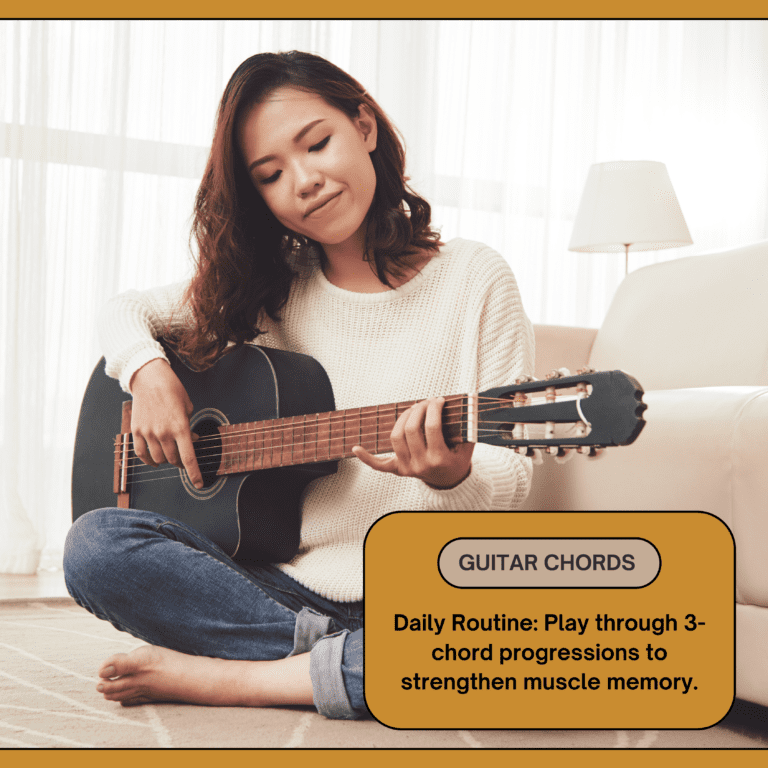
You do not need extreme finger-strength exercises to begin learning chords.
Regular playing gradually develops the coordination and endurance required.
Focus on Technique
Correct finger placement is generally more useful than simply trying to squeeze harder.
Keep your wrist comfortable and avoid unnecessary tension.
If you experience persistent pain, stop and seek appropriate guidance rather than pushing through it.
Learn Barre Chords Later
Barre chords are extremely useful, but beginners do not necessarily need to start with them.
Open chords provide a much more accessible foundation.
Build Your Foundation First
Once you are comfortable with open chords, rhythm, and chord changes, you can gradually introduce barre chords.
This gives you access to movable chord shapes across the fretboard.
Practice Basic Guitar Chords Every Day
You do not need to practice for hours.
A short daily session can be highly effective.
A Simple 15-Minute Routine
5 minutes: Review individual chords.
5 minutes: Practice two or three chord changes.
5 minutes: Play a simple song or progression.
Consistency is more important than occasional marathon practice sessions.
Learn to Listen While Playing
Guitar technique is only one part of musicianship.
Train your ears at the same time.
Listen for Rhythm and Tone
Ask yourself:
Is the rhythm steady?
Are the chord changes clean?
Is the strumming too loud?
Does the progression sound musical?
Developing this awareness will help you become a better guitarist rather than simply someone who knows chord shapes.
Conclusion
Learning basic guitar chords gives beginners the foundation they need to start playing real music. Chords such as C, G, D, A, E, Am, and Em can open the door to countless songs and provide the starting point for developing rhythm, harmony, coordination, and confidence.
Do not worry if your first chord shapes sound imperfect. Buzzing strings, slow transitions, and awkward finger movements are normal at the beginning. Focus on placing your fingers correctly, keeping your hand relaxed, practicing slowly, and gradually connecting individual chords into musical progressions.
Most importantly, use your new chords in actual songs. Playing music you enjoy gives your practice a clear purpose and makes the learning process much more rewarding.
At The Mystic Keys, personalized Guitar Lessons Online help beginners build strong foundations in chords, strumming, rhythm, technique, music theory, and song playing. With guidance from experienced teachers, students can learn at their own pace while developing the skills and confidence needed to enjoy guitar for years to come.