
How Parents Can Support Their Child's Music Practice at Home
Introduction
Child’s Music Practice is a rewarding journey that helps children develop creativity, discipline, confidence, patience, and self-expression. However, attending music lessons alone is not always enough to build strong musical skills. Regular practice at home plays an equally important role in helping children understand what they learn and gradually improve their abilities.
This is where parents can make a meaningful difference in Child’s Music Practice. Supporting a child’s music practice at home does not mean becoming their music teacher or constantly reminding them to practise. Instead, it involves creating a supportive environment, encouraging consistency, celebrating progress, and helping children develop a positive relationship with music.
Whether your child is learning piano, guitar, violin, drums, or vocals, the right kind of parental support can make their musical journey more enjoyable and productive.
Let’s explore how parents can encourage effective music practice at home and help their children become confident, independent learners.
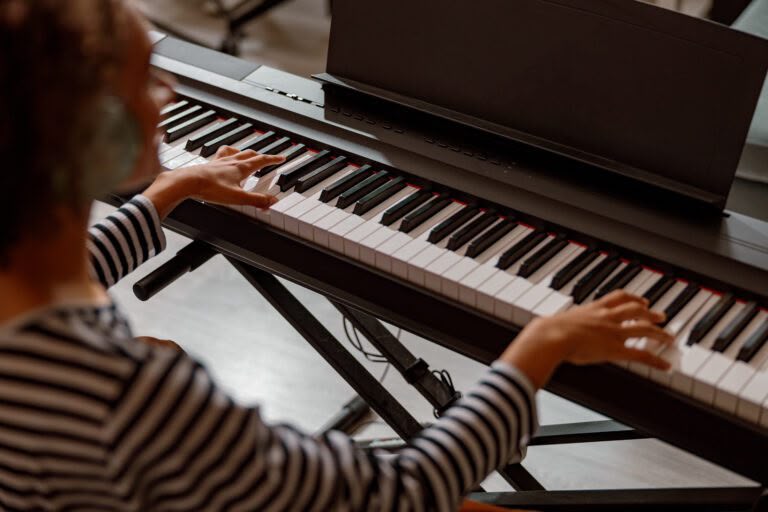
1. Create a Comfortable Environment for Your Child’s Music Practice
One of the first steps parents can take is to create a suitable space where children can practise without unnecessary distractions.
A comfortable practice environment helps children concentrate and makes it easier for them to develop a regular routine. The space does not need to be large or professionally designed. Even a quiet corner of the home can work well.
Consider the following:
Choose a quiet area away from television noise and other distractions.
Keep the musical instrument easily accessible.
Provide a comfortable chair and suitable lighting.
Keep sheet music, notebooks, and other learning materials organised.
Make sure the instrument is properly maintained and ready to use.
For example, a Child’s Music Practice or learning piano should have a suitable seating position and enough space to place their sheet music comfortably. A guitar student should have their instrument, tuner, and practice materials within easy reach.
When children have an organised practice space, they are more likely to approach their sessions with focus and enthusiasm.
2. Establish a Consistent Music Practice Routine
Consistency is one of the most important factors in musical development. Children benefit from practising regularly because it helps them remember what they have learned and gradually improve their technique.
Parents can help by introducing a simple practice routine that fits naturally into the child’s daily schedule.
For example, practice time could be arranged:
After completing schoolwork.
Before an evening activity.
At a consistent time during the weekend.
Before or after another established daily routine.
The goal is not to make practice feel like another school assignment. Instead, parents should help children understand that regular practice is a normal and enjoyable part of learning music.
A short, focused session every day or on several days throughout the week can be more manageable than leaving all practice until the weekend.
How Long Should Children Practise Music?
Practice duration depends on the child’s age, instrument, experience, and current learning level.
Younger beginners may benefit from shorter sessions, while older or more experienced students may gradually increase their practice time.
A simple example could be:
| Learning level | Example practice duration |
|---|---|
| Young beginners | 10–15 minutes |
| Elementary learners | 15–20 minutes |
| Intermediate students | 20–30 minutes |
| Advanced students | 30–45 minutes or more |
These are flexible suggestions rather than strict requirements. Parents should follow the music teacher’s recommendations and pay attention to the child’s concentration and comfort.
3. Encourage Your Child Without Putting Pressure on Them
Children need encouragement to stay motivated, especially when they are learning something challenging.
However, too much pressure can make music practice feel stressful. Constantly correcting mistakes, comparing progress with other children, or demanding longer practice sessions may reduce a child’s interest in learning.
Instead, parents should focus on encouragement and positive reinforcement.
You can support your child by:
Appreciating their effort, even when progress is gradual.
Recognising improvements in difficult sections.
Avoiding negative comments about mistakes.
Giving them opportunities to play music they enjoy.
Reminding them that learning takes time.
For example, instead of saying, “You are still making mistakes,” try saying, “You played that section more smoothly today. Keep working on it.”
Positive encouragement helps children develop confidence and understand that mistakes are a natural part of learning.
4. Show Interest in What Your Child Is Learning
Children often feel more motivated when their parents show genuine interest in their activities.
You do not need to understand music theory or know how to play an instrument to participate in your child’s musical journey. Simply asking questions and listening to their progress can make a difference.
Try asking:
What did you learn in your last music lesson?
Which song are you practising this week?
Is there a particular part you find difficult?
Would you like to play something for me?
What new technique did your teacher introduce?
These conversations help children reflect on their learning and feel that their efforts are valued.
Parents can also encourage children to perform small musical pieces at home. These informal performances provide opportunities to build confidence without the pressure of a formal audience.
5. Help Your Child Set Small and Achievable Music Goals
Setting goals can make practice more organised and give children a clear sense of direction.
However, goals should be realistic and appropriate for the child’s learning level. Expecting a beginner to master an entire song in one day can create unnecessary frustration.
Instead, divide larger tasks into smaller achievements.
For example, a child learning piano could work towards:
Recognising a new group of musical notes.
Practising a short melody.
Improving hand coordination.
Playing a musical phrase without stopping.
Learning a complete section of a song.
A guitar student might focus on changing between two chords smoothly, while a young vocalist could practise maintaining pitch during a short melody.
Parents can help children track these achievements in a notebook or simple practice chart.
Celebrating small milestones makes progress visible and encourages children to continue learning.

6. Allow Your Child to Make Mistakes During Practice
Mistakes are an unavoidable part of learning music. Children may play incorrect notes, lose rhythm, forget lyrics, or struggle with difficult musical passages.
Parents should understand that making mistakes does not mean a child is failing.
In fact, mistakes provide useful opportunities to identify areas that need more attention.
Rather than interrupting every time your child plays something incorrectly, allow them to finish a section and discuss what they can improve.
Encourage them to:
Slow down difficult passages.
Practise challenging sections separately.
Listen to their own playing.
Ask their teacher for help when necessary.
It is also important to remember that parents do not need to correct every technical mistake. Instrumental technique and musical instruction should remain the responsibility of the qualified teacher.
A supportive home environment gives children the freedom to experiment, learn, and improve without being afraid of making mistakes.
7. Listen to Your Child’s Music Practice
Listening is a simple but valuable way parents can participate in their child’s musical development.
You can occasionally sit nearby while your child practises or ask them to perform a piece they have recently learned.
Pay attention to their progress rather than expecting a perfect performance.
For example, you may notice that your child is:
Remembering more musical notes.
Changing chords more smoothly.
Singing with improved pitch accuracy.
Performing with greater confidence.
Parents can also encourage active listening by introducing children to different musical styles, instruments, and performers.
Listening to music regularly helps children become more familiar with melodies, rhythms, musical expression, and different sounds.
8. Make Music Practice Enjoyable and Engaging
Children are more likely to continue practising when they find the experience enjoyable.
If every practice session feels repetitive or demanding, they may gradually lose interest. Parents can introduce simple activities that make learning more engaging.
Some ideas include:
Allowing children to choose a favourite song to learn.
Organising small family music sessions.
Using musical games to practise rhythm and note recognition.
Encouraging children to create their own melodies.
Recording short performances to track improvement.
Exploring music from different cultures and genres.
For younger learners, activities such as clapping rhythms, identifying musical sounds, or singing familiar melodies can make practice more interactive.
The purpose is to balance structured learning with creativity and enjoyment.
9. Avoid Comparing Your Child With Other Music Students
Every child learns at a different pace. Some children may develop strong rhythmic abilities quickly, while others may need more time to improve coordination, pitch recognition, or reading musical notation.
Comparing your child with siblings, classmates, or other students can create unnecessary pressure.
Instead, focus on individual progress.
Ask yourself:
Is my child becoming more comfortable with their instrument?
Are they remembering what they learn during lessons?
Have they improved in areas that were previously difficult?
Are they becoming more confident while performing?
Are they enjoying their musical journey?
These are more meaningful indicators of development than comparing examination grades or the number of songs a child can play.
Encouraging children to compete with their own previous achievements helps them develop confidence and a healthier attitude towards learning.
10. Stay Connected With Your Child’s Music Teacher
Parents and music teachers play different but equally important roles in a child’s musical education.
While teachers introduce techniques, explain musical concepts, and guide structured learning, parents can reinforce good practice habits at home.
Maintaining communication with the music teacher helps parents understand what their child should focus on between lessons.
You can ask the teacher about:
The main learning goals for the current week.
Difficult sections that need additional practice.
Suitable practice duration.
Areas where the child has shown improvement.
Techniques that should not be practised without guidance.
This communication ensures that home practice supports the lessons rather than introducing confusion or incorrect techniques.
If your child is struggling with a particular exercise, it is better to discuss it with the teacher than to insist on repeated practice without understanding the difficulty.
11. Support Your Child When They Lose Motivation
There may be times when children feel bored, frustrated, or reluctant to practise. This is a normal part of learning any new skill.
A difficult musical piece, a busy school schedule, or slow progress can sometimes affect motivation.
Parents should try to understand the reason behind the reluctance instead of immediately treating it as a lack of discipline.
Here are some helpful approaches:
Take a short break: If your child feels overwhelmed, a brief break may help them return with better concentration.
Revisit enjoyable songs: Allow them to play something familiar that reminds them why they enjoy music.
Reduce the practice goal: A shorter, focused session may be more effective than forcing a long session.
Recognise their feelings: Listen when they explain what they find difficult or frustrating.
Discuss challenges with the teacher: The teacher may be able to introduce a different approach or adjust the learning material.
Children should understand that temporary difficulties do not mean they should give up. With patience and support, they can gradually rebuild their interest.
12. Encourage Music Beyond Regular Practice Sessions
Musical development does not happen only when children sit down with their instruments. Parents can encourage musical curiosity through everyday activities.
For example:
Listen to different genres of music together.
Attend live musical performances when possible.
Watch age-appropriate musical performances and concerts.
Explore the instruments used in different songs.
Encourage children to sing along to familiar melodies.
Discuss how music creates different moods and emotions.
These experiences help children develop a deeper appreciation for music and understand that it is part of everyday life.
They may also discover new instruments, musical styles, and performers that inspire them to continue learning.
13. Celebrate Progress and Every Musical Achievement
Recognising progress is an important part of keeping children motivated.
Achievements do not always have to involve winning competitions or completing examinations. Learning a difficult passage, performing a song confidently, or practising consistently for a week can all be meaningful milestones.
Parents can celebrate these moments by:
Praising their effort and dedication.
Recording important performances.
Sharing their progress with supportive family members.
Attending their music recitals.
Recognising improvements in their technique.
Encouraging them to reflect on how much they have learned.
Celebrating progress helps children understand that musical development is about more than reaching a final destination. Every improvement is part of the learning journey.
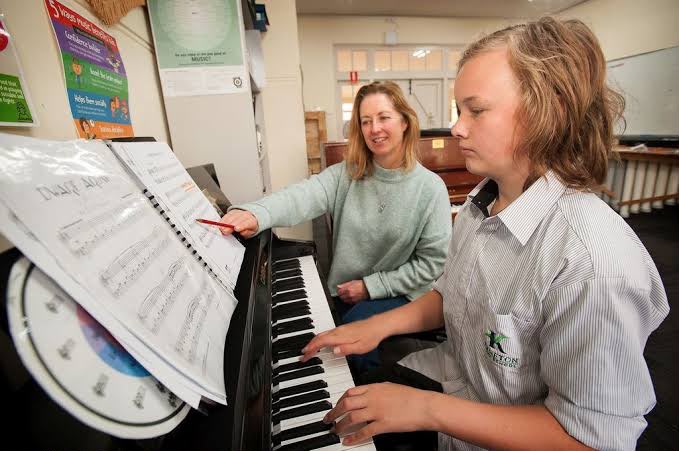
How The Mystic Keys Helps Parents Support Their Child’s Musical Journey
At The Mystic Keys, we understand that a child’s musical development depends on both effective teaching and consistent encouragement at home. Our online music lessons provide structured guidance to help children develop instrumental techniques, musical understanding, rhythm, listening skills, and performance confidence. Our teachers guide students through their learning goals and help them understand what to practise between lessons, making it easier for parents to support their progress. Whether your child is learning piano, guitar, vocals, violin, or drums, The Mystic Keys offers personalised music education in a supportive learning environment. We believe that when teachers and parents work together, children can develop stronger practice habits, greater confidence, and a lasting appreciation for music.
Conclusion
Parents play an important role in shaping their child’s experience of learning music. While professional instruction provides the technical guidance children need, encouragement and consistency at home help them turn lessons into lasting skills.
Creating a comfortable practice space, establishing a realistic routine, celebrating small achievements, and allowing children to learn at their own pace can make a significant difference.
Most importantly, parents should remember that music education is not simply about mastering an instrument or preparing for examinations. It is also about developing creativity, discipline, confidence, and a lifelong appreciation for music.
With patience, encouragement, and the right learning support, parents can help their children enjoy every stage of their musical journey.
For more information and exciting resources about learning music, visit our website at The Mystic Keys. For more music content and exciting offers follow us on
Facebook, Instagram, YouTube, LinkedIn, Twitter, Pinterest, and Threads,