Trinity College London vs ABRSM: Which Music Exam Should You Choose?
Introduction
Choosing the right music examination board is an important decision for students who want to develop their musical abilities and receive internationally recognised qualifications. Two popular options are Trinity vs ABRSM Trinity College London and ABRSM (Associated Board of the Royal Schools of Music). Both offer structured music examinations that help learners measure their progress, improve their performance skills, and work towards higher musical goals.
However, the two examination boards have different approaches to assessment, repertoire selection, technical requirements, and examination formats. Some students may prefer an examination that offers greater flexibility in repertoire and performance, while others may benefit from a more structured assessment of different musical skills.
Understanding the differences between Trinity College London and ABRSM can help students, parents, and teachers choose an examination pathway that matches their abilities and learning preferences.
Let’s compare both examination boards and explore which one may be the right choice for your musical journey.
1. Understanding Trinity College London and ABRSM
Before comparing their examination structures, it is helpful to understand what each organisation offers.
What Is Trinity College London?
Trinity College London is an international examination board that provides qualifications in music, performing arts, English language, and other subjects.
Its music examinations cover several instruments and disciplines, including:
Piano
Classical and acoustic guitar
Singing and vocals
Violin and other string instruments
Drum kit and percussion
Electronic keyboard
Woodwind and brass instruments
Trinity places a strong emphasis on practical performance and individual musical expression. Its graded examinations offer different pathways, allowing students to demonstrate their abilities through face-to-face assessments or digital video submissions.
The examination structure also provides opportunities for students to explore different repertoire choices and demonstrate their musical personalities.
What Is ABRSM?
ABRSM, the Associated Board of the Royal Schools of Music, is another internationally recognised music examination board. It provides graded qualifications designed to develop practical performance, musical understanding, and technical ability.
Its examinations cover a wide range of instruments and musical disciplines, including:
Piano
Violin and other string instruments
Guitar
Singing
Flute and other woodwind instruments
Brass instruments
Percussion
ABRSM offers Practical Grades, Performance Grades, and separate Music Theory qualifications. Its Practical Grades assess a combination of performance and supporting musical skills, while Performance Grades focus primarily on presenting a prepared musical programme.
Both organisations provide structured progression from beginner levels to advanced grades.
2. Trinity vs ABRSM: Understanding the Examination Structure
One of the main differences between Trinity College London and ABRSM is how they organise their practical examinations.
Although both boards assess musical performance, their examination components and available pathways are different.
Trinity College London Examination Structure
Trinity offers face-to-face graded examinations and digital examinations.
For standard face-to-face Classical and Jazz graded examinations, the structure generally includes:
Three prepared performance pieces.
Technical work, such as scales, arpeggios, and other exercises.
Two supporting tests selected from the available options, depending on the grade.
For digital examinations, students can choose between two pathways:
Digital Technical Work Pathway: Students perform three pieces and complete the required technical work. Supporting musical skills are assessed through the overall performance.
Digital Repertoire-only Pathway: Students perform four prepared pieces, with the assessment focusing entirely on their repertoire performance.
The exact requirements depend on the instrument, grade, and syllabus.
ABRSM Examination Structure
ABRSM offers two main practical examination pathways: Practical Grades and Performance Grades.
Practical Grades: These are face-to-face examinations that assess a range of musical abilities. For piano, the examination includes:
Three prepared pieces.
Scales and arpeggios.
Sight-reading.
Aural tests.
Performance Grades: These are digital examinations assessed through a submitted video recording. Students perform four pieces, including three selected from the syllabus lists and one own-choice piece.
Performance Grades place greater emphasis on musical communication, interpretation, delivery, and the overall quality of the performance.
Therefore, students should compare the specific examination pathways rather than assuming that every Trinity examination is structured in the same way as every ABRSM examination.
3. Trinity vs ABRSM: Differences in Repertoire Selection
Repertoire selection plays an important role in both examination systems. Students need to prepare musical pieces that demonstrate their technical ability, musical understanding, and performance skills.
However, the two boards offer different approaches to repertoire.
Trinity College London Repertoire
Trinity provides a wide selection of repertoire across different musical styles and genres.
Students can explore music from:
Western classical compositions.
Contemporary music.
Jazz.
Popular music.
Stage and screen.
Video game soundtracks.
Other musical traditions represented in the syllabus.
Its repertoire options encourage students to select music they enjoy while developing their musical abilities.
Trinity also provides flexibility through certain examination pathways, including opportunities to perform own-choice pieces or original compositions where the relevant syllabus permits them.
ABRSM Repertoire
ABRSM organises its graded repertoire into different lists. These lists provide students with opportunities to explore different musical periods, composers, and styles.
For example, piano students may encounter music from Renaissance and Baroque traditions, Classical and Romantic compositions, and more contemporary works.
Students taking ABRSM Practical Grades select three pieces according to the relevant syllabus. Performance Grade candidates present four pieces, including one own-choice piece.
This approach encourages students to develop a balanced repertoire and demonstrate a range of musical abilities.
Which offers more flexibility?
Trinity may appeal to students who enjoy having a broad range of repertoire options and exploring individual musical interests. ABRSM also offers varied repertoire and an own-choice option through its Performance Grades.
The best choice depends on the student’s preferred musical styles and the available repertoire at their chosen grade.

4. Trinity vs ABRSM: Technical Skills and Musical Knowledge
Technical development is an essential part of learning an instrument. Both Trinity and ABRSM recognise the importance of developing control, accuracy, coordination, and musical understanding.
However, they organise their technical assessments differently.
Technical Requirements in Trinity Examinations
Trinity’s face-to-face graded examinations include technical work. Depending on the instrument and grade, this may involve:
Scales and arpeggios.
Technical exercises.
Instrument-specific techniques.
Other musical exercises included in the syllabus.
Students prepare the required technical work and demonstrate selected elements during the examination.
In Trinity’s digital Technical Work pathway, candidates also complete technical requirements, although the assessment arrangements differ from face-to-face examinations.
The Repertoire-only digital pathway does not include a separate technical work section.
Technical Requirements in ABRSM Examinations
ABRSM Practical Grades include scales and arpeggios as part of the examination, alongside prepared pieces, sight-reading, and aural tests.
Students are expected to develop technical accuracy, finger control, coordination, and familiarity with musical patterns.
ABRSM Performance Grades follow a different approach. They focus on prepared repertoire rather than separate technical exercises or supporting tests.
Which is better for technical development?
Both examination boards encourage technical development through their syllabuses. ABRSM Practical Grades provide a clearly defined assessment of scales and arpeggios, while Trinity offers different technical and performance pathways.
Students should consider which assessment format best matches their learning goals.
5. Trinity vs ABRSM: Sight Reading and Aural Skills
Sight reading and aural skills are important parts of becoming a well-rounded musician. They help students understand music beyond the pieces they have memorised.
However, these skills are assessed differently by Trinity and ABRSM.
Sight Reading in Trinity Examinations
In Trinity face-to-face Classical and Jazz graded examinations, sight reading is one of the available supporting tests. Students can choose it as one of their supporting assessments, subject to the requirements of their grade.
The available supporting tests include:
Sight reading.
Aural skills.
Improvisation.
Musical knowledge for Initial to Grade 5.
The precise choices depend on the examination level.
Sight Reading in ABRSM Examinations
Sight reading is a compulsory component of ABRSM Practical Grades.
Students are presented with unfamiliar music and must demonstrate their ability to interpret the notation and perform it accurately.
ABRSM Performance Grades do not include a separate sight-reading test because the assessment focuses on prepared performances.
Aural Skills in Both Examination Systems
Aural skills involve listening carefully and recognising different musical elements, such as pitch, rhythm, melody, and musical expression.
ABRSM Practical Grades include aural tests, while Trinity allows students taking eligible face-to-face Classical and Jazz examinations to choose aural skills as one of their supporting tests.
Which is more suitable?
Students who want regular formal assessment of sight reading and listening skills may prefer ABRSM Practical Grades. Those who want some choice over their supporting tests may find Trinity’s face-to-face format appealing.
6. Is Music Theory Compulsory for Trinity and ABRSM?
Music theory helps students understand musical notation, scales, chords, harmony, rhythm, and composition.
However, students should understand the difference between learning music theory as part of their musical education and meeting a formal examination prerequisite.
Music Theory Requirements for Trinity
Trinity does not require candidates to pass a separate music theory examination before entering its standard graded practical music examinations.
Students still benefit from understanding musical notation, rhythm, harmony, and other theoretical concepts relevant to their instrument and grade.
Trinity also offers separate Theory of Music qualifications for learners who want to develop their theoretical knowledge.
Music Theory Requirements for ABRSM
ABRSM offers separate Music Theory Grades from Grade 1 to Grade 8.
For ABRSM Practical and Performance Grades 6, 7, and 8, candidates must pass Grade 5 or above in Music Theory, Practical Musicianship, or an accepted Jazz Practical Grade qualification before booking the examination.
This is an important difference for students planning to progress towards the higher grades.
What should students choose?
Students who enjoy studying musical theory alongside practical performance may appreciate ABRSM’s structured theory pathway.
Those who prefer to focus on practical examination preparation without a separate theory examination prerequisite may find Trinity more suitable.
However, learning music theory remains valuable regardless of which board a student chooses.
7. Trinity vs ABRSM: Face-to-Face and Digital Examination Options
The examination experience is another important factor when choosing between the two boards.
Both organisations provide different assessment formats, giving students options depending on their preferences and circumstances.
| Feature | Trinity College London | ABRSM |
|---|---|---|
| Face-to-face practical exams | Yes | Yes, through Practical Grades |
| Video-based examinations | Yes | Yes, through Performance Grades |
| Performance-focused pathway | Repertoire-only digital pathway | Performance Grades |
| Technical assessment | Depends on pathway | Included in Practical Grades |
| Prepared repertoire | Varies by pathway | Three pieces in Practical; four in Performance |
Digital examinations can be useful for students who prefer recording their performance in a familiar environment. Face-to-face examinations, on the other hand, give candidates the experience of performing directly for an examiner.
Students should check the recording rules, submission requirements, equipment requirements, and available examination dates before choosing a digital option.
8. Which Examination Board Is Better for Beginners?
For beginners, choosing the right examination board should be based on the student’s current ability, musical interests, and readiness for structured assessment.
Both Trinity and ABRSM offer beginner-level pathways, including Initial-level options for several instruments.
Why Beginners May Choose Trinity
Trinity may appeal to beginners who:
Enjoy exploring a wide range of musical styles.
Prefer having choices within their examination.
Want access to different practical assessment formats.
Enjoy learning through performance and creative expression.
Why Beginners May Choose ABRSM
ABRSM may appeal to beginners who:
Prefer a clearly structured practical examination.
Want to develop a broad range of musical skills.
Enjoy working on scales, aural exercises, and sight reading.
Want to follow a traditional graded progression.
Neither board is automatically easier or better for beginners. The student’s readiness and the teacher’s assessment of their abilities should guide the decision.
9. Trinity vs ABRSM: Which Is More Suitable for Advanced Students?
As students progress towards higher grades, their musical abilities become more advanced. They may need to demonstrate greater technical control, musical interpretation, expressive performance, and independent understanding.
Both Trinity and ABRSM offer graded pathways up to Grade 8, with further qualifications available beyond the graded levels.
Trinity’s higher grades allow students to demonstrate advanced performance skills through its repertoire and technical assessment pathways.
ABRSM’s higher practical grades assess prepared repertoire alongside technical and supporting skills. Its Performance Grades provide an alternative route focused on a sustained performance.
Students should also consider the additional requirements for advanced examinations. For example, ABRSM Grades 6–8 require an accepted Grade 5-level qualification in theory or an approved alternative.
The best option depends on the student’s long-term goals, preferred assessment style, and musical strengths.
10. Trinity College London vs ABRSM: Which One Should You Choose?
There is no universal answer to this question. Both examination boards offer valuable musical qualifications, and the right choice depends on what a student wants to achieve.
Here is a simple way to compare them.
| Your learning preference | Option worth considering |
|---|---|
| Greater choice in supporting tests in eligible face-to-face exams | Trinity |
| A structured assessment of pieces, scales, sight reading, and aural skills | ABRSM Practical Grades |
| A digital pathway focused entirely on prepared repertoire | Trinity Repertoire-only or ABRSM Performance Grades |
| Exploring a broad range of musical styles | Both |
| A formal theory prerequisite for higher practical grades | ABRSM |
| Opportunities for creative repertoire choices | Both, depending on pathway and syllabus |
Before making a decision, students should discuss their goals with their music teacher and review the current syllabus for their chosen instrument.
The examination board should support the student’s musical development rather than become the only reason for learning music.
11. Tips for Preparing for a Trinity or ABRSM Music Examination
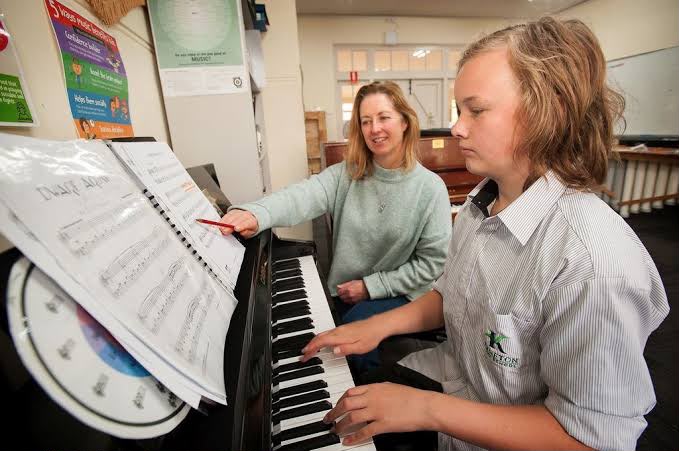
Regardless of the examination board, successful preparation requires consistency, patience, and a clear understanding of the assessment requirements.
Here are some practical tips for students:
Understand the syllabus: Read the current examination requirements and identify everything that needs to be prepared.
Choose suitable repertoire: Select pieces that match your grade and allow you to demonstrate different musical skills.
Practise technical exercises: Develop finger control, coordination, rhythm, and accuracy through regular technical practice.
Improve sight reading: Practise unfamiliar musical passages to become more comfortable reading notation.
Develop listening skills: Work on pitch recognition, rhythm, melody, and musical expression.
Create a practice routine: Divide your preparation into manageable sessions covering all examination components.
Arrange mock examinations: Perform in front of your teacher or family to become more comfortable with examination conditions.
Review your progress: Identify challenging sections and work on them before the examination date approaches.
With a consistent preparation routine, students can develop the confidence and skills needed to perform successfully.
How The Mystic Keys Helps Students Choose the Right Music Examination
At The Mystic Keys, we believe that every student’s musical journey is different. Choosing between Trinity College London and ABRSM should depend on individual abilities, learning preferences, and long-term musical goals. Our online music lessons provide structured guidance to help students develop their practical skills, musical understanding, and performance confidence. With personalised instruction from experienced music educators, students can strengthen their technique, improve their music theory knowledge, and prepare for graded examinations according to their chosen pathway. Whether you are interested in Trinity, ABRSM, or simply want to develop your musical abilities, The Mystic Keys supports your progress through engaging lessons and individual attention. Our goal is to help students become confident, capable musicians while making their learning experience enjoyable and rewarding.
Conclusion
Both Trinity College London and ABRSM offer valuable opportunities for students to develop their musical abilities and gain recognition for their progress.
Trinity provides flexible assessment options and encourages individual musical expression, while ABRSM offers structured pathways that assess performance alongside other important musical skills. Both organisations also provide performance-focused digital examination options.
The best choice depends on the student’s instrument, musical interests, preferred examination format, and future goals.
Ultimately, the purpose of a music examination is not simply to earn a certificate. It is to encourage consistent learning, develop musical understanding, and help students become more confident performers.
With the right guidance and regular practice, either examination pathway can become a valuable part of a student’s musical journey.
For more information and exciting resources about learning music, visit our website at The Mystic Keys. For more music content and exciting offers follow us on
Facebook, Instagram, YouTube, LinkedIn, Twitter, Pinterest, and Threads,