Online Music Academy Canada | How to Find the Right One
Learning music has become more accessible than ever. Students no longer need to live near a music school, travel across the city for every lesson, or follow a rigid classroom schedule. With the growth of online music education, students across Canada can now connect with music teachers from different locations and learn from home. An Online Music Academy Canada can provide this flexibility while offering structured lessons, personalised guidance, and access to experienced music educators without the need for in-person travel..
However, having many options also creates a new challenge: How do you find the right online music academy in Canada?
The answer is not simply about choosing the academy with the most courses or the lowest price. A good online music academy should match the student’s goals, learning style, schedule, preferred instrument, and expectations from the lessons.
Whether you are looking for music lessons for yourself, searching for classes for your child, preparing for a music examination, or simply hoping to develop your skills, knowing what to look for can make the decision much easier.

What Is an Online Music Academy?
An online music academy is a music education platform that provides lessons through digital communication tools such as video conferencing. Instead of attending a physical music school, students participate in live lessons from their home or another convenient location.
Depending on the academy, students may be able to learn instruments such as piano, guitar, violin, drums, ukulele, keyboard, or vocals. Some academies also provide music theory, ear training, examination preparation, songwriting, or other areas of musical development.
The biggest difference between online academies is not necessarily the technology they use. It is how the learning experience is structured.
Some platforms may focus mainly on recorded lessons, while others offer live classes with a teacher. Certain academies may provide group sessions, whereas others focus on one-on-one instruction. Understanding these differences is important before enrolling.
Why Are Online Music Lessons Becoming Popular in Canada?
Canada has a diverse population spread across large cities, suburbs, and smaller communities. For some students, finding a suitable teacher nearby can be difficult, particularly when they are looking for a specific instrument, teaching style, genre, or level of expertise.
Online learning can remove some of these geographical limitations.
A student can attend a lesson without spending time travelling to and from a music school. Parents can also avoid arranging transportation for every lesson, while adult learners can fit music education more easily around work and family responsibilities.
Another advantage is flexibility. Many online academies work with students across different locations and may offer lesson timings that are more adaptable than traditional music schools.
At the same time, convenience should not become the only reason for choosing an academy. The quality and structure of the lessons still matter.

Finding Your Musical Goal with an Online Music Academy Canada
Before comparing different online music academies, it helps to understand why you want to learn music.
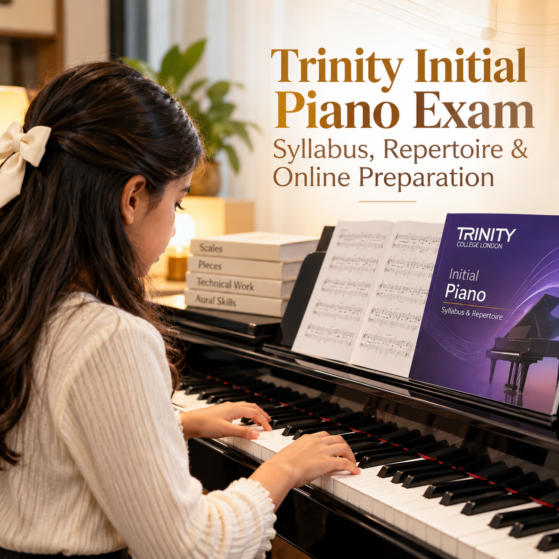
A beginner who wants to learn piano for personal enjoyment may need a very different learning approach from a student preparing for an ABRSM, Trinity College London, or Rockschool examination.
Similarly, someone interested in Western vocals may be looking for a different teaching style from a student who wants to learn Hindustani or Carnatic music.
Your goal could be learning an instrument from scratch, improving existing skills, preparing for examinations, developing music theory knowledge, learning to sing confidently, or simply making music part of your routine.
Once that goal is clear, it becomes easier to evaluate whether an academy’s teaching approach is actually suitable.
Exploring Courses at an Online Music Academy Canada
The range of courses is another important factor to consider.
A well-structured online music academy may offer various instruments and musical disciplines. This gives students more choices based on their interests. Courses may include piano, keyboard, guitar, violin, drums, ukulele, Western vocals, Indian classical vocals, and other specialised areas.
However, a long course list does not always mean better teaching.
Instead of asking only, “How many courses do they offer?”, check the teachers available for your chosen course. Their experience and expertise should match your learning goals.
For example, vocal students should look for teachers who understand vocal technique, musicality, pronunciation, repertoire, and performance development. Simply offering singing as a course is not enough.

Check Whether Lessons Are Live and Interactive
One of the most important questions to ask is whether the lessons are live, recorded, or a combination of both.
Recorded videos can be useful for revision and independent practice, but they cannot completely replace interaction with a teacher. During a live lesson, the teacher can listen to the student’s playing or singing, identify mistakes, demonstrate techniques, answer questions, and adjust the lesson according to the student’s progress.
One-on-one live classes can provide an even more personalised learning experience.
Instead of following exactly the same lesson as every other student, the teacher can spend more time on areas where the individual needs support. That can be particularly valuable for beginners who may need additional explanation and encouragement during the early stages.
Consider the Teacher’s Qualifications and Experience
The teacher is one of the most important parts of any music-learning experience.
An academy may have an attractive website, modern technology, and a large selection of courses, but the actual learning experience ultimately depends heavily on the teacher.
When researching an online music academy in Canada, look at the qualifications and experience of its instructors. Depending on the course, relevant certifications could include Trinity College London, ABRSM, Rockschool, university-level music education, performance qualifications, or other recognised training.
Experience also matters.
A teacher who regularly works with beginners may approach a first lesson very differently from a teacher who primarily prepares advanced performers. Likewise, teaching children requires patience, communication, and lesson planning that may differ from teaching adults.
Therefore, it is worth looking beyond the qualification itself and considering whether the teacher’s experience matches the student’s needs.

Look for Personalised Music Lessons
Every student learns differently.
Some may understand concepts quickly but struggle with rhythm. Others may have good technique but need more confidence. Beginners may need extra practice, while advanced students may focus on specific skills.
Personalised lessons allow teachers to address these individual needs.
A good online music academy should adapt lessons to the student’s level, progress, interests, and goals. This makes learning more engaging and avoids a one-size-fits-all approach.
For children, personalised instruction can include suitable songs and activities while building strong musical foundations.
Ask About Trial or Demo Lessons
If an academy offers a trial or demo lesson, it can be an excellent opportunity to understand how the learning experience actually works.
A website can tell you about teachers, courses, technology, and pricing, but a live lesson gives you a better idea of the teacher’s communication style and the overall learning environment.
During a demo, pay attention to whether the teacher explains concepts clearly, listens to the student, encourages questions, and adjusts the lesson according to the student’s level.
The experience should feel like a genuine learning session rather than simply a sales conversation.
Understanding Technology Used by an Online Music Academy Canada
Online music lessons depend on technology, so the academy should have a clear and practical system for conducting classes.
Ask which platforms are used for lessons. Common options include Zoom and Google Meet, although the specific platform matters less than whether the lessons are stable and easy to access.
It is also useful to understand how lesson recordings and supplementary learning materials are handled.
For instance, recordings can allow students to revisit difficult sections after class, while notes, exercises, sheet music, or other materials can support independent practice between lessons.
A straightforward technical setup can make online learning considerably more comfortable, particularly for younger students and parents.

Flexibility Can Make a Big Difference
For many Canadian students, scheduling is an important consideration.
School, university, work, extracurricular activities, family commitments, and changing routines can make fixed lesson timings difficult to maintain.
An online academy that considers teacher availability alongside the student’s schedule can provide greater flexibility.
However, flexibility does not mean that students should treat lessons casually. Consistent attendance and regular practice remain important for musical progress. The ideal arrangement is one that provides reasonable scheduling flexibility while still encouraging a steady learning routine.
Comparing the Cost of an Online Music Academy Canada
Cost is naturally an important part of the decision, but it should not be the only deciding factor.
A lower-priced lesson may seem attractive initially, but the actual value depends on what the student receives in return. Teacher expertise, lesson duration, individual attention, learning materials, recordings, examination support, and scheduling flexibility can all influence the overall experience.
Rather than comparing prices alone, compare what is included in the learning experience.
A slightly different fee may make sense if the student receives personalised instruction, qualified teaching, structured progression, and additional academic or examination support.

Consider Examination and Certification Support
Students who want to pursue formal music examinations should check whether the academy provides appropriate preparation.
Examination systems such as Trinity College London, ABRSM, and Rockschool have specific requirements relating to repertoire, technique, theory, performance, and musical understanding.
An academy experienced in examination preparation can help students understand those requirements and prepare systematically.
That does not mean every student needs examination training. For someone learning purely for enjoyment, a performance-focused or recreational approach may be more appropriate.
The important point is to choose an academy that aligns with the student’s long-term objective.
Read Reviews, But Look Beyond the Rating
Reviews can offer useful insight into an online music academy. Look beyond the star rating and read what students and parents say about teaching quality, communication, scheduling, and support.
Choose reviews that match your needs. For example, a parent seeking piano lessons for a child may find feedback from other parents more relevant.
Remember that reviews reflect individual experiences. Consider them alongside teacher qualifications, course structure, and a trial lesson.

Think About the Student’s Age and Learning Style
The right online music academy can look different for a six-year-old beginner, a teenager preparing for examinations, and an adult learning music after work.
Young students often benefit from teachers who can maintain attention, introduce concepts creatively, and communicate clearly with both the child and parent.
Teenagers may need a balance between structured learning and their own musical interests. Adult students, meanwhile, often appreciate flexibility and lessons that connect directly with their personal goals.
Learning style matters as well.
Some students prefer structured progression, while others enjoy learning through songs and practical application. Identifying these preferences can help you find a teacher and academy that feel like a natural fit.
Ask Questions Before Enrolling
A short conversation with the academy can answer many questions before you make a commitment.
You might ask about the teacher’s qualifications, lesson duration, class frequency, scheduling, course structure, examination preparation, recordings, learning materials, and what happens if a class needs to be rescheduled.
It is also worth asking how the academy evaluates student progress.
A clear answer can indicate whether the academy has a structured approach to learning rather than simply conducting individual lessons without a broader progression plan.

What Makes a Good Online Music Academy?
Ultimately, finding the right online music academy in Canada comes down to fit.
The academy should offer suitable courses, qualified teachers, interactive lessons, an accessible learning system, and an approach that matches the student’s goals. Personal attention and consistent communication can make the online experience feel much more engaging than simply watching instructional videos.
A strong academy should also make the learning journey practical. Students need a system that works with their schedules, technology that is easy to use, and resources that help them continue practising between lessons.
Most importantly, the student should feel that the lessons are helping them move forward.
Online Music Learning Can Be More Than Just Convenience
Online music education is no longer simply an alternative for people who cannot attend a physical music school.
With live instruction, personalised lesson planning, qualified teachers, digital resources, and flexible scheduling, online learning can provide a structured musical education from the comfort of home.
For students in Canada, this can open up access to teachers and learning opportunities that may not be available within their immediate neighbourhood.
The key is to choose thoughtfully rather than simply selecting the first academy that appears in a search result.

Final Thoughts on Choosing an Online Music Academy Canada
Finding the right Online Music Academy Canada starts with understanding your musical goals. Consider the teachers, course structure, personalised attention, flexibility, learning resources, and overall experience before enrolling.
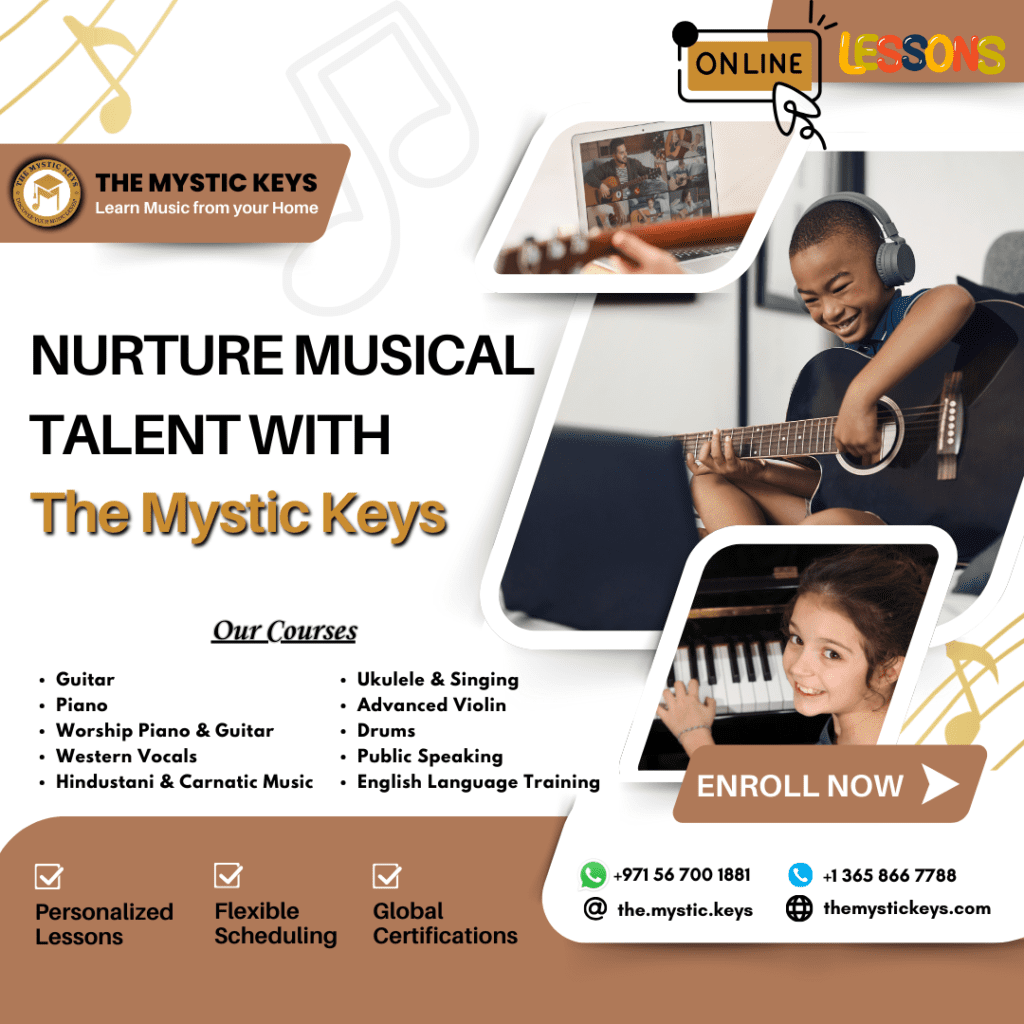
For those looking for Piano Lessons Online or other personalised music classes, The Mystic Keys offers live, one-on-one online lessons designed around different levels, goals, and schedules.
Ultimately, the right academy is one that makes learning music structured, flexible, engaging, and enjoyable.
For more information and exciting resources about learning music, visit our website at The Mystic Keys. For more music content and exciting offers follow us on Facebook, Instagram, YouTube, LinkedIn,
Twitter, Pinterest, and Threads.