
How to Avoid Memorization Mistakes in Piano
Piano memorization mistakes are common even among students who have spent considerable time learning a piece. A pianist may be able to play a piece confidently during practice but suddenly forget a passage during a performance. Another student may remember the notes but lose their place after making one small mistake. Sometimes the problem is not a lack of practice at all. It is the way the music was memorized.
Memorizing piano music is more than repeating a piece until the fingers seem to know what to do. Strong memorization involves understanding the music, recognising patterns, listening carefully, remembering physical movements, visualising the keyboard, and knowing what happens next in the score. When several types of memory work together, the pianist becomes less dependent on a single pathway.
The good news is that many memorization problems can be avoided with a more thoughtful practice approach. Instead of waiting until a piece is almost finished to start memorizing it, students can build reliable memory into their practice from the beginning.
Why Piano Memorization Mistakes Happen
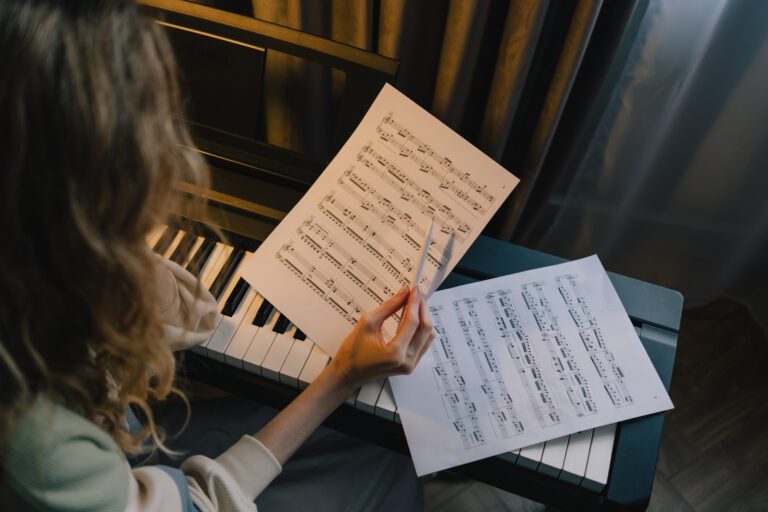
One of the most common reasons students forget music is that they rely too heavily on repetition.
Playing the same piece from beginning to end again and again can create familiarity, but familiarity does not always equal secure memorization. A student may feel that the piece is memorized because the fingers automatically move through it while the score is in front of them. However, when the score disappears, the pianist may discover that they cannot consciously recall the notes, harmonies, structure, or starting points.
Another problem occurs when students memorize only the physical movements. Muscle memory can be useful, but it should not be the only form of memory involved. If the hands lose their place, the pianist needs another way to understand where the music should go next.
Other common causes include:
- Memorizing too quickly
- Repeating mistakes
- Learning only from beginning to end
- Ignoring the musical structure
- Not practising without the score
- Depending entirely on muscle memory
- Starting again from the beginning after every mistake
- Not testing memory regularly
- Failing to practise difficult transitions
- Becoming nervous because memory has never been tested under pressure
Understanding these problems is the first step toward avoiding them.
Start Memorizing Earlier
Students often wait until they can comfortably play an entire piece before they begin memorizing it. This can make the process harder.
Memorization can begin while the piece is still being learned.
When a new section is introduced, the student can first understand the notes, rhythm, fingering, harmony, and musical phrase. After practising the section carefully, they can attempt to play a small portion without looking at the score.
This approach gradually builds memory alongside technical ability.
There is no need to memorize an entire page in one sitting. A few measures can be enough. Once those measures are secure, another section can be added.
Starting early also prevents students from becoming excessively dependent on the written score.
Understand the Music Before Memorizing It
One of the strongest ways to prevent piano memorization mistakes is to understand what you are playing.
Rather than seeing the music as a long sequence of unrelated notes, look for patterns.
Ask yourself:
What key is the piece in?
Where does the melody begin?
What chords are being used?
Where does the phrase end?
Which sections repeat?
Where does the harmony change?
Are there scales or arpeggios?
Which sections are similar but slightly different?
When a pianist understands the structure, memorization becomes more meaningful.
For example, remembering a chord progression is generally easier than trying to remember dozens of individual notes with no harmonic context. Understanding musical patterns gives the brain an organisational framework.
Divide the Piece Into Sections
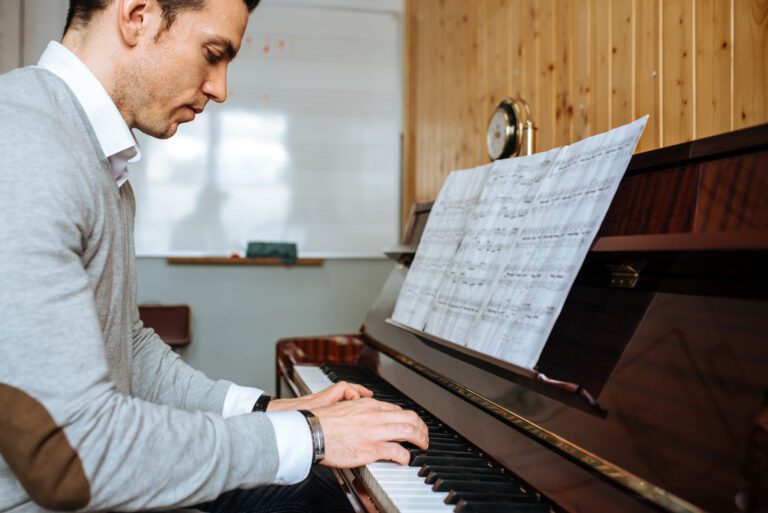
Trying to memorize a complete piece from beginning to end can be overwhelming.
Instead, divide the music into logical sections.
These might be:
- Introduction
- First theme
- Second theme
- Development
- Transition
- Repeated section
- Bridge
- Coda
- Ending
The exact structure depends on the piece.
Once the sections are identified, practise each one separately. Learn how each section begins, develops, and ends.
It is also useful to know how to start from different places. A pianist who can only begin from the first measure may struggle badly if they forget something halfway through.
Being able to start from several sections creates stronger memory and greater performance security.
Don’t Always Practise From the Beginning
One of the most important habits for avoiding piano memorization mistakes is to stop always starting from the beginning.
When students practise a piece from the first measure every time, the beginning often becomes extremely strong while later sections remain weaker.
The pianist may reach the middle of the piece and suddenly become uncertain.
A better approach is to practise different starting points.
For example, one practice session might begin with the introduction. Another might begin with the second theme. Another might begin with the final page.
This teaches the brain that every section can be accessed independently.
It also makes performance recovery easier because the pianist is not psychologically dependent on restarting the entire piece.
Use Hands-Separate Practice When Necessary
Playing both hands together is essential, but hands-separate practice can strengthen memorization.
When practising the right hand alone, the student can focus on melody, fingering, articulation, and phrasing. Left-hand practice can focus on bass lines, chord shapes, accompaniment patterns, and harmonic movement.
Once each hand has been understood independently, putting them together becomes more secure.
This does not mean students should always practise hands separately. The two approaches should complement each other.
Hands-separate work can be especially useful when a passage repeatedly causes memory problems.
Avoid Repeating Mistakes

Repetition is powerful, but it can work against you if the wrong thing is being repeated.
Suppose a pianist repeatedly plays a passage and misses the same note every time. After enough repetitions, that incorrect movement can become familiar.
Instead of playing the entire passage again, stop and identify the problem.
Slow the passage down.
Check the fingering.
Look at the notes.
Listen carefully.
Practise the difficult movement several times correctly.
Then return to the larger phrase.
The goal is not simply to repeat. The goal is to repeat accurately enough that the correct movement becomes reliable.
Practise Without Looking at the Score
If you want to know whether a piece is genuinely memorized, close the score occasionally.
But do not wait until the day before a performance to do this.
Test your memory throughout the learning process.
Play a short section without looking. Then check the score and identify anything you missed.
You can gradually increase the amount of music played from memory.
This process reveals weak areas while there is still plenty of time to correct them.
It also prevents the false confidence that can come from being able to play comfortably while constantly following the notation.
Use Mental Practice Away From the Piano
Memorization does not have to happen entirely at the keyboard.
Mental practice can be extremely useful.
Sit somewhere quiet and imagine the piece. Visualize the keyboard. Think about the opening notes. Hear the melody internally. Recall the chord progression. Imagine the movements of your hands.
You can also look at the score away from the piano and mentally follow the music.
Ask yourself what comes next without physically playing it.
This type of practice strengthens your understanding of the music and creates another memory pathway.
It is particularly useful when you have limited time at the instrument.
Listen to Yourself While Memorizing
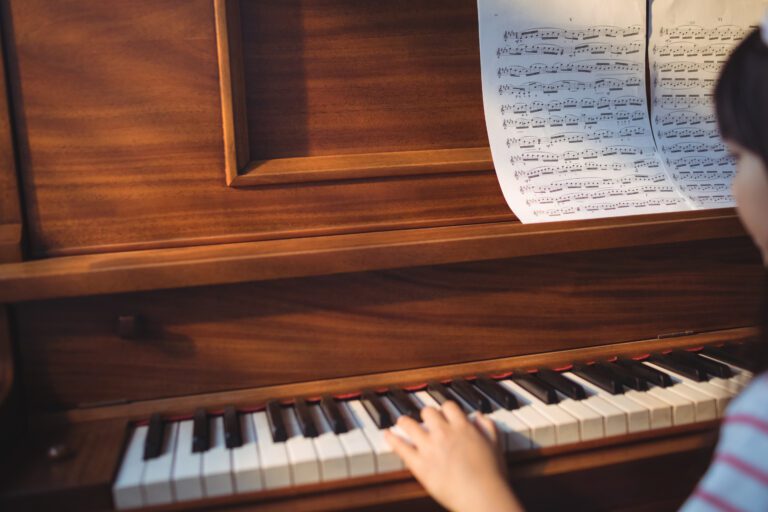
Your ears should be involved in the memorization process.
Many students focus almost entirely on visual information and finger movements. However, hearing the melody, harmony, rhythm, dynamics, and phrasing gives the brain additional information to remember.
Try singing the melody.
Listen to recordings of the piece.
Play a passage and close your eyes.
Ask yourself what chord comes next.
Try to hear a phrase internally before playing it.
The more ways you understand the music, the less dependent your memory becomes on a single system.
Pay Attention to Transitions
Transitions are among the most common places where memory breaks down.
A pianist may know one section perfectly and another section perfectly, but struggle when moving from one to the next.
This happens because the transition itself has not received enough attention.
When practising, isolate the last few measures of one section and the first few measures of the next. Play them together repeatedly.
Then try starting directly from the transition without playing the earlier material.
This creates a stronger connection between sections.
For piano memorization mistakes, transitions deserve special attention because they are often where a pianist discovers that two separately memorized sections do not automatically connect securely.
Memorize the Music in More Than One Way
Reliable memorization usually involves multiple forms of memory.
Visual Memory
Remember what the score looks like.
Think about where the notes appear, how the phrases are arranged, and what the page looks like.
Auditory Memory
Remember how the music sounds.
Hear the melody, harmony, rhythm, dynamics, and phrasing.
Physical Memory
Remember the movements required to play the passage.
This includes fingering, hand position, chord shapes, and physical patterns.
Analytical Memory
Understand the structure of the music.
Know the key, chords, form, repeated patterns, sequences, and important transitions.
When these types of memory support each other, forgetting becomes less likely to completely interrupt a performance.
Don't Memorize Every Note as an Isolated Event

Trying to remember every individual note separately can make memorization unnecessarily difficult.
Instead, look for relationships.
A melody may move through a scale. A left-hand pattern may repeat. A chord progression may appear several times. A phrase may return in a different key.
Recognising these relationships allows the brain to organise information into larger musical units.
This is similar to learning a language. Remembering complete words and phrases is generally more efficient than remembering every letter as an independent piece of information.
Musical patterns can work in a similar way.
Practise Memory Retrieval, Not Just Performance
Regularly testing your memory is another practical way to reduce piano memorization mistakes. Instead of assuming that a piece is memorized because you can play it several times successfully, challenge yourself to begin from different sections, play without the score, recall the harmony, and continue after small errors.
During practice, deliberately stop at different points and ask yourself:
“What comes next?”
“What chord am I playing?”
“What is the next phrase?”
“Where does the melody move?”
Then continue.
This turns memorization into an active process.
Students can also randomly choose a measure or section and try to begin from there. This is a useful test because it shows whether the music is truly understood or whether the hands simply remember a continuous chain of movements.
Learn How to Recover From a Mistake
Even highly prepared pianists can make mistakes during performance.
The goal should not be to create a memory system that can never fail. A better goal is to know what to do if something goes wrong.
If you forget a note or make a small mistake, avoid immediately stopping unless continuing is impossible.
Listen for the musical direction.
Find the next strong beat.
Recall the next harmonic point.
Move toward the next section.
A pianist who knows the structure of the music can often recover more naturally than someone who has memorized only the physical sequence of finger movements.
Recovery skills are therefore an important part of performance preparation.
Practise Starting From Different Places
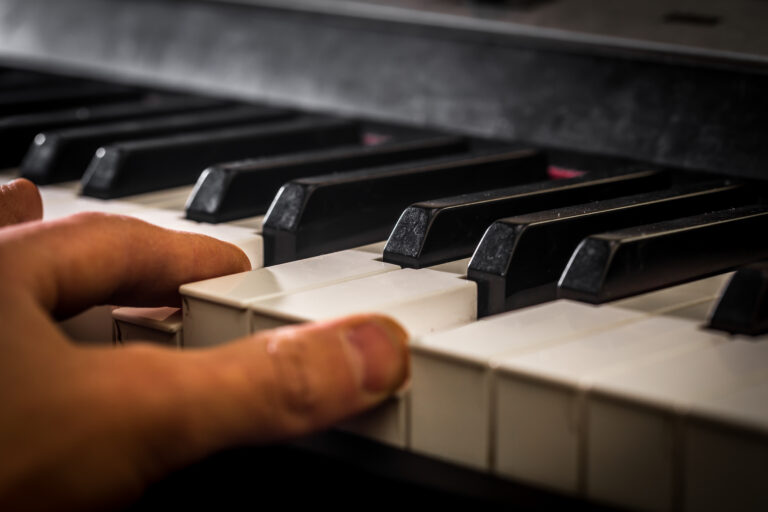
Another effective way to strengthen memory is to choose random starting points.
You might write down section numbers or measure numbers and select one at random.
Start there.
Then choose another.
This exercise prevents the brain from depending on a single sequence.
It also helps identify sections that have not been memorized as securely as others.
Over time, you should be able to enter the piece from multiple points without needing to play everything that comes before them.
Don’t Memorize Only at the End
One of the most effective ways to prevent piano memorization mistakes is to make every section of the piece independently familiar. When students practise different starting points, transitions, and difficult passages instead of always playing from the beginning, they build a more dependable memory of the entire composition.
Use Slow Practice to Strengthen Memory
Slow practice is useful not only for technique but also for memorization.
When you slow down, you have more time to notice individual details.
You can consciously identify the notes, hear the harmonic changes, check the fingering, observe the phrase structure, and anticipate what comes next.
Try playing a difficult passage slowly without the score.
If you forget something, do not immediately speed up or return to the beginning.
Identify exactly where the memory failed and work on that point.
Slow practice can expose weaknesses that fast playing sometimes hides.
Avoid Becoming Dependent on Muscle Memory
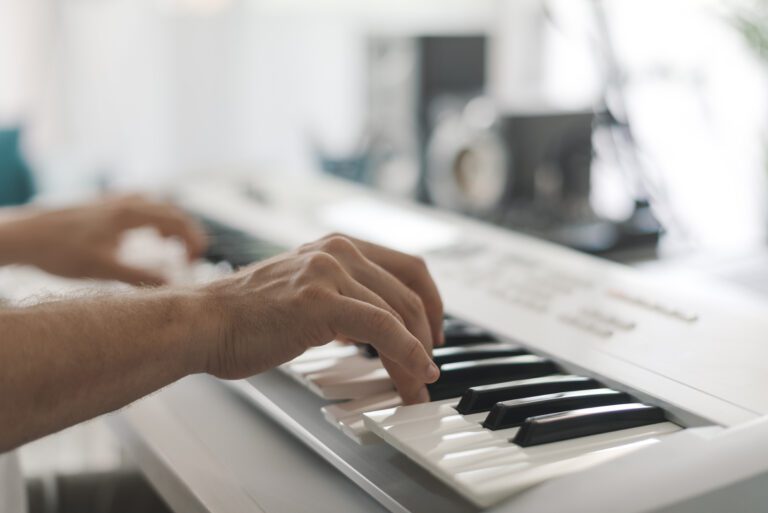
Muscle memory is useful, but it should not carry the entire performance.
If your hands are doing everything automatically and your conscious mind is not engaged with the music, one interruption can cause the whole sequence to collapse.
This is especially risky during performances.
A better approach is to combine physical familiarity with musical understanding.
Know what the harmony is doing.
Know where the melody goes.
Know how the phrase develops.
Know which section comes next.
Know several places from which you can restart.
The more completely you understand the piece, the more resilient your memory becomes.
Record Your Practice
Recording yourself can reveal memory problems that are difficult to notice while playing.
You may discover that one section consistently slows down, that a transition feels uncertain, or that your playing becomes hesitant when you move away from the score.
Listening to recordings also gives you an opportunity to assess the performance from a listener’s perspective.
You can ask:
Did the phrasing remain continuous?
Did I hesitate anywhere?
Where did I appear uncertain?
Which sections sounded confident?
The answers can help you decide what to practise next.
Prepare for Performance Conditions
A piece that is perfectly memorized in a quiet practice room may feel different on stage.
There may be an audience, different lighting, a different piano, unfamiliar acoustics, or simply the psychological pressure of knowing that the performance matters.
This is why students should occasionally simulate performance conditions.
Sit at the piano and play the entire piece without stopping.
Do not restart after every mistake.
Record the performance.
Practise entering the room, sitting down, taking a breath, and beginning.
The more familiar the performance process becomes, the less surprising it feels when the actual event arrives.
What to Do When You Suddenly Forget
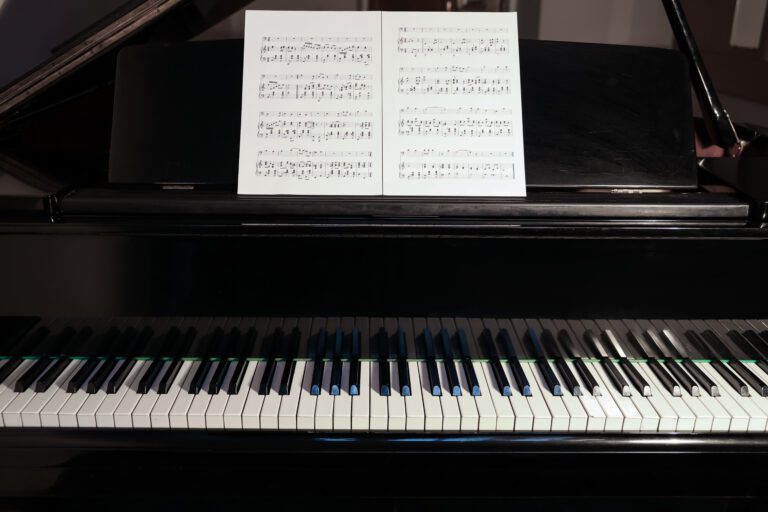
If your memory fails during a performance, panic can make the situation worse.
Instead, pause mentally and listen.
Try to remember the harmonic direction.
Think about the next phrase.
Use the rhythm to help you find your place.
If necessary, move to the next secure section.
This is much easier when you have practised starting from different points and understand the structure of the piece.
A single forgotten note does not necessarily mean the performance has failed. Continuing musically can often be more important than attempting to reproduce every note perfectly.
A Simple Piano Memorization Practice Routine
Students can incorporate memory training into their regular practice without making the process complicated.
Begin by playing through the section with the score. Then identify the musical structure and any patterns. Practise the difficult areas slowly and accurately.
Next, close the score and attempt a small section from memory.
Check the score afterward.
If something was forgotten, identify exactly what went wrong.
Then repeat the section.
Later in the practice session, return to the same passage from memory without looking.
You can finish by starting from a different point in the piece.
This routine encourages active recall instead of passive repetition.
Common Memorization Habits to Avoid
Several habits can make memorization less reliable.
One is always playing from the beginning. Another is practising only when the score is open. Some students repeatedly play the entire piece without isolating difficult sections. Others memorize the notes but never analyse the harmony or structure.
It is also unhelpful to wait until the performance is approaching before testing memory.
Another common problem is restarting every time a mistake occurs. While restarting can be useful during technical practice, it does not teach you how to recover during performance.
Finally, students should avoid assuming that playing a piece several times successfully means it is completely memorized. Memory should be tested under different conditions.
Build Memory That You Can Trust
The most reliable memorization is not based on one trick.
It comes from combining understanding, repetition, listening, analysis, physical familiarity, mental practice, and active recall.
When you know the notes but also understand the chords, structure, melody, rhythm, and transitions, the music becomes easier to access from different directions.
That is the key to reducing piano memorization mistakes.
Instead of asking, “How many times have I played this piece?” ask, “How many different ways can I remember this piece?”
Can you hear it?
Can you see it?
Can you explain its structure?
Can you play it from different sections?
Can you imagine it away from the piano?
Can you recover if you make a mistake?
If the answer to these questions is increasingly yes, your memorization is becoming more secure.
Develop Reliable Piano Memory With The Mystic Keys
At The Mystic Keys, students can develop piano skills through structured, personalised online lessons that go beyond simply learning individual pieces. Teachers can guide students through technique, music reading, musical interpretation, practice strategies, and performance preparation while helping them understand how to approach challenging repertoire.
For students preparing for performances or graded examinations, developing reliable memory can be particularly valuable. Recorded lessons can also give students an opportunity to revisit instructions and musical details while practising between classes.
Memorization becomes much less stressful when it is treated as part of the learning process rather than something that must be completed at the last minute. With thoughtful practice, active listening, musical understanding, and regular testing, students can build memory that is both stronger and more dependable.
The aim is not simply to play a piece without the score. It is to understand the music so thoroughly that you can continue playing with confidence even when something unexpected happens. With the right practice habits and guidance, avoiding piano memorization mistakes becomes a natural part of becoming a more independent and confident pianist.
For more information and exciting resources about learning music, visit our website at The Mystic Keys. For more music content and exciting offers follow us on
Facebook, Instagram, YouTube, LinkedIn, Twitter, Pinterest, and Threads.