Understanding time signatures in worship music is essential for musicians who want to play confidently and stay in sync during worship. Time signatures guide the rhythm and structure of a song, helping musicians know how many beats are in each measure and how the music flows.
Whether you are a pianist, guitarist, or vocalist, mastering time signatures improves your overall performance.
What Are Time Signatures in Worship Music?
To begin understanding time signatures in worship songs, you need to know what a time signature is.
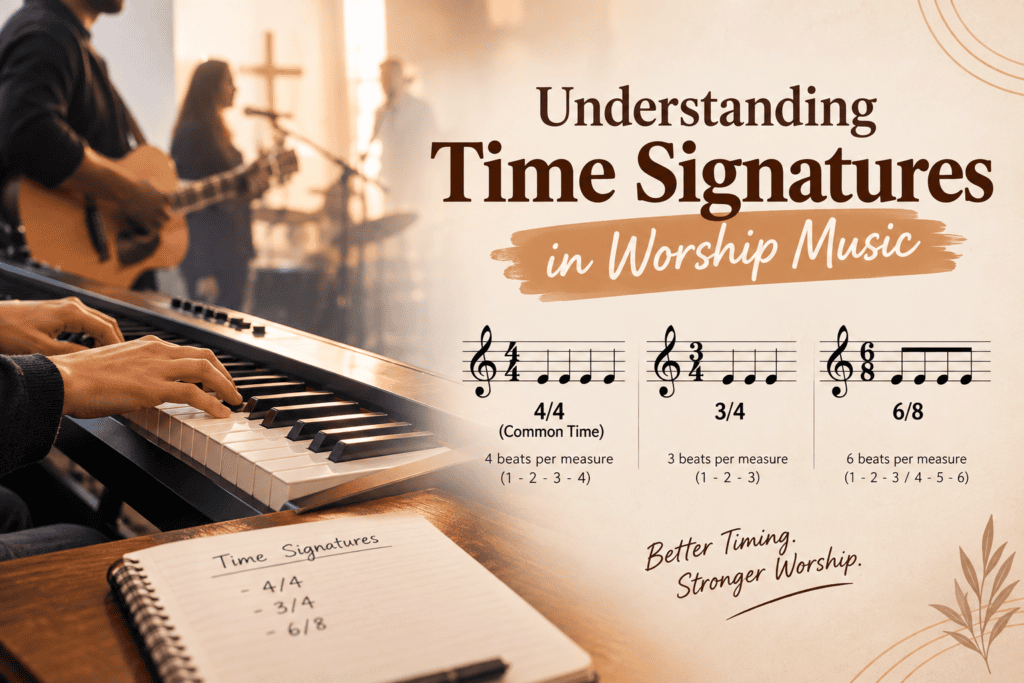
A time signature is written at the beginning of a piece of music and looks like a fraction (for example, 4/4 or 3/4). It tells you:
How many beats are in each measure
What type of note gets one beat
This helps musicians stay together rhythmically.
Common Time Signatures in Worship Songs
Most worship songs use simple and consistent time signatures.
Understanding time signatures in worship music helps musicians:
Stay in rhythm with the band
Follow the worship leader easily
Transition smoothly between sections
Support the congregation
Without proper timing, even simple songs can feel disorganized.
How Musicians Apply Time Signatures
Different instruments interpret time signatures differently.
Piano: Focuses on chord rhythm and flow
Guitar: Uses strumming patterns based on beats
Drums: Establish the groove and tempo
All instruments must stay aligned with the time signature.
Counting Beats Effectively
Counting is the key to mastering rhythm.
Tips:
Count out loud while practicing
Use a metronome
Break down complex sections
Feel the pulse naturally
This builds strong timing skills.
Time Signatures in Worship Music and Transitions
Transitions between songs are common in worship.
Understanding time signatures in worship music helps you:
Move between songs smoothly
Adjust tempo easily
Maintain flow during worship
This keeps the atmosphere consistent.
Common Mistakes to Avoid
❌ Losing count of beats ❌ Rushing or dragging tempo ❌ Ignoring the drummer or leader ❌ Not practicing with a metronome
Avoiding these improves timing and confidence.
Tips to Master Time Signatures
Practice regularly with rhythm exercises
Listen carefully to worship songs
Play along with recordings
Focus on consistency
These habits will strengthen your rhythm skills.
How The Mystic Keys Helps Students
At The Mystic Keys, we teach time signatures in worship music through:
Practical rhythm training
Live playing techniques
Ensemble coordination
Personalized guidance
This helps students perform confidently in worship settings.
Visit our page, Worship Music Online to explore more about our worship music courses.
Conclusion
Understanding time signatures in worship music is a key step toward becoming a better musician. With practice and awareness, you can stay in rhythm, play confidently, and contribute to a smooth worship experience.
👉 Strong rhythm creates strong worship.
For more information and exciting resources about learning music, visit our website at The Mystic Keys. For more music content and exciting offers follow us on