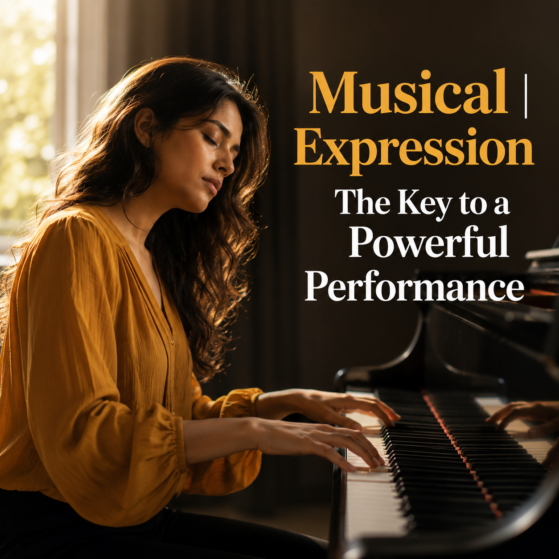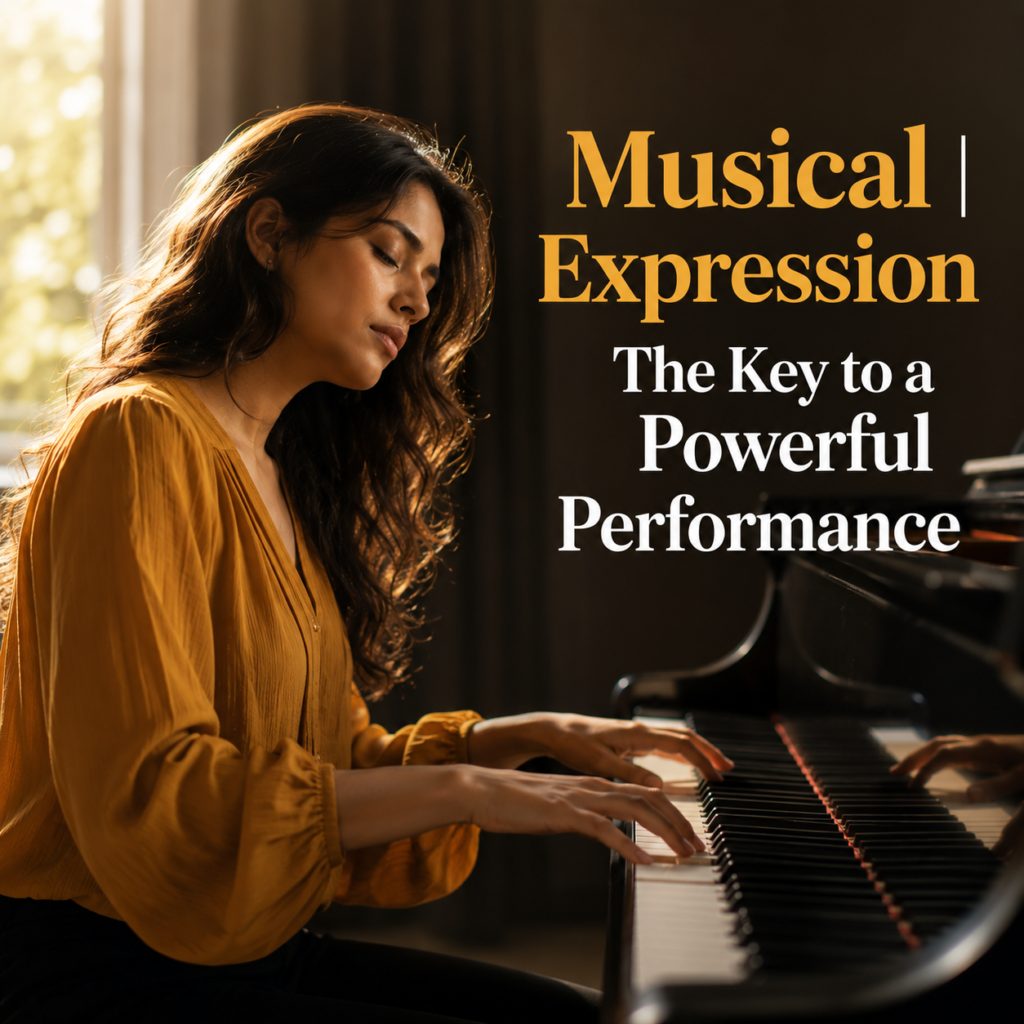
Musical Expression | The Key to a Powerful Performance
A technically accurate piano performance can be impressive, but musical expression is what transforms correct notes into a memorable musical experience. The rhythm may be steady, the difficult passages may be played flawlessly, and every detail of the score may be followed carefully. Yet, without musical expression, even a technically perfect performance can feel distant or mechanical. It is through thoughtful phrasing, dynamics, articulation, tone, tempo, and touch that a pianist gives the music emotion, character, and meaning.
Musical expression is what transforms a sequence of notes into a meaningful musical experience. It allows a pianist to communicate emotion, create contrast, build anticipation, and tell a story without saying a single word. In fact, two pianists can play exactly the same piece from the same score and create completely different experiences simply because they interpret and express the music differently.
For this reason, developing musical expression is just as important as developing technical skill. A powerful pianist does not simply play the notes; they understand what those notes are trying to say.

What Is Musical Expression in Piano Playing?
Musical expression refers to the way a pianist communicates the character, emotion, and meaning of a piece through performance. It involves much more than simply playing loudly or softly. Dynamics, articulation, phrasing, tempo, rhythm, pedaling, tone, pauses, and even silence contribute to the expressive quality of a performance.
Consider a simple melody played with exactly the same volume from beginning to end. Even if every note is correct, the phrase may sound flat. However, when the pianist gently shapes the beginning, allows the melody to grow naturally, gives emphasis to an important note, and gradually releases the phrase, the same music can suddenly feel alive.
Therefore, expression is not an additional decoration placed on top of technique. It is part of the musical language itself.
Why Musical Expression Matters
Music communicates emotions that words sometimes cannot fully describe. A pianist may convey tenderness through a delicate touch, excitement through rhythmic energy, sadness through a carefully shaped phrase, or confidence through a strong and resonant sound.
Moreover, expression gives direction to the music. Without it, every note can appear to have equal importance. With thoughtful interpretation, certain notes become destinations, phrases gain movement, and musical ideas begin to interact with one another.
This is particularly important during performances. Audiences may not understand every technical detail of a difficult piece, but they can immediately sense whether the pianist is communicating something meaningful. Consequently, a technically demanding performance is not necessarily more powerful than a simple one. Sometimes, a beautifully shaped melody played with genuine feeling can leave a far stronger impression.
Understanding the Story Behind the Music
Before trying to make a piece expressive, a pianist should first understand what they are playing. Knowing the composer, historical period, musical style, and overall character of a composition can provide valuable clues about its interpretation.
A piece written during the Baroque period, for example, may require a different approach from a Romantic-era composition. Similarly, a graceful classical movement should not necessarily be approached with the same emotional intensity as a dramatic Romantic work.
The title and markings in the score can also offer important guidance. Words such as dolce, cantabile, espressivo, con brio, or agitato suggest different moods and approaches.
However, understanding the background does not mean that every pianist must create exactly the same interpretation. Once the musical language is understood, there is still room for individuality. In fact, personal interpretation is one of the most beautiful aspects of piano performance.
Musical Expression and the Power of Phrasing
Phrasing is one of the most important elements of musical expression. Just as we naturally change our voice when speaking, a pianist needs to shape musical sentences so they feel natural and purposeful.
A musical phrase often has a beginning, a direction, a point of arrival, and an ending. If every note receives the same weight, that sense of direction disappears. Instead, the pianist should identify where the phrase is moving and allow the sound to support that journey.
For instance, a melody may gradually rise toward an important note. Bringing that note forward can create a feeling of arrival. Afterward, allowing the sound to relax can give the phrase a natural sense of completion.
This approach makes the piano sound less like a collection of individual notes and more like a voice that is speaking.
Musical Expression Through Dynamics
Dynamics are often the first expressive element pianists learn, but their role goes much deeper than simply following piano and forte markings.
A gradual crescendo can create anticipation, while a sudden change in volume can introduce surprise or drama. Likewise, a carefully controlled diminuendo can make a phrase feel as though it is disappearing into the distance.
Importantly, expressive dynamics depend on context. A forte passage does not always mean “play as loudly as possible.” Sometimes the most effective forte is powerful because it has been prepared by quieter music.
In the same way, playing softly is not simply about pressing the keys gently. A quiet passage can still have warmth, depth, and emotional intensity. The goal is to create the right sound for the musical moment rather than simply following volume instructions mechanically.
Articulation Gives Music Its Character
How a pianist plays a note can be just as important as which note they play. This is where articulation becomes essential.
Legato can create a smooth, connected quality, while staccato can bring lightness, energy, or playfulness. Accents can provide emphasis, and carefully controlled detached playing can create clarity and elegance.
At the same time, articulation should support the character of the composition. A pianist who understands the musical intention can choose a touch that enhances the phrase rather than treating every articulation marking as an isolated instruction.
Even within a single melody, different articulations can subtly change the emotional effect. That flexibility gives the pianist another powerful tool for communication.
Tempo, Rubato, and Musical Expression
Tempo provides the underlying movement of a piece, but expressive playing does not always mean maintaining an absolutely rigid speed from beginning to end.
In appropriate styles and passages, subtle changes in tempo can make a phrase feel more natural. This expressive flexibility is often associated with rubato, which allows the performer to temporarily stretch or compress the timing while maintaining the overall musical flow.
Nevertheless, rubato should be used thoughtfully. Too much can make the performance feel unstable, while too little can make it sound overly mechanical.
The most effective tempo changes often feel almost natural to the listener. Rather than sounding like the pianist is deliberately slowing down or speeding up, the music simply seems to breathe.
The Role of Pedaling in Expression
The sustain pedal can dramatically influence the emotional character of a piano performance. Used carefully, it can connect harmonies, enrich the tone, create resonance, and give certain passages a sense of depth.
However, expressive pedaling is not simply about holding the pedal down for longer. Excessive pedal can blur harmonies and hide important details, particularly in passages with fast harmonic changes.
A thoughtful pianist listens carefully to how the sound changes after the pedal is engaged. Sometimes a clean pedal change creates clarity; at other times, allowing a little resonance to remain can produce warmth and atmosphere.
Therefore, pedaling should be treated as part of musical interpretation rather than merely a technical habit.
Tone, Touch, and Musical Expression
Every pianist develops a personal relationship with the piano through touch. The same instrument can produce dramatically different sounds depending on how the keys are approached.
A gentle touch can create intimacy, while a deeper and more energetic approach can produce a fuller sound. Yet expressive tone is not simply determined by how hard a key is pressed. The timing, speed, weight, and coordination of the fingers, hand, wrist, and arm all influence the resulting sound.
Listening becomes especially important here. Instead of thinking only about how the fingers feel, pianists should ask themselves what they actually hear.
Does the melody stand out? Is the accompaniment too prominent? Does the sound feel warm, bright, heavy, delicate, or clear?
These questions encourage active listening and help develop a more refined expressive touch.
Silence Is Also Part of the Music
One of the most overlooked aspects of musical expression is silence.
A pause can create anticipation. A brief moment of stillness can make the following phrase feel more powerful. Likewise, allowing the final resonance of a piece to fade naturally can create a sense of closure.
In this way, music is shaped not only by the sounds a pianist produces but also by the spaces between them.
Learning to respect silence can make a performance more confident and expressive. Rather than rushing to fill every moment, the pianist allows the music to breathe.
Technique and Expression Must Work Together
It is sometimes tempting to think of technique and expression as two separate stages: first learn the notes, and then add emotion. In reality, the two are closely connected.
Strong technique gives a pianist the freedom to express musical ideas without being constantly distracted by difficult passages. When fingering, coordination, rhythm, and accuracy become more secure, attention can move toward phrasing, tone, dynamics, and interpretation.
At the same time, expression can improve technical practice. When a pianist understands where a phrase is heading, difficult passages often become easier to organize because the hands are working toward a musical purpose.
Ultimately, technique is the foundation, while expression gives that foundation a voice.
How to Practice Musical Expression
Expressive playing can absolutely be developed through practice. Instead of always practicing a piece from beginning to end, try focusing on small musical ideas.
Begin by identifying the main melody and deciding which notes or phrases need greater emphasis. Then experiment with different dynamic levels and listen carefully to the results. Practicing a phrase slowly can also reveal whether the notes are truly connected or whether unnecessary tension is interrupting the musical line.
Recording yourself is another valuable approach. A performance can feel expressive while you are playing it, yet sound quite different when you hear it afterward. Listening back allows you to notice uneven dynamics, rushed transitions, excessive pedal, or phrases that need more direction.
Most importantly, avoid trying to add every expressive technique at once. Choose one element, such as phrasing or dynamics, and listen to how it changes the music. Once that becomes natural, gradually introduce another layer.
Listen Before You Imitate
Listening to great pianists can be extremely inspiring. Different performers may interpret the same composition with contrasting tempos, dynamics, articulation, and emotional intensity.
However, listening should not become an exercise in copying someone else’s interpretation. Instead, pay attention to what makes a performance compelling.
Ask yourself why a particular phrase feels emotional. Notice where the pianist creates tension, where the melody becomes prominent, and how the performer handles transitions between contrasting sections.
Afterward, return to your own interpretation and experiment. The goal is not to sound exactly like another pianist but to discover what you want to communicate through the music.
Developing Your Own Musical Expression
As technical ability grows, a pianist gradually begins to develop a personal musical identity. This does not happen overnight. It comes from years of listening, practicing, experimenting, performing, and reflecting.
Two pianists may make different expressive choices and both create convincing performances. One may prefer a more restrained interpretation, while another may emphasize dramatic contrasts. Neither approach is automatically better if both are musically thoughtful and appropriate to the composition.
Personal expression, therefore, does not mean ignoring the score. Instead, it means understanding the composer’s intentions while finding an authentic way to communicate them.
That balance between respect for the music and individuality is what can make a performance truly memorable.
Common Mistakes That Can Reduce Musical Expression
One common mistake is trying to make every moment dramatic. If everything is played with maximum emotion, nothing has enough contrast to feel genuinely special. Expression becomes more effective when intensity is balanced with restraint.
Another issue is allowing technical concerns to dominate the performance. A pianist may become so focused on avoiding mistakes that the musical message gets lost. While accuracy matters, perfection should not come at the cost of communication.
Rushing through transitions can also weaken an otherwise expressive performance. Important phrases sometimes need space, and allowing those moments to breathe can make a significant difference.
Finally, excessive use of pedal, rubato, or dramatic dynamics can distract from the composition rather than enhancing it. Expressive choices work best when they serve the music.
Musical Expression Turns Performance Into Communication
A powerful piano performance is not defined solely by speed, complexity, or technical difficulty. Its real impact comes from the connection between the pianist, the music, and the listener.
When phrasing has direction, dynamics have purpose, articulation has character, and the tone reflects the mood, the piano begins to communicate something beyond the written score. The listener is no longer simply hearing notes; they are experiencing a musical story.
That is the true power of musical expression.
Final Thoughts on Musical Expression
Learning to play the piano accurately is an important achievement, but learning to express music is what takes a pianist to another level. Every element—from the smallest change in touch to a carefully shaped phrase—can contribute to the emotional journey of a performance.
Therefore, the next time you sit at the piano, do more than ask, “Am I playing the notes correctly?”
Ask yourself:
“What am I trying to say through these notes?”
That question can completely change the way you practice, interpret, and perform. With the right guidance, developing musical expression becomes a natural part of your piano journey. The Mystic Keys offers personalized piano lessons online, helping students build not only technical confidence but also the musicality, interpretation, and expressive skills needed to create powerful performances.
Because ultimately, great piano playing is not simply about playing what is written. It is about making the listener feel what the music has to say.
For more information and exciting resources about learning music, visit our website at The Mystic Keys. For more music content and exciting offers follow us on
Facebook, Instagram, YouTube, LinkedIn, Twitter, Pinterest, and Threads.