
Violin Practice | Daily Habits That Lead to Success
Learning the violin is an exciting journey filled with beautiful melodies, personal growth, and rewarding milestones. However, successful violin practice is not about spending endless hours with the instrument once in a while. Instead, effective violin practice is built on developing consistent daily habits that steadily improve your technique, confidence, and musical expression.
Many aspiring violinists believe that talent is the biggest factor in success. While natural ability can certainly help, consistent practice and the right habits make a much greater difference over time. Every accomplished violinist has reached their level through patience, discipline, and a commitment to daily improvement.
Whether you are a complete beginner or someone preparing for advanced performances, your everyday routine shapes your progress. Even small improvements made consistently can lead to remarkable results over weeks, months, and years. Fortunately, building effective practice habits is easier than most people imagine.
This guide explores the daily habits that help violin students improve faster while making practice sessions more productive, enjoyable, and meaningful.

Why Daily Violin Practice Matters
The violin is one of the most expressive musical instruments, but it also demands precision and consistency. Unlike many activities where occasional effort is enough, violin playing relies heavily on muscle memory, listening skills, and coordination.
Daily practice allows your fingers, arms, shoulders, and ears to gradually work together. Every session reinforces proper technique while reducing mistakes that often develop when practice is irregular. Consequently, students who practice consistently usually progress faster than those who only practice occasionally for longer periods.
Furthermore, regular practice helps maintain flexibility in both the left and right hands. Bow control, finger placement, posture, and intonation all require continual reinforcement. Without frequent practice, these skills can fade surprisingly quickly.
Another important benefit is confidence. The more often you play, the more comfortable the instrument feels in your hands. As a result, performances become less stressful, and learning new pieces becomes much easier.
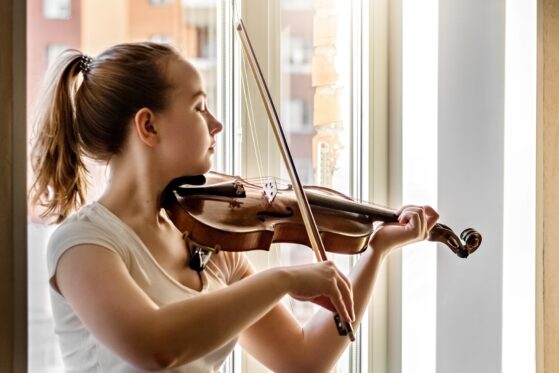
Create a Consistent Violin Practice Routine
One of the most successful habits every violinist develops is practicing at the same time each day. A consistent schedule removes the need to constantly decide when to practice, turning it into a natural part of your daily life.
Morning practice often works well because the mind is fresh and distractions are limited. On the other hand, evening sessions can also be highly productive if they fit your schedule better. The most important factor is consistency rather than the specific time.
Your practice environment also plays an important role. Choose a quiet room with good lighting and enough space to move your bow comfortably. Keeping your violin, bow, music stand, and sheet music readily available makes it much easier to begin practicing without unnecessary delays.
Eventually, your brain begins associating that time and place with focused learning. Over time, starting a practice session requires less motivation because it becomes an established habit.
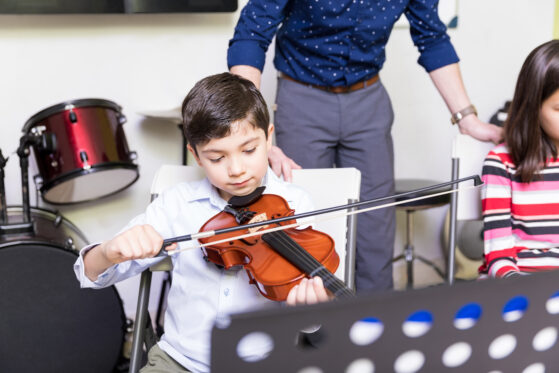
Begin Every Session with a Proper Warm-Up
Just as athletes warm up before training, violinists should prepare both their bodies and minds before diving into challenging music.
Start with simple bowing exercises on open strings. These exercises improve tone production while helping your right arm relax naturally. Next, practice slow scales to wake up your fingers and strengthen intonation.
Meanwhile, pay attention to your posture. Relax your shoulders, maintain a balanced stance, and avoid gripping the violin too tightly. Excessive tension can limit your movement and eventually lead to discomfort or even injury.
A thoughtful warm-up also helps you transition mentally into practice mode. Instead of rushing directly into difficult passages, you gradually prepare yourself for focused and productive learning.
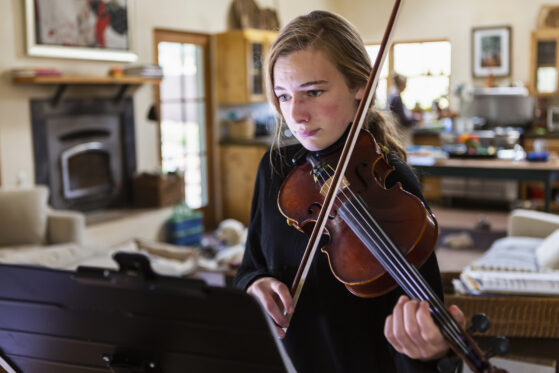
Focus on Quality Instead of Quantity
Many students assume that practicing for several hours automatically leads to better results. In reality, the quality of practice matters far more than the total amount of time spent holding the violin.
A focused thirty-minute session often produces greater improvement than two hours of distracted playing. During practice, concentrate fully on every note, every bow stroke, and every movement. Whenever you notice mistakes, slow down and correct them carefully instead of repeatedly playing through them.
Deliberate practice encourages steady improvement because it emphasizes solving problems rather than simply repeating them. Consequently, your brain learns correct movements much faster.
Remember that every repetition teaches your muscles something. Therefore, practicing accurately is far more valuable than practicing quickly.
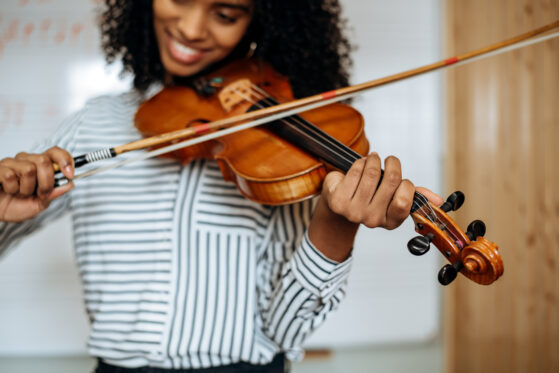
Set Small Goals for Better Violin Practice Progress
Large goals such as mastering an entire concerto can feel overwhelming. Breaking them into smaller objectives makes progress much more manageable and motivating.
For example, today’s goal might be improving one difficult measure, refining a particular bowing technique, or playing a scale with better intonation. Tomorrow, you can build upon those achievements while introducing a new challenge.
Small victories create momentum. As each goal is accomplished, your confidence grows, encouraging you to continue practicing consistently.
Additionally, measurable goals make it easier to recognize improvement. Instead of wondering whether you’re getting better, you can clearly see the progress you’ve made.
How Slow Violin Practice Builds Strong Technique
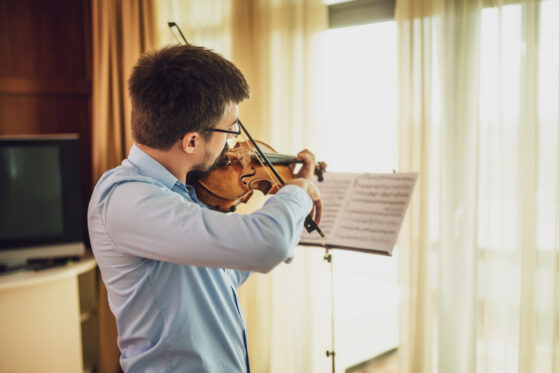
One of the most effective habits shared by professional violinists is practicing slowly before increasing speed.
Playing slowly allows you to hear every pitch clearly, maintain accurate rhythm, and develop precise finger placement. It also gives your brain enough time to process each movement correctly.
Once you can perform a passage cleanly at a slower tempo, gradually increase the speed while maintaining the same level of accuracy. Rushing too early often introduces unnecessary mistakes that become difficult to eliminate later.
Although slow practice may seem less exciting initially, it creates a much stronger technical foundation that supports faster playing in the future.

Develop Better Listening Skills Through Violin Practice
Successful violinists do far more than move their fingers correctly. They actively listen to every sound they produce.
Carefully notice whether your notes are perfectly in tune. Listen to the smoothness of your bow changes, the richness of your tone, and the consistency of your dynamics. Whenever something sounds unclear, pause and identify the reason before continuing.
Recording your practice sessions can be especially helpful. Hearing yourself objectively often reveals details that are difficult to notice while playing.
Over time, active listening sharpens your musical awareness. Consequently, you become better at making subtle adjustments that significantly improve your overall performance.
Practice Difficult Sections Separately
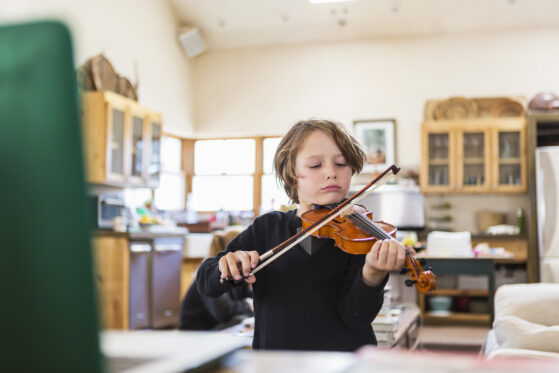
Every piece contains passages that require extra attention. Instead of repeatedly playing the entire composition, isolate the sections that need the most work.
Work through those challenging measures slowly and patiently. Repeat them several times with full concentration before reconnecting them to the surrounding music.
This focused approach prevents frustration while making practice sessions much more efficient. Rather than spending equal time on sections you already know well, you invest your energy where it creates the greatest improvement.
Eventually, difficult passages become comfortable, allowing the entire piece to flow naturally.

Make Scales and Exercises a Regular Part of Violin Practice
Many students rush directly into songs because they seem more enjoyable. Nevertheless, scales and technical exercises remain some of the most valuable parts of violin practice.
Scales strengthen finger accuracy, improve intonation, develop bow control, and increase familiarity with different key signatures. Technical exercises also build speed, coordination, and finger independence.
Instead of viewing these exercises as repetitive drills, consider them the foundation that supports every piece you play. The stronger your technical skills become, the easier it is to learn increasingly challenging music.
Professional musicians continue practicing scales throughout their entire careers because they understand their lasting value.
Stay Fully Focused During Every Violin Practice Session
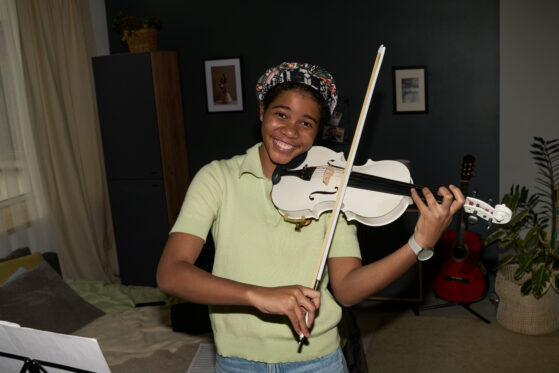
Distractions can quickly reduce the effectiveness of a practice session. Checking your phone, watching television, or constantly switching tasks interrupts your focus and slows your progress.
Before beginning, silence notifications and create an environment that encourages concentration. During practice, give your complete attention to the music rather than thinking about unrelated tasks.
Focused practice helps your brain absorb new information more efficiently. As a result, you often accomplish more in a shorter period.
Even brief sessions become highly productive when your attention remains fully engaged.

Balance Technique with Musical Expression
Technical accuracy is essential, but music is about much more than playing the correct notes.
As your technique improves, begin thinking about phrasing, dynamics, articulation, and emotional expression. Ask yourself what story the music is telling and how you can communicate those emotions through your performance.
Experiment with different bow speeds, vibrato, and tone colours. Listen to professional violinists for inspiration while gradually developing your own musical voice.
This balance between technical precision and artistic expression transforms practice from a mechanical exercise into a creative experience.
Stay Patient When Violin Practice Progress Slows
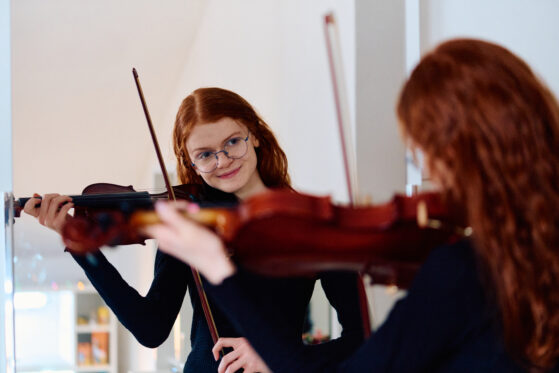
Every violinist experiences periods when progress seems slower than expected. These plateaus are a natural part of learning and should never be mistaken for failure.
Sometimes your brain is quietly strengthening new skills even when noticeable improvement appears limited. Continued practice eventually leads to breakthroughs that often happen quite suddenly.
Rather than becoming discouraged, trust the learning process. Maintain your routine, celebrate small improvements, and remember that every accomplished musician has faced similar challenges.
Patience often separates successful learners from those who give up too soon.
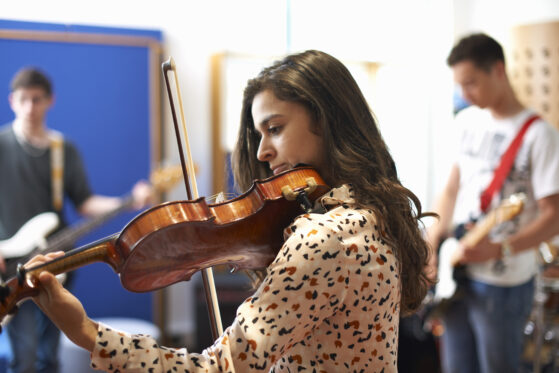
Learn from Your Teacher’s Feedback
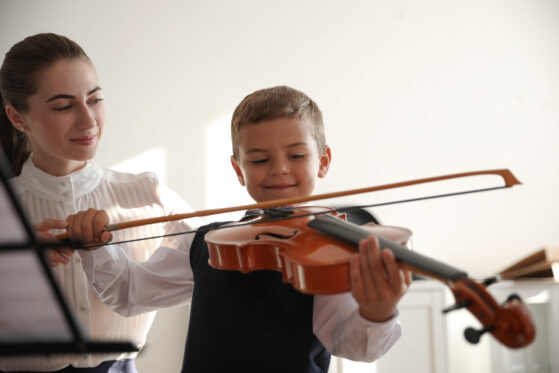
A skilled violin teacher provides guidance that is difficult to achieve through self-study alone. Their observations help identify technical issues before they become long-term habits.
After each lesson, review your teacher’s suggestions carefully during your daily practice sessions. Applying corrections immediately reinforces proper technique while preventing repeated mistakes.
Don’t hesitate to ask questions whenever something feels unclear. Understanding why a technique works often makes it much easier to apply consistently.
Regular communication with your instructor keeps your learning focused and ensures steady progress toward your musical goals.
Enjoy the Journey, Not Just the Destination
While it is natural to dream of performing advanced compositions, remember that every stage of learning offers valuable experiences.
Celebrate mastering a new scale, improving your tone, or successfully playing a difficult phrase. These moments may seem small individually, yet together they build the foundation for long-term success.
Enjoy experimenting with new pieces, discovering different musical styles, and expressing yourself through the violin. The more you appreciate the learning process, the more motivated you will remain.
Most importantly, remember that every great violinist was once a beginner who simply chose to keep practicing.

Conclusion
Success on the violin is rarely the result of extraordinary talent alone. Instead, it grows from consistent daily habits practiced with patience, focus, and determination. Building a regular routine, warming up properly, practicing slowly, listening carefully, and maintaining a positive mindset all contribute to steady improvement over time. Whether you are learning through Violin Lessons Online or practicing independently, consistency remains the key to lasting improvement.
Progress may not always happen overnight, but every focused practice session moves you one step closer to becoming the violinist you aspire to be. By embracing these daily habits, you will not only strengthen your technical abilities but also deepen your connection with music, making every practice session a rewarding part of your musical journey. At The Mystic Keys, we encourage every student to develop effective practice habits that inspire confidence, creativity, and a lifelong love for music.
For more information and exciting resources about learning music, visit our website at The Mystic Keys. For more music content and exciting offers follow us on
Facebook, Instagram, YouTube, LinkedIn, Twitter, Pinterest, and Threads.