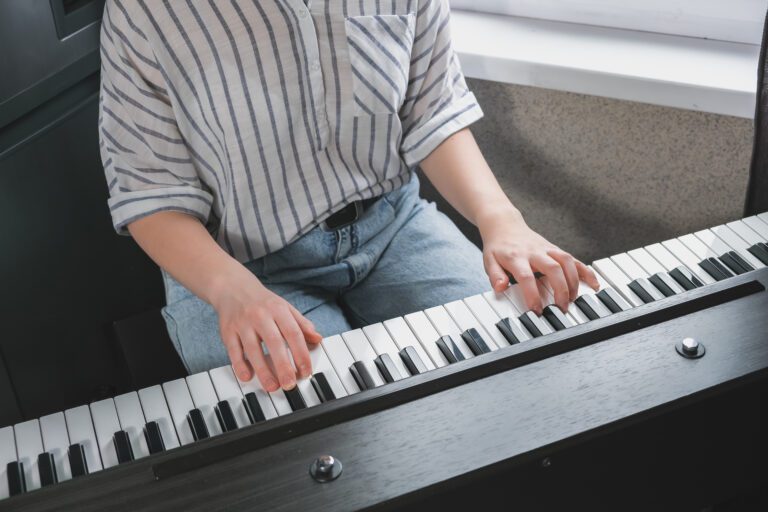
When audiences watch a live band perform, their attention is often drawn to the lead singer, guitarist, or drummer. While these musicians are highly visible, there is another performer whose contribution is often overlooked yet incredibly important. Understanding the hidden role of keyboard players in a bandreveals just how much they influence the overall sound, energy, and musical depth of a performance.
Keyboard players are among the most versatile musicians in any ensemble. They can provide harmony, rhythm, orchestral textures, bass support, and even lead melodies when needed. Their ability to fill musical gaps and connect different elements of a song makes them an essential part of a successful band.
At The Mystic Keys, students learn not only how to play the keyboard but also how to become effective ensemble musicians. In this blog, we explore the hidden role of keyboard players in a band and why their contribution is far more significant than many people realize.
Understanding the Hidden Role of Keyboard Players in a Band
Keyboard players often work behind the scenes musically.
Their responsibilities include:
Supporting harmony
Strengthening rhythm
Adding atmosphere
Filling musical space
Enhancing arrangements
Although they may not always be in the spotlight, they are crucial to the band’s overall sound.
Creating Harmonic Foundations
One of the most important responsibilities of a keyboard player is providing harmony.
Through chords and voicings, keyboardists help:
Support vocal melodies
Strengthen chord progressions
Create musical richness
Without harmony, songs can feel incomplete and less engaging.
The Hidden Role of Keyboard Players in a Band Through Layering
Keyboard players add layers that enrich a performance.
These layers may include:
Piano sounds
Strings
Pads
Organ textures
Synth sounds
These elements help create a fuller and more professional sound.
Supporting the Rhythm Section
Although drummers and bass players are often associated with rhythm, keyboardists contribute significantly as well.
They help by:
Reinforcing rhythmic patterns
Playing rhythmic chord stabs
Supporting groove and timing
Strong rhythmic keyboard playing helps the entire band stay connected.
Filling Musical Gaps
Every song contains moments where certain instruments pause or simplify their parts.
Keyboard players often fill these spaces by:
Sustaining chords
Adding texture
Providing subtle accompaniment
This keeps the music flowing smoothly.
Creating Atmosphere and Emotion
One reason the hidden role of keyboard players in a band is so important is their ability to shape emotion.
Keyboard sounds can create:
Warmth
Excitement
Tension
Peacefulness
Energy
The atmosphere of many songs depends heavily on keyboard contributions.
Supporting Lead Vocalists
Great keyboard players understand how to support singers.
They achieve this by:
Choosing appropriate sounds
Avoiding unnecessary clutter
Enhancing emotional moments
Their role is often to complement rather than compete with the vocals.
Adapting to Multiple Musical Styles
Keyboard players are among the most versatile musicians in a band.
They commonly perform in:
Pop bands
Worship teams
Rock groups
Jazz ensembles
Corporate bands
Their flexibility makes them valuable in almost any musical setting.
Why Keyboard Players Need Strong Listening Skills
Listening is one of the most important skills for ensemble playing.
Keyboardists must pay attention to:
Drums
Bass lines
Guitar parts
Vocal phrasing
Good listening helps them make effective musical decisions.
The Hidden Role of Keyboard Players in a Band During Live Performances
Live performances require quick thinking and adaptability.
Keyboard players often:
Change sounds instantly
Adjust volume levels
Respond to unexpected situations
Their ability to adapt keeps performances running smoothly.
Adding Orchestral and Cinematic Elements
Modern keyboards can recreate the sounds of entire orchestras.
This allows keyboard players to add:
Strings
Brass sections
Choirs
Ambient textures
These sounds dramatically enhance live performances.
Providing Musical Transitions
Transitions between sections can determine how professional a band sounds.
Keyboard players help connect:
Verses and choruses
Song endings
Setlist transitions
Their contributions make performances feel seamless.
Enhancing Worship and Contemporary Music
In worship music, keyboardists often play a central role.
They use:
Piano
Pads
Strings
Ambient sounds
These elements help create a supportive and immersive worship environment.
Why Musical Awareness Matters
The best keyboard players understand the entire arrangement, not just their own part.
Playing in a band requires more than technical ability.
Students must learn:
Listening skills
Timing
Sound selection
Musical awareness
At The Mystic Keys, students receive practical training that prepares them for real-world ensemble performance.
Long-Term Benefits of Understanding Band Roles
Keyboard players who understand their role develop:
Better musical judgment
Stronger collaboration skills
Increased performance confidence
Greater versatility
These qualities help them become valuable members of any musical group.
Conclusion
The hidden role of keyboard players in a band is far more significant than many people realize. From providing harmony and rhythm to creating atmosphere and supporting transitions, keyboardists help shape the overall musical experience. Their versatility allows them to strengthen every aspect of a performance while helping other musicians shine.
At The Mystic Keys, students learn how to become complete keyboard players who understand both technical skills and ensemble performance. By developing musical awareness, listening skills, and adaptability, keyboardists can become the foundation that holds a band together.
If you want to develop professional keyboard skills and learn how to perform confidently with other musicians, explore Keyboard Lessons Onlineand begin your journey toward becoming a versatile and impactful performer.
For more information and exciting resources about learning music, visit our website at The Mystic Keys. For more music content and exciting offers follow us on