Learn Hindustani Vocals | Breaking Classical Singing Myths
For years, Hindustani classical music has been admired from a distance. Many people listen to a soulful alaap or a beautifully rendered bandish and immediately assume that learning such music is only meant for gifted singers or people born into musical families. As a result, several aspiring singers hesitate to even explore opportunities to Learn Hindustani Vocals, believing the journey is far too difficult or reserved for a select few. The art form often carries an aura of seriousness that unintentionally discourages beginners from even trying.c
At the same time, modern learners are surrounded by fast-paced music trends, short-form content, and instant results. Because of that, classical training can appear rigid, complicated, or outdated. Some assume they must already have a naturally perfect voice. Others believe they are “too old” to begin. A few even think classical music limits creativity instead of enhancing it.
The truth is very different.
Learning Hindustani vocals is not reserved for a select few. It is a journey of voice development, emotional expression, listening, discipline, and gradual growth. Like any meaningful skill, it becomes approachable when the myths around it are removed. Once these misconceptions fade away, students often discover that classical training is not only achievable but deeply rewarding.
Understanding the reality behind these myths can completely change the way aspiring singers approach music.
Learn Hindustani Vocals Without Worrying About a “Perfect” Voice
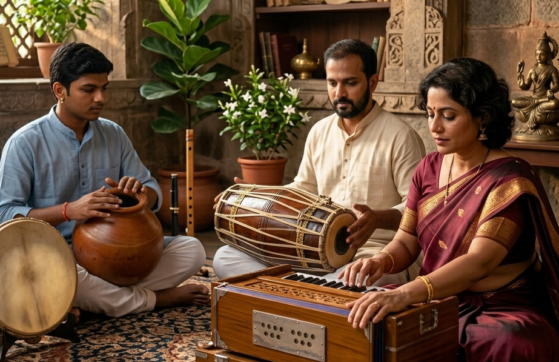
One of the biggest misconceptions surrounding Hindustani classical music is the belief that only naturally gifted singers can learn it successfully. While some individuals may begin with stronger tonal quality or better pitch sense, classical music is fundamentally built on training and practice rather than raw talent alone.
A voice is not a fixed instrument. It evolves over time. Through regular riyaaz, breath control, voice placement, and listening exercises, even an average voice can become stable, expressive, and melodious. Many respected vocalists spent years refining their tone before reaching mastery.
Moreover, Hindustani music does not demand that every singer sound identical. Classical training actually helps individuals discover the uniqueness of their own voice. Instead of forcing imitation, it develops vocal identity gradually.
Patience plays a larger role than natural brilliance. Consistent practice often creates better singers than talent without discipline.
Classical Music Is for all who Loves Music
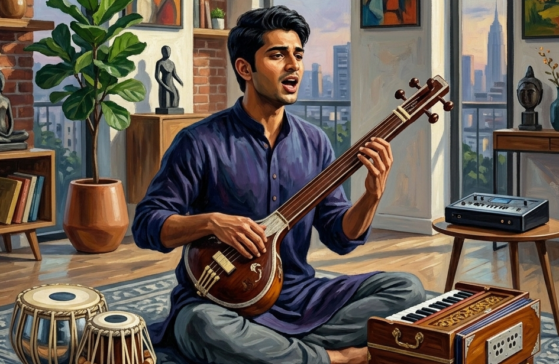
A large number of people avoid learning Hindustani vocals because they assume the training only benefits those planning a professional music career. In reality, countless students learn classical singing simply because they love music.
Some join classes to improve their playback singing. Others learn for devotional music, stage confidence, emotional well-being, or personal fulfillment. Parents often enroll children to improve concentration, discipline, and listening abilities. Adults, meanwhile, frequently turn to music as a calming and creative escape from stressful routines.
Classical training strengthens the foundation of every singing style. Whether someone enjoys Bollywood songs, ghazals, bhajans, fusion music, or independent music production, understanding sur and rhythm improves overall musicality.
The beauty of Hindustani music lies in the fact that it welcomes both ambition and passion equally. You do not need a performance goal to begin learning.
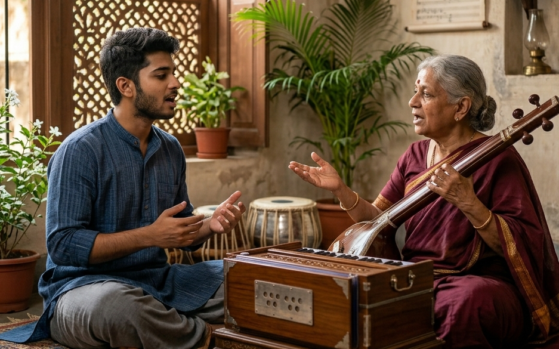
Learn Hindustani Vocals Without Waiting for Years to Sound Good
Another common fear is that classical music demands years of struggle before a student can sing anything enjoyable. This idea usually comes from watching advanced performances without understanding the step-by-step learning process behind them.
In actual training, students begin with simple swaras, alankars, and basic compositions designed to build confidence gradually. As voice control improves, learners start recognizing ragas, maintaining pitch stability, and understanding rhythm patterns. Even within a few months, sincere students notice positive changes in their singing.
Growth in classical music is layered. Every stage brings its own sense of achievement. The journey itself becomes enjoyable because improvement is constantly visible.
Advanced mastery certainly requires dedication over many years, but meaningful singing does not take decades to emerge. A beginner can experience musical progress much earlier than most people imagine.
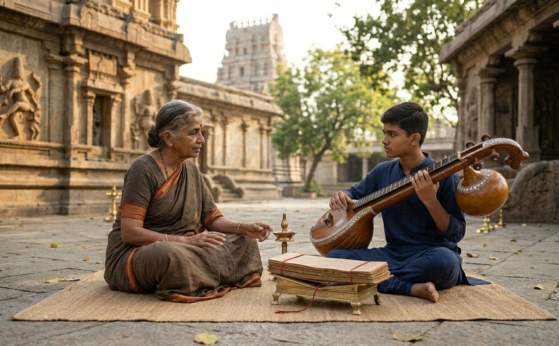
Hindustani Classical Music Is not Difficult to Understand
Many beginners feel intimidated by terms like raag, taal, alaap, taan, and bandish. Technical vocabulary can make the art form appear academically overwhelming at first glance.
However, the actual learning process is far more natural than people expect.
Music is taught through listening, repetition, observation, and guided correction. Students slowly absorb musical patterns the same way children learn language. Instead of memorizing theory endlessly, learners experience the music practically through singing exercises and compositions.
Over time, the terminology begins making sense organically because it connects directly with practice.
A good teacher never burdens a beginner with unnecessary complexity. Effective classical training introduces concepts gradually, allowing the student to build comfort step by step. Once learners settle into the rhythm of practice, the music starts feeling intuitive rather than intimidating.
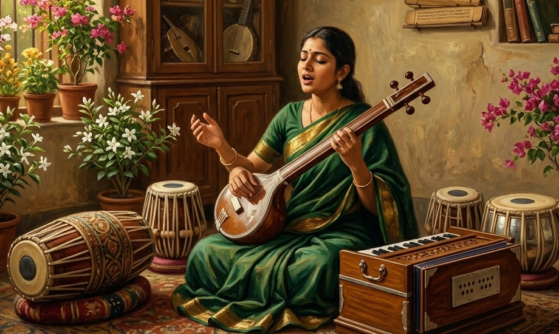
Learn Hindustani Vocals While Staying Creative and Expressive
Some aspiring singers worry that learning classical music will make their singing overly technical or less expressive. They fear losing flexibility or sounding “too classical” while singing contemporary songs.
Ironically, the opposite is usually true.
Hindustani vocal training enhances emotional depth, vocal control, improvisation skills, and tonal clarity. Singers who understand classical fundamentals often adapt more easily to different genres because they possess stronger command over sur and expression.
Classical music does teach discipline, but discipline does not reduce creativity. Instead, it creates the freedom to experiment confidently. A singer who understands musical structure can explore variations, improvisations, and stylistic nuances more effectively.
Many versatile singers across film, fusion, semi-classical, and independent music backgrounds have benefited immensely from classical training. Their flexibility often comes from having a strong foundation rather than avoiding one.
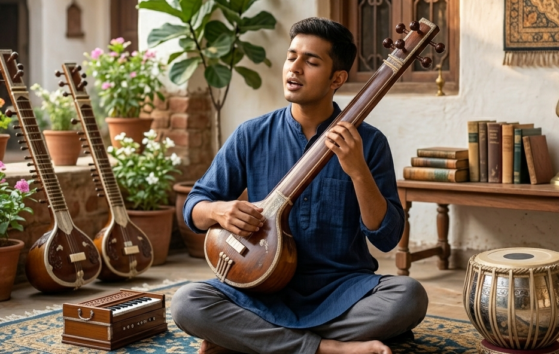
Learn Hindustani Vocals Without Practicing for Endless Hours
The image of students practicing endlessly for eight or ten hours daily often discourages beginners. While intense riyaaz may be part of advanced professional training, beginners do not need extreme schedules to make progress.
Consistency matters far more than exhausting practice sessions.
Even thirty to forty-five minutes of focused daily riyaaz can create noticeable improvement when done correctly. Regularity develops muscle memory, listening accuracy, and vocal strength steadily over time.
Short yet mindful practice sessions are often more effective than irregular marathon sessions. What truly matters is attention, sincerity, and proper guidance.
Music should become a sustainable part of life rather than a burden that creates anxiety.
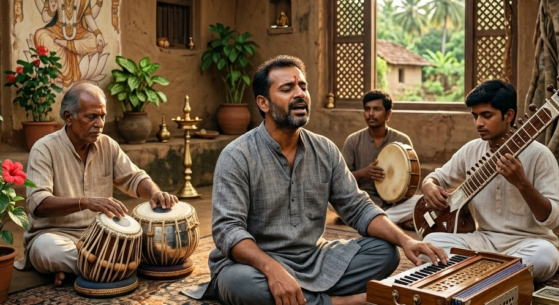
Adults Can Still Learn Hindustani Vocals Successfully
A surprising number of adults hesitate to start learning because they believe classical music can only be learned in childhood. While beginning early certainly helps with long-term training, adulthood is absolutely not a barrier.
Adult learners often bring qualities that younger students may still be developing, including patience, emotional maturity, discipline, and deeper appreciation for music. Many adults learn faster conceptually because they understand instructions with greater clarity.
Voice flexibility may differ from person to person, but musical understanding can continue growing at any age.
In fact, adult learners frequently experience immense emotional satisfaction through music because they approach it with genuine personal interest rather than external pressure.
The desire to learn is far more important than the age at which learning begins.
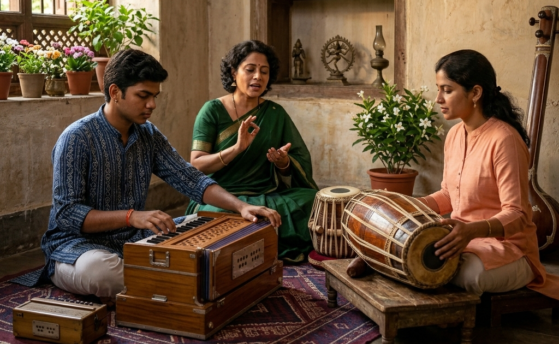
Learn Hindustani Vocals for More Than Just Singing
Beyond technical skill, Hindustani classical singing teaches attentive listening, emotional sensitivity, and inner discipline. The practice of riyaaz creates a rare connection between breath, mind, and sound.
Students gradually become more aware of subtle tonal shifts, emotional textures, and rhythmic balance. Music begins influencing not only singing ability but also concentration, patience, and confidence.
The journey is deeply personal. Every learner progresses differently, and that individuality is completely natural. Comparing progress with others often distracts from the real beauty of classical learning, which lies in gradual transformation.
Over time, singing stops feeling like mere performance. It becomes a form of expression and self-discovery.
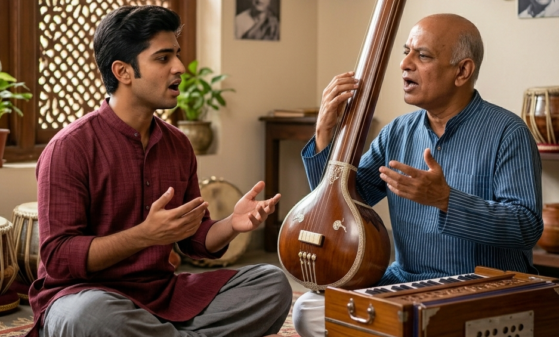
How Beginners Can Start Learning Comfortably
Starting Hindustani vocals does not require perfection. It simply requires openness and consistency.
Beginners benefit most when they focus on listening carefully, practicing basic swaras regularly, and avoiding the pressure to progress too quickly. Choosing a supportive teacher or structured learning environment also makes a significant difference.
Rather than chasing complexity immediately, learners should allow their foundation to develop naturally. A stable understanding of pitch, rhythm, and breath eventually makes advanced concepts easier to absorb.
Most importantly, students should permit themselves to enjoy the process. Fear of mistakes often blocks musical growth more than lack of ability.
Music flourishes where curiosity remains stronger than self-doubt.
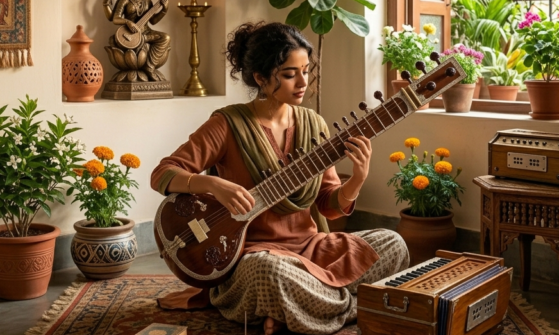
Final Thoughts
Hindustani classical music has survived for generations not because it is inaccessible, but because it continues offering depth, beauty, and emotional richness to anyone willing to learn sincerely. The myths surrounding classical singing often create unnecessary fear before the journey even begins, but once those misconceptions fade away, the learning process starts feeling far more human, flexible, and welcoming.
You do not need a perfect voice, extraordinary talent, or lifelong experience to begin. Every accomplished singer was once a beginner learning their very first swara with hesitation and uncertainty. What truly matters is the willingness to listen carefully, practice consistently, and grow patiently with the music over time.
Hindustani vocals are not only about becoming a classical singer. They are about discovering the power, emotion, confidence, and individuality hidden within your own voice. With the right guidance and sincere practice, even beginners can experience the beauty of this timeless art form. Through platforms like The Mystic Keys, students today can conveniently explore Hindustani Vocal Lessons Online and begin their musical journey from anywhere in the world.
For more information and exciting resources about learning music, visit our website at The Mystic Keys. For more music content and exciting offers follow us on
Facebook, Instagram, YouTube, LinkedIn, Twitter, Pinterest, and Threads.