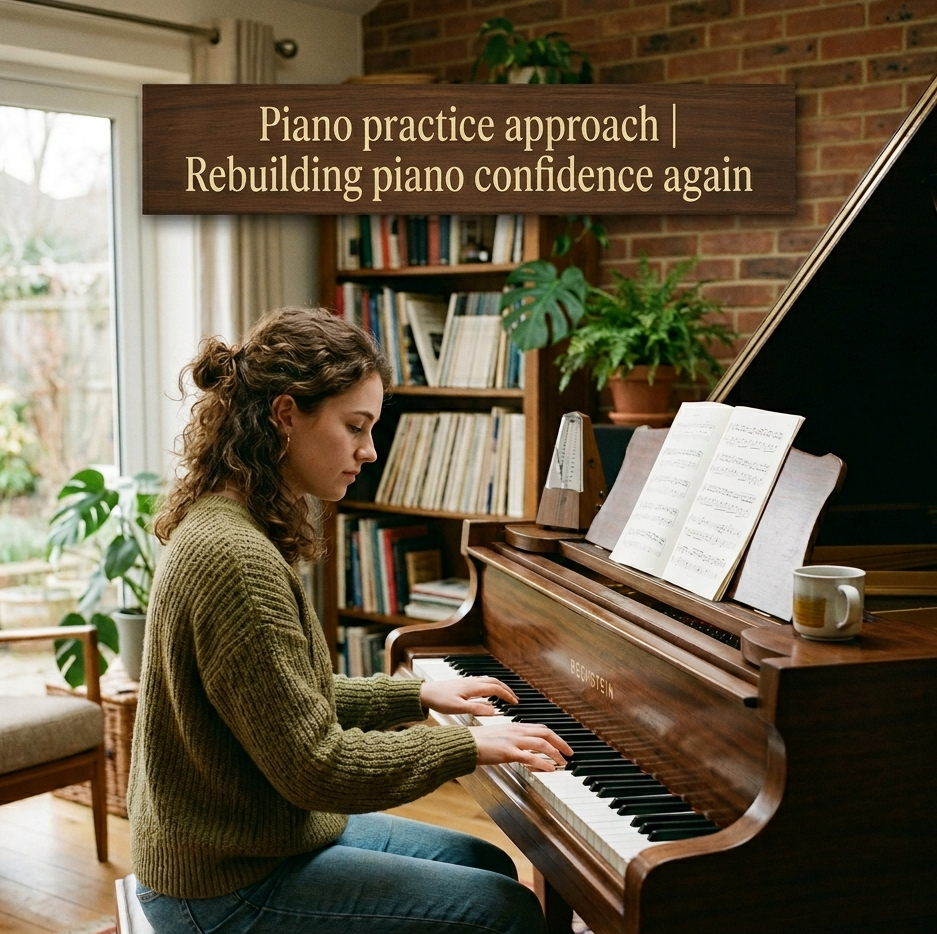
Piano practice approach | Rebuilding piano confidence again
There comes a point in almost every pianist’s journey when progress suddenly feels invisible, especially when the usual piano practice approach that once worked so well starts to feel ineffective. The fingers that once moved with curiosity now hesitate. Pieces that used to feel exciting start sounding repetitive or even frustrating. It’s a strangely quiet phase—because nothing is “wrong” in an obvious way, yet something feels off.
This is exactly the moment where practice matters the most, not for improvement alone, but for rebuilding confidence from within.

When Progress Feels Like It Has Disappeared
Feeling stuck at the piano is more common than most people admit. It often appears after a phase of rapid learning, when the brain has absorbed a lot of new information and suddenly needs time to reorganize it.
You might notice that familiar pieces don’t sound as clean as before or that new music feels harder than expected. Even simple exercises can feel unusually heavy. Instead of reflecting a lack of ability, this stage usually signals that your skills are consolidating beneath the surface.
During this time, it helps to avoid judging your playing too quickly. What feels like stagnation is often silent growth that hasn’t fully surfaced yet.

Returning to the Piano Without Pressure
One of the most powerful ways to move through this phase is to return to the instrument with less expectation. Not every practice session needs to produce visible progress. Sometimes, simply sitting at the piano and playing without strict goals can reset your relationship with it.
Soft improvisation, slow scales, or revisiting very easy pieces can feel surprisingly refreshing. These moments remind your hands what comfort feels like, without the pressure of perfection.
Instead of asking “Am I improving?”, it becomes more helpful to ask “Am I reconnecting?”
Rebuilding Confidence Through Small Wins
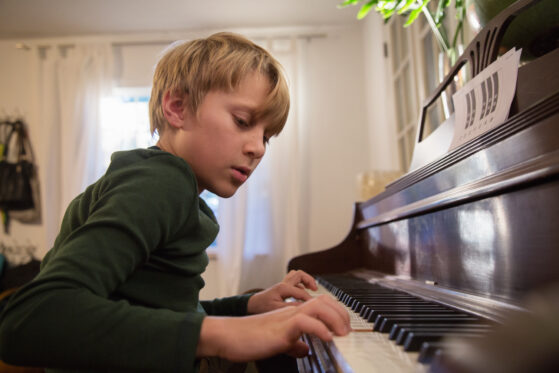
Confidence rarely returns through big breakthroughs. It grows quietly through small, repeated experiences of success. Even a cleanly played bar or a smooth transition between two chords can shift your internal state.
When practice feels discouraging, narrowing your focus can help. Working on a short section instead of an entire piece allows you to notice details that were previously overlooked. Over time, these small refinements accumulate into a stronger sense of control.
The important shift is learning to value consistency over intensity. A few minutes of focused, calm practice often does more for confidence than long sessions filled with frustration.

Letting Musical Memory Do Its Work | Piano Practice Approach
There are times when stepping back slightly actually improves progress. The brain continues processing music even when you are not actively practicing. This is why pieces often feel easier after a short break.
Instead of forcing constant repetition, allowing space between sessions can refresh your perception. When you return, you may notice clarity that wasn’t there before.
Listening to recordings of your pieces or hearing professional performances can also reawaken your sense of direction. It reminds you what the music is meant to feel like, rather than what it currently feels like in your hands.

Shifting from Perfection to Awareness | Piano Practice Approach
A major reason pianists feel stuck is the pressure to play everything flawlessly. This mindset can quietly turn practice into evaluation rather than exploration.
A more helpful approach is to focus on awareness instead of accuracy. Noticing how a phrase feels, how a chord transitions, or how your posture affects sound creates a deeper connection with the instrument.
Mistakes then become information rather than failures. They show where attention is needed, not where ability is lacking.
Rebuilding Motivation Through Familiar Music
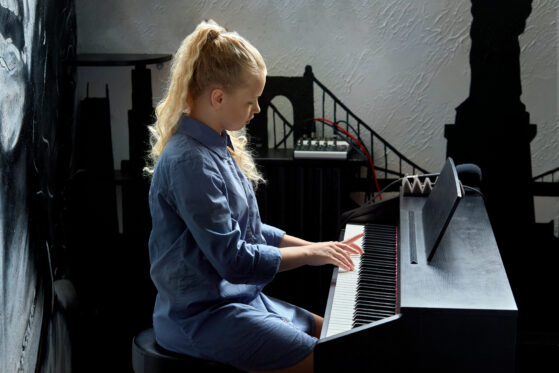
Returning to pieces you once enjoyed can be incredibly grounding. These works already carry emotional memory, which makes them easier to reconnect with. Even if they feel technically simple, they can restore the joy that initially brought you to the piano.
At the same time, mixing in very new or very easy pieces keeps the experience balanced. Too much difficulty can drain motivation, while too much familiarity can reduce curiosity. A gentle blend of both helps maintain engagement without overwhelm.
Over time, this balance restores a natural sense of musical flow.

Trusting the Slow Return of Confidence | Piano Practice Approach
Confidence in piano playing rarely returns in a straight line. It arrives gradually, often without notice, after many small moments of patience and repetition. One day, passages that felt uncertain begin to settle naturally under your fingers.
What once felt like being stuck slowly transforms into a phase you passed through, not a state you stayed in.
The most important part of this journey is continuing to show up, even when results feel unclear. Each quiet practice session is contributing to something larger than immediate progress—it is rebuilding trust in your own ability. Support from guided learning spaces like The Mystic Keys or structured online piano learning platforms such as Piano Lessons Online can also make this process feel less isolating and more directed.
And eventually, that trust becomes music again.
For more information and exciting resources about learning music, visit our website at The Mystic Keys. For more music content and exciting offers follow us on
Facebook, Instagram, YouTube, LinkedIn, Twitter, Pinterest, and Threads.