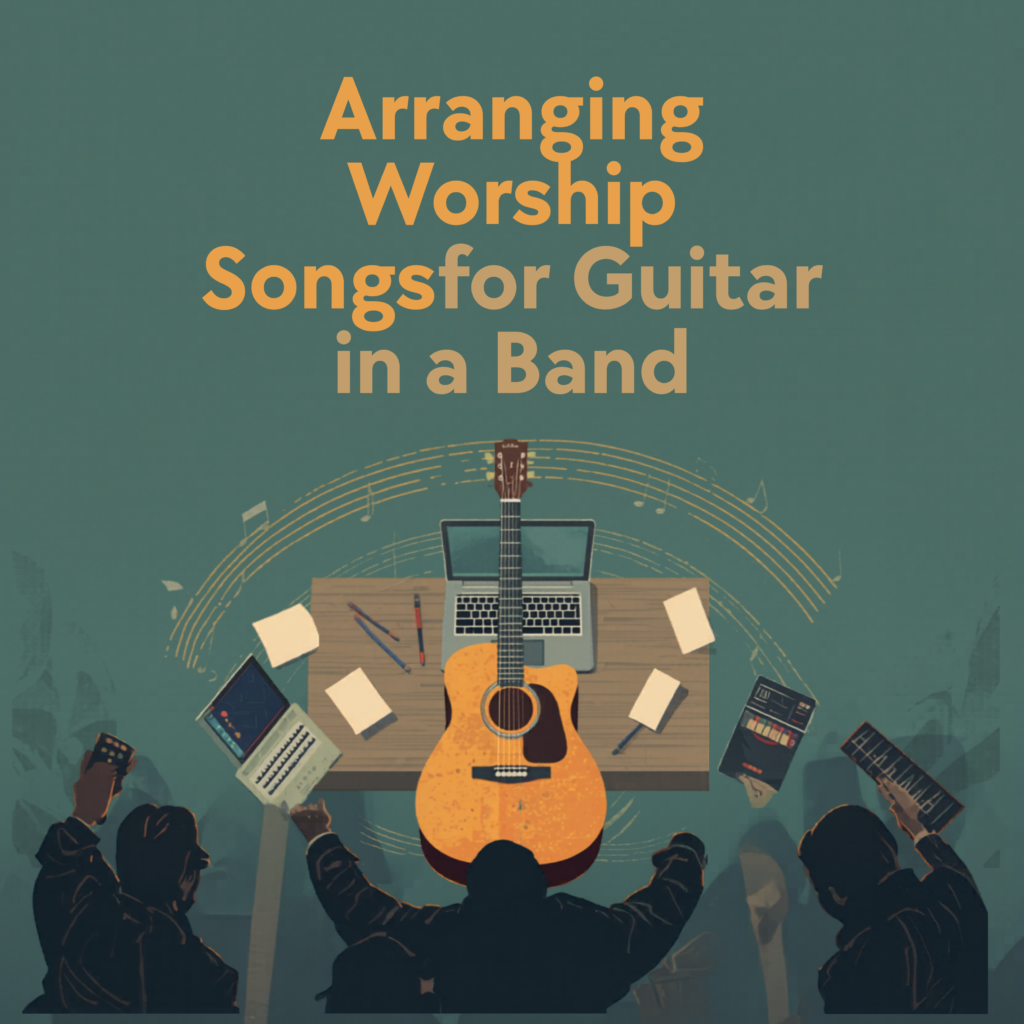
Arranging Worship Songs for Guitar in a Band
The process of arranging worship songs for guitar in a professional band setting is one of the most significant transitions a musician can make. In a solo environment, the guitar is the entire orchestra; you are responsible for the rhythm, the harmony, and the melody simultaneously. However, the moment you step onto a stage alongside a drummer, a bassist, and a keyboardist, your role shifts fundamentally. You are no longer the whole picture you are a vital piece of a complex, living puzzle. To succeed, you must move beyond the mechanical act of playing chords and begin thinking like a producer who understands frequency, emotional arc, and the discipline of restraint.
When you sit down to arrange a worship song for a band, you aren’t just deciding which chords to play. You are deciding how to manage energy, how to respect the vocal narrative, and how to utilize technology to fill a room. This guide is designed to take you from a bedroom player to a professional-grade band member, capable of handling the rigors of international performance and certification.
The Physics of Sound – Finding Your "Sonic Slot"
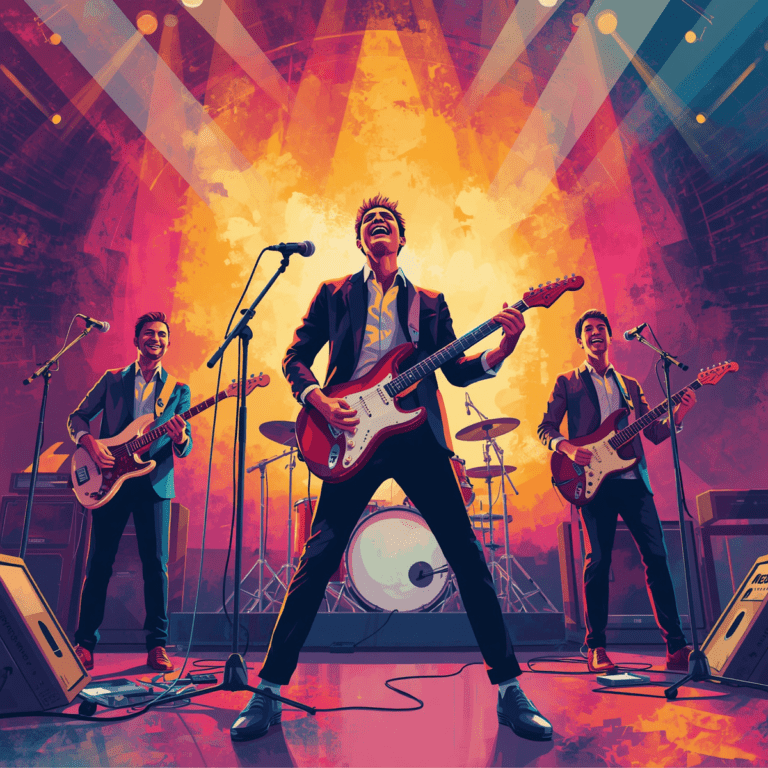
The most common mistake in band arrangements is “frequency clashing.” In a standard band (Drums, Bass, Keys, Electric Guitar, Acoustic Guitar, and Vocals), the air is physically crowded with sound waves.
1.1 The Mid-Range Battleground
The human voice, the piano, and the guitar all live in the mid-range. If everyone plays in the same octave, the audience hears a “wall of noise” where nothing is distinct.
The Piano vs. The Guitar: If the keyboardist is playing wide, two-handed chords in the middle of the keyboard, the guitarist should move higher up the neck. Use “Triads” on the top strings (E, B, and G) to sit above the piano’s thickness.
The Vocal Gap: Never play a complex melodic riff while the singer is delivering an important lyric. Your arrangement should “breathe” around the vocal. When the singer stops, the guitar can step forward; when the singer starts, the guitar should simplify.
1.2 The Low-End Forbidden Zone
The “low end” (below 200Hz) belongs to the Bass Guitar and the Kick Drum. If an electric guitarist uses a heavy “bridge pickup” tone with lots of bass, it creates “mud.”
Arrangement Tip: Use a High-Pass Filter (HPF) on your amplifier or pedalboard. By cutting the extreme lows of the guitar, you actually make the whole band sound tighter and more professional.
The Three-Layer Theory of Arrangement
At The Mystic Keys, we teach our students to think in layers. A great arrangement isn’t one part; it’s a series of layers that change based on the song’s intensity.
The Foundation (The Rhythm)
This is usually the Acoustic Guitar or a “clean” Electric Guitar. The job here is to lock in with the drummer’s hi-hat or snare.
Technical Tip: Avoid “all-down” strumming. Use rhythmic “ghost notes” (muted strums) to create a sense of movement. This keeps the song driving forward even during quiet verses.
The Atmosphere (The Ambient Pad)
Modern worship relies heavily on the “ambient” guitar. This isn’t about notes; it’s about “clouds of sound.”
Volume Swells: By using a volume pedal and a long “Shimmer” reverb, you can make a guitar sound like a cathedral organ. This is essential for transitions between songs.
Dotted Eighth Delays: This is the “signature sound.” Setting your delay to a dotted-eighth note creates a rhythmic “gallop” that fills the empty space in a 4/4 time signature.
The Hook (The Lead)
The hook is the melody that people whistle when they leave.
Economy of Notes: A great hook doesn’t need 20 notes. Think of the melody of “Amazing Grace”—it is simple, soaring, and memorable. Use “Slides” and “Vibrato” to give your lead lines a human, vocal-like quality.
Mastering Key Techniques for Arranging Worship Songs for Guitar
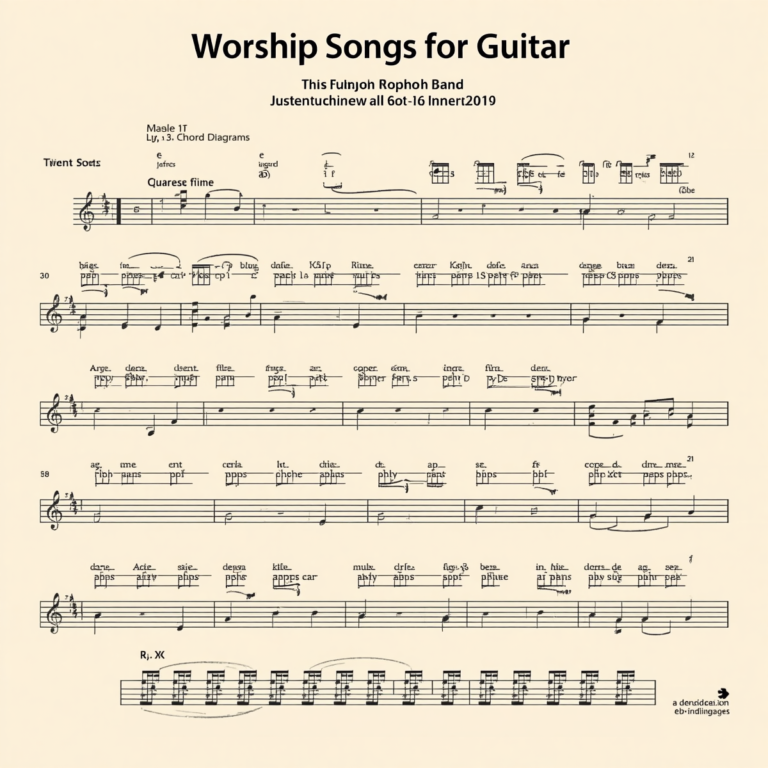
You cannot arrange effectively if you do not understand your tools. As a global music school, we emphasize that “Tone is in the fingers,” but “Texture is in the gear.”
3.1 The Gain Stage Ladder
A professional arrangement requires at least four levels of “drive”:
Clean: No distortion. Used for fingerpicking and light ambient work.
Stage 1 (Light Overdrive): Adds “hair” to the sound. This helps the guitar “cut” through a verse.
Stage 2 (Mid-Gain): Used for the big choruses. It should feel powerful but not “fuzzy.” You should still be able to hear individual notes in a chord.
Lead/Boost: For the bridge or a solo. This adds volume and “sustain” so the notes don’t die out.
3.2 Time-Based Effects as Arrangement Tools
Delay and Reverb are not just “effects”—they are arrangement choices.
Reverb Opacity: In a small room, use “Room” or “Plate” reverb. In a large hall or for “Epic” worship songs, use “Hall” or “Cloud” algorithms.
Dual Delays: Combining a quarter-note delay with a dotted-eighth delay creates a rhythmic “wash” that mimics a second guitar player. This is a secret weapon for small bands.
Section-by-Section Arrangement Strategy
Every worship song is a journey. Your guitar should tell that story.
4.1 The Intro: The Invitation
The intro should be an “invitation” to the melody. If the song is high-energy, start with a “power-chord” riff. If it is intimate, start with a simple, clean melody on the higher frets.
4.2 Verse 1: The “Less is More” Rule
In the first verse, the congregation or audience is focusing on the lyrics.
Strategy: Don’t play. Or, if you do, play “Diamonds”—whole notes that ring out. This creates a “foundation” without distracting.
4.3 Chorus 1: The First Lift
When the chorus hits, the energy needs to “lift.”
Acoustic: Move from light picking to full-chord strumming.
Electric: Add a Stage 1 overdrive and move to lower-register power chords to provide “weight.”
4.4 The Bridge: The Build-Up
The bridge is where the “Music Genes” truly show. Most worship songs repeat the bridge 3 or 4 times, building in volume each time.
Repetition 1: Palm-muted 8th notes on a single string.
Repetition 2: Open 8th notes with a light overdrive.
Repetition 3: Full chords with heavy strumming.
Repetition 4: High-register “Octaves” or lead lines that soar over the top.
The Role of Theory in Arrangement
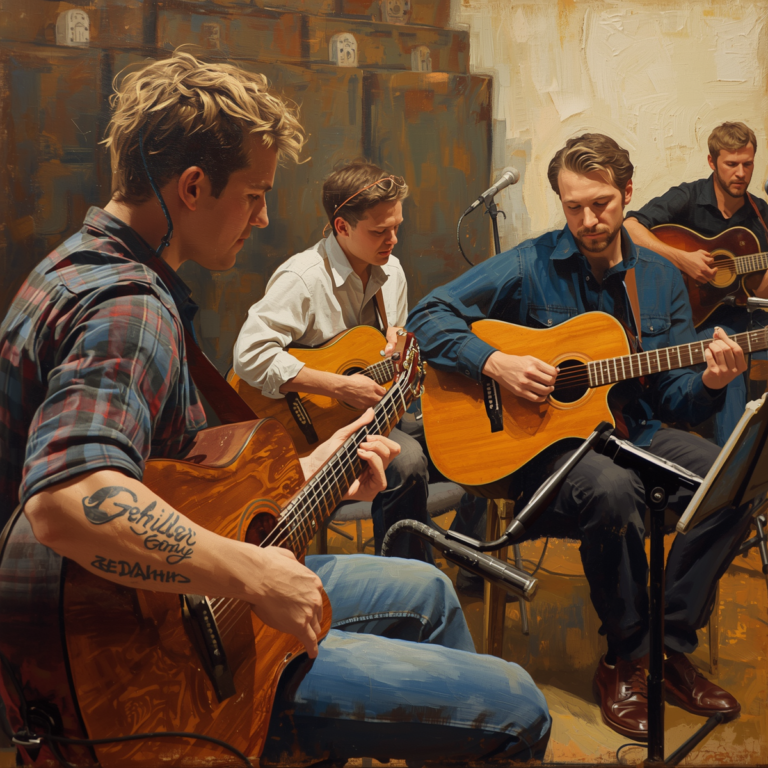
At The Mystic Keys, we provide students with the theoretical tools to move beyond “basic shapes.”
5.1 Inversions and “Voice Leading”
Instead of jumping your hand across the fretboard, try to keep your chord changes “close.” This is called voice leading.
Example: Moving from a $G$ Major to a $C$ Major by only changing two fingers. This makes the arrangement sound smoother and more “expensive.”
5.2 The Use of Open Strings (Drone Tones)
In the key of E or G, you can leave the high E and B strings open while you play chords elsewhere on the neck. This creates a “shimmering” drone effect that is a staple of modern guitar arrangement.
Preparing for International Certification
Many of our students are working toward International Total International Certificates. When an examiner looks at your arrangement skills, they aren’t just looking for speed. They are looking for:
Dynamic Control: Can you play soft and loud with the same level of accuracy?
Stylistic Awareness: Do you understand the difference between a “Gospel” arrangement and a “Contemporary Christian” arrangement?
Technical Proficiency: Are your transitions between effects pedals seamless?

Practical Exercise – The “Three-Chord” Challenge
Try this exercise at home:
Take a simple 3-chord song (G, C, D).
Create an arrangement using only notes above the 12th fret.
Create a second arrangement using only palm-muted notes on the low strings.
Notice how the “emotion” of the song changes. This is the power of arrangement.
Conclusion: Discover Your Music Genes
The art of arranging worship songs for Guitar Lessons Online is a lifelong pursuit. It requires a humble heart, a sharp ear, and a disciplined hand. By following the principles of frequency management, layering, and dynamic storytelling, you will transform your band’s sound.
At The Mystic Keys, we don’t just teach you how to play; we teach you how to listen. Are you ready to discover your music genes?
Ready to start your journey? Enroll now at The Mystic Keys and get access to our world-class faculty and international certification programs. Whether you want to lead a band or master the technicalities of the guitar, we have a flexible program tailored for you.
For more information and exciting resources about learning music, visit our website at The Mystic Keys. For more music content and exciting offers follow us on
Facebook, Instagram, YouTube, LinkedIn, Twitter, Pinterest, and Threads.