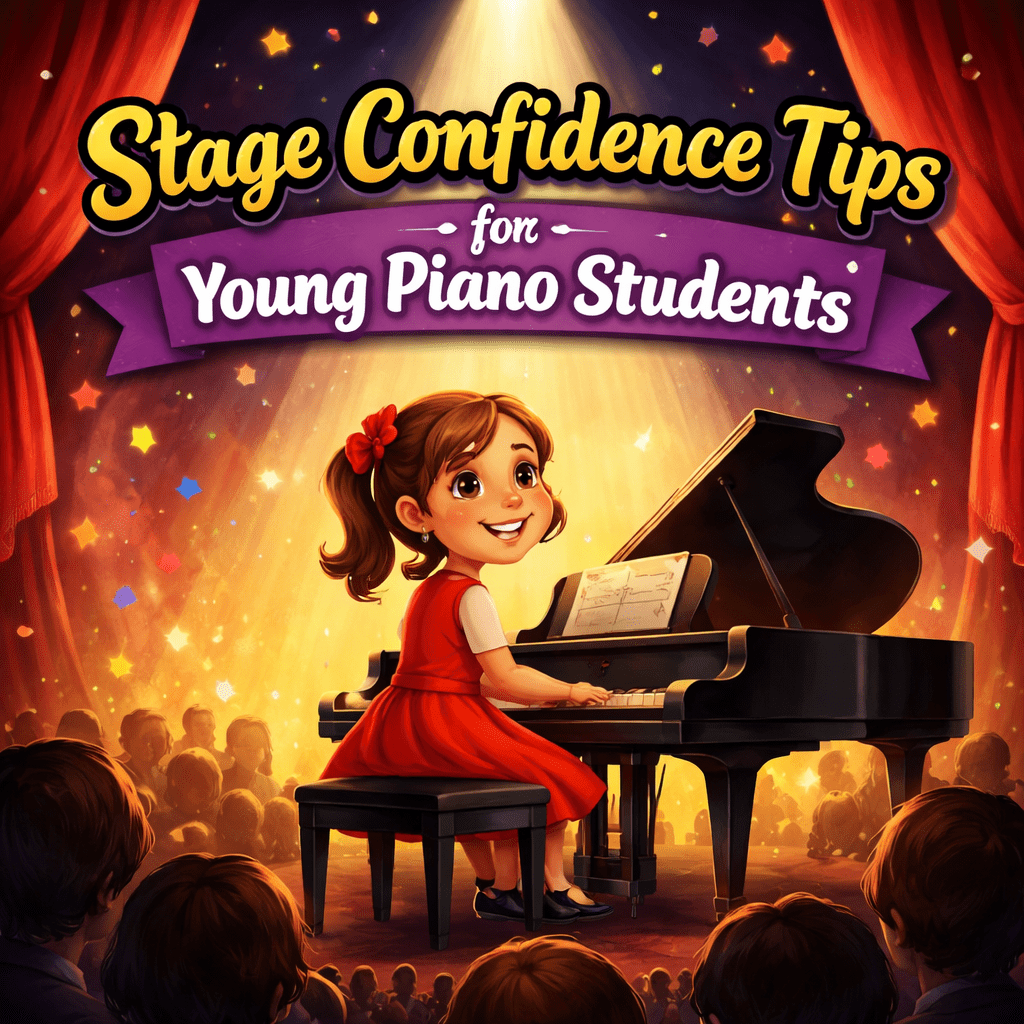
Stage Confidence Tips for Young Piano Students
Learning the piano is an exciting journey for young musicians. While practicing scales, mastering pieces, and developing technique are essential parts of musical growth, performing on stage introduces an entirely new challenge. Many young piano students experience nervousness or stage fright before a recital or concert. Learning piano stage confidence tips can help students manage these feelings and perform more comfortably in front of an audience.
Building stage confidence is an important skill that helps students perform with freedom, express emotion through music, and truly enjoy sharing their talent with others. With the right preparation and mindset, young pianists can transform nervous energy into confidence and excitement.
In this article, we will explore practical piano stage confidence tips for young piano students that can help them feel more comfortable and perform their best during recitals and performances.
Understanding Stage Fright in Young Piano Students | Piano Stage Confidence Tips
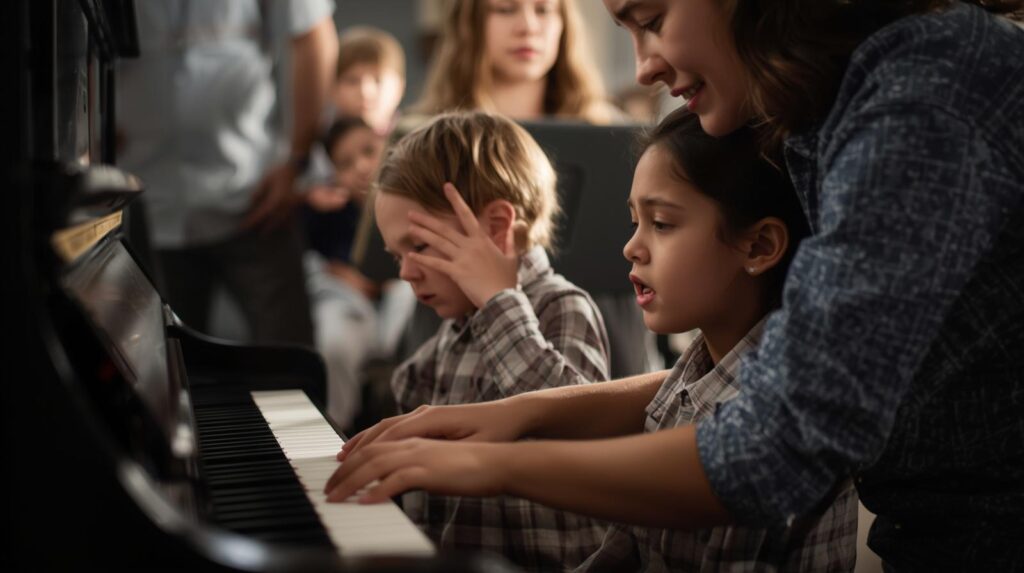
Before learning how to build confidence, it is important to understand why stage fright happens. Many young musicians feel nervous when performing in front of an audience because it is a new and unfamiliar experience. Students may worry about making mistakes, forgetting notes, or being judged by others.
Stage fright often shows up as physical and emotional reactions. A student might feel shaky hands, a fast heartbeat, sweaty palms, or difficulty concentrating. These reactions are natural responses to performing under pressure.
However, stage fright does not mean a student is unprepared or incapable. In fact, even professional concert pianists experience some level of nervousness before performing. The key difference is that experienced performers learn how to manage those feelings and use them to enhance their performance.
Teaching young pianists that nervousness is normal helps reduce fear and encourages a healthy attitude toward performing.
The Importance of Regular Performance Practice for Piano Stage Confidence
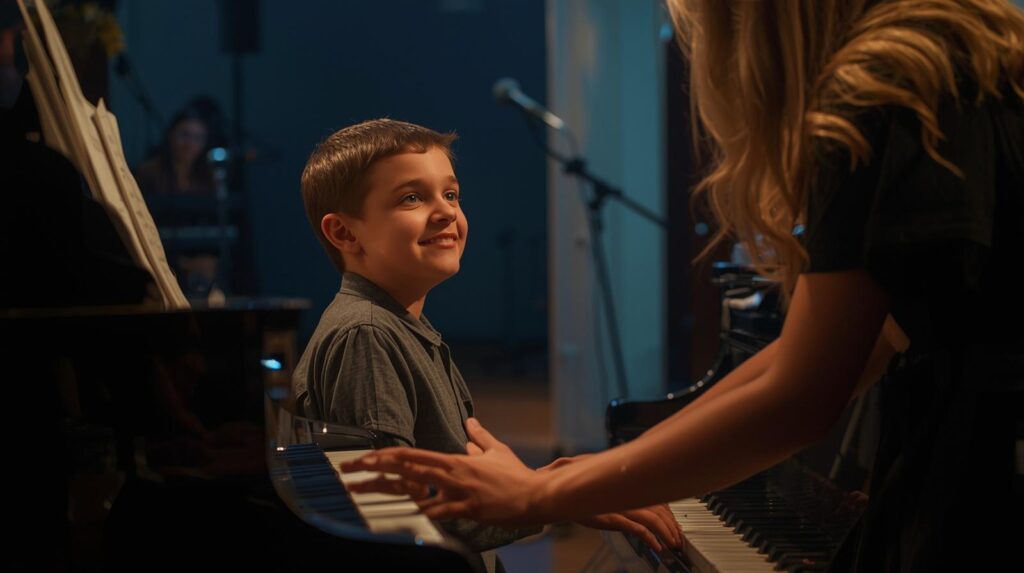
One of the most effective ways to build stage confidence in young piano students is through regular performance practice. The more often students perform in front of others, the more comfortable they become with the experience.
Teachers and parents can create small performance opportunities at home or during lessons. For example, students can play a piece for family members, classmates, or friends. These informal performances help students gradually become used to playing while others are listening.
Music schools often organize recitals, workshops, or group classes where students can perform in a supportive environment. These experiences teach young pianists how to manage nerves, focus on their music, and develop stage presence.
Performance practice also teaches students valuable skills such as maintaining concentration, continuing after small mistakes, and communicating musical expression to an audience.
Preparing Thoroughly Before a Performance | Piano Stage Confidence Tips
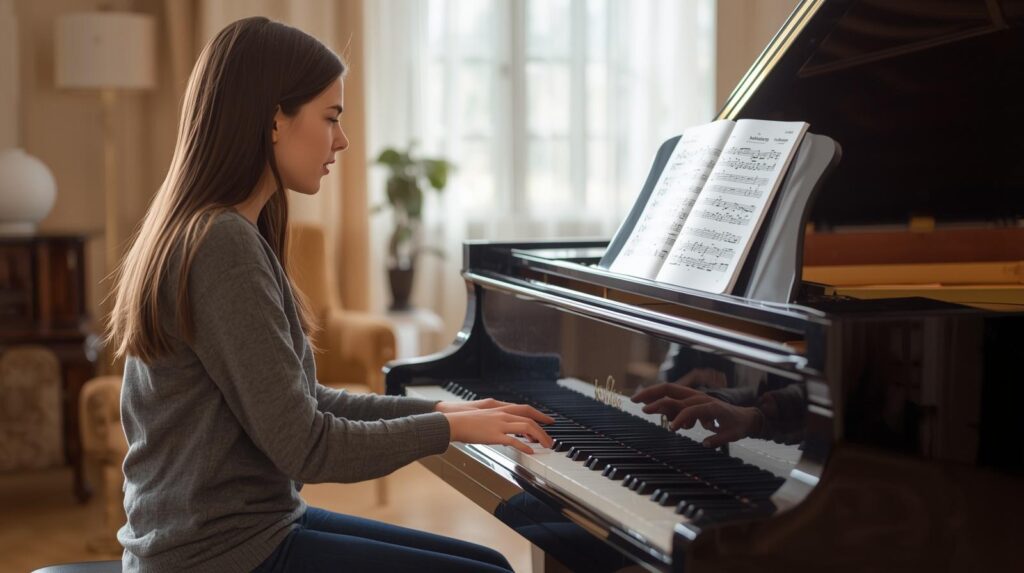
Preparation plays a crucial role in stage confidence. When a student knows their piece thoroughly, they feel more secure and relaxed during a performance.
Young piano students should practice their pieces consistently and thoughtfully. Instead of only repeating the same section many times, students should focus on musical expression, dynamics, phrasing, and tempo control. Understanding the structure of the piece also helps students recover if they lose their place while playing.
Practicing under “performance conditions” is also helpful. Students can simulate a real recital by walking to the piano, adjusting the bench, taking a deep breath, and then beginning to play. Repeating this routine helps reduce anxiety on the actual performance day.
Teachers may also encourage students to practice playing their piece from different starting points. This builds confidence because the student knows they can continue playing even if they make a mistake.
Developing a Positive Mindset: Piano Stage Confidence Tips for Students
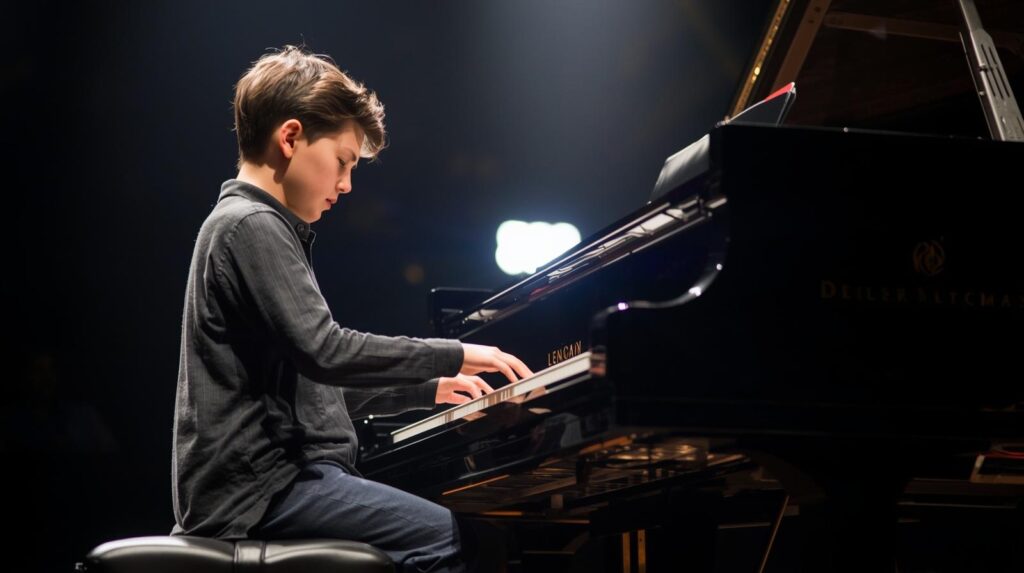
A positive mindset is essential for young piano students who want to build stage confidence. Instead of focusing on mistakes or fear, students should learn to view performances as opportunities to share music.
Teachers and parents can help students develop healthy thinking habits before performances. Encouraging phrases such as “Enjoy the music,” “Do your best,” and “The audience wants you to succeed” can help students relax and focus.
Visualization techniques can also be very helpful. A student can imagine themselves walking confidently onto the stage, sitting at the piano, and playing beautifully. This mental rehearsal prepares the brain for a successful performance.
Celebrating progress rather than perfection is another important part of building confidence. Every performance experience helps a student grow, even if it is not flawless.
Simple Relaxation Techniques Before Going on Stage
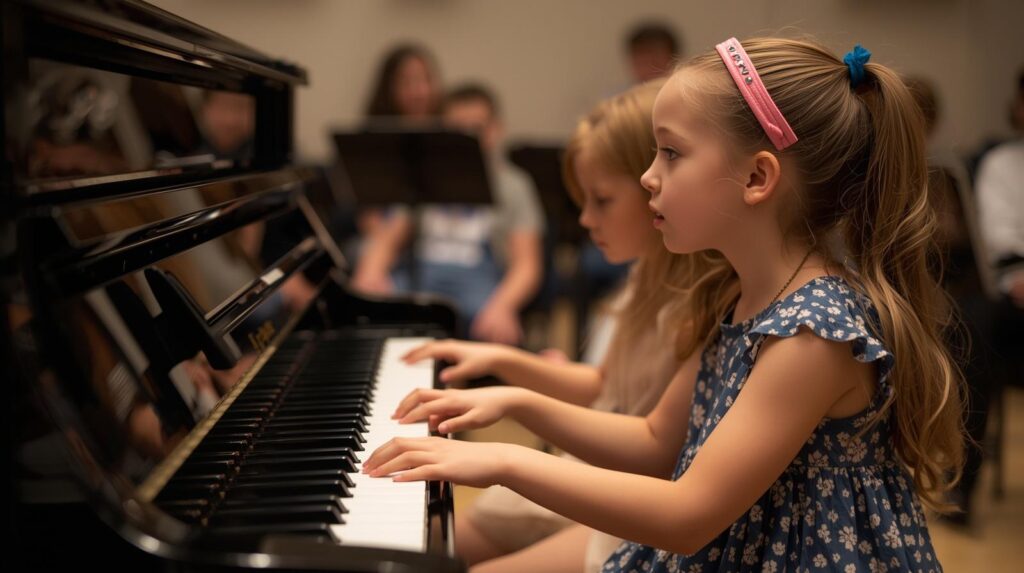
Learning a few relaxation techniques can greatly improve stage confidence for young piano students. Simple breathing exercises are one of the most effective methods.
Before going on stage, students can take slow, deep breaths to calm their nerves. Breathing in slowly through the nose and exhaling gently through the mouth helps relax the body and clear the mind.
Stretching the fingers and shoulders before performing can also reduce tension. Since piano playing requires relaxed hand movement, releasing physical tension helps students play more naturally.
Another helpful strategy is focusing attention on the music itself rather than the audience. When students think about the melody, rhythm, and emotion of the piece, their concentration shifts away from nervousness.
These small techniques can make a significant difference in how a young pianist feels during a performance.
Learning to Handle Mistakes During a Performance
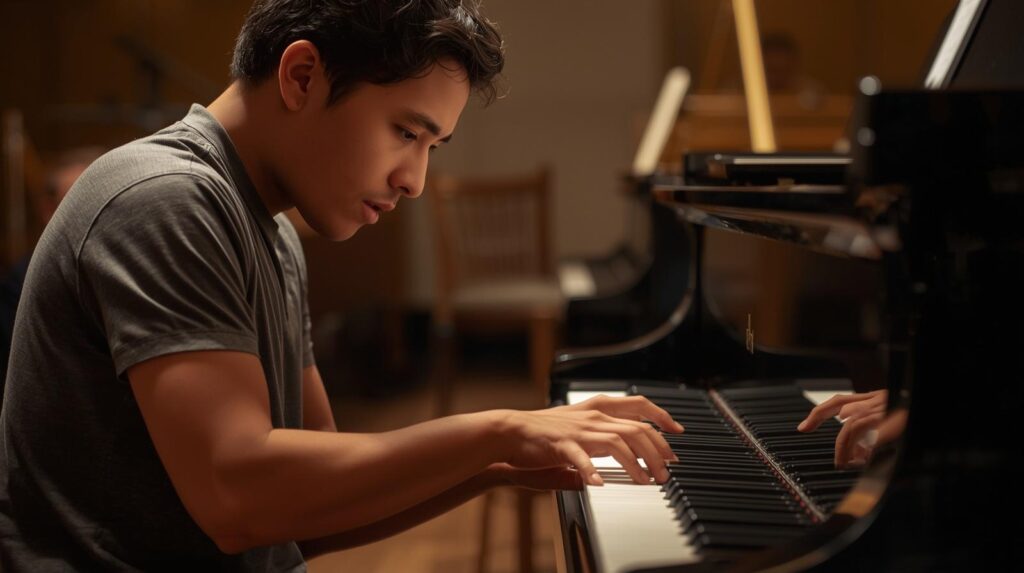
One of the biggest fears young piano students have is making mistakes on stage. However, mistakes are a normal part of live music performances. Even professional musicians occasionally play wrong notes.
The most important skill is learning how to continue playing confidently after a mistake. Stopping suddenly or showing frustration can interrupt the flow of the performance. Instead, students should keep the rhythm steady and continue with the music.
In many cases, audiences do not even notice small mistakes if the performer remains confident and focused. Teaching students that perfection is not required allows them to perform more freely.
Teachers often remind students that the goal of a performance is to communicate music, not to play every note perfectly.
How Teachers and Parents Can Support Young Performers
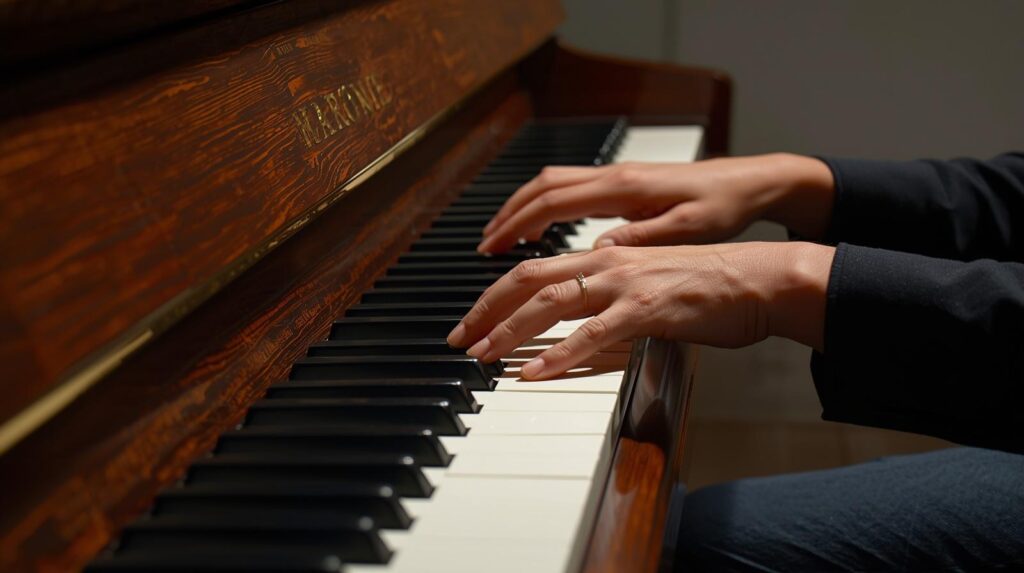
Support from teachers and parents plays a major role in helping young piano students develop stage confidence. A positive and encouraging environment helps students feel safe while learning new skills.
Teachers can gradually introduce performance opportunities and guide students through the preparation process. They can also share their own experiences with stage fright, helping students understand that nervousness is normal.
Parents can support their children by focusing on effort and improvement rather than results. Praising a student’s courage to perform is just as important as praising their musical accuracy.
Attending recitals, encouraging practice routines, and celebrating each performance experience helps students build confidence over time.
Building Lifelong Confidence Through Piano Performances
Performing music is about more than just playing notes on a piano. It teaches young students valuable life skills such as confidence, discipline, focus, and resilience.
With consistent practice, supportive guidance, and positive experiences, young pianists gradually learn to enjoy performing on stage. Each recital becomes an opportunity to express creativity and share music with others.
By following these stage confidence tips for young piano students, teachers and parents can help children transform nervousness into excitement. Over time, students not only become stronger performers but also develop confidence that benefits many areas of life.
Students can further strengthen these skills through piano lessons online with The Mystic Keys, where experienced teachers guide young learners through structured training, performance preparation, and regular recitals. With the right mentorship and learning environment, students gain the confidence to perform comfortably and share their music with the world.
For more information and exciting resources about learning music, visit our website at The Mystic Keys. For more music content and exciting offers follow us on
Facebook, Instagram, YouTube, LinkedIn, Twitter, Pinterest, and Threads.