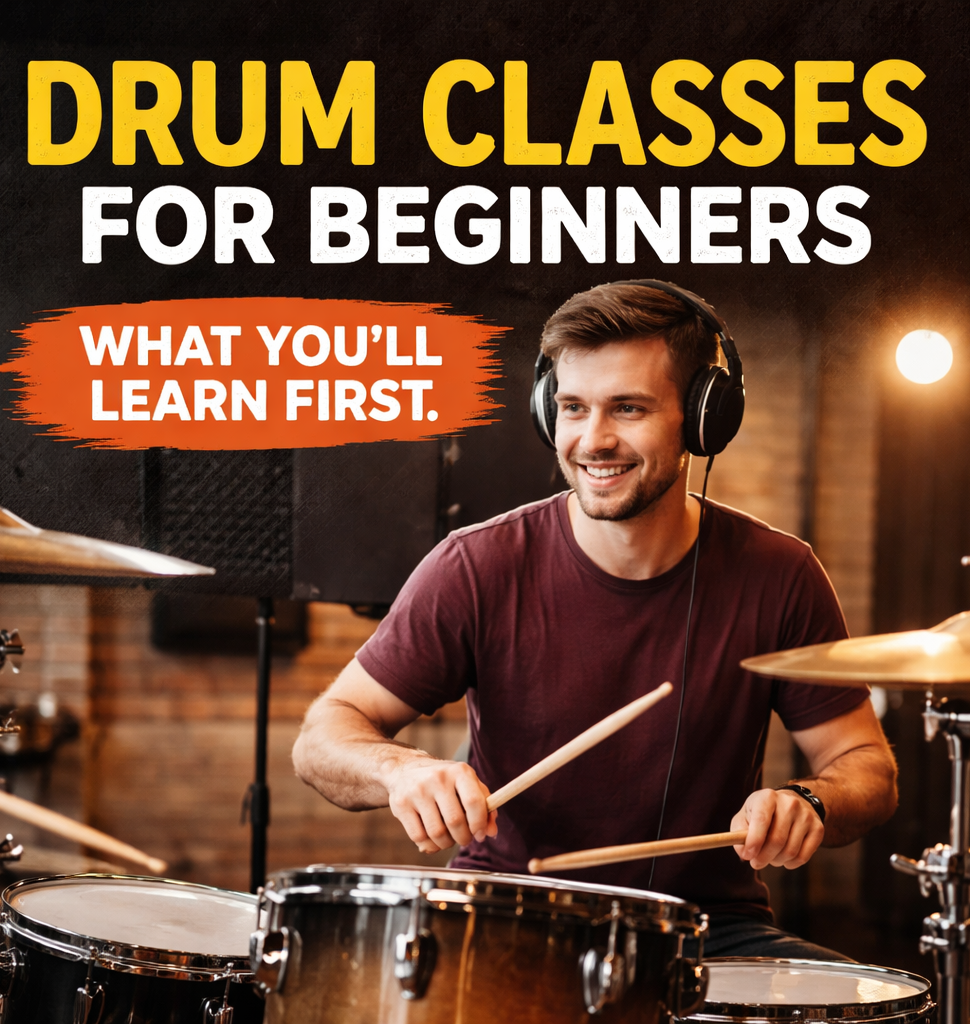
Drum Classes for Beginners | What You’ll Learn First
Starting something new always carries a mix of excitement and hesitation—and learning the drums is no different. The moment you sit behind a drum kit, surrounded by cymbals, pedals, and drums of different sizes, it can feel both thrilling and a little overwhelming. Yet, that first step into drum classes is where rhythm begins to make sense, coordination starts to build, and music becomes something you physically feel, not just hear.
Getting Comfortable with the Drum Kit in Drum Classes
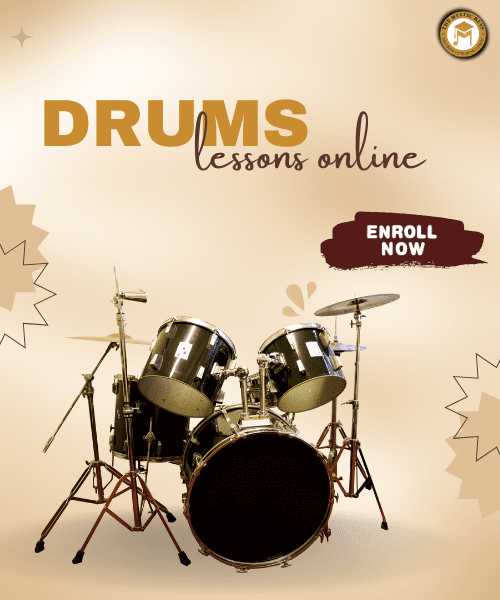
Before you play your first beat, your instructor will guide you through the basics of the drum kit itself. Each part has a role, and understanding that is essential. The snare drum,bass drum,hi-hat, and cymbals all work together to create rhythm, but initially, they may seem like separate worlds.
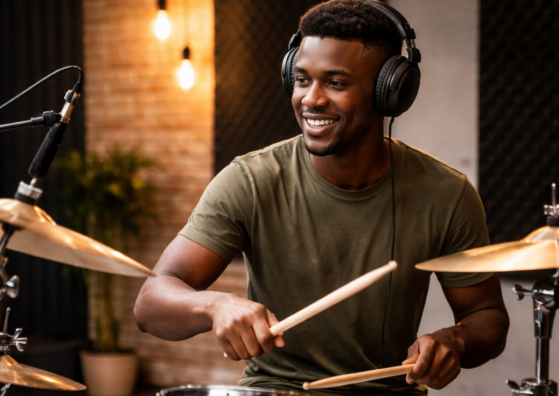
Gradually, you’ll learn how to sit correctly, hold your drumsticks, and position your feet on the pedals. Posture plays a bigger role than most beginners expect. A comfortable setup not only prevents strain but also makes it easier to play smoothly.
As you settle in, the kit stops feeling like a complicated setup and starts feeling like an extension of your body.
Learning How to Hold and Control Drumsticks
Once you’re seated and ready, attention shifts to your hands. Holding drumsticks properly is one of the first technical skills you’ll develop, and it sets the foundation for everything that follows.
Instead of gripping tightly, beginners are taught to maintain a relaxed but controlled hold. This allows the sticks to rebound naturally, making your playing more fluid and less tiring. At first, it might feel unnatural, especially if you’re trying to control every movement.
Now comes the heart of drumming—rhythm. Beginners are introduced to simple counting patterns, often starting with basic beats like “1-2-3-4.” These counts help you stay in time and create a steady groove.
At this stage, you won’t be playing complex patterns. Instead, the focus remains on keeping a consistent tempo. Even a simple beat can sound impressive when played with good timing.
Slow practice becomes your best friend here. Rushing ahead may feel tempting, but developing a strong sense of timing early on makes everything else easier later.
Understanding Basic Rhythm and Timing in Drum Classes
One of the most unique aspects of drumming is coordination. Unlike many instruments, drumming requires your hands and feet to do different things simultaneously.
In the beginning, this can feel like trying to pat your head and rub your stomach at the same time. Your right hand might be keeping a steady rhythm on the hi-hat, while your left hand strikes the snare, and your foot controls the bass drum.
Progress might seem slow at first, but small breakthroughs happen often. Suddenly, what once felt impossible becomes natural. That moment is incredibly rewarding and keeps most beginners motivated to continue.
Playing Your First Basic Beat
After understanding rhythm and coordination, you’ll finally play your first complete beat. This is often a simple rock pattern that combines hi-hat, snare, and bass drum.
Even though the beat is basic, it feels like a big achievement. You’re no longer just practicing parts—you’re actually making music.
With repetition, your confidence grows. The beat becomes steadier, your movements smoother, and your sense of rhythm stronger. That’s when you start realizing that drumming is not just about hitting drums—it’s about creating flow.
Introduction to Practice Techniques
Learning drums is as much about how you practice as what you practice. Early classes usually introduce structured practice habits that help you improve faster.
You’ll be encouraged to practice slowly, use a metronome, and repeat exercises with focus. Consistency matters more than long practice sessions. Even short, regular practice can bring noticeable improvement.
Along the way, patience becomes part of the process. Progress in drumming builds layer by layer, and each session adds something valuable.
Developing Listening Skills in Drum Classes
An often overlooked part of beginner drum lessons is learning to listen. Drumming isn’t just about playing; it’s about fitting into music.
You’ll start paying attention to beats in songs, noticing patterns, and understanding how drums support melodies. This awareness helps you connect your practice with real music.
As your listening improves, your playing naturally becomes more musical. You begin to feel the groove instead of just counting it.
Building Confidence Behind the Kit
At the beginning, hesitation is completely normal. Every beginner wonders if they’re doing it right. However, with each class, that uncertainty slowly fades.
Mistakes become part of learning rather than something to avoid. Instructors often encourage experimentation, allowing you to explore sounds and rhythms without pressure.
Eventually, confidence replaces doubt. You start enjoying the process instead of worrying about perfection.
The First Step Toward Musical Expression
Drum classes for beginners are not just about technique—they’re about unlocking a new way of expressing yourself. Those first lessons may seem simple, but they lay the groundwork for everything ahead.
With time, the basics turn into creativity. Beats evolve into rhythms, and rhythms turn into your personal style.
What begins as learning where to hit gradually becomes learning how to feel the music.
Final Thoughts
Starting drum classes might feel intimidating, but the journey begins with simple, manageable steps. With The Mystic Keys and their Drums Lessons Online, each lesson is designed to build on the previous one, helping you grow steadily without feeling overwhelmed.
The early stage is all about patience, practice, and enjoying small wins. With guided support and structured learning, those basic lessons gradually transform into real musical skills.
So if you’re thinking about learning drums, take that first step with the right guidance. The rhythm is already within you—you just need to bring it out.
For more information and exciting resources about learning music, visit our website at The Mystic Keys. For more music content and exciting offers follow us on