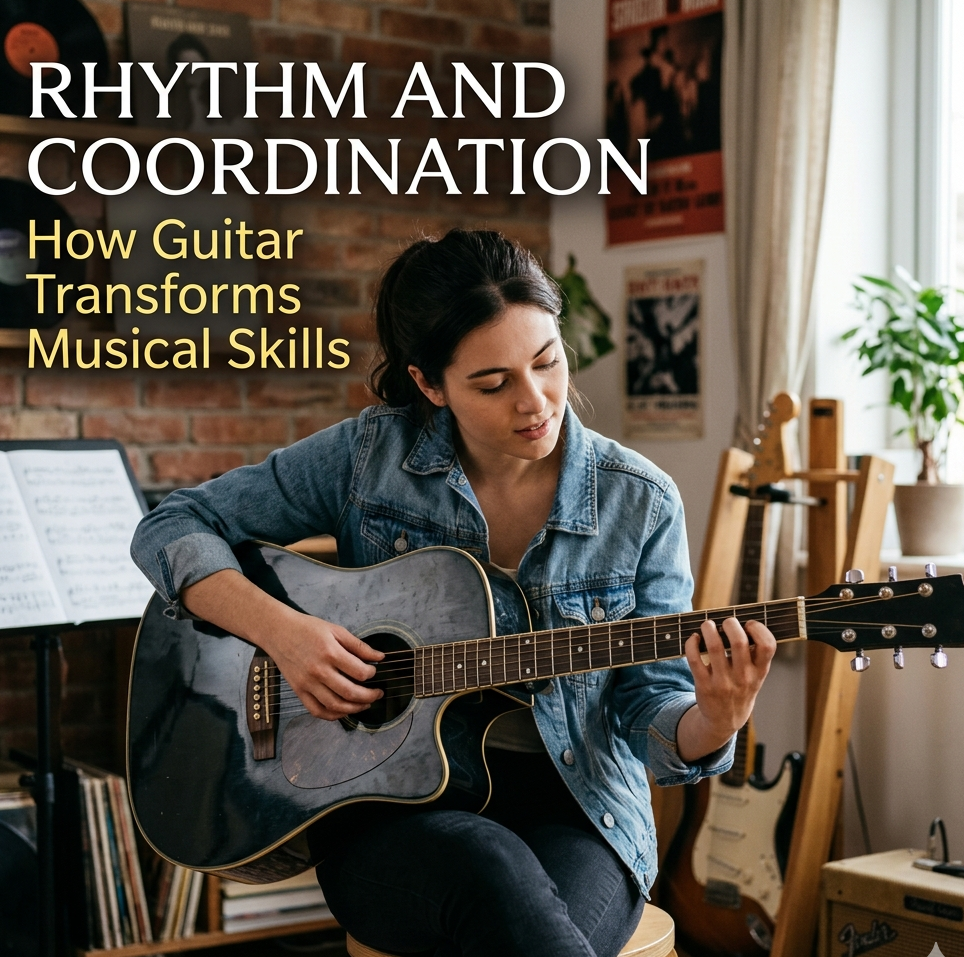
Rhythm and Coordination | How Guitar Transforms Musical Skills
Music, at its core, is movement—of sound, of time, and of emotion. While many instruments help develop musicality, the guitar holds a special place because it demands a unique balance between rhythm and coordination. It is not just about pressing strings or strumming patterns; it is about synchronizing the mind and body in a way that gradually reshapes how a person experiences music altogether.
Learning guitar often begins with simple chords and basic strumming. However, beneath this simplicity lies a powerful training ground for developing timing, control, and independence between different parts of the body. Over time, this process becomes less mechanical and more intuitive, transforming not only how one plays but also how one listens and feels music.

Rhythm and Coordination in Understanding Rhythm Beyond Counting
At first, rhythm may feel like a matter of counting beats—one, two, three, four. Yet, as a learner spends more time with the guitar, rhythm begins to evolve into something more fluid and expressive. The instrument naturally introduces patterns that require consistency while allowing subtle variations, encouraging players to internalize timing rather than merely follow it.
Strumming patterns, for instance, teach the importance of spacing between beats. A pause, a muted stroke, or a slight emphasis can completely change the feel of a progression. Gradually, the player starts recognizing that rhythm is not just about accuracy but also about character. This awareness builds a deeper connection with music, where timing becomes something felt internally rather than calculated externally.
As this shift happens, listening skills improve significantly. Songs are no longer heard as a collection of notes but as structured flows of rhythm and energy. That transformation plays a crucial role in overall musical growth.
The Role of Coordination in Guitar Playing
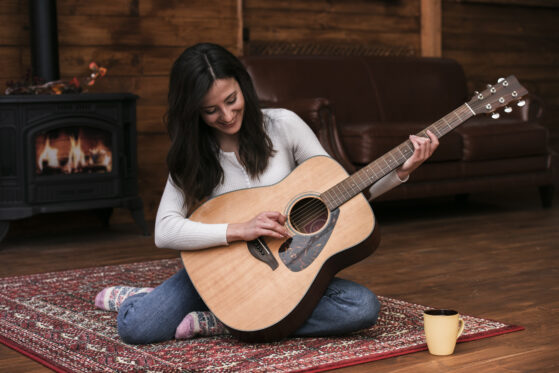
Unlike some instruments that focus on a single primary action, the guitar requires simultaneous yet distinct movements. One hand controls the fretboard, shaping notes and chords, while the other manages rhythm through strumming or picking. Initially, this dual responsibility can feel overwhelming, as each hand seems to operate on a different logic.
With consistent practice, coordination begins to develop in subtle ways. The brain starts creating connections between these movements, allowing both hands to work together seamlessly. What once required conscious effort gradually becomes automatic, freeing the player to focus on expression rather than execution.
This process strengthens motor skills and enhances neural pathways related to multitasking. Over time, it becomes easier to adapt to new patterns, faster tempos, and more complex techniques. Such improvements extend beyond guitar playing, influencing other activities that require coordination and timing.

Rhythm and Coordination in Building Independence Between Hands
One of the most fascinating aspects of learning guitar is the development of hand independence. The fretting hand might be changing chords while the strumming hand maintains a steady rhythm. In more advanced stages, fingerstyle playing introduces even greater complexity, where individual fingers perform separate rhythmic roles simultaneously.
At first, this independence feels unnatural. Mistakes are frequent, and timing may fall apart. However, repeated practice gradually aligns these movements, allowing each hand to function with a degree of autonomy while still staying connected to the overall rhythm.
This ability mirrors a broader cognitive skill—managing multiple tasks without losing focus. As a result, guitar players often find themselves better equipped to handle activities that require divided attention, whether in music or in everyday life.

Rhythm and Coordination as a Foundation for Musical Confidence
Confidence in music often stems from a strong sense of rhythm. When timing is stable, everything else—melody, harmony, and expression—falls into place more naturally. The guitar, with its emphasis on strumming and timing patterns, reinforces this foundation consistently.
As players gain control over rhythm, they become more comfortable experimenting with variations. Slight changes in tempo, dynamics, or accent patterns begin to feel less risky and more creative. This freedom encourages exploration, which is essential for artistic growth.
Moreover, playing along with songs or other musicians further strengthens rhythmic confidence. The ability to stay in sync with external sounds builds trust in one’s timing, making collaborative music-making more enjoyable and less intimidating.

Enhancing Musical Awareness and Expression
Beyond technical skills, the guitar sharpens a player’s overall musical awareness. Changes in rhythm, tempo, and dynamics become more noticeable, both in personal playing and while listening to others. This heightened sensitivity allows musicians to respond more effectively to different musical contexts.
Expression also improves as coordination becomes second nature. When the hands no longer struggle with basic movements, the player can focus on conveying emotion through subtle variations. A softer strum, a delayed note, or a stronger accent can communicate feelings that words often cannot.
This shift from technique to expression marks an important milestone in musical development. The guitar, in this sense, acts as both a teacher and a medium, guiding players toward a more nuanced understanding of music.
The Long-Term Impact on Musical Skills
Over time, the skills developed through guitar practice extend far beyond the instrument itself. Improved rhythm translates into better timing in other instruments, while enhanced coordination supports faster learning of new techniques. Even activities unrelated to music can benefit from the increased focus and motor control gained through regular practice.
Additionally, the discipline required to master rhythm and coordination fosters patience and persistence. Progress may feel slow at times, but each small improvement contributes to a larger transformation. This journey teaches that consistency often matters more than speed, a lesson valuable in many areas of life.

Conclusion | A Journey of Synchronization
The guitar is more than an instrument; it is a pathway to deeper musical understanding. Through the development of rhythm and coordination, it reshapes how players interact with sound, time, and movement. What begins as a challenge gradually becomes a source of confidence and creativity.
As hands learn to work together and rhythm becomes instinctive, music transforms from something played into something experienced. That transformation is what makes the guitar such a powerful tool for musical growth, offering benefits that resonate far beyond the strings themselves.
At The Mystic Keys, this journey is guided with care and expertise through thoughtfully designed Guitar Lessons Online, where students not only learn techniques but also build a strong foundation in rhythm and coordination. With the right guidance and consistent practice, every learner can experience this transformation and unlock their true musical potential.
For more information and exciting resources about learning music, visit our website at The Mystic Keys. For more music content and exciting offers follow us on
Facebook, Instagram, YouTube, LinkedIn, Twitter, Pinterest, and Threads.