How to Identify Piano Keys Quickly Without Looking
One of the most important skills for a pianist is the ability to identify piano keys quickly without looking at the keyboard. Beginners often rely on watching their hands while playing, but this habit can slow down reading music and make it harder to focus on expression and technique.
Professional pianists develop strong keyboard awareness so their fingers can find the correct keys naturally. This skill comes from understanding the keyboard layout, practicing regularly, and building muscle memory.
With the right techniques, anyone can learn to navigate the piano confidently without constantly looking down.
Understanding the Piano Keyboard Pattern

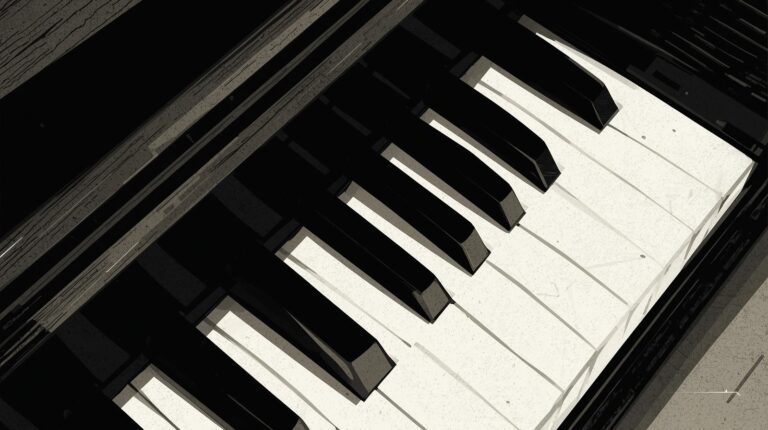
The piano keyboard follows a repeating pattern of white keys and black keys. The black keys are grouped in sets of:
- Two black keys
- Three black keys
These groups repeat across the entire keyboard and serve as visual and physical landmarks for identifying notes.
For example:
- The white key just before the two black keys is C.
- The white key between the two black keys is D.
- The white key after the two black keys is E.
Recognizing these patterns helps you quickly determine where your fingers are on the keyboard.
Use Black Keys as Landmarks
Black keys are slightly raised compared to white keys, making them easy to feel with your fingers.
When your hands rest on the keyboard, you can quickly identify your position by feeling these raised keys.
For example:
- If you feel two black keys, you know the surrounding white keys are C, D, and E.
- If you feel three black keys, the surrounding white keys are F, G, A, and B.
These landmarks allow pianists to orient themselves on the keyboard without looking.
Develop Muscle Memory

Muscle memory is one of the most powerful tools for playing piano without relying on sight.
When you practice scales, chords, and patterns repeatedly, your fingers begin to remember the distance between notes. Over time, your hands automatically move to the correct keys.
Muscle memory helps with:
- Playing scales smoothly
- Moving between chords
- Jumping across octaves
Playing fast passages confidentlyConsistent practice strengthens this automatic movement.
Practice Five-Note Patterns
Simple exercises can train your fingers to recognize key positions.
A common beginner exercise is the five-note pattern.
Example:
C – D – E – F – G
Practice this slowly while focusing on how the keys feel under your fingers. Try practicing with minimal visual focus on the keyboard.
This helps your hands learn the physical layout of the piano.
Learn to Feel the Distance Between Notes
As you practice more, your fingers begin to recognize the distance between notes.
For example:
- Moving from C to G requires a larger stretch.
- Moving from E to F requires a very small movement.By practicing intervals and scales regularly, your hands start recognizing these distances automatically.
- This makes it much easier to locate keys without looking.
Practice Scales Regularly
Scales are one of the best exercises for building keyboard familiarity.
Practicing scales helps you:
- Understand note patterns
- Develop finger strength
- Improve hand coordination
- Build muscle memory
Beginner scales often include:
- C Major
- G Major
- F Major
Over time, scales train your hands to move across the keyboard confidently.
Reduce the Habit of Looking Down
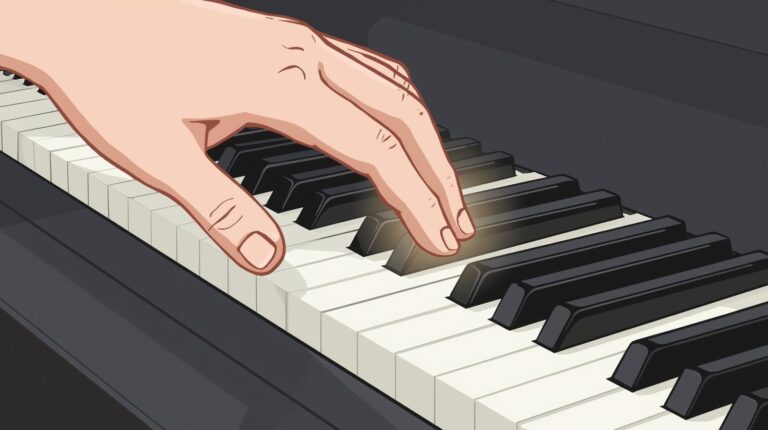
Many beginners constantly look at their hands while playing. While this may feel helpful initially, it can slow progress.
Instead, gradually reduce how often you look at the keyboard.
You can practice this by:
- Keeping your eyes on the sheet music
- Practicing slow exercises without looking down
- Closing your eyes briefly during simple patternsThis helps your hands develop spatial awareness of the keyboard.
Practice Slowly and Carefully
When learning to play without looking, slow practice is essential.
Playing slowly allows you to focus on:
- Finger placement
- Hand movement
- Accuracy of notes
- Smooth transitions
As your confidence grows, you can gradually increase speed.
How Guided Piano Lessons Can Help

Working with experienced teachers can help students develop better keyboard awareness and technique. Teachers can guide students in building proper finger movement, rhythm, and practice habits.
Structured piano lessons also help students learn how to navigate the keyboard efficiently without relying on visual cues.
Final Thoughts
Learning how to identify piano keys quickly without looking is an essential skill for pianists at any level. By understanding keyboard patterns, using black keys as landmarks, and practicing regularly, you can train your hands to navigate the keyboard naturally.
Although it may feel challenging at first, consistent practice will gradually build muscle memory and confidence. Over time, your fingers will instinctively find the correct keys, allowing you to focus more on musical expression and performance.

About The Mystic Keys
The Mystic Keys is an online music academy dedicated to helping students build strong musical foundations through personalized instruction. The academy offers one-on-one online lessons for Piano Lessons Online, guitar, vocals, drums, Hindustani music, and more. instruments.
Students receive individual guidance from experienced instructors along with recorded lessons and customized practice materials. This structured approach helps learners improve technique, rhythm, and musical understanding.
The academy also prepares students for internationally recognized certifications such as Trinity College London, helping them achieve important milestones in their musical journey.
For more information and exciting resources about learning music, visit our website at The Mystic Keys. For more music content and exciting offers follow us on
Facebook, Instagram, YouTube, LinkedIn, Twitter, Pinterest, and Threads.