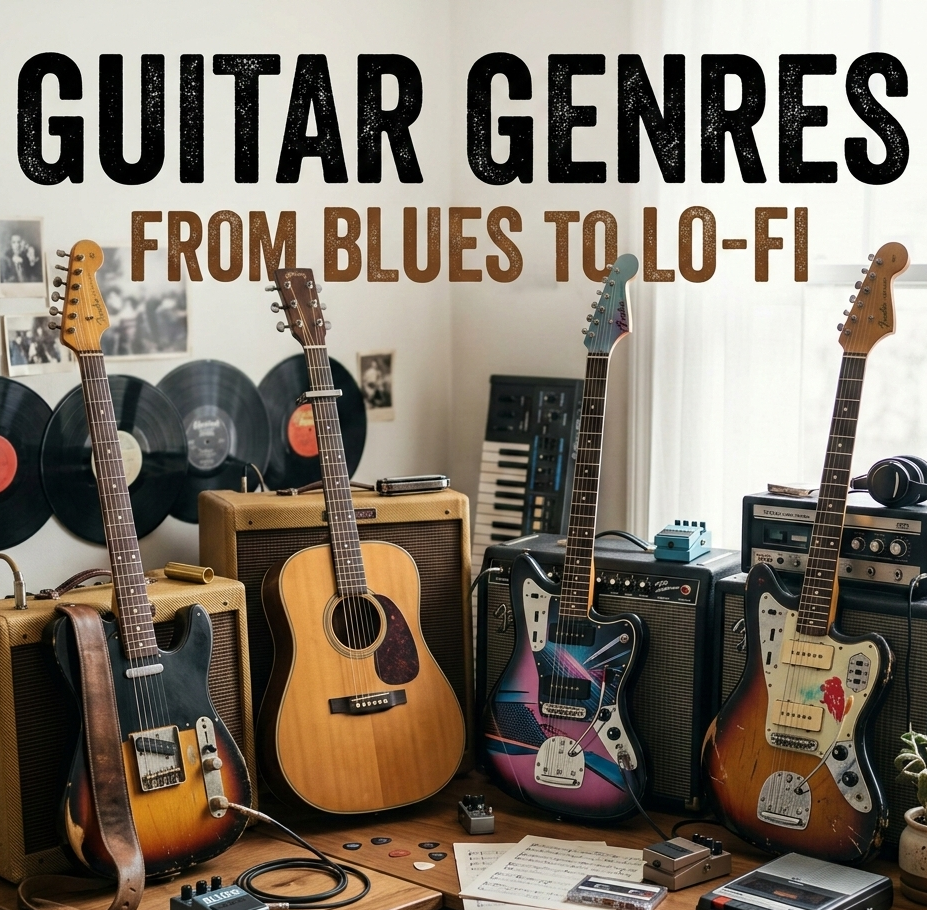
Guitar Genres | From Blues to Lo-Fi
The guitar is one of the most expressive instruments in modern music. Its versatility allows it to move effortlessly between raw emotion, technical brilliance, and atmospheric soundscapes. This remarkable range becomes especially evident when exploring different guitar genres, each revealing a unique character of the instrument. Across cultures and decades, musicians have used the guitar to tell stories—sometimes loud and electrifying, sometimes soft and intimate.
From the soulful bends of blues legends to the dreamy textures of lo-fi producers, guitar music has evolved in fascinating ways. Each genre reveals a different personality of the instrument. Some styles celebrate virtuosity, while others focus on mood and simplicity. Yet all of them share the same foundation: the ability of the guitar to communicate feeling.
Understanding these genres is not only useful for listeners but also for players who want to explore new musical directions. When we trace the path from blues to lo-fi, we see how one instrument has shaped entire musical movements.
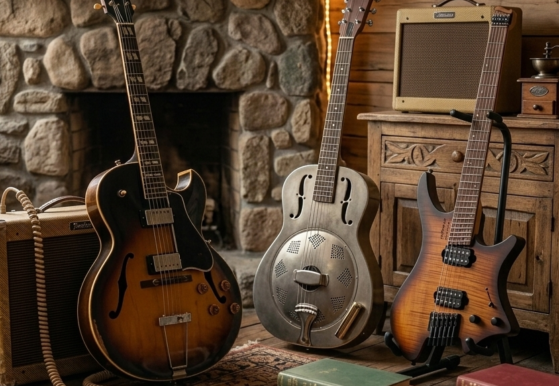
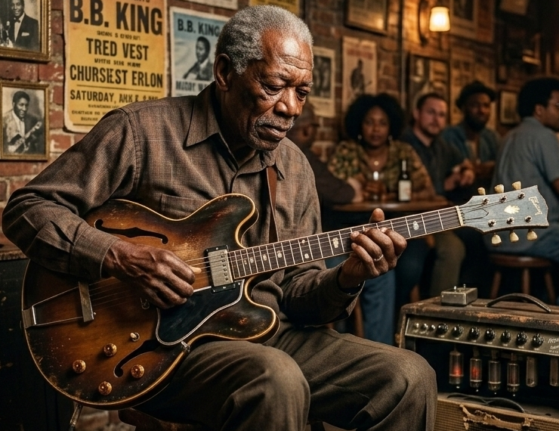
The Soulful Origins | Blues Guitar
Blues guitar sits at the heart of modern guitar music. Its roots stretch back to the American South, where musicians transformed hardship and everyday experiences into deeply emotional songs. Instead of relying on complex arrangements, early blues players used simple chord progressions and expressive phrasing to create powerful music.
What makes blues guitar unique is its emotional language. Techniques like string bending, vibrato, and sliding notes imitate the human voice. As a result, the instrument seems to sing rather than simply play notes. Each phrase carries feeling—sometimes sorrowful, sometimes defiant, often reflective.
Improvisation also plays a central role in blues. Musicians rarely perform a song exactly the same way twice. A guitarist may stretch a note longer, add a spontaneous lick, or respond to the mood of the audience in real time. That sense of freedom helped blues become the foundation for many other genres.
Rock, jazz, and even modern pop guitar styles trace their lineage back to these early blues traditions. Without blues, the language of the electric guitar would look very different today.
The Energy Shift | Rock Guitar
As music moved into the mid-twentieth century, blues guitar evolved into something louder and more aggressive. Amplifiers became more powerful, distortion effects entered the scene, and guitarists began pushing the instrument into new sonic territory. This transformation gave birth to rock guitar and marked an exciting expansion in the landscape of Guitar Genres.
Rock music placed the guitar at center stage. Riffs became the backbone of songs, creating instantly recognizable hooks that audiences could identify within seconds. Power chords, heavy distortion, and driving rhythms helped shape the bold sound associated with rock.
Lead guitar solos soon became a defining element. During these moments, a guitarist could break away from the structure of the song and showcase creativity, speed, and emotional intensity. These solos often carried the energy of the entire performance.
Over time, rock guitar branched into numerous subgenres. Hard rock emphasized raw power and aggressive tones, while progressive rock explored complex structures and technical precision. Alternative rock leaned toward experimentation and distinctive textures, allowing artists to reshape the sound in unexpected ways. Each variation added new colors to the guitar’s growing musical palette.
Despite these differences, the spirit of rock guitar remains rooted in freedom and rebellion. The instrument gradually became a symbol of self-expression, encouraging musicians to push boundaries and discover entirely new sounds.

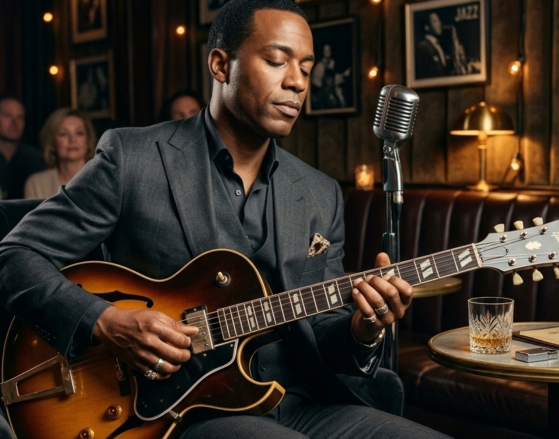
Guitar Genres | The Sophisticated Voice of Jazz Guitar
While rock guitar focused on power and attitude, jazz guitar followed a different path. Within jazz, the guitar developed a more refined and harmonically rich identity. Players began exploring complex chords, extended harmonies, and intricate improvisation.
Unlike the raw emotion of blues or the driving force of rock, jazz guitar emphasizes subtlety and conversation. A guitarist interacts constantly with other musicians, responding to the rhythm section and shaping phrases around the melody. Every performance becomes a dialogue rather than a fixed arrangement.
Chord voicings in jazz often include additional notes beyond the basic triad. Ninths, elevenths, and thirteenths add layers of color to the harmony. These textures allow jazz guitarists to create lush soundscapes even while playing solo.
Improvisation remains essential, yet it follows sophisticated harmonic frameworks. Instead of relying solely on pentatonic scales, jazz musicians navigate complex chord progressions, weaving melodic lines that shift gracefully with each change.
Through this style, the guitar demonstrates its intellectual and expressive depth. Jazz proves that the instrument is capable of elegance and complexity equal to any other member of the orchestra.
Guitar Genres | Acoustic Storytelling in Folk and Fingerstyle
Another branch of guitar music embraces simplicity and storytelling. Folk guitar traditions rely primarily on acoustic instruments and straightforward arrangements. Rather than overwhelming listeners with technical display, the music highlights lyrics, narrative, and emotional sincerity.
Strumming patterns provide the rhythmic backbone in many folk songs. These steady rhythms support melodies that feel natural and conversational. The guitar becomes both accompaniment and atmosphere, allowing singers to deliver stories that resonate with everyday life.
Fingerstyle playing introduces another dimension to acoustic guitar. Instead of strumming with a pick, the player uses individual fingers to pluck different strings simultaneously. This technique allows one guitarist to perform bass lines, chords, and melodies at the same time.
Because of this approach, fingerstyle guitar often feels orchestral despite being played on a single instrument. Gentle bass notes anchor the harmony while higher strings carry flowing melodies. The result is music that feels intimate yet surprisingly full.
Across cultures, folk and fingerstyle traditions have preserved the guitar’s role as a companion to human stories. Campfires, living rooms, and small concert halls remain some of the most natural homes for this style.

The Atmospheric Turn | Ambient and Experimental Guitar
As technology advanced, guitarists began experimenting with sound design, and the expanding world of Guitar Genres reflected this creative shift. Effects pedals, looping devices, and studio processing opened doors to entirely new sonic landscapes. From this wave of experimentation, ambient guitar gradually emerged as a distinctive style.
Within ambient music, the guitar often moves away from traditional riffs or chord progressions. Long sustained notes, layered textures, and shimmering reverbs begin to take center stage instead. These elements combine to create immersive sound environments where a single note can slowly evolve, blending into a soft atmospheric wash.
Looping technology further expanded these possibilities. Players could record phrases and stack them in real time, allowing textures to grow gradually during a performance. Over time, these layers build rich sonic landscapes that feel almost orchestral in scale. Listeners often hear echoes, drones, and shifting harmonies rather than clearly defined melodies.
Experimentation also led many guitarists to adopt unconventional techniques. Some artists bow the strings with violin bows to produce haunting tones. Others tap rhythmic patterns across the fretboard, transforming the guitar into a percussive instrument. Meanwhile, creative use of feedback and effects continues to reshape the instrument’s sonic identity.
Through these explorations, the guitar moves beyond its traditional role. Instead of serving only as a melodic or rhythmic tool, it becomes a medium for sonic discovery and atmosphere, capable of creating entire worlds of sound.

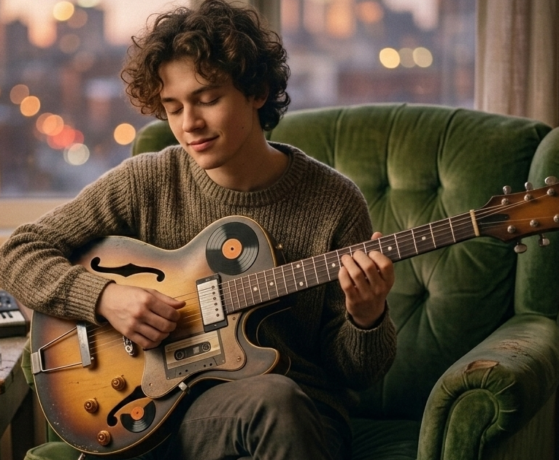
Guitar Genres | The Modern Mood of Lo-Fi Guitar
In recent years, lo-fi music has introduced yet another interpretation of guitar sound. Lo-fi, short for “low fidelity,” intentionally embraces imperfections. Soft distortion, tape-like warmth, background noise, and relaxed tempos give the music a nostalgic atmosphere.
Guitar plays a crucial role in shaping this mood. Instead of aggressive riffs or complex solos, lo-fi guitar often uses gentle chords and mellow melodies. Slightly detuned strings, muted notes, and simple progressions contribute to the genre’s laid-back character.
The aesthetic of lo-fi music reflects everyday moments. Many tracks are designed as background sound for studying, relaxing, or reflecting. Because of this purpose, the guitar rarely demands attention. It drifts quietly through the mix, adding warmth and emotional color.
Interestingly, lo-fi guitar reconnects with earlier traditions despite its modern production style. Blues phrasing, jazz chords, and folk simplicity often appear subtly within the genre. These influences blend together, creating a sound that feels both contemporary and timeless.
Through lo-fi music, the guitar proves once again that subtlety can be as powerful as virtuosity.
The Endless Evolution of Guitar Music
The journey from blues to lo-fi reveals more than just different musical styles. It highlights the remarkable adaptability of the guitar and the diverse world of Guitar Genres that have developed over time. Across decades of musical evolution, the instrument has continued to reinvent itself, shaped by cultural shifts, technology, and artistic creativity.
Blues gave the guitar its emotional voice, while rock amplified its power and cultural impact. Jazz later introduced harmonic depth and sophisticated improvisation. Folk traditions preserved the instrument’s storytelling spirit through simple, heartfelt melodies. Ambient experimentation expanded sonic possibilities, and lo-fi brought the guitar into modern digital culture with relaxed textures and nostalgic tones.
Every genre reflects the era and environment in which it emerged. Today, learning these styles has become easier through Guitar Lessons Online, where students can explore techniques and genres from anywhere. Platforms such as The Mystic Keys support aspiring musicians in understanding different guitar styles while steadily developing their skills.
For listeners, exploring guitar genres opens the door to new musical worlds. Players, meanwhile, discover endless inspiration as they experiment with different sounds and approaches.
For more information and exciting resources about learning music, visit our website at The Mystic Keys. For more music content and exciting offers follow us on
Facebook, Instagram, YouTube, LinkedIn, Twitter, Pinterest, and Threads.