Trinity Piano Exam Syllabus Explained | A Complete Guide
The world of piano examinations can feel overwhelming, especially for students and parents trying to choose the right exam board. Among the internationally respected options available today, the Trinity Piano Exam stands out for its modern outlook, flexibility, and strong emphasis on musical expression. Rather than focusing solely on technical perfection, Trinity encourages students to grow into confident, well-rounded musicians.
An Introduction to Trinity College London and Its Musical Philosophy
Trinity College London has a long-standing reputation for promoting practical and performance-based music education. Its piano syllabus reflects a belief that music should be expressive, engaging, and relevant to today’s learners.
Unlike rigid exam systems, Trinity allows students to make meaningful choices within the syllabus. This learner-focused approach helps students feel more involved in their musical journey and often leads to greater motivation and enjoyment.
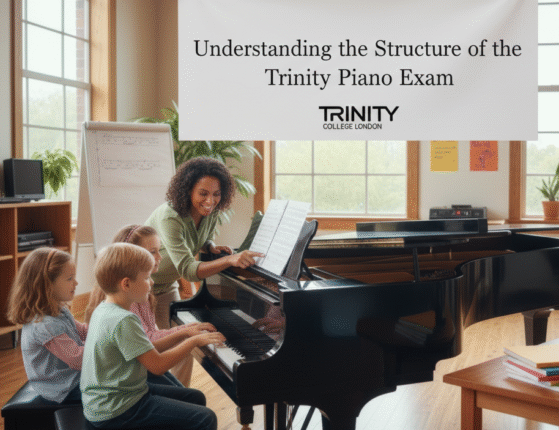
Understanding the Structure of the Trinity Piano Exam
The Trinity Piano Exam syllabus is divided into Initial Grade, followed by Grades 1 through 8. Each grade is designed to reflect a clear stage of musical development, gradually increasing in complexity and depth.
Early grades focus on basic coordination, note reading, and rhythmic awareness. As students progress, the syllabus introduces more demanding repertoire, advanced technical control, and greater interpretative responsibility. The transition from one grade to the next feels natural, making the system suitable for long-term musical growth.
Repertoire in the Trinity Piano Exam | A Broad Musical Landscape
A defining feature of the Trinity Piano Exam is its carefully curated and stylistically diverse repertoire. Students are exposed to music from different periods and genres, helping them develop flexibility and musical curiosity.
Each grade offers multiple repertoire lists, usually divided into contrasting sections. Students are required to select pieces that differ in style and character, encouraging them to explore a range of musical expressions. This variety not only keeps practice sessions engaging but also prepares students to approach unfamiliar music with confidence.
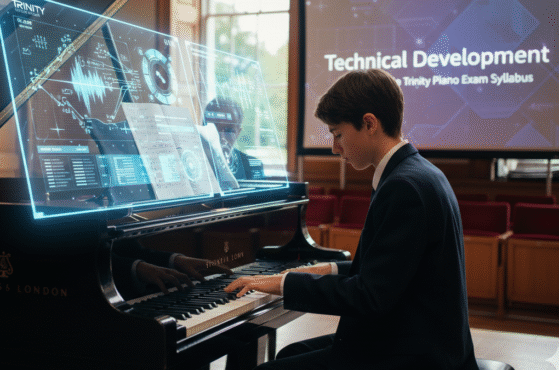
Technical Development in the Trinity Piano Exam Syllabus
Technical skills form the backbone of effective piano playing, and the Trinity Piano Exam syllabus integrates technique in a practical and musical way. Rather than isolating technique as a mechanical exercise, Trinity treats it as a tool for expressive performance.
At lower levels, technical work focuses on building finger strength, hand position, and basic coordination. As grades advance, students encounter more challenging scales, arpeggios, and patterns across a wider range of keys. The emphasis remains on control, tone quality, and accuracy rather than sheer speed.
Sight Reading | Encouraging Musical Independence
Sight reading is an essential skill for any pianist, and Trinity treats it as a real-life musicianship test rather than a trap for mistakes. Students are expected to maintain a steady pulse, observe key musical details, and continue playing even if minor errors occur.
This approach helps students become more confident readers and better ensemble musicians. Over time, strong sight-reading skills also make learning new repertoire faster and less stressful.
Aural Skills and Musical Listening
Aural tests in the Trinity syllabus focus on sharpening the student’s listening ability. These exercises encourage students to engage actively with sound, rather than relying solely on written notation.
Through singing, clapping, and identifying musical features, students develop a stronger internal sense of pitch, rhythm, and expression. This directly enhances their performance quality and overall musical awareness.
Performance as the Core of the Trinity Piano Exam
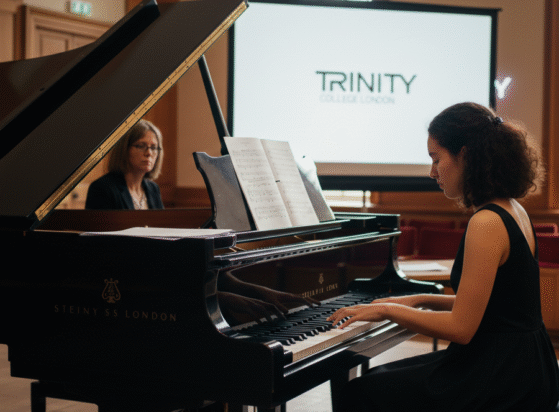
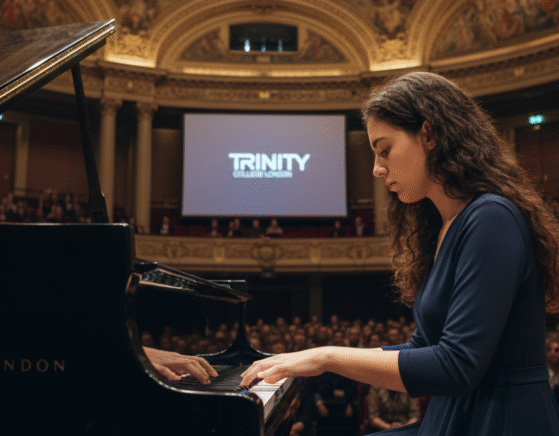
Performance is central to the Trinity Piano Exam, shaping the overall exam experience. Students are encouraged to think of the exam as a musical presentation rather than a technical inspection.
Expression, communication, and stylistic understanding are all valued alongside accuracy. This performance-oriented mindset helps reduce exam anxiety and builds confidence, particularly for students who enjoy playing for an audience.
Assessment, Marking, and Examiner Feedback
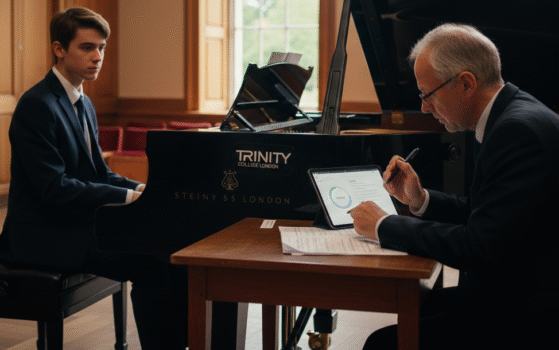
Trinity uses a balanced and transparent marking scheme that evaluates students across multiple sections of the exam. Examiners award marks for technique, musical understanding, accuracy, and expressive performance, ensuring a fair assessment of overall musicianship rather than a narrow focus on perfection.
Examiners provide detailed and constructive feedback that helps students recognize their strengths and identify areas for improvement. Teachers and learners can use this guidance to shape future practice and set clear musical goals. As a result, the exam becomes a meaningful learning experience rather than a one-time judgment based solely on marks.
Alternative Exam Options and Performance Grades
The Trinity Piano syllabus supports a wide range of learners, from beginners to advanced students. It especially helps students who enjoy musical variety, focus on expressive playing, and perform well in assessment settings that value interpretation and communication. By offering flexibility in repertoire and exam structure, the syllabus encourages students to develop their own musical identity rather than simply meet technical benchmarks.
Teachers value Trinity’s adaptable framework because it allows them to design lessons around each student’s strengths, pace, and musical goals. Instead of teaching to a rigid exam pattern, teachers can concentrate on building strong musicianship, confidence, and artistic growth over time.
Who Is the Trinity Piano Syllabus Best Suited For?
The Trinity Piano syllabus suits a wide range of learners and supports different learning styles and musical goals. It particularly benefits students who enjoy variety in their repertoire, value expressive and interpretative playing, and feel comfortable performing in a presentation-based exam format.
The syllabus also encourages students to develop confidence, musical independence, and a deeper connection with the music they play. By offering flexibility in repertoire and assessment, Trinity allows learners to progress at a pace that feels both challenging and achievable.
Teachers value Trinity’s adaptable structure because it allows them to shape lessons around each student’s strengths, interests, and learning needs. Instead of teaching strictly to a fixed exam formula, educators can focus on long-term musical development, creativity, and enjoyment, while still preparing students thoroughly for examinations.
Final Thoughts
At The Mystic Keys, we believe the Trinity Piano syllabus strikes a thoughtful balance between technical development, musical expression, and practical musicianship. By prioritizing performance, informed choice, and real-world musical skills, the Trinity Piano Exam actively supports learners in building confidence and artistry at every stage of their journey.
For students who seek an examination board that nurtures creativity while maintaining strong musical discipline, Trinity offers a clear, flexible, and deeply enriching path forward.
For more information and exciting resources about learning music, visit our website at The Mystic Keys. For more music content and exciting offers follow us on