Drumming for Health | Physical and Mental Benefits
In a world that constantly demands speed, productivity, and mental agility, finding a single activity that nurtures both the body and the mind can feel rare. Drumming, often seen purely as a musical or performance skill, quietly stands out as one such powerful practice. Beyond rhythm and beats, drumming has a profound impact on physical health, mental well-being, and even long-term motivation.
Interestingly, the motivation to drum doesn’t work the way motivation for many other activities does. It doesn’t rely solely on discipline or external rewards. Instead, it grows naturally—fed by movement, emotion, connection, and the deep human relationship with rhythm.
Let’s explore how drumming supports health and how motivation truly unfolds through it.
Drumming for Health |The Body’s Natural Response to Rhythm
From ancient tribal ceremonies to modern music therapy rooms, drumming has always been intertwined with human life. Rhythm mirrors the most fundamental sounds we experience—our heartbeat, breathing patterns, and walking pace. Because of this, drumming feels instinctive rather than forced.
When someone begins drumming, the body immediately recognizes the pattern. This recognition creates comfort, grounding, and engagement, which is why people often feel “drawn” to drums even before understanding technique. This natural pull plays a key role in sustaining motivation over time.

Drumming for Health and Physical Vitality Without the Pressure of Exercise
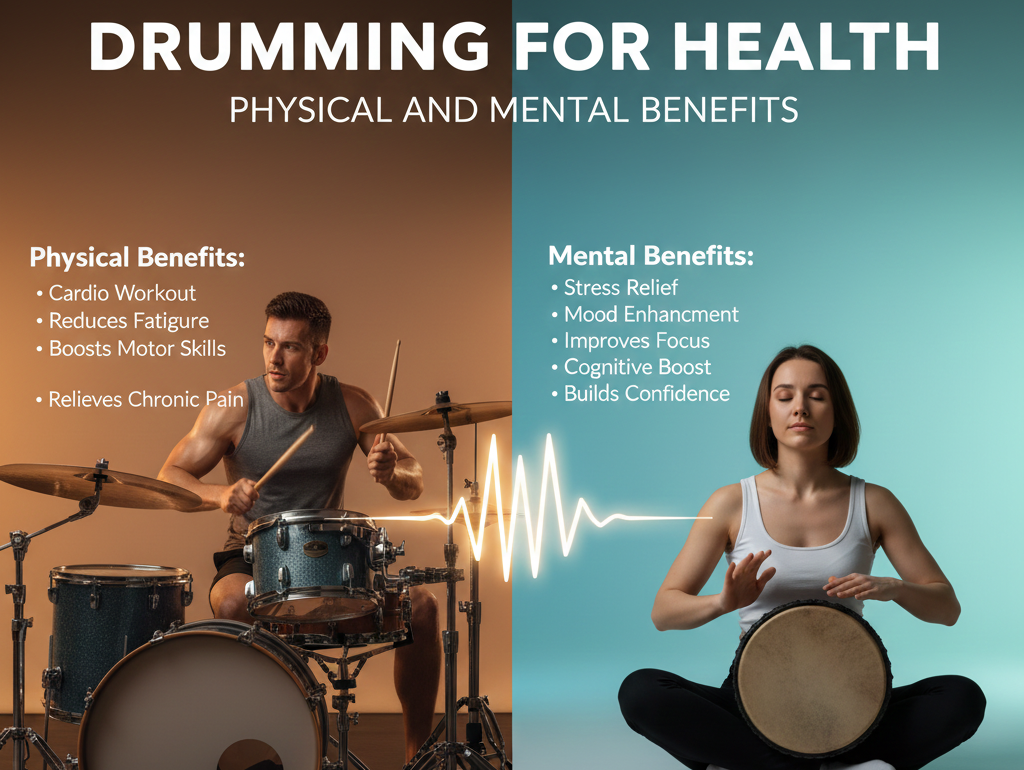
One of the most underrated aspects of drumming is its physical impact. While it may not resemble traditional workouts, drumming engages the body in continuous, controlled movement.
As the arms, shoulders, wrists, and fingers work together, muscles gradually gain strength and endurance. At the same time, maintaining rhythm and posture activates the core and improves overall coordination. Over longer sessions, drumming also elevates heart rate, gently supporting cardiovascular health.
What makes this especially powerful is that drummers rarely think, “I’m exercising.” The focus remains on sound, rhythm, and expression—allowing physical benefits to accumulate effortlessly. This is where motivation works differently: the body improves without the mental resistance often associated with fitness routines.
Mental Health Benefits | Rhythm as a Regulator
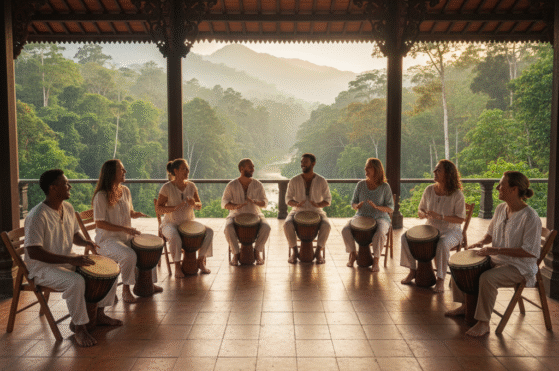
While the physical effects are significant, the mental benefits of drumming are often life-changing. Rhythm has a direct influence on the nervous system. Repetitive drumming patterns can calm the mind, slow racing thoughts, and bring attention into the present moment.
For many, drumming becomes a form of moving meditation. Stress hormones reduce, while dopamine and serotonin—chemicals associated with pleasure and emotional balance—are released. This explains why people often feel lighter, calmer, or emotionally refreshed after a drumming session.
Over time, drumming can help manage anxiety, reduce symptoms of depression, and improve emotional regulation. It provides a safe outlet for expression, especially for emotions that are difficult to articulate in words.

Cognitive Growth | Training the Brain Through Rhythm
Beyond emotional well-being, drumming significantly strengthens cognitive abilities. Playing rhythms requires focus, memory, timing, and coordination between both hands and sometimes the feet. This bilateral engagement stimulates both hemispheres of the brain simultaneously.
As drummers practice, they enhance concentration, listening skills, and reaction time. The brain learns to process complex patterns while staying adaptable, which can positively influence problem-solving skills and mental flexibility in daily life.
This constant mental engagement makes drumming deeply satisfying. The brain feels challenged—but not overwhelmed—creating an ideal environment for sustained motivation.
How Motivation Really Works in Drumming for Health
Unlike many skill-based activities, motivation in drumming does not rely solely on external validation such as grades, applause, or rewards. Instead, motivation grows internally through experience.
Each improvement—whether cleaner timing, stronger coordination, or a groove that finally “locks in”—creates immediate feedback. The sound itself becomes the reward. This instant cause-and-effect loop fuels curiosity and commitment.
Additionally, drumming allows progress to be felt, not just measured. When the body relaxes, the rhythm flows better. When emotions shift, the sound changes. This deep mind-body connection makes practice feel meaningful rather than obligatory.
Social Connection and Collective Energy
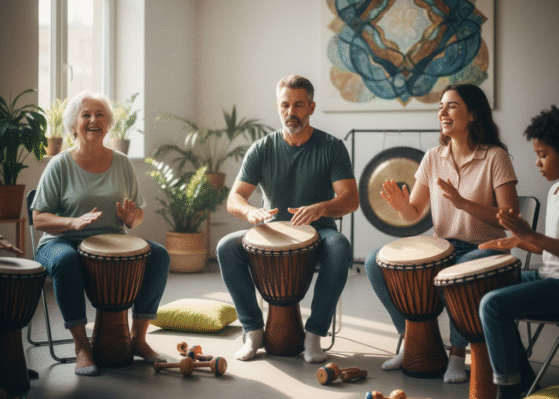
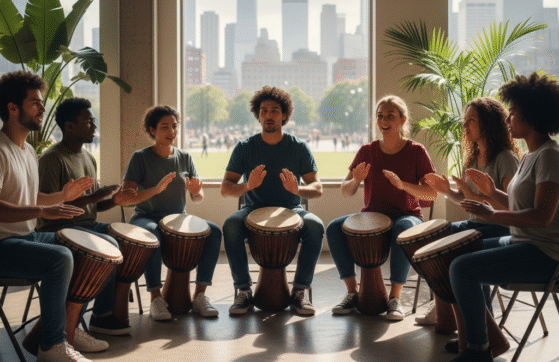
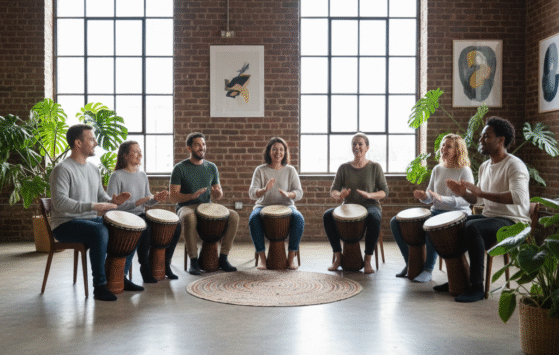
Drumming also has a strong social dimension. Group drumming sessions create a shared rhythm that fosters connection, trust, and a sense of belonging. Playing in sync with others naturally enhances empathy and cooperation.
This collective experience amplifies motivation. People are more likely to return, practice, and grow when they feel part of a rhythmic community. The drum circle doesn’t judge—it includes. That inclusivity makes drumming accessible and sustaining for people of all ages and backgrounds.
Consistency Without Burnout
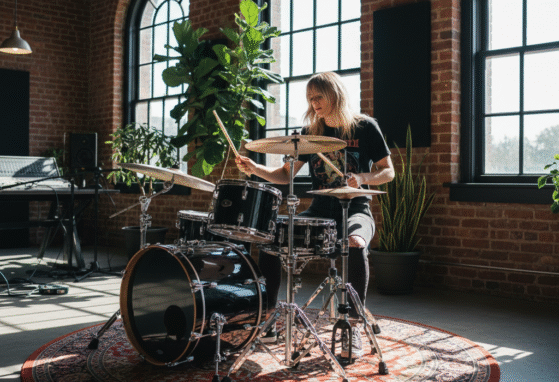
One of the most powerful health benefits of drumming lies in its sustainability. Because drumming is enjoyable, expressive, and emotionally rewarding, people are more likely to continue it long-term.
Motivation here is not forced through discipline alone. It is renewed each time the drum is played—through sound, sensation, and emotional release. This makes drumming an ideal lifelong practice rather than a short-lived habit.
Conclusion| Drumming for Health as a Lifelong Practice
At The Mystic Keys, this philosophy of Drumming for Health is at the heart of how drum lessons are designed and taught. Through Drum Lessons Online, learners are guided not just to play rhythms, but to experience drumming as a complete mind–body practice—one that grows with them, wherever they are.
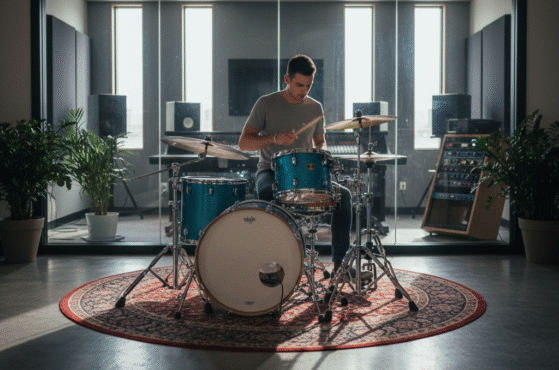
Drumming is far more than an artistic skill. It is a holistic practice that strengthens the body, sharpens the mind, and nurtures emotional balance. Its true power lies in how naturally it motivates—by aligning movement, rhythm, and inner experience.
In a time when motivation often feels fragile, drumming reminds us that the most sustainable drive comes not from pressure, but from joy, connection, and rhythm. When the beat begins, the body listens—and the mind follows.
For more information and exciting resources about learning music, visit our website at The Mystic Keys. For more music content and exciting offers follow us on
Facebook, Instagram, YouTube, LinkedIn, Twitter, Pinterest, and Threads.