Drum Tuning and Maintenance | Keeping Your Kit in Top Shape
Introduction
A well-tuned and properly maintained drum kit is the foundation of powerful rhythm, clear tone, and expressive musical performance. Many drummers focus heavily on technique and practice routines but overlook one of the most critical aspects of their sound: drum tuning and maintenance. Even the most skilled drummer cannot achieve a great tone from a poorly tuned or neglected kit.
Drum tuning is not just about tightening or loosening lugs; it is about understanding how tension, shell resonance, drumhead selection, and environment work together to shape your sound. Similarly, drum maintenance goes far beyond simple cleaning—it involves regular inspection, correct handling, timely replacement of worn components, and protecting your kit from environmental damage.
Whether you are a beginner learning your first grooves, an intermediate player refining your sound, or a professional performer preparing for studio or stage, mastering drum tuning and maintenance will dramatically improve consistency, tonal quality, and confidence. At The Mystic Keys, we emphasize complete musicianship, and that includes knowing how to care for your instrument so it performs at its best every time.
This in-depth guide covers everything you need to know about tuning each part of your drum kit, maintaining hardware and cymbals, avoiding common mistakes, and developing habits that keep your drums in top shape for years.
Why Drum Tuning and Maintenance Matter
Drums are acoustic instruments that respond instantly to changes in tension, temperature, humidity, and playing intensity. Unlike electronic instruments, their sound is shaped physically, making tuning and maintenance essential rather than optional.
When your drum kit is properly tuned and well maintained, every stroke produces a clear, controlled, and musical tone. Poor tuning, on the other hand, can result in unwanted overtones, uneven pitch, lack of projection, and listener fatigue. Maintenance issues such as loose hardware or worn drumheads can cause rattling, tuning instability, and even long-term damage to the shells.
Consistent drum tuning and maintenance offer multiple benefits. They help drummers achieve reliable sound across rehearsals, recordings, and live performances. They also reduce setup time, prevent sudden equipment failures, and save money by extending the lifespan of drumheads, pedals, stands, and cymbals.
Most importantly, a well-maintained kit responds better to dynamics and touch, allowing drummers to express themselves more musically. This is why professional drummers treat tuning and maintenance as part of their regular practice routine, not an afterthought.
Understanding the Basics of Drum Tuning
Drum tuning is the process of adjusting the tension of a drumhead so that it vibrates evenly and produces a clear, controlled pitch. Each drum has at least two heads: the batter head, which you strike, and the resonant head, which shapes sustain and tone. Both heads must work together to achieve a balanced sound.
The pitch of a drum is determined by the tension applied through the tuning lugs. Higher tension results in a higher pitch and shorter sustain, while lower tension produces a deeper tone with more resonance. However, tuning is not simply about high or low—it is about balance, clarity, and musical context.
Drum shells, bearing edges, hoops, and even the type of drumhead used all influence tuning results. Thicker heads provide durability and focused tone, while thinner heads offer greater sensitivity and resonance. Understanding these elements allows drummers to make informed tuning choices rather than relying on guesswork.
Step-by-Step Guide to Tuning Your Drums
Tuning drums correctly requires patience, consistency, and a systematic approach. Following a step-by-step process ensures even tension and stable tuning.
1. Prepare the Drum
Before tuning, remove the drumhead if necessary and inspect the bearing edge for dust or debris. Clean the edge and hoop with a dry cloth. A clean surface allows the drumhead to seat properly, which is essential for accurate tuning and tone.
2. Seat the Drumhead Properly
Place the drumhead evenly on the shell and position the hoop on top. Lightly press the center of the head with your palm to help it seat evenly. This step reduces uneven tension and improves tuning stability.
3. Finger-Tighten the Lugs
Tighten each lug using your fingers until all rods feel equally snug. This creates a balanced starting point before using a drum key.
4. Use a Star or Crisscross Pattern
Using a drum key, tighten opposite lugs gradually in a star pattern. Make small quarter-turn adjustments rather than large movements. This method distributes tension evenly across the head.
5. Match the Pitch at Each Lug
Tap the drumhead near each lug and listen carefully. Adjust until each lug produces the same pitch. This step is crucial for eliminating unwanted overtones and achieving a clean sound.
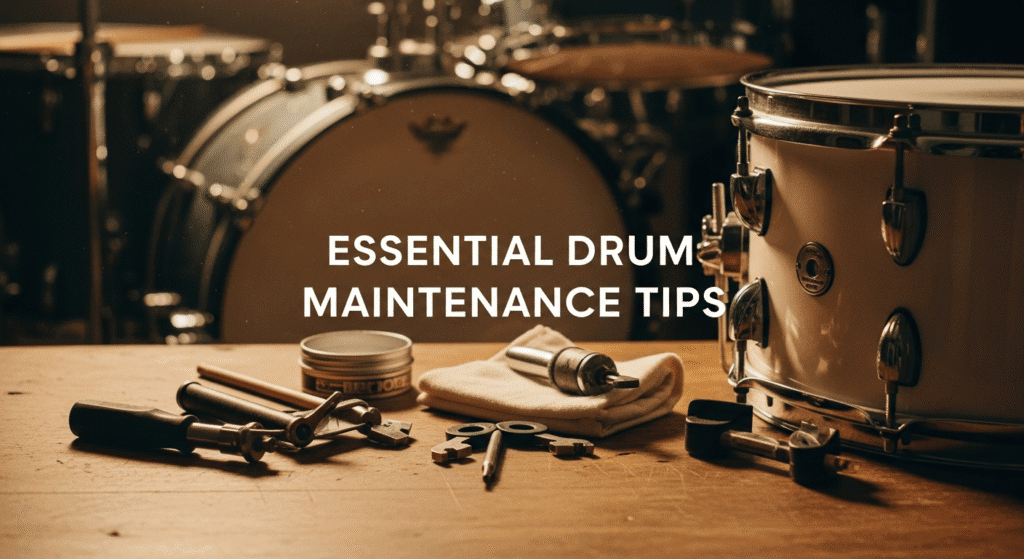
Regular maintenance keeps your drum kit reliable, visually appealing, and sonically consistent. Developing simple maintenance habits can prevent major issues over time.
Drumhead Care
Drumheads wear out gradually due to constant impact and tension. Look for dents, stretching, or loss of tone as signs that replacement is needed. Cleaning drumheads with a dry or slightly damp cloth removes stick residue and preserves responsiveness.
Hardware Maintenance
Hardware components such as tension rods, lugs, pedals, and stands should be inspected regularly. Tighten loose screws, lubricate moving parts sparingly, and ensure pedals operate smoothly. Neglected hardware can cause tuning instability and performance distractions.
Cymbal Maintenance
Cymbals are delicate despite their appearance. Clean them only with products designed specifically for cymbals, and always follow the manufacturer’s instructions. Avoid excessive tightening on stands, which can cause cracks over time.
Storage and Handling Best Practices
Store drums in a dry, temperature-controlled environment
Use cases or covers during transport
Avoid exposure to extreme heat or humidity
Proper storage is a key part of drum kit maintenance.
Common Drum Tuning and Maintenance Mistakes
Over-tightening drumheads
Ignoring resonant heads
Using damaged drumsticks
Neglecting regular inspections
Avoiding these mistakes will keep your kit sounding its best.
How Often Should You Tune and Maintain Your Drums?
Tuning: Before performances and regularly during practice
Basic cleaning: Weekly
Detailed inspection: Monthly
Drumhead replacement: Every few months, depending on usage
Drum Tuning Tools You Should Have
Drum key
Tuning app or tuner
Soft cleaning cloth
Cymbal cleaner
Lubricant for hardware
These tools make drum tuning and maintenance easier and more precis
Learn Professional Drum Care at The Mystic Keys
At The Mystic Keys, we teach more than just playing techniques. Our drum programs help students understand instrument care, tuning, and sound control so they can perform confidently in any setting.
Whether you are learning drums online or in-person, our expert instructors guide you through every aspect of musicianship.
Conclusion
Drum tuning and maintenance are essential skills that every drummer should develop alongside technique and rhythm. A properly tuned drum kit delivers consistent tone, improved projection, and greater musical control, while regular maintenance ensures long-term reliability and protects your investment. By understanding how drumheads, shells, hardware, and environmental factors interact, drummers can make informed decisions that elevate their sound in any musical setting. Consistent care not only enhances performance quality but also builds confidence and professionalism. At The Mystic Keys, our drum lessons online encourage musicians to go beyond simply playing notes and rhythms. We teach students how to care for their instruments, shape their sound, and develop habits that support lifelong musical growth—ensuring their drum kits are always performance-ready.
For more information and exciting resources about learning music, visit our website at The Mystic Keys. For more music content and exciting offers follow us on