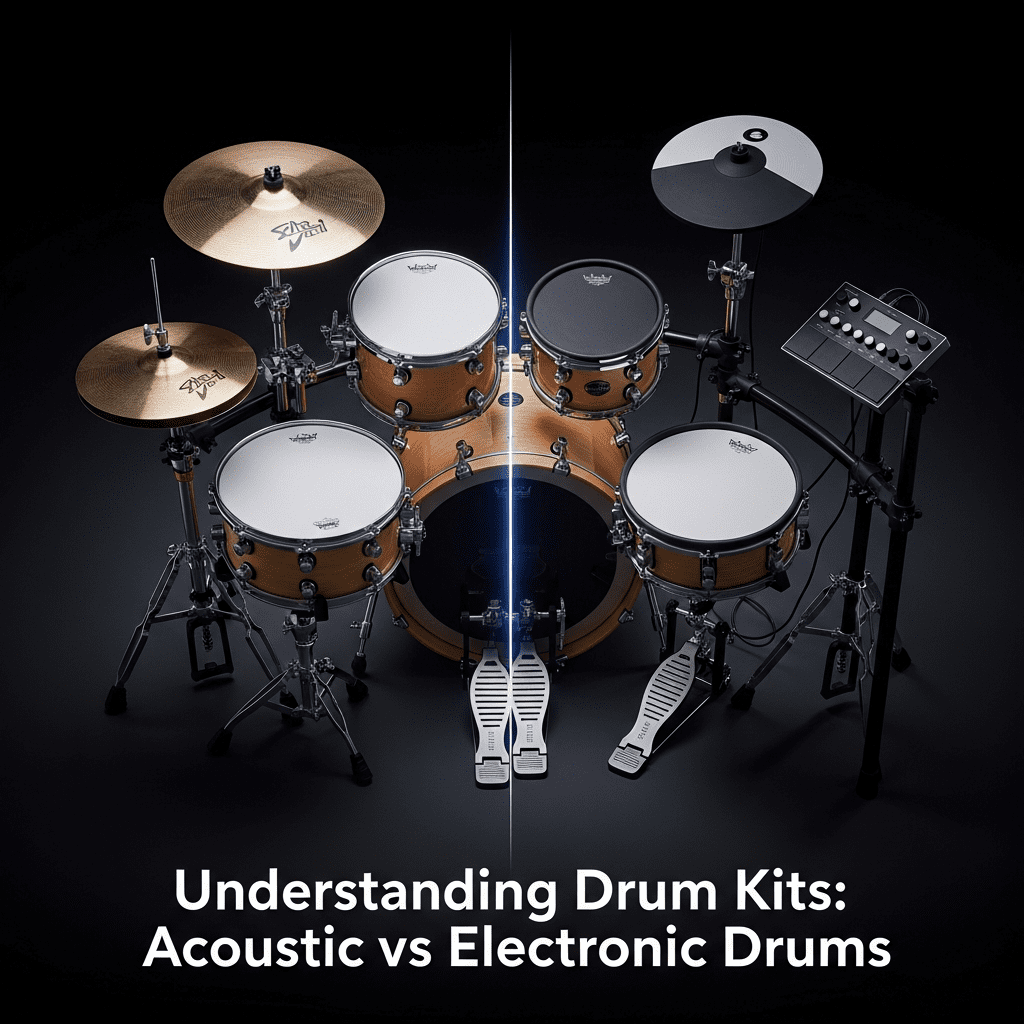
Understanding Drum Kits: Acoustic vs Electronic Drums
Choosing between acoustic and electronic drums is one of the biggest decisions every new drummer faces. The world of drumming has evolved dramatically, especially in recent years, and both types of drum kits have become more advanced, accessible, and beginner-friendly. Whether you are learning at home, preparing for band performances, joining a worship team, or exploring drumming as a hobby, understanding the differences between acoustic vs electronic drums will help you choose the perfect setup for your musical goals.
This complete guide breaks down everything about how each type works, what makes them unique, their pros and cons, how they sound, how much they cost, and which one is best for different learners and environments. By the end, you will have absolute clarity on which drum kit is right for you in 2025.

What Makes Acoustic Drums Unique?
Acoustic drums are the traditional drum kits used in live concerts, studio recordings, and band performances. They produce sound naturally through wooden shells, metal cymbals, and drumheads that vibrate when struck.
How Acoustic Drums Work
Every drum produces sound based on its shell size, wood type, and tuning.
Cymbals vibrate freely and create rich overtones.
Sound is natural, organic, and varies depending on how hard or soft you play.
The dynamics are entirely under your control, which makes them expressive.
Acoustic drums are known for their energy, power, and authenticity. No electronic drum can fully replicate the real feeling of air moving through the room when you hit an acoustic snare or crash cymbal.
Strengths of Acoustic Drums
Natural and powerful sound
Full dynamic control (soft, medium, loud, accents)
Realistic feel and rebound
Best for bands, worship teams, and concerts
Helps beginners develop proper tone and technique
Perfect for genres like rock, jazz, blues, worship, pop, and funk
Limitations of Acoustic Drums
Very loud
Cannot be played quietly without drum mutes
Requires a dedicated practice space
Needs tuning and maintenance
More difficult for apartment or small-room practice
Microphones may be needed for recordings
Despite these limitations, most professional drummers eventually prefer acoustic drums for their unmatched realism and musicality.

What Makes Electronic Drums Special?
Electronic drums use rubber or mesh pads that trigger digital drum sounds when struck. They’re designed for quiet practice, versatility, and modern learning.
How Electronic Drums Work
Pads send signals to a sound module (the “brain”).
The module plays pre-recorded drum samples or digitally generated sounds.
You can connect headphones, speakers, computers, and learning apps.
Sound levels can be controlled or played silently with headphones.
Electronic drums have become extremely popular in 2025 because they combine convenience, technology, and beginner-friendly features.
Strengths of Electronic Drums
Nearly silent practice with headphones
Built-in coaching features
Metronome, backing tracks, and preset kits
Compatible with learning apps
Compact and space-saving
No tuning required
Great for digital recording
Easy volume control for home practice
Limitations of Electronic Drums
Feel is slightly different from acoustic drums
Cheaper models may feel stiff or unrealistic
Limited dynamic range compared to acoustic
Cymbal swells and ghost notes may not respond as naturally
Pads can wear out and need replacement
Dependent on electricity and sound modules
Despite the limitations, electronic drums are the top choice for beginners living in apartments or family homes.

Sound Comparison: Acoustic vs Electronic Drums
Understanding how each drum kit sounds is one of the most important parts of choosing the right one.
Acoustic Drum Sound
Acoustic drums are known for their warm, rich, resonant tone. The sound comes naturally from:
Drum shell material
Drumhead type
Tuning
Room acoustics
Playing dynamics
The sound varies every time you play, making it expressive and emotional. This natural sound is the reason acoustic drums are used in concerts, worship bands, and professional recordings.
Electronic Drum Sound
Electronic drums rely on digital samples. These are recorded sounds of real drums or synthetic effects stored inside the module.
Types of Sounds You Get
Classic rock kits
Jazz brushes
Worship kits
Electronic/EDM kits
Hip-hop and trap sounds
Percussion instruments
Orchestral drums
Electronic drums offer versatility. You can switch from a rock kit to a worship kit with just a button press.
But There Are Differences
Electronic sounds may feel repetitive
Dynamics depend on sensor sensitivity
Cymbal resonance is shorter
Cheaper kits sound more artificial
However, advanced electronic kits in 2025 sound extremely realistic and are used even in big live worship settings.

Feel and Playability: Which Drums Feel More Real?
Beginners often wonder which drum type “feels better.” Here’s a clear comparison.
Acoustic Drum Feel
Natural rebound
Wide dynamic range
Larger playing surface
Real cymbal movement
Expressive tones
Acoustic drums respond to every tiny detail of your playing, including stick angle, velocity, and hand dynamics.
Electronic Drum Feel
The feel depends on the material of the pads:
Rubber Pads
Harder
Less natural rebound
Cheaper electronic drums use these
Mesh Pads
Softer, more realistic
Adjustable tension
Closest feel to acoustic drums
Found in most mid-range kits
Cymbal Pads
Don’t swing like real cymbals
Have limited choking and bow/bell zones
Electronic drums have improved a lot over the years, but acoustic drums still win in feel and realism.

Noise Levels: Which Is Better for Apartments?
This is where electronic drums shine.
Acoustic Drums
Extremely loud
Hard to mute fully
Even practice pads make noise
Not suitable for apartments
Electronic Drums
Quiet with headphones
Silent enough for night practice
Only pad tapping is audible
Ideal for small spaces and shared homes
If noise is a concern, electronic drums are the clear choice.

Price Comparison: Which Is More Affordable?
Cost plays a huge role in choosing a drum kit.
Acoustic Drum Pricing
Beginner kits: medium
Intermediate kits: higher
Professional kits: expensive
Additional costs include cymbals, drumheads, microphones, and maintenance.
Electronic Drum Pricing
Beginner e-kits: affordable
Intermediate kits: moderate
Professional kits: can be very expensive
However, electronic kits include many built-in features like metronomes, training tools, and recording options, making them an excellent value.
Maintenance and Durability
Acoustic Drums
Needs Regular Maintenance
Tuning
Drumhead changes
Cymbal polishing
Stand adjustments
Storage protection
Electronic Drums
Less Maintenance, But Different Issues
Pads wear out over time
Cables may need replacing
Module may need updates
Sensitive parts can break if hit too hard
Both drums last long with proper care, but maintenance is different.

Recording Drums: Which Is Better?
Acoustic Drums
Needs a treated room
More natural recording
Electronic Drums
Plug into computer
Instant recording
Clean sound
Great for creating songs at home
Electronic drums are excellent for home studios.

Portability and Space Requirements
Acoustic Drums
Larger
Heavy
Harder to transport
Needs dedicated space
Electronic Drums
Compact
Foldable
Easy to move
Great for small rooms
If space is limited, electronic drums are the smarter choice.

Final Comparison: Acoustic vs Electronic Drums
| Feature | Acoustic Drums | Electronic Drums |
|---|---|---|
| Sound | Natural, powerful | Adjustable, digital |
| Feel | Most realistic | Depends on pads |
| Noise | Very loud | Very quiet |
| Space | Requires more room | Compact |
| Maintenance | Moderate to high | Low |
| Learning Tools | None built-in | Many built-in |
| Cost | Medium to high | All ranges |
| Recording | Complex | Very easy |
| Best For | Performance, training | Home practice, beginners |
Conclusion
Understanding the differences between acoustic vs electronic drums helps you choose the perfect drum kit for your musical goals. Acoustic drums offer unmatched realism, expressive sound, and professional performance quality. Electronic drums provide quiet practice, modern learning tools, and versatility in sound.
If you want a traditional, powerful drumming experience, acoustic drums are the best choice.
If you want convenience, silence, and technology-driven learning, electronic drums are ideal.
Either way, 2025 is the perfect year to start your drumming journey — with more learning resources, better equipment options, and beginner-friendly tools than ever before.
For more information and exciting resources about learning music, visit our website at The Mystic Keys. For more music content and exciting offers follow us on
Facebook, Instagram, YouTube, LinkedIn, Twitter, Pinterest, and Threads.