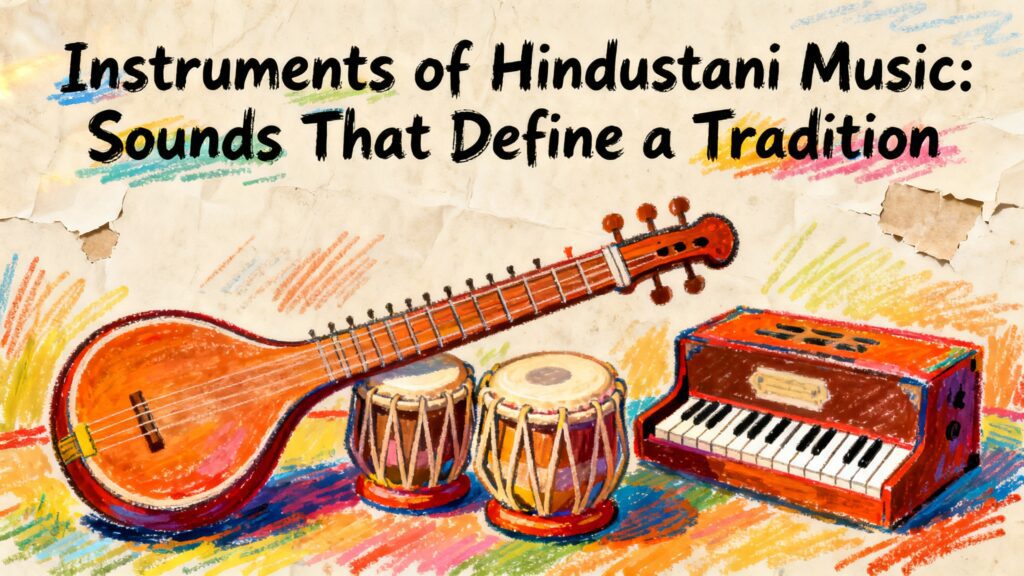
Instruments of Hindustani Music: Sounds That Define a Tradition
Hindustani music, the classical music tradition of North India, has mesmerized audiences for centuries. Its soul-stirring melodies, intricate rhythmic patterns, and improvisational brilliance are deeply tied to the instruments that bring it to life. Each instrument in Hindustani music is not just a tool—it is a voice, carrying centuries of culture, devotion, and emotion. Understanding these instruments is essential not only for students and musicians but also for enthusiasts who wish to appreciate the depth and complexity of this rich musical heritage. In this blog, we explore the most iconic instruments of Hindustani music, their history, unique characteristics, playing techniques, and the sounds that make them unforgettable.
1. Sitar: The Queen of Strings
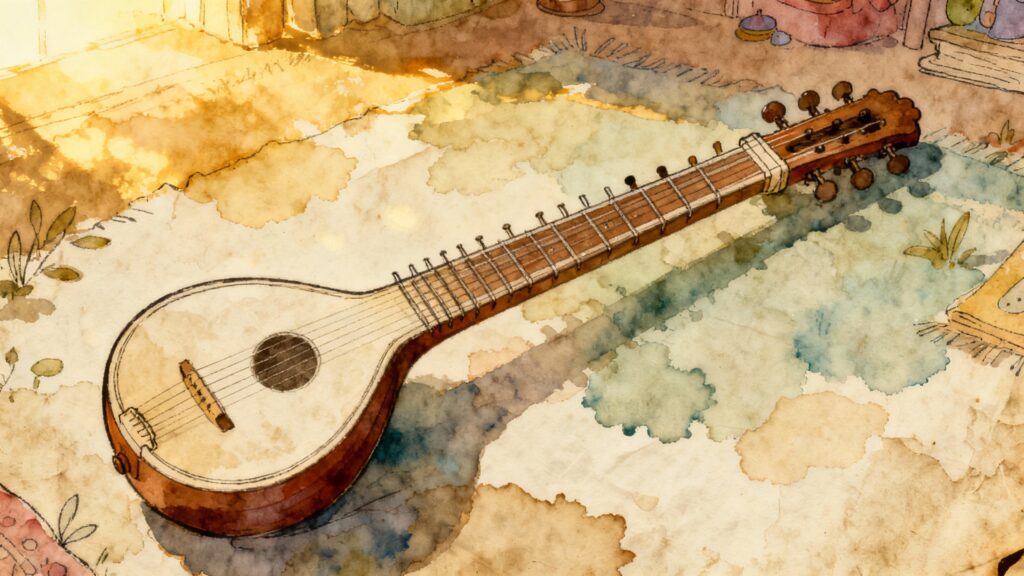
The sitar is perhaps the most internationally recognized instrument of Hindustani music. Its ethereal and resonant sound is capable of evoking profound emotions.
Historical Background: The sitar evolved during the Mughal period and was popularized by legendary musicians like Tansen. Its modern design was refined in the 18th century by the renowned musicians of the Senia gharana.
Structure: A sitar typically has 18–21 strings, including main playing strings and sympathetic strings that vibrate in resonance, enriching the tonal quality.
Technique: Players use a mezrab (metal plectrum) on their right hand to pluck strings while the left hand slides along the frets to produce intricate ornamentations known as meend and gamak.
Cultural Significance: Sitar melodies are central to many ragas and are often used in both solo and ensemble performances. Artists like Ravi Shankar and Vilayat Khan brought the sitar to global recognition.
2. Tabla: The Rhythmic Heartbeat
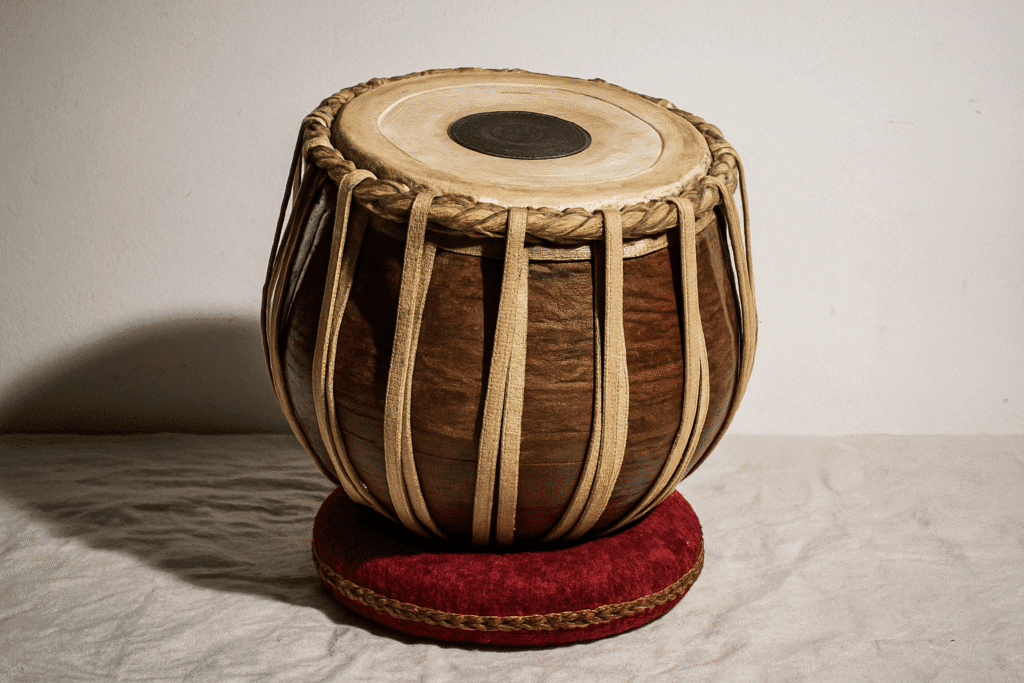
The tabla is the cornerstone of rhythm in Hindustani music. Comprising two hand-played drums—the dayan (right drum) and bayan (left drum)—the tabla brings intricate rhythmic cycles, or talas, to life.
Origin: The tabla is believed to have evolved in the 18th century, with some legends attributing its invention to Amir Khusro.
Playing Technique: Tabla players use a combination of fingers, palms, and heel of the hands to produce a wide range of sounds, known as bols, which form the language of rhythm.
Use: Tabla is indispensable for accompanying vocalists and instrumentalists in both classical and semi-classical forms, including khayal, thumri, and ghazal.
Famous Artists: Zakir Hussain, Anindo Chatterjee, and Alla Rakha are among the maestros who revolutionized tabla playing.
3. Bansuri: The Breath of Nature
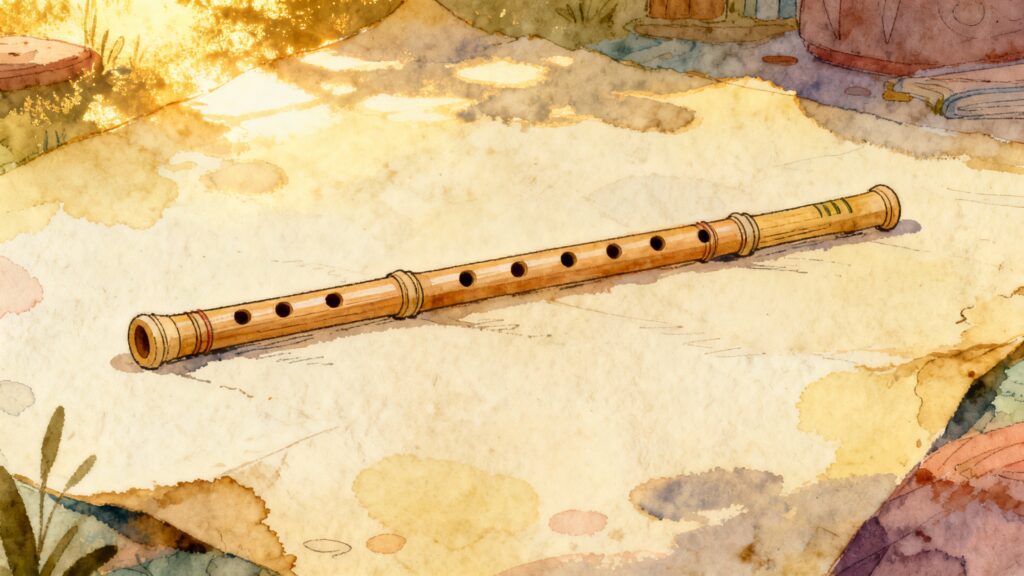
The bansuri is a bamboo flute whose soft, soulful tones are synonymous with nature and devotion.
Historical Context: The bansuri is deeply associated with Lord Krishna and has been a part of Indian folk and classical music for millennia.
Structure: A simple bamboo flute with 6–7 finger holes, made of high-quality bamboo to produce smooth, resonant notes.
Playing Technique: Breath control is key. Players use subtle variations in airflow and embouchure to produce microtones (shruti) and delicate ornaments.
Role in Hindustani Music: Bansuri is ideal for lyrical ragas, meditative melodies, and pastoral themes.
Renowned Players: Hariprasad Chaurasia is celebrated worldwide for his mastery of the bansuri.
4. Sarangi: The Soulful Voice
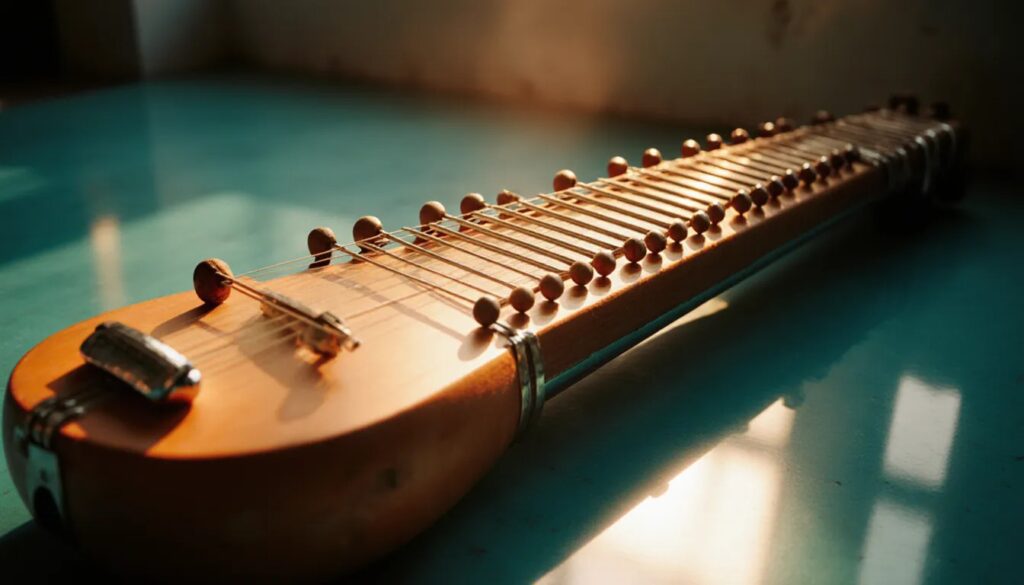
The sarangi is often described as the closest instrument to the human voice. Its deep, emotive timbre makes it ideal for accompanying vocalists in Hindustani classical music.
Historical Background: The sarangi has roots in folk traditions and became a central accompaniment instrument in khayal and thumri performances.
Structure: A short-necked bowed instrument with three main strings and up to 35 sympathetic strings that resonate to create rich overtones.
Playing Technique: Played with a bow while pressing cuticles against the strings for pitch control, allowing subtle microtonal inflections.
Cultural Significance: Sarangi is essential for expressing the delicate nuances of ragas and has been played by maestros such as Ustad Sultan Khan and Pandit Ram Narayan.
5. Harmonium: The Melody Companion
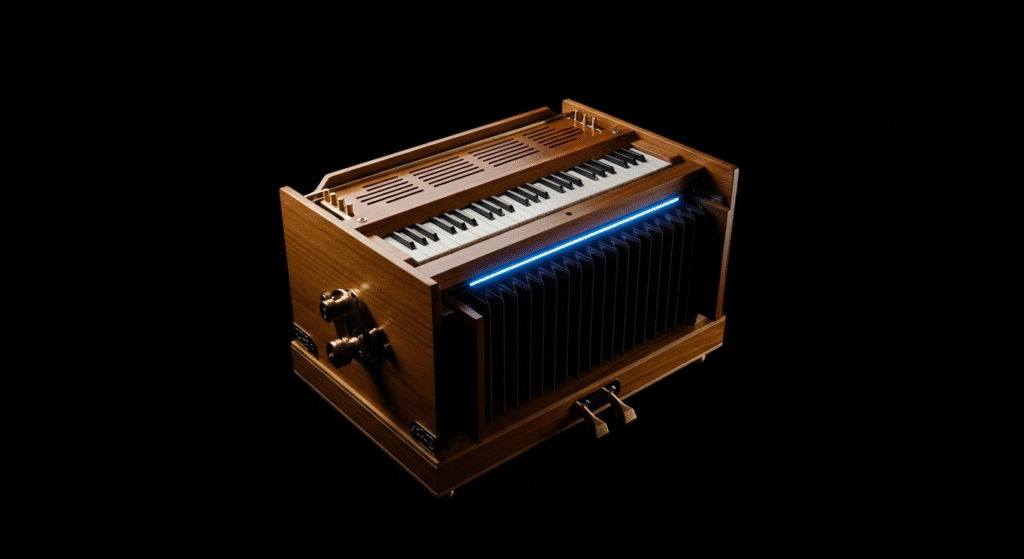
The harmonium is a keyboard instrument introduced from Europe, fully embraced in Indian classical music.
History: Introduced in India in the 19th century, it quickly became indispensable for vocal accompaniment.
Structure: Keyboard with hand-pumped bellows, allowing melodic support for vocalists and instrumentalists.
Playing Technique: Musicians use their left hand to pump air while playing notes with the right, often adding meend using note transitions.
Use in Hindustani Music: Essential in khayal, bhajan, and semi-classical performances, it provides both melody and harmonic support.
6. Pakhawaj: The Ancient Drum
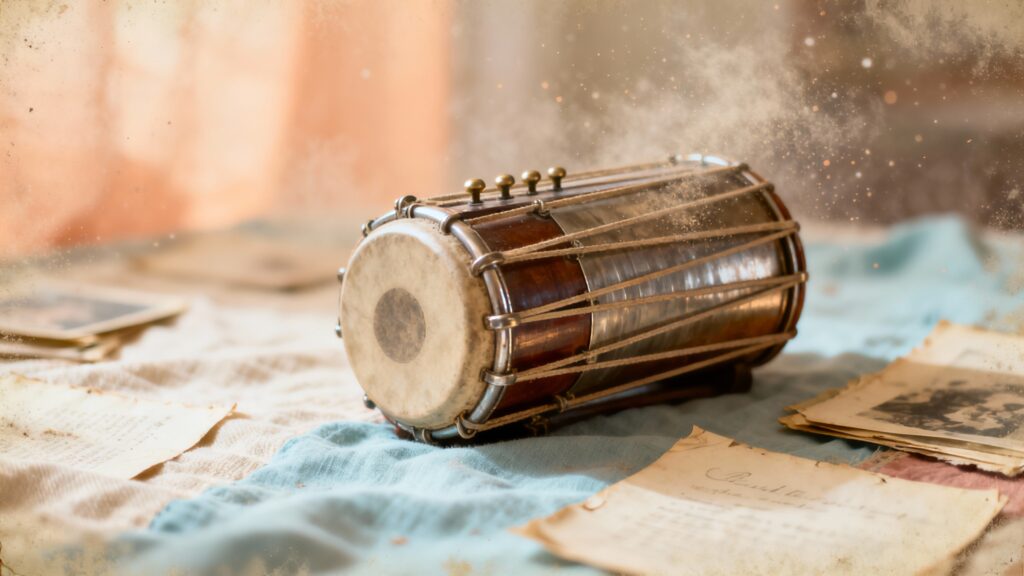
The pakhawaj predates the tabla and is primarily used in dhrupad music. Its deep, resonant tones create a strong rhythmic foundation.
Historical Significance: An ancient barrel-shaped drum, considered one of the oldest percussion instruments in North India.
Structure and Technique: Played horizontally, using both hands to produce deep bass and sharp treble sounds. Patterns are intricate and form the backbone of many traditional compositions.
Famous Artists: Swapan Chaudhuri and the Gharana lineages of dhrupad have kept this instrument alive in classical performances.
7. Tanpura: The Constant Drone
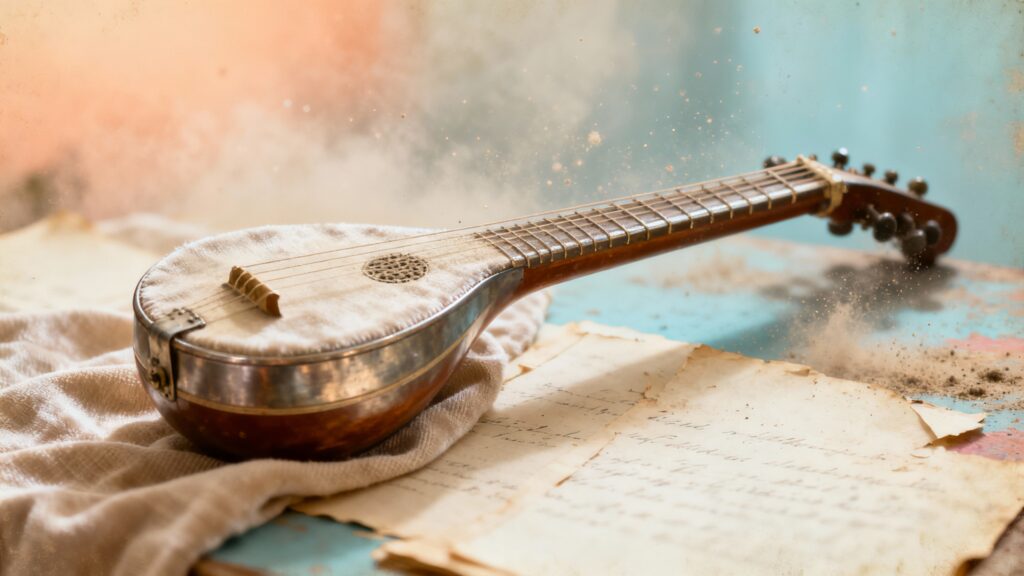
The Tanpura is a uniquely essential instrument in Hindustani music. Unlike other instruments, it does not play melody but produces a continuous, resonant drone, forming the tonal foundation for any performance. This drone creates a harmonic backdrop that allows melody and rhythm to flourish, providing stability for both vocalists and instrumentalists.
Structure: The Tanpura is a long-necked string instrument, typically featuring 4–6 strings stretched over a resonating gourd. The strings are tuned to the tonic and dominant notes of the raga being performed, creating a rich and sustained sound.
Playing Technique: Players pluck the strings in a continuous, steady pattern, often using a rolling finger technique that ensures even resonance. This subtle, repetitive plucking sustains the drone, creating a sonic canvas for improvisation.
Historical Significance: The Tanpura has been used for centuries in North Indian classical music, accompanying vocalists in khayal, dhrupad, and thumri styles. Its presence is so integral that most performances are considered incomplete without the sustained harmonic support it provides.
Cultural Importance: Beyond its functional role, the Tanpura symbolizes the spiritual and meditative aspects of Hindustani music. It is widely used in music education to help students internalize tonal stability, pitch accuracy, and the emotive essence of ragas.
The Tanpura’s soothing drone is not only a technical necessity but also contributes to the meditative and transcendental qualities of Hindustani music, making it one of the most revered instruments in the classical tradition.
8. Esraj and Dilruba: Bowed String Instruments
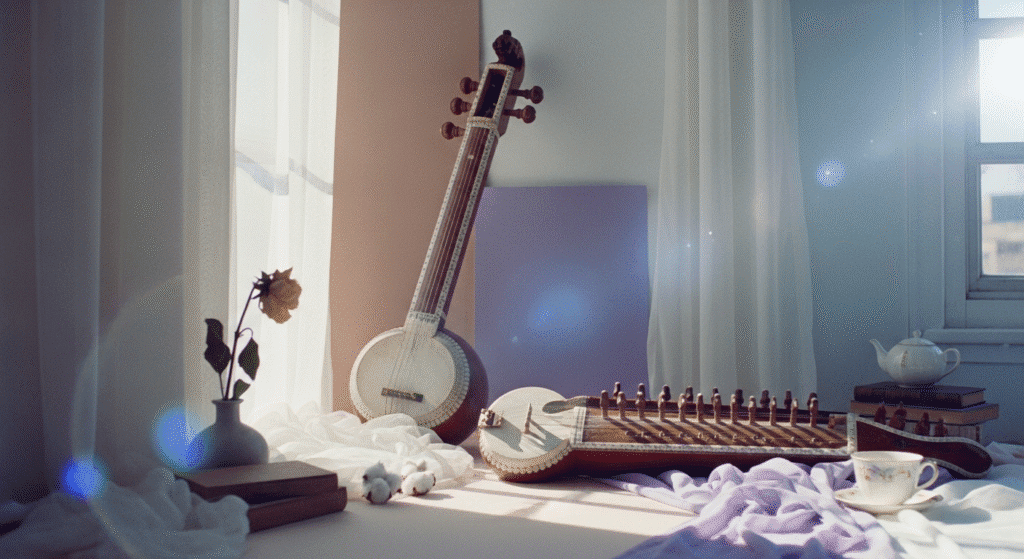
Both the Esraj and Dilruba are bowed string instruments that blend characteristics of the sarangi and sitar, creating a uniquely expressive sound that is both melodic and soulful.
Structure: These instruments feature sitar-like frets along with sympathetic strings and are played with a bow, allowing for smooth slides, intricate ornamentation, and microtonal nuances.
Role in Hindustani Music: They are primarily used to produce soft, lyrical melodies, making them ideal for semi-classical forms such as thumri, dadra, and devotional bhajans. Their gentle, resonant tones can beautifully accompany vocalists or be performed as solo instruments.
Historical Significance: Originating in the 19th century, the Esraj and Dilruba evolved to meet the demand for more portable bowed instruments capable of sustaining the vocal-like expressions of ragas. They retain the emotive depth of the sarangi while being easier to play and maintain.
Notable Artists: Ustad Ranadhir Sengupta is widely acclaimed for his mastery of the Esraj, bringing its delicate and expressive tones to audiences worldwide. Other notable performers have popularized these instruments in both classical concerts and devotional gatherings.
9. Jaltarang: The Rare Melodic Instrument
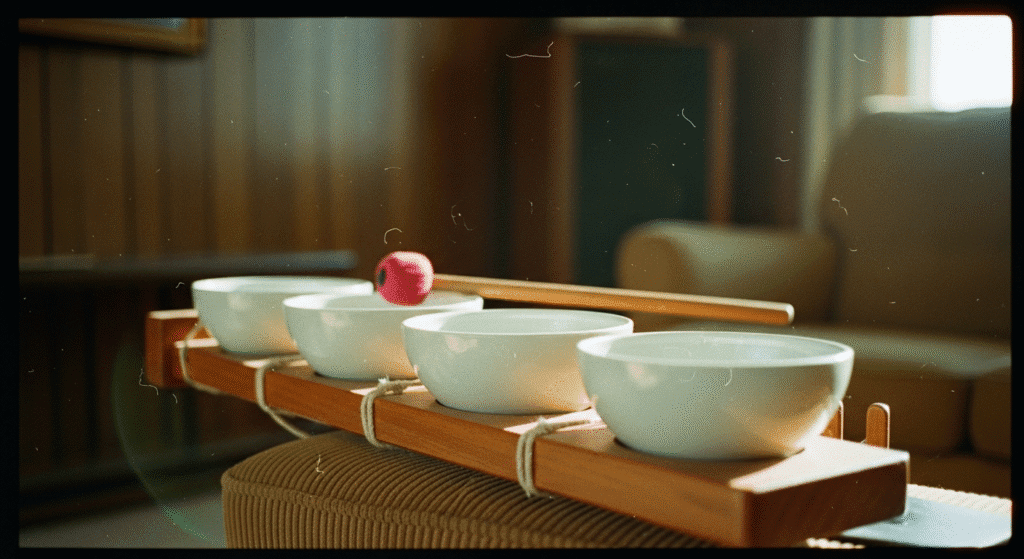
The Jaltarang is a rare and fascinating melodic instrument in Hindustani music that uses tuned water-filled bowls to produce delicate, bell-like tones. Its ethereal sound is unlike any other instrument, offering a soft, shimmering quality that adds a unique layer to classical performances.
Playing Technique: The musician carefully fills each bowl with water to achieve precise pitch tuning, then gently strikes the bowls with slender bamboo or wooden sticks. By adjusting the water level, players can produce subtle microtones and gliding effects that enhance the melodic expression.
Historical and Cultural Significance: The Jaltarang has been mentioned in ancient Indian texts and was once popular in royal courts for its soothing and meditative sound. Although it is rare today, it continues to be celebrated for its ability to provide melodic variety and a serene tonal palette, complementing other classical instruments in ensembles or solo performances.
Role in Hindustani Music: Its delicate sound is ideal for light classical, devotional, or experimental compositions, offering a distinct contrast to string and percussion instruments.
The Jaltarang stands as a testament to the inventiveness and diversity of Indian classical music, showcasing how creativity with simple materials can produce profoundly expressive art.
Why These Instruments Matter
Each instrument in Hindustani music carries cultural, spiritual, and emotional significance. The combination of melody, rhythm, and drone creates an immersive experience, inviting listeners into the heart of Indian classical music.
For musicians, mastering these instruments is not just about technical skill; it is about understanding the emotional essence of ragas and conveying it to the audience. For enthusiasts, learning about these instruments enhances appreciation of concerts, recordings, and performances worldwide.
Conclusion
The instruments of Hindustani music are the lifeblood of a tradition that spans centuries. From the melodic sitar to the rhythmic tabla, the soulful bansuri, and the resonant sarangi, each instrument contributes to a dialogue of emotion, culture, and artistry. Exploring these instruments opens a door to understanding one of the richest musical traditions in the world.
Whether you are a student, a performer, or an admirer, appreciating these instruments brings you closer to the soul of Hindustani music—a sound that continues to inspire, uplift, and transform.
For more information and exciting resources about learning music, visit our website at The Mystic Keys. For more music content and exciting offers follow us on
Facebook, Instagram, YouTube, LinkedIn, Twitter, Pinterest, and Threads.