

Music Theory Skills For students
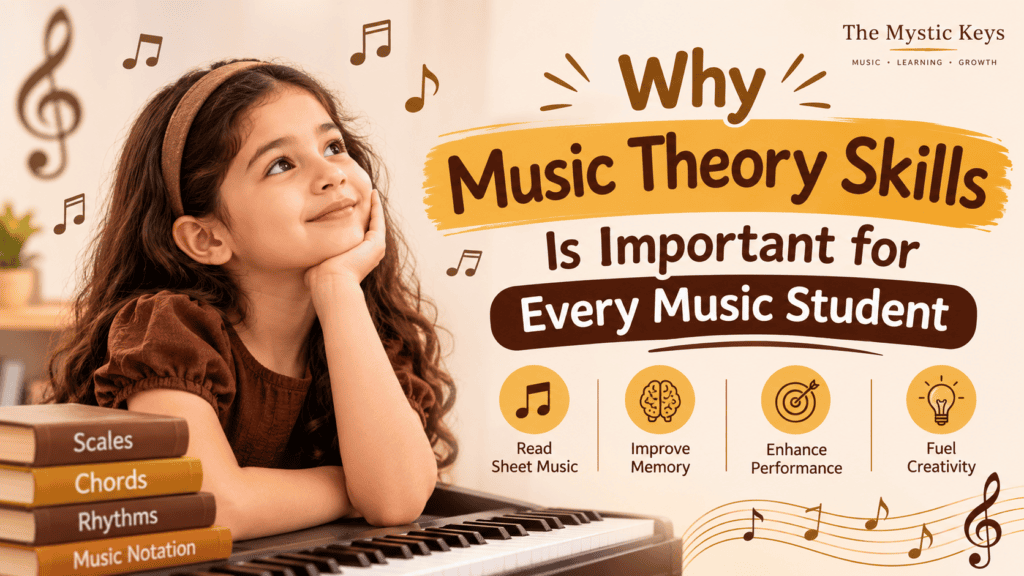
Why Music Theory Is Important for Every Music Student
Introduction
Learning music is an exciting journey filled with melodies, rhythms, creativity, and self-expression. Developing strong music theory skills helps students understand how music works, whether they are learning piano, guitar, violin, drums, or vocals. These skills provide the foundation for understanding musical notes, scales, chords, rhythms, harmonies, and song structures.
This is where music theory comes in. It provides the foundation that helps students understand musical notes, scales, chords, rhythms, harmonies, and song structures. Instead of simply memorising what to play, students learn why certain notes sound good together and how different musical elements work as a whole.
Music theory is not limited to professional musicians or advanced learners. It is useful for beginners as well, helping them develop a stronger understanding of music and become more confident performers.
Let’s explore why music theory is important for every music student and how it can improve the overall learning experience.
1. How Music Skills Build a Strong Musical Foundation
One of the biggest reasons music theory skills is important is that it gives students a clear understanding of the basic principles behind music.
When beginners start learning an instrument, they often focus on playing notes, copying melodies, or following instructions. Although these activities are useful, understanding the fundamentals helps students connect different musical concepts.
Music skills introduces essential elements such as:
Musical notes and their names.
The musical alphabet.
Scales and key signatures.
Rhythm and time signatures.
Intervals and chords.
Melody and harmony.
For example, a piano student who understands the C major scale can recognise the relationship between its notes instead of learning each musical passage as a separate pattern.
A strong theoretical foundation makes it easier to understand new musical concepts as students progress.
2. Music Helps Students Read Sheet Music
Reading sheet music is an important skill for musicians who want to explore a wide range of musical compositions. Music skills helps students understand the symbols and instructions used in written music.
Sheet music contains information about pitch, rhythm, timing, dynamics, and expression. Without some knowledge of music theory skills, these symbols may seem confusing to beginners.
Students learn to recognise:
Staff and clefs: Understand where notes are positioned.
Note values: Identify how long different notes should be played.
Rests: Recognise moments of silence within a composition.
Key signatures: Understand which notes are sharp or flat throughout a piece.
Time signatures: Identify how beats are organised.
Dynamics: Follow instructions for playing softly or loudly.
As students become familiar with these elements, they can approach unfamiliar musical pieces with greater confidence.
3. How Music Skills Improve Rhythm and Timing
Rhythm is one of the most essential elements of music. Even when the correct notes are played, poor timing can make a performance sound incomplete or unbalanced.
Music theory skills helps students understand how beats are organised and how different note values fit into a measure.
For example, students learn the difference between whole notes, half notes, quarter notes, and eighth notes. They also explore time signatures such as 4/4, 3/4, and 6/8.
Understanding these concepts helps students:
Maintain a steady beat.
Recognise rhythmic patterns.
Perform with better timing.
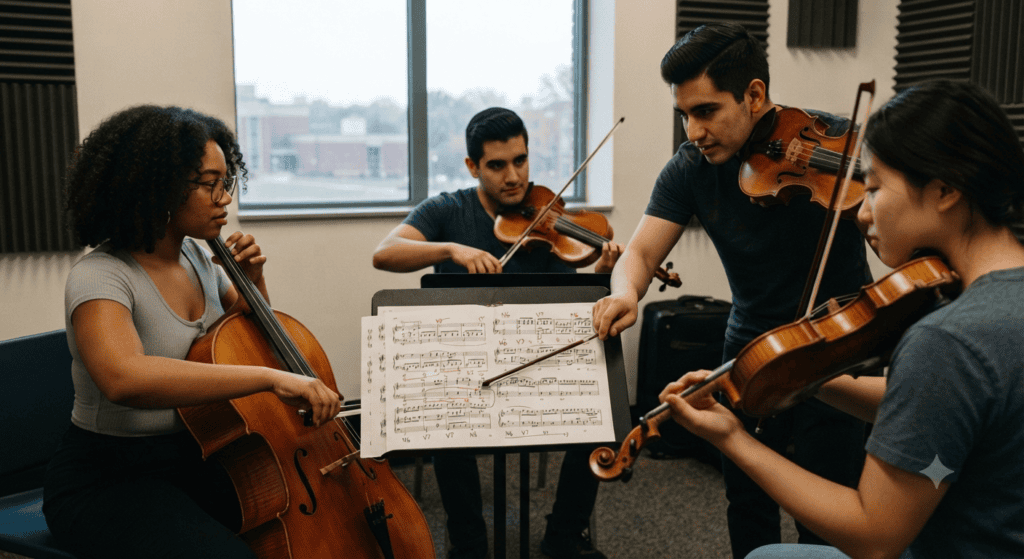
Coordinate with other musicians.
For guitarists, pianists, drummers, and vocalists, rhythmic understanding is essential for performing music accurately and confidently.

4. Understanding Music Theory Makes Learning Instruments Easier
Learning an instrument involves more than developing physical technique. Students also need to understand how notes, scales, chords, and musical patterns relate to one another.
Music theory skills helps connect these concepts, making the learning process more organised.
Music Skills for Piano Students
Piano students benefit from understanding scales, intervals, chords, and key signatures. These concepts help them recognise patterns across the keyboard and understand how melodies and harmonies are constructed.
Music Skills for Guitar Students
Guitar students use music theory to understand chord shapes, scale patterns, intervals, and chord progressions. This knowledge can make it easier to move between chords and explore different musical styles.
Music Skills for Vocal Students
Singers benefit from understanding pitch, intervals, scales, and harmony. Music theory can help them recognise melodies, follow written music, and understand how their vocal parts fit into a song.
Music Skills for Drumming Students
Drummers use rhythmic notation, time signatures, subdivisions, and musical measures to understand how beats are structured. This knowledge helps them maintain timing and coordinate with other musicians.
Although each instrument requires different practical skills, music theory provides a common foundation that connects them.
5. Developing Creativity and Musical Experience
Some beginners believe that music theory makes music restrictive or overly technical. In reality, understanding musical principles can give students more freedom to experiment and express themselves.
When students understand scales, chords, and harmony, they gain the knowledge needed to create their own musical ideas.
For example, a piano student who understands chord progressions can experiment with different combinations to create an original melody. A guitarist who knows scale patterns can explore improvisation and develop personal playing styles.
Music theory encourages creativity by helping students:
Create original melodies.
Explore new chord progressions.
Understand musical moods and styles.
Develop their own approach to composition.
Rather than limiting creativity, music theory gives students tools to turn their ideas into music.
6.Understanding Chords and Harmony
Harmony plays a major role in how music sounds and feels. It is created when different notes are played or sung together in a meaningful way.
Music theory helps students understand how chords are constructed and why certain combinations of notes work well together.
Students gradually learn about:
Major and minor chords.
Chord inversions.
Triads and seventh chords.
Chord progressions.
Harmonic relationships.
Basic principles of voice leading.
For example, understanding a common chord progression such as C–G–Am–F helps students recognise how chords support a melody and create a sense of musical movement.
This knowledge is especially useful for piano players, guitarists, composers, songwriters, and singers who want to understand how songs are arranged.
7.Improving Listening and Musical Awareness
Being a good musician involves listening carefully, not just playing or singing accurately.
Music theory helps students recognise the different elements they hear in a composition. As their understanding develops, they can begin identifying scales, chord changes, rhythmic patterns, and melodic structures.
For example, students may learn to recognise whether a melody moves upwards or downwards, identify repeated musical phrases, or notice when a song changes key.
These skills help develop musical awareness and encourage more active listening.
Music theory also supports ear training, which allows students to connect what they hear with what they understand about music.
With regular practice, students can become more comfortable recognising musical patterns and responding to different sounds.

8. Music Theory Helps Students Perform With Confidence
Confidence is an important part of musical development. Students who understand the structure of a musical piece often feel better prepared to perform it.
Instead of depending entirely on memorisation, they can use their knowledge of scales, chords, rhythms, and musical patterns to understand what they are playing.
This can be particularly helpful when students:
Learn unfamiliar compositions.
Prepare for music examinations.
Perform in front of an audience.
Play with other musicians.
Recover from small mistakes during a performance.
Music theory does not eliminate performance mistakes, but it can give students a stronger understanding of the music they are performing.
9. Music Theory Supports Improvisation and Songwriting
Improvisation and songwriting allow musicians to move beyond reproducing existing compositions and begin creating their own musical ideas.
However, creating music can feel challenging when students do not understand how notes, chords, and rhythms relate to each other.
Music theory provides a starting point.
Students who understand scales can explore different melodic ideas, while those familiar with chord progressions can experiment with harmonies and song arrangements.
For example, a student learning the blues scale can use its notes to create simple improvisations over a blues progression.
Music theory can help aspiring musicians:
Develop original melodies.
Experiment with chord progressions.
Understand song structures.
Create musical variations.
Explore improvisation.
Express personal musical ideas.
These skills can make learning more engaging and open up opportunities for creative exploration.
10. Music Theory Prepares Students for Advanced Musical Learning
As students progress, musical compositions and techniques often become more challenging. They may encounter unfamiliar scales, complex rhythms, advanced harmonies, and different musical styles.
A good understanding of music theory makes it easier to approach these challenges.
Advanced musical learning may involve concepts such as:
Modes and advanced scales.
Chromaticism.
Extended chords.
Modulation and key changes.
Counterpoint.
Advanced rhythmic structures.
Musical arrangement and composition.
Students do not need to learn all these concepts immediately. They can develop their theoretical knowledge gradually alongside their practical skills.
Building this foundation early makes it easier to explore more advanced musical ideas in the future.
How Students Can Learn Music Theory Effectively
Music theory becomes easier to understand when students connect theoretical concepts with practical musical activities. Instead of treating it as a separate subject, they should apply what they learn directly to their instruments or voices.
Here are a few practical ways to make music theory part of regular learning:
Start with the basics: Learn musical notes, scales, rhythms, and intervals before moving to advanced concepts.
Practise on your instrument: Play the scales and chords you study to understand how they sound.
Read simple sheet music: Begin with short compositions and gradually explore more challenging pieces.
Listen actively: Identify rhythms, melodies, and chord changes in familiar songs.
Use practical exercises: Apply theoretical concepts through short activities during practice sessions.
Learn consistently: Spend a little time on music theory during regular lessons rather than trying to understand everything at once.
Ask questions: Discuss unfamiliar concepts with your music teacher and explore how they apply to your instrument.
Combining theory with practical learning makes musical concepts easier to remember and use.
How The Mystic Keys Helps Students Understand Music Theory
At The Mystic Keys, we believe that a strong understanding of music is just as important as developing practical playing and singing skills. Our online music lessons combine instrument training with essential musical concepts, helping students understand what they learn rather than simply memorising notes or songs. With personalised guidance from experienced music educators, students can gradually explore scales, chords, rhythm, notation, and other important aspects of music theory alongside their chosen instrument. Whether learning piano, guitar, drums, violin, or vocals, students receive structured guidance that supports their individual progress and encourages them to become more confident, independent, and well-rounded musicians.
Conclusion
Music theory is an essential part of becoming a well-rounded musician. It helps students understand how music is structured, read sheet music, recognise rhythms, build chords, and develop their creative abilities.
Whether someone is a beginner learning their first instrument or an experienced student exploring advanced techniques, understanding music theory can make the learning journey more meaningful and rewarding.
Most importantly, music theory helps students move beyond simply playing notes. It allows them to understand the music they create, perform, and enjoy.
With consistent practice, practical application, and the right guidance, every music student can develop a stronger musical foundation and discover new possibilities through learning.
For more information and exciting resources about learning music, visit our website at The Mystic Keys. For more music content and exciting offers follow us on
Facebook, Instagram, YouTube, LinkedIn, Twitter, Pinterest, and Threads,