

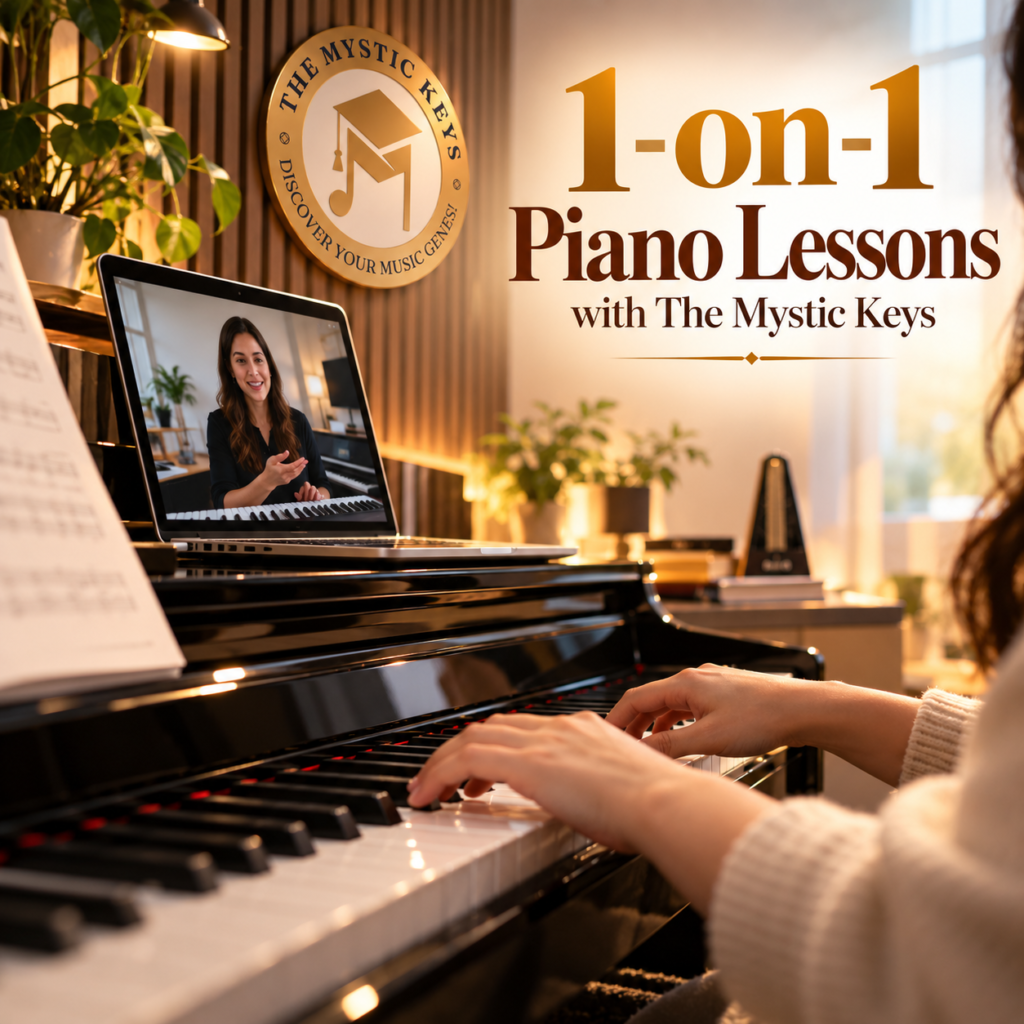
1-on-1 Piano Lessons with The Mystic Keys
1-on-1 Piano Lessons with The Mystic Keys
Learning the piano is not simply about pressing the right keys at the right time. It is about developing coordination, understanding music, building confidence, and gradually finding your own musical expression. While group classes can introduce learners to the basics, 1-on-1 piano lessons offer a more personalized learning experience, where every session can be shaped around the learner’s pace, goals, strengths, and areas that need more attention.
At The Mystic Keys, piano lessons are designed to make online learning personal, structured, and engaging. With individual live sessions, learners receive focused guidance from a teacher throughout their musical journey, whether they are starting from the very beginning, returning to the piano after a break, or preparing for a recognized music examination.
Why Choose 1-on-1 Piano Lessons?
Every learner approaches music differently. Some may quickly understand notes but need more practice with rhythm, while others may have good finger coordination but require additional support with music theory. Because of these differences, following exactly the same lesson structure for every student may not always produce the most effective learning experience.
That is where individual instruction makes a difference. In a 1-on-1 lesson, the teacher can observe the learner closely and adapt explanations, exercises, repertoire, and practice techniques according to their progress.
Instead of moving forward simply because the rest of a group has moved ahead, students can spend additional time on a concept when necessary. Similarly, learners who grasp a particular technique quickly can progress without having to wait for an entire class.
This creates a learning environment where the student’s progress becomes the centre of the lesson.
A Personalized Learning Experience
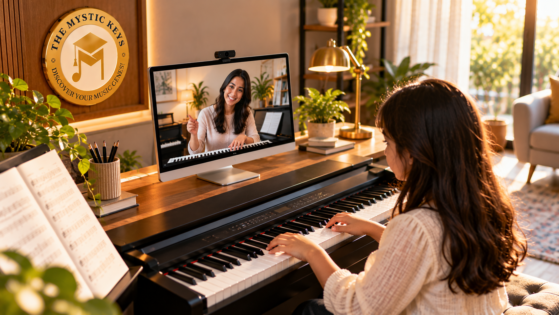
One of the biggest advantages of individual piano instruction is personalization. At The Mystic Keys, lessons are conducted live online, allowing the teacher and student to interact directly during each session.
From posture and hand position to scales, chords, sight-reading, rhythm, and repertoire, the teacher can provide immediate guidance. Small technical issues can also be identified early, which is important because incorrect habits can become harder to change with time.
Moreover, the learning path can reflect the student’s interests. A beginner may first focus on basic notes, rhythm, finger exercises, and simple melodies, while a more experienced learner may work on chord progressions, accompaniment patterns, advanced pieces, improvisation, or performance techniques.
As a result, piano learning becomes more than following a fixed sequence of exercises. It becomes a structured musical journey built around the individual learner.
Learn at Your Own Pace with 1-on-1 Piano Lessons
Progress in music is rarely identical from one student to another. Some concepts may take only a few sessions to understand, whereas others may require repeated explanation and practice.
With 1-on-1 piano lessons, there is greater flexibility to work through these differences. If a student is struggling with a particular rhythm or hand movement, the teacher can revisit it and use another explanation or exercise. Once the concept becomes comfortable, the learner can gradually move towards the next challenge.
This approach can be particularly helpful for beginners, who may otherwise feel overwhelmed when several new concepts are introduced at once. At the same time, experienced learners can benefit from focused guidance that addresses specific technical or musical goals.
Therefore, the aim is not simply to complete lessons. It is to build understanding, consistency, and confidence along the way.
Building Strong Piano Foundations
A strong foundation can influence how comfortably a student progresses later. Piano lessons therefore involve much more than learning individual songs.
Students can gradually develop essential skills such as reading musical notation, understanding rhythm, recognizing notes, coordinating both hands, playing scales and chords, and developing proper technique. These fundamentals help learners understand what they are playing instead of relying entirely on memorization.
Once these building blocks become familiar, students can approach more challenging pieces with greater confidence. Musical concepts that initially seem complicated can also become easier to understand when they are introduced step by step.
At The Mystic Keys, the focus on personalized instruction allows teachers to work on these foundations while keeping the lessons relevant to the learner’s current ability.
Piano Lessons for Beginners and Developing Musicians
Starting the piano can feel intimidating, particularly when a learner is unfamiliar with musical notation or has never played an instrument before. A structured one-on-one approach can make those first steps more manageable.
Beginners can gradually become familiar with the keyboard, correct playing posture, finger placement, basic notation, rhythm, and simple musical patterns. Rather than expecting everything to be understood immediately, lessons can build one skill upon another.
For learners who already have some experience, the focus can shift towards strengthening technique, improving accuracy, developing musical interpretation, and working on more advanced repertoire.
This flexibility makes individual piano lessons suitable for different stages of musical development.
Develop More Than Just Playing Technique
Learning piano can contribute to several aspects of musical development beyond finger movement. As students practise regularly, they begin to develop listening skills, rhythm awareness, coordination, concentration, and musical memory.
Reading music also encourages learners to connect visual information with physical movement and sound. Over time, this can help them become more independent when approaching new pieces.
Perhaps most importantly, regular practice teaches patience. A difficult passage may not sound right on the first attempt, but breaking it down, practising slowly, identifying mistakes, and trying again can gradually produce improvement.
That process can make piano learning rewarding because progress becomes something the learner can hear and experience personally.
Guidance for Trinity, ABRSM and Rockschool Preparation
For students interested in structured music education, piano lessons can also include support for recognized music examinations.
The Mystic Keys provides guidance for learners preparing for Trinity College London, ABRSM, and Rockschool pathways. Depending on the learner’s chosen examination and current level, lessons can incorporate repertoire preparation, technical work, music theory, notation, rhythm, and other relevant skills.
Exam preparation can benefit significantly from individual instruction because teachers can identify areas that need additional attention. A learner who performs a piece accurately but struggles with rhythm, for example, can receive targeted exercises rather than spending equal time on areas they already understand.
In this way, examination preparation can remain connected to broader musical development rather than becoming focused solely on completing a syllabus.
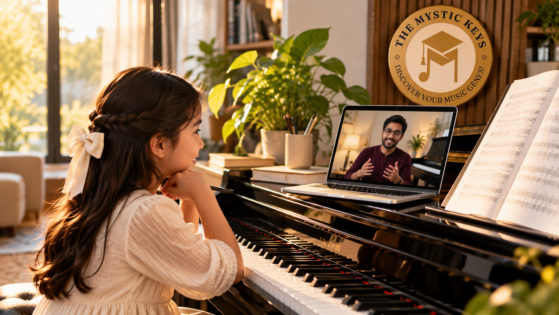
Flexible Online 1-on-1 Piano Lessons
Online learning has made it possible for students to receive live musical instruction without travelling to a physical classroom. The Mystic Keys conducts piano lessons through platforms such as Zoom and Google Meet, providing direct interaction between the teacher and student.
The online format also offers practical flexibility for learners with busy schedules. Sessions can be planned around teacher availability and the student’s preferred schedule, making it easier to incorporate music learning into school, work, or family routines.
At the same time, students can learn from the comfort of their own space with their piano or keyboard readily available. Recorded sessions and supplementary learning materials can further support practice between lessons.
Consequently, the convenience of online learning can be combined with the personal attention associated with individual instruction.
Learn with Focused Teacher Guidance
Having a teacher present during a lesson provides more than instruction. It creates an opportunity for continuous feedback.
A teacher can listen to how a student approaches a piece, observe technique, identify recurring mistakes, and suggest practical ways to improve. Questions can also be addressed immediately instead of leaving the learner uncertain about a particular concept.
For developing musicians, this guidance can be especially valuable when learning independently from videos or written resources. Online resources can demonstrate what to play, but personalized instruction can help explain why something is played in a particular way and how the learner can improve their own technique.
That combination of explanation, demonstration, practice, and feedback can make each session more purposeful.
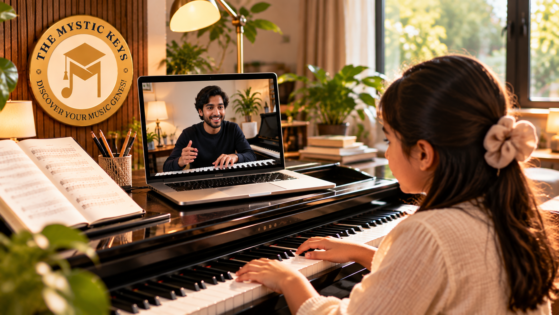
Staying Motivated with 1-on-1 Piano Lessons
Technical exercises are an important part of learning the piano, but motivation also matters. Students are more likely to remain engaged when they can see how their practice connects to music they enjoy.
Depending on their level and goals, learners can gradually work on pieces that challenge them while remaining achievable. Completing a section that once seemed difficult can provide a tangible sense of progress.
Over time, these small achievements can build confidence. A learner who once needed extensive guidance may eventually be able to approach a new piece, read the notes, practise independently, and identify areas for improvement.
That progression is one of the most rewarding aspects of learning an instrument.
Making Every 1-on-1 Piano Lesson Count
A productive piano lesson does not necessarily mean learning an entire song or completing a large number of exercises. Meaningful progress can sometimes come from mastering one difficult section, correcting a technical habit, understanding a new chord, or improving rhythm.
Because the lessons are individual, the teacher can devote attention to what the student needs most at that moment. The focus can move between technique, theory, repertoire, sight-reading, ear training, or exam preparation as the learner develops.
Between sessions, students can continue practising the concepts introduced by the teacher. Regular practice then becomes an extension of the lesson, helping transform new knowledge into comfortable musical skills.
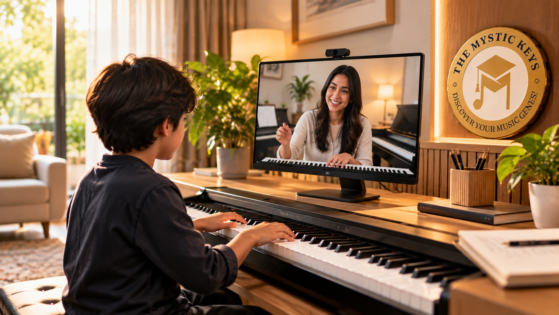
From First Notes to Musical Confidence
Every pianist starts somewhere. For some, it begins with learning middle C and a simple melody. Others return to the piano after years away. Some already have experience and want to improve their technique or prepare for an exam.
Whatever the starting point, progress takes time.
With regular practice and expert guidance, students can move from finding notes to understanding how they create music. As their technique improves, they can play with greater control, expression, and confidence.
The goal goes beyond learning more pieces. It is about helping students become confident, capable, and independent musicians.
Why Choose The Mystic Keys for 1-on-1 Piano Lessons?
The Mystic Keys brings together personalized online music education and structured teacher guidance to create an accessible learning experience for students in different parts of the world.
With 1-on-1 live piano lessons, flexible scheduling, personalized instruction, supplementary learning resources, and support for recognized examination pathways, students can work towards their musical goals in a way that suits their individual pace.
Whether the goal is to learn piano from scratch, strengthen existing skills, prepare for Trinity, ABRSM or Rockschool examinations, or simply become more confident at the instrument, the learning journey can be shaped around the student.
Most importantly, music education does not have to feel like a race. Each new chord, scale, rhythm, and piece becomes another step forward.
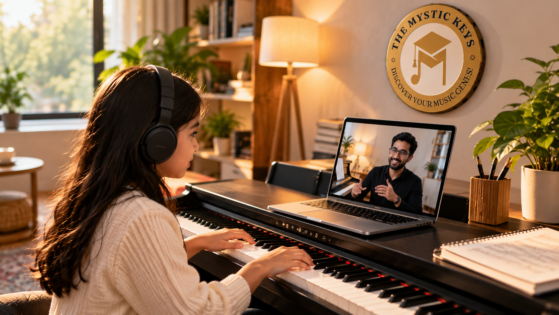
Start Your Piano Journey with The Mystic Keys
Learning piano takes time, practice, and curiosity. The right guidance keeps the journey focused and enjoyable.
With Piano Lessons Online from The Mystic Keys, students get personal attention, live teacher guidance, and flexible learning. Teachers adapt each lesson to the student’s pace, goals, and skill level.
Whether you are learning your first notes or refining your skills, each session builds confidence, technique, and musical expression.
Start with one note. Turn each lesson into music.
For more information and exciting resources about learning music, visit our website at The Mystic Keys. For more music content and exciting offers follow us on Facebook, Instagram, YouTube, LinkedIn,
Twitter, Pinterest, and Threads.