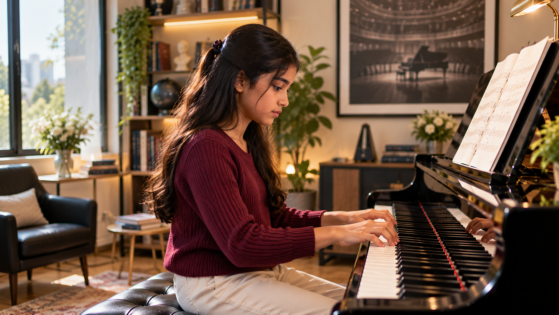
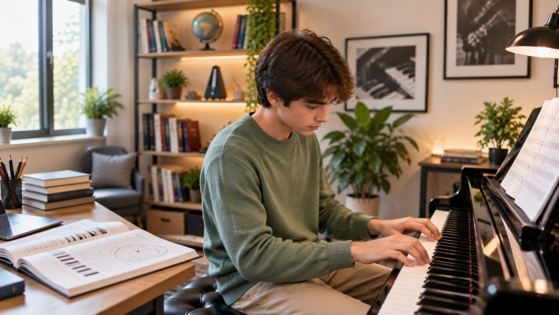
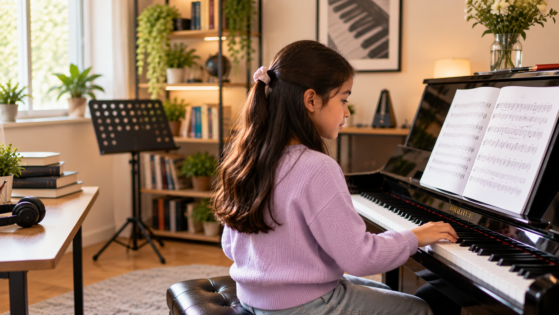
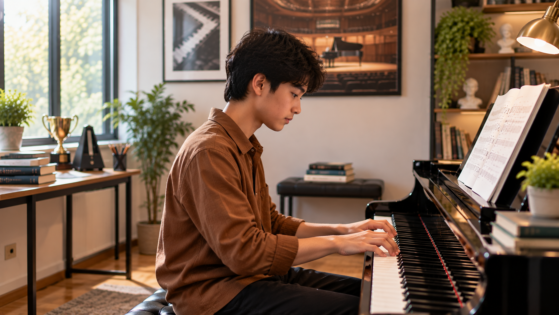
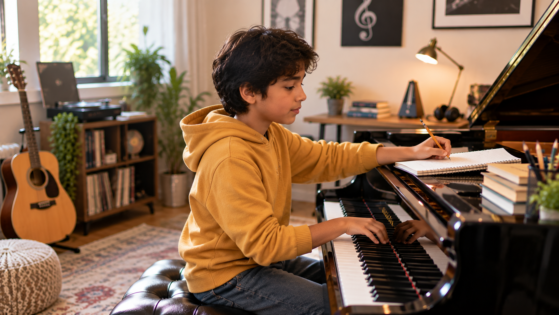
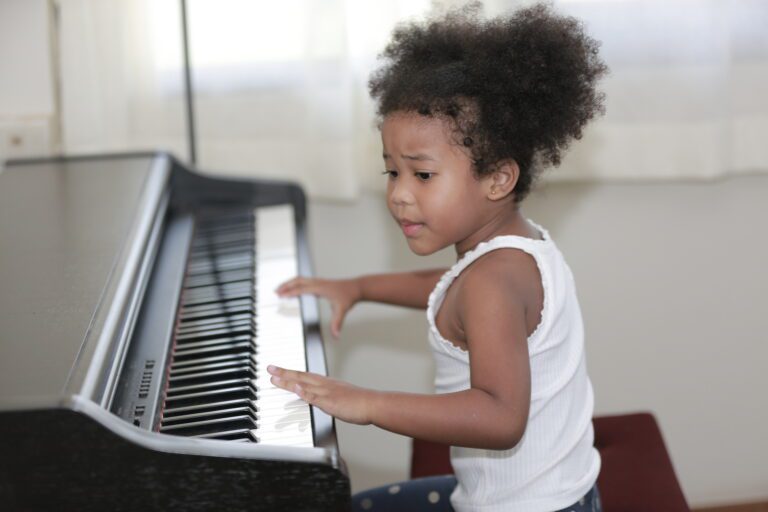
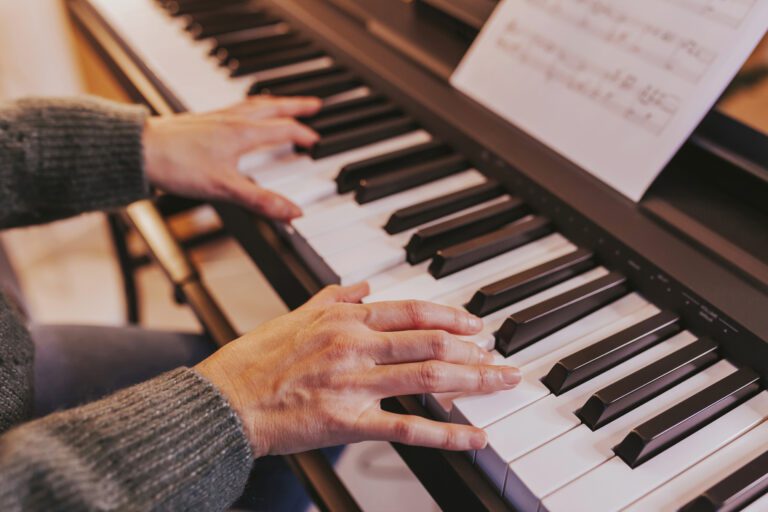
Learning how to play All of Me on piano is a great choice for beginners and intermediate players. This popular song by John Legend is known for its emotional melody and simple chord progression, making it perfect for practice and performance.
With consistent practice, you can play this song smoothly and expressively.
How to Play All of Me on Piano: Song Overview
To understand how to play All of Me on piano, you need to know the structure of the song. It follows a repeating chord progression that makes it easier to learn.
The song is usually played in the key of A♭ major (or simplified versions in C major for beginners).
How to Play All of Me on Piano with Basic Chords
The most important step in how to play All of Me on piano is learning the chords.
👉 Explore more music courses at The Mystic Keys to start your piano journey with the right foundation.
Conclusion
Learning how to play All of Me on piano is simple when you focus on chords, melody, and expression. With regular practice, you can perform this beautiful song confidently.
👉 Play with emotion, keep it simple, and enjoy the music.
For more information and exciting resources about learning music, visit our website at The Mystic Keys. For more music content and exciting offers follow us on
Best Piano Curriculum for Beginners Kids & Advanced Learners
Learning the piano is a rewarding musical journey, but the right curriculum can make a significant difference in how quickly a student develops confidence, technique, musical understanding, and creativity. A well-designed piano curriculum should do more than teach students where to place their fingers. It should gradually develop their ability to read music, understand rhythm, play with expression, listen critically, and eventually perform or create music independently.
However, beginners and advanced learners have very different needs. A young child who is touching a piano for the first time needs an engaging and encouraging introduction, while an advanced learner may need a much more structured approach focused on technique, interpretation, repertoire, theory, and examination preparation.
For this reason, the best piano curriculum is not necessarily the one that follows a single fixed method. Instead, it should evolve with the learner. From the first few notes to complex musical pieces, each stage should build naturally on the skills developed earlier.
Why a Structured Piano Curriculum Matters
Piano learning can sometimes appear simple from the outside. A student sits at the instrument, reads the notes, and plays them. In reality, effective piano playing involves coordination between the eyes, ears, hands, brain, and sense of rhythm.
A structured curriculum brings these elements together in a logical order. Rather than introducing difficult concepts before a student is ready, it allows skills to develop progressively. This approach also prevents students from becoming overly dependent on memorizing individual pieces without understanding the music behind them.
More importantly, a good curriculum creates measurable progress. Students can recognize what they have already learned and understand what they are working toward next. Parents can also see whether their child is developing a balanced set of musical skills instead of simply learning one song after another.
With that foundation in mind, the curriculum should begin differently for children who are completely new to the piano.
Piano Curriculum for Beginner Kids
For young beginners, the first goal should be to build a positive relationship with music. Technical accuracy is important, but expecting a child to immediately understand complex theory or spend long periods repeating exercises can make piano lessons feel like a chore.
The early curriculum should therefore combine basic musical skills with activities that keep children interested. Students can begin by learning how the keyboard is organized, identifying high and low sounds, understanding finger numbers, and developing simple hand positions. These concepts become much easier when introduced through short musical activities rather than lengthy explanations.
As children become comfortable with the instrument, they can gradually learn simple rhythms, basic note values, rests, and elementary music notation. Reading music should be introduced alongside playing rather than treated as a completely separate subject. This helps children associate what they see on the page with what they hear and play.
At this stage, repertoire selection matters enormously. Familiar melodies, short pieces, simple songs, and age-appropriate compositions can give young learners a sense of achievement. Finishing a piece they enjoy can be much more motivating than completing a page of exercises with no musical connection.
Building the Foundations | Notes, Rhythm and Technique
Once a child is comfortable with the keyboard, the curriculum can gradually become more structured. Students should start developing reliable finger technique while continuing to strengthen their music-reading skills.
Learning the musical alphabet, staff notation, treble and bass clefs, simple scales, and basic intervals provides an important foundation. Rhythm should develop alongside these concepts through counting, clapping, playing with a metronome, and listening exercises.
At the same time, students can begin working on proper posture, relaxed shoulders, appropriate finger movement, hand coordination, and controlled dynamics. These habits are much easier to establish early than to correct after years of playing.
Instead of treating technique as repetitive work, teachers can connect exercises directly to the music students are learning. When children understand why a particular exercise helps them play a passage more comfortably, practice becomes more purposeful.
This foundation then prepares learners for one of the most important transitions in piano education: moving from simply playing notes to actually understanding music.
Developing Musicality in Young Learners
Technical ability alone does not create a great pianist. A student may play every note correctly and still produce a performance that sounds mechanical. Musicality teaches learners how to shape a phrase, control dynamics, recognize articulation, and communicate emotion through sound.
Young pianists can begin with simple concepts such as loud and soft playing, smooth and detached articulation, changes in tempo, and identifying musical phrases. Listening activities can also encourage them to compare different performances and describe what they hear.
As these skills develop, children begin to understand that the piano is not simply an instrument for reproducing notes. It is a way of expressing ideas and emotions.
That shift in understanding becomes particularly important as students move beyond the beginner stage.
Intermediate Piano Curriculum for Kids
At the intermediate level, students are ready for greater independence. They can begin handling more complicated rhythms, wider keyboard ranges, longer pieces, and increasingly demanding coordination between the hands.
Scales and arpeggios can become a regular part of technical development, while music theory can expand into key signatures, intervals, chords, chord progressions, time signatures, and more detailed musical terminology.
Repertoire should also become more varied. Students may explore classical compositions alongside contemporary music, film themes, popular songs, or other styles that match their interests. Exposure to different genres helps prevent learning from becoming too narrow.
At this stage, teachers should also encourage students to practice more independently. Rather than simply telling them how many times to repeat a passage, lessons can teach them how to identify mistakes, isolate difficult sections, slow down challenging passages, and evaluate their own playing.
Consequently, the student starts developing an important long-term skill: learning how to learn.
Piano Curriculum for Advanced Learners
Advanced piano education requires a significant change in approach. At this level, students generally have a strong understanding of notation, rhythm, basic theory, and keyboard technique. Simply introducing more difficult pieces is not enough.
Advanced learners need deeper musical understanding, refined technique, stylistic awareness, and greater interpretative independence. Their curriculum should challenge both their hands and their musical thinking.
Repertoire can include technically demanding works from different periods and composers. Students may study Baroque counterpoint, Classical-era phrasing, Romantic expression, Impressionistic textures, and contemporary compositions, depending on their goals and interests.
Alongside repertoire, advanced students should continue developing scales, arpeggios, chord patterns, sight-reading, ear training, and technical exercises. These areas support performance rather than existing as isolated requirements.
Most importantly, advanced learning should encourage students to make informed musical decisions. They should begin asking questions such as: Why does this phrase need to be shaped this way? What is the character of this section? How does the harmony influence the interpretation? Which articulation best communicates the musical idea?
These questions mark the difference between simply playing an advanced piece and genuinely understanding it.
Music Theory and Piano Learning Should Grow Together
Music theory is sometimes treated as an additional subject that students study separately from piano lessons. A stronger curriculum integrates theory into practical playing.
When students learn a new piece, they can identify its key, recognize scales and chords, analyze its structure, and understand recurring musical patterns. Such connections make theory more meaningful because students immediately see how the concepts apply to the music under their fingers.
Advanced learners can take this even further through harmonic analysis, chord progressions, modulation, form, counterpoint, and composition. Understanding these elements can significantly improve sight-reading and interpretation.
Therefore, theory should not feel like an interruption to piano learning. It should become another tool that helps students understand what they are playing.
Sight-Reading and Ear Training
Two skills that deserve consistent attention throughout piano education are sight-reading and ear training. Both are often neglected when students focus heavily on preparing individual pieces.
Sight-reading helps students become comfortable approaching unfamiliar music. Beginning learners can start by recognizing simple patterns and notes, while more advanced students can gradually work with complex rhythms, key changes, wider ranges, and multiple voices.
Ear training develops a different but equally important ability. Students learn to recognize pitch, rhythm, intervals, chords, melodies, and musical patterns through listening. Even simple activities such as singing a melody before playing it or identifying whether a sound moves higher or lower can strengthen musical awareness.
Over time, these skills make students more independent. They become less reliant on repeatedly hearing a teacher demonstrate a passage and more capable of understanding music on their own.
Examination-Based Piano Curriculum
For students preparing for formal examinations, the curriculum needs an additional layer of structure. Examination systems such as ABRSM, Trinity College London, and Rockschool can provide clear goals and progressive levels.
Exam preparation may include repertoire, technical exercises, sight-reading, aural skills, music theory, and performance requirements, depending on the examination system and level.
However, examination preparation should not become the entire definition of piano education. Students benefit most when exam work is combined with broader musical development. Learning pieces outside the syllabus, improvising, playing contemporary music, and exploring different musical styles can keep their overall education engaging.
A good teacher can therefore use examinations as milestones while continuing to develop the student’s wider musicianship.
Choosing Repertoire for Different Learners
The right repertoire can transform a student’s motivation. Pieces should be challenging enough to encourage growth but not so difficult that the learner becomes constantly frustrated.
For beginners, short and recognizable melodies can create early success. Intermediate learners can be introduced to greater stylistic variety and gradually more complex musical structures. Advanced students, meanwhile, can explore substantial works that demand technical control, interpretation, musical maturity, and sustained concentration.
Student interests should also have a place in repertoire selection. A child who loves movie music may become more enthusiastic about practicing when they are occasionally allowed to learn an appropriate film theme. Similarly, an adult learner may prefer popular songs, jazz, worship music, classical repertoire, or a combination of styles.
The strongest curriculum balances educational value with personal interest.
Creativity, Improvisation and Composition
Piano education should not be limited to reading music written by someone else. Creativity can be introduced from the earliest stages.
Beginners can experiment with simple rhythms and melodies. Intermediate students can improvise using familiar scales or chords, while advanced learners can explore harmonic ideas, arrangements, improvisation, and composition.
Creative activities strengthen musical confidence because students learn that they are not merely performers but also musical thinkers. They begin experimenting with sound, structure, rhythm, harmony, and expression.
This approach can also make lessons more enjoyable, particularly for students who do not intend to pursue formal examinations.
Adapting the Curriculum to the Student
Although structured progression is essential, every student learns differently. Age, previous musical experience, practice habits, learning speed, musical interests, and personal goals all influence the ideal curriculum.
A young child may need shorter activities and frequent changes in focus. An adult beginner might prefer a more analytical approach and may progress quickly through concepts they can understand intellectually. An advanced student preparing for a performance may require intensive work on interpretation rather than basic technique.
For this reason, the best piano curriculum is flexible rather than rigid. Teachers should regularly evaluate progress and adjust lesson content accordingly.
The curriculum should answer not only, “What level is this student?” but also, “What does this student need next?”
The Role of Regular Practice
Even an excellent curriculum cannot replace consistent practice. At the same time, effective practice is more valuable than simply spending a large number of hours at the piano.
Beginners can benefit from short, focused practice sessions that reinforce the skills introduced during lessons. As students advance, practice can become more structured, with separate attention given to technique, sight-reading, repertoire, theory, and difficult passages.
Learning how to practice is itself an important part of piano education. Students should gradually understand how to break a challenging passage into smaller sections, practice slowly, use repetition intelligently, and monitor accuracy before increasing speed.
This approach helps learners become more independent and makes progress easier to sustain over the long term.
Online Piano Lessons and a Modern Curriculum
A well-designed piano curriculum can also work effectively through online one-on-one lessons. With live instruction, teachers can demonstrate techniques, observe hand position, correct mistakes, explain theory, and provide personalized feedback.
Online learning can offer additional flexibility for families and adult learners, particularly when lessons are scheduled around school, work, and other commitments. Digital resources can also supplement lessons with recordings, practice materials, sheet music, and guided exercises.
The quality of online learning, however, depends heavily on personalization. A curriculum should not simply provide the same lesson to every student. Individual feedback and appropriate progression remain essential.
What Should the Ideal Piano Curriculum Include?
When all these elements come together, a strong piano curriculum should create a balanced musical education. Students need technique, music reading, rhythm, theory, ear training, sight-reading, repertoire, and musical expression. Creativity and improvisation can then add another dimension to the learning experience.
For younger beginners, the emphasis should be on building confidence, musical awareness, healthy technique, and enjoyment. Intermediate learners need increasing independence, broader repertoire, stronger theory, and more refined technique. Advanced pianists require deeper interpretation, sophisticated technical control, stylistic understanding, and the ability to approach music independently.
Ultimately, progression should feel natural rather than rushed. Each new skill should have a connection to something the learner already understands while preparing them for the next musical challenge.
Final Thoughts
The best piano curriculum is not simply a collection of books, exercises, or examination pieces. It is a carefully planned learning journey that develops the complete musician.
For a young beginner, that journey may start with identifying keys, learning simple rhythms, and playing a first melody. Over time, the same learner can progress to analyzing complex harmony, performing advanced repertoire, improvising, or preparing for formal examinations.
What connects these stages is thoughtful progression. When lessons combine strong technique with musical understanding, creativity, listening, and appropriate repertoire, students can develop skills that extend far beyond playing individual songs.
Whether the goal is personal enjoyment, ABRSM or Trinity examination preparation, accompaniment, contemporary music, or advanced performance, Piano Lessons Onlinecan provide a flexible and structured path for learners at different stages. The Mystic Keys focuses on personalized musical learning that helps students become not just better piano players, but more confident, independent, and expressive musicians.
For more information and exciting resources about learning music, visit our website at The Mystic Keys. For more music content and exciting offers follow us on
Learning Shallow on piano is a great way to develop your chord knowledge, hand coordination, rhythm, and musical expression. The song, famously performed by Lady Gaga and Bradley Cooper in A Star Is Born, has a powerful emotional character while using harmonic ideas that can be approachable for beginner and intermediate pianists.
Rather than trying to learn the entire song at once, it is much easier to break it into sections. Start with the chords and accompaniment, then gradually add the melody, dynamics, and expressive details. With regular practice, you can turn a relatively simple arrangement into a convincing piano performance.
1. Start With the Basic Chords
The first step when learning Shallow on piano is becoming comfortable with the song’s chord progression. Chords provide the harmonic foundation, so learning them first gives you a framework for everything else.
Practice each chord individually and then work on moving smoothly between them. Don’t worry about playing quickly. Your priority should be recognizing each chord shape and being able to move to the next one without hesitation.
Once the progression feels familiar, you’ll find that learning the rest of the arrangement becomes much easier.
2. Learn the Chord Progression
After learning the individual chords, practice the progression in sequence. Listen carefully to how one chord leads into the next and notice how the harmony supports the emotional character of the song.
Try playing the progression using simple block chords first. Once you’re comfortable, you can experiment with broken chords and different voicings to create a fuller accompaniment.
Understanding the progression also makes it easier to memorize the song instead of relying entirely on sheet music.
3. Develop the Left-Hand Pattern
The left hand plays an important role in creating movement underneath the melody. Start with simple bass notes or chord tones before attempting a more detailed accompaniment pattern.
Practice the left hand on its own until you can play it evenly and comfortably. Keep your wrist relaxed and avoid unnecessary tension.
A steady left hand gives your right hand a stable foundation and helps the entire performance sound controlled.
The accompaniment should support the melody rather than overpower it. Play with a relaxed touch and maintain consistent timing from one chord to the next.
4. Add the Right Hand
Once your left hand is comfortable, begin introducing the right-hand part. Start with small sections instead of attempting the entire song immediately.
Practice each phrase slowly and pay attention to the fingering. If a particular movement feels awkward, experiment with a different fingering rather than repeatedly forcing your hand into an uncomfortable position.
The objective is to make the right hand feel natural before combining it with the left.
5. Practice Both Hands Together
Playing Shallow on piano becomes much easier when you gradually bring both hands together.
Start with just a few beats or one short phrase. Play the left-hand accompaniment while adding the corresponding right-hand notes. Repeat the section several times before moving forward.
If you lose coordination, slow down. Playing slowly with accuracy is far more useful than repeatedly playing mistakes at full speed.
6. Work on Rhythm and Timing
A steady rhythm is essential for making the song recognizable. Even if you know all the notes and chords, inconsistent timing can make the performance sound uncertain.
Use a metronome if you need help maintaining a steady pulse. Start slowly and increase the tempo gradually as your coordination improves.
Once your rhythm is secure, you can allow the performance to breathe more naturally while still maintaining a reliable underlying pulse.
7. Learn the Melody
The vocal melody is one of the most recognizable parts of the song. Learning it on piano can help you understand the musical structure and develop better phrasing.
When playing the melody, try to make it stand out from the accompaniment. Not every note should have the same volume.
Imagine that your right hand is actually singing the words. Let important notes and phrases receive more attention while keeping the accompanying notes softer.
8. Practice the Song in Sections
Instead of always beginning at the first measure, divide Shallow on piano into manageable sections.
You might practice:
Introduction
Verse
Pre-chorus
Chorus
Instrumental sections
Ending
Spend extra time on transitions because they are often where coordination problems occur. Once each section is comfortable, connect them gradually.
This approach makes practice more efficient and prevents you from repeatedly spending most of your time on the opening.
9. Add Dynamics and Expression
The emotional impact of Shallow comes from its gradual build in intensity. Your piano arrangement should reflect that development.
Don’t play the entire song at the same volume. Think about the emotional journey and allow your playing to grow along with it.
10. Use the Sustain Pedal Carefully
The sustain pedal can help create the smooth, spacious sound that works well for a ballad like Shallow.
However, too much pedal can make the harmony unclear. Change the pedal with the chord movement and listen carefully to ensure that previous harmonies aren’t bleeding into the next ones.
A good exercise is to learn the arrangement without the pedal first. Once your hands can connect the music cleanly, add the pedal to enhance the sound.
11. Practice the Big Transitions
The transitions into the larger sections of the song deserve special attention. These moments often require a change in volume, energy, or playing intensity.
Practice the few measures before and after each transition separately. Gradually connect them until the change feels natural.
The objective isn’t simply to play the next chord correctly. It is to make the listener feel that the music is moving somewhere.
12. Build Toward a Complete Performance
Once the chords, accompaniment, melody, rhythm, dynamics, and pedal technique are comfortable, start putting everything together.
Begin with a slower performance and concentrate on continuity. Try not to stop every time you make a small mistake. Learning to continue playing is an important part of becoming a confident performer.
As your accuracy improves, gradually bring the piece closer to your desired performance tempo.
Common Mistakes When Learning “Shallow” on Piano
Playing Too Fast
Trying to reach the final tempo too early can create unnecessary mistakes. Build speed gradually.
Playing the Melody Too Softly
The melody should generally remain distinguishable from the accompaniment. Give important phrases enough musical weight.
Ignoring Dynamics
A song with such a strong emotional build can sound flat if everything is played at the same volume.
Using Too Much Pedal
Excessive sustain can make chord changes muddy. Use the pedal to enhance clarity rather than cover mistakes.
Practicing Only From the Beginning
Practice different sections and transitions independently so the entire song becomes secure.
How Long Does It Take to Learn “Shallow” on Piano?
The time required depends on your current piano experience and how regularly you practice. A beginner who is still developing basic chord changes and hand coordination may need several weeks, while an intermediate player who already knows common accompaniment patterns may learn a simplified arrangement much faster.
Instead of worrying about the number of days, focus on consistent practice. Even 15–20 minutes of focused work can make a noticeable difference when you practice with a clear goal.
Final Thoughts
Learning Shallow on piano is an excellent project for developing chord technique, coordination, rhythm, dynamics, and emotional expression. Start with the chord progression, build a steady accompaniment, add the melody, and then gradually introduce dynamics and pedal work.
Don’t feel pressured to make the arrangement complicated. A simple version played with good timing, thoughtful dynamics, and expressive phrasing can sound beautiful.
As you become more comfortable, experiment with different chord voicings, accompaniment patterns, and ways of bringing out the melody. The goal isn’t simply to play the correct notes—it is to make the piano arrangement communicate the emotion of the song.
If you’re looking to develop stronger piano technique, chord knowledge, and musical confidence, The Mystic Keys offers online piano lessons designed to help students build practical skills and become more expressive musicians.
For more information and exciting resources about learning music, visit our website at The Mystic Keys. For more music content and exciting offers follow us on
Learning Someone Like You on piano is a great way for beginners and intermediate players to develop chord technique, rhythm, coordination, and musical expression. Adele’s emotional ballad has a memorable piano accompaniment that sounds impressive without requiring extremely complicated playing.
The song is also a good example of how simple musical ideas can create a powerful emotional effect. Once you understand the chord progression and accompaniment pattern, you can gradually add the melody, dynamics, and expressive details that make the piece sound musical rather than simply correct.
1. Learn the Chords First
The first step when learning Someone Like You on piano is to become comfortable with the basic chord progression. Rather than trying to learn the entire song note by note immediately, start by identifying and practicing the chords used throughout the piece.
Practice each chord separately with your right hand and left hand. Make sure you can move between the chords smoothly without stopping. Once the changes become comfortable, you can begin working on the characteristic accompaniment pattern.
2. Understand the Piano Chord Progression
The song relies heavily on a repeating harmonic pattern, which makes it approachable for developing pianists. Understanding how the chords move from one to another is more useful than simply memorizing individual notes.
Play the chords slowly and listen to how each one creates tension and release. This will help you understand why the progression sounds emotional and will make it easier to remember when you eventually play the piece without looking constantly at the music.
3. Practice the Left-Hand Pattern
The left hand provides much of the movement in the piano accompaniment. Instead of simply holding whole chords, practice the broken-chord pattern slowly and evenly.
Start with a comfortable tempo and concentrate on keeping the notes consistent. Your left hand should feel almost automatic before you try to increase the speed. If the pattern feels difficult at first, practice it separately from the right hand.
Keep the Left Hand Relaxed
Avoid pressing the keys too hard. The accompaniment needs to remain smooth and flowing, so keep your wrist relaxed and let your fingers move naturally between notes.
4. Add the Right Hand
Once the left hand feels comfortable, begin adding the right-hand part. Don’t worry about playing at full speed immediately.
Practice a small section at a time and repeat it until your hands begin to coordinate naturally. If you make frequent mistakes, slow down rather than repeatedly playing through the mistake.
The goal is to build reliable muscle memory.
5. Practice Both Hands Together
Playing Someone Like You on piano becomes much easier when you gradually combine the two hands instead of trying to master everything simultaneously.
Begin with very small sections. Play one chord pattern with the left hand while adding the corresponding right-hand notes. Once that feels comfortable, connect it to the next section.
If your hands become confused, return to separate-hand practice for a few minutes and then try again.
6. Focus on Rhythm and Timing
The recognizable piano accompaniment depends on steady timing. Even if you know all the correct notes, the song won’t sound convincing if the rhythm constantly speeds up or slows down.
Use a metronome during practice if necessary. Start slower than the final performance tempo and gradually increase the speed.
Once your timing becomes secure, you can begin playing more naturally without feeling restricted by the metronome.
7. Practice the Song in Small Sections
Instead of always starting from the beginning and playing until you make a mistake, divide the song into manageable sections.
Spend extra time on transitions because these are often where mistakes occur. Being able to start from different sections also makes your practice more efficient.
8. Add the Melody
Once you are comfortable with the accompaniment, you can begin incorporating the vocal melody into your playing.
The melody is especially useful for developing your musical awareness because it teaches you to bring out one musical line while keeping the accompaniment softer.
If you’re playing the melody with your right hand, avoid making every note equally loud. Think about how a singer would naturally shape the phrase.
9. Work on Dynamics and Expression
One of the reasons Someone Like You on piano sounds so emotional is the contrast between the gentle accompaniment and the expressive melody.
Don’t simply play everything loudly because the song is emotional. Expression comes from contrast.
10. Use the Sustain Pedal Carefully
The sustain pedal can help create the smooth, connected sound associated with the piano arrangement.
However, using too much pedal can make the harmony muddy. Change the pedal with the chord changes and listen carefully to whether the notes remain clear.
A useful exercise is to practice without the pedal first. Once your hands can create clean connections, add the pedal gradually.
11. Practice Transitions and Difficult Sections
Some of the most noticeable mistakes happen when moving from one chord or section to another.
Identify the transitions that feel uncomfortable and practice them repeatedly on their own. Play the last few beats of one section followed by the first few beats of the next section.
This type of focused practice is much more effective than repeatedly playing the entire song from beginning to end.
12. Build Up to the Full Performance
Once you’ve learned the chords, accompaniment, melody, rhythm, and dynamics, start putting everything together.
Begin slowly and concentrate on maintaining a steady pulse. Then gradually increase the tempo until the piece feels comfortable.
Don’t worry about making the first complete performance perfect. The goal is to develop continuity and confidence.
Common Mistakes When Learning “Someone Like You” on Piano
Playing Too Fast
Trying to reach the original tempo too quickly can lead to uneven rhythm and missed notes. Build your speed gradually.
Ignoring the Left Hand
The left-hand pattern is a major part of the song’s character. Don’t treat it as background noise.
Playing Every Note at the Same Volume
Without dynamics, the performance can sound mechanical. Give the melody room to breathe.
Using Too Much Sustain Pedal
Too much pedal can blur the chord changes. Listen for clarity and change the pedal when the harmony changes.
Practicing Only From the Beginning
Always starting at the beginning can make later sections less secure. Practice different sections independently.
How Long Does It Take to Learn “Someone Like You” on Piano?
The answer depends on your current level and how consistently you practice.
A beginner who is still learning basic chords and coordination may need several weeks to feel comfortable with the song. Someone who already knows common chord progressions and broken-chord patterns may learn the basic arrangement much faster.
Rather than focusing on how many days it takes, aim for short, focused practice sessions. Even 15–20 minutes of concentrated practice can produce meaningful progress when done consistently.
Final Thoughts
Learning Someone Like You on piano is a rewarding project because it combines accessible chord patterns with expressive musical techniques. Start with the chords, develop the left-hand accompaniment, add the right hand, and then gradually work on rhythm, melody, dynamics, and pedal control.
Most importantly, don’t rush the process. A simple arrangement played with good timing, smooth transitions, and genuine expression can sound far more impressive than a difficult arrangement played without control.
If you want to develop stronger piano technique, chord knowledge, coordination, and musical expression, The Mystic Keys offers online piano lessons designed to help students progress through structured, practical training.
For more information and exciting resources about learning music, visit our website at The Mystic Keys. For more music content and exciting offers follow us on
How to Prepare for a Global Choir Competition in 2026
Preparing for a global choir competition requires much more than simply learning a collection of songs. A successful choir needs technical accuracy, unified sound, musical interpretation, strong stage presence, disciplined rehearsal habits, and the ability to perform confidently under pressure.
International competitions can evaluate choirs on areas such as intonation, rhythm, vocal quality, blending, interpretation, diction, repertoire, and overall artistic impression. This means preparation should begin well before the choir steps onto the competition stage.
Whether your choir is participating in a major international festival, a world-level competition, or its first overseas event, the right preparation strategy can help every singer perform at their highest level.
Understand the Global Choir Competition Rules
Every choir competition has its own rules and requirements. Before choosing repertoire or designing a rehearsal schedule, carefully study the official regulations. Look at competition categories, age requirements, number of singers, performance duration, repertoire requirements, accompaniment rules, stage regulations, registration deadlines, and scoring criteria.
Understanding these details early allows the conductor and organizing team to plan effectively. A technically excellent choir can still encounter unnecessary problems if administrative or competition requirements are overlooked.
Create a Competition Checklist
Prepare one master checklist containing:
Registration deadlines
Repertoire requirements
Participant information
Travel documents
Accommodation
Performance schedule
Rehearsal arrangements
Sheet music requirements
Stage requirements
Payment deadlines
Good organization gives the choir more time to concentrate on music.
Choose the Right Repertoire for a Global Choir Competition
One of the most important decisions in a global choir competition is repertoire selection. The goal isn’t simply to choose the most difficult pieces. Instead, choose music that allows the choir to demonstrate its strongest qualities.
Consider the choir’s vocal range, experience, tone, musical strengths, language abilities, and technical level. If the choir has a beautiful lyrical sound, choose repertoire that allows that quality to shine. If rhythm and energy are strengths, select pieces that showcase those qualities.
Build a Balanced Programme
A strong programme should feel like a musical journey rather than a random collection of songs.
The programme should give the judges and audience a clear sense of the choir’s musical identity.
Build a Unified Choral Sound
One of the biggest differences between an ordinary choir and a competition-ready choir is ensemble sound.
A jury should hear many singers functioning as one musical instrument. This requires attention to vowel shapes, breath support, vocal placement, volume, tone quality, consonants, balance, and releases.
Work on Vowel Unification
When singers produce different vowel shapes, the choir’s sound becomes fragmented. Spend rehearsal time deciding how particular vowels should be shaped and how consonants should be articulated.
The objective isn’t to make every singer sound identical individually. It is to make the ensemble sound unified.
Improve Intonation for Competition Performance
Pitch accuracy is one of the most important technical elements in a global choir competition. Even a beautiful tone can lose its impact if the choir gradually rises or falls in pitch.
Don’t wait until full rehearsals to correct pitch problems. Work on difficult passages using unison singing, sectional rehearsals, sustained notes, slow practice, reference pitches, and a cappella repetitions.
Pay Attention to Chords
Choral intonation isn’t only about individual notes. It is also about how notes interact inside chords.
Singers need to listen vertically as well as horizontally.
Strengthen Rhythm and Ensemble Precision
A choir can have excellent voices and still sound unconvincing if its rhythm is inconsistent. Rhythmic accuracy is especially important when different sections have independent musical parts.
For difficult passages, begin by speaking the rhythm, then clap it, speak the lyrics in rhythm, and finally sing slowly before returning to the correct tempo.
The conductor should also identify passages where different sections have separate rhythmic responsibilities. When every singer understands their role, ensemble precision improves significantly.
Work Intensively on Diction
Clear diction becomes particularly important when a choir performs in multiple languages. The audience and jury should be able to hear the text rather than a collection of blurred syllables.
Work on vowels, consonants, word endings, final consonants, syllable timing, and language-specific pronunciation. At the same time, diction should remain musical. Over-pronouncing every consonant can damage the choir’s blend.
The goal is clarity without sacrificing ensemble sound.
Develop Musical Interpretation for the Global Choir Competition
Technical accuracy is only the foundation. A memorable global choir competition performance also needs musical personality.
Ask:
What is the piece trying to communicate?
Where is the emotional climax?
Which phrases need greater intensity?
Where should the sound recede?
What is the character of the text?
What should the audience feel?
For every piece, identify its overall musical journey—from beginning to development, climax, and resolution.
When singers understand the emotional story behind a piece, the performance becomes far more engaging.
Practice Dynamics and Musical Contrast
Strong competition choirs use dynamics as part of musical storytelling rather than simply singing “loud” or “soft.”
Practice crescendos, diminuendos, sudden dynamic changes, controlled pianissimo, powerful but healthy fortissimo, and contrasts between sections.
A soft passage should still have energy, while a loud passage should still have control. The goal isn’t maximum volume; it is intentional musical expression.
Rehearse Without the Conductor Occasionally
This can be a surprisingly useful exercise.
During some rehearsals, allow the choir to sing selected passages with minimal conducting. This encourages singers to develop an internal pulse and become more aware of the voices around them.
It helps build:
Listening skills
Independence
Ensemble awareness
Musical responsibility
Internal rhythm
A strong competition choir shouldn’t completely depend on large conducting gestures. The singers should already understand the music.
Record Every Important Rehearsal
Recording rehearsals can reveal problems that singers and conductors don’t always notice in the room.
Listen for:
Pitch drift
Unbalanced sections
Unclear diction
Uneven entrances
Weak endings
Excessive volume
Missing dynamics
Tempo instability
Poor blend
Don’t try to fix everything at once. Choose the three most important problems and address them in the next rehearsal. Then record again and compare the results.
This creates a practical improvement cycle.
Simulate the Global Choir Competition Stage
One of the best ways to prepare for a global choir competition is to recreate competition conditions before the actual event.
Organize mock performances and ask the choir to arrive early, warm up, dress as they will on competition day, walk onto the stage, take their positions, perform the complete programme, and leave professionally.
Invite teachers, musicians, friends, or another choir to watch.
The more familiar singers become with the performance environment, the less intimidating the real competition will feel.
Prepare for Stage Presence
Stage presence doesn’t mean exaggerated movement. It means looking confident, focused, and prepared.
Work on walking onto the stage calmly, standing naturally, maintaining good posture, looking toward the conductor, coordinating page turns, beginning together, finishing together, and leaving the stage professionally.
Even before the first note, the choir communicates something to the audience. A calm and professional appearance creates a strong first impression.
Build Mental Strength for Competition
A competition can create pressure even for experienced singers. International events may involve unfamiliar venues, large audiences, international juries, travel fatigue, language differences, and unexpected schedule changes.
Mental preparation should therefore become part of rehearsal.
Teach singers to focus on:
Preparation → Breathing → Listening → Music
rather than:
“What if we make a mistake?”
Mistakes can happen. What matters is learning to recover quickly without allowing one mistake to affect the next phrase.
Create a Smart Choir Rehearsal Schedule
Avoid rehearsing everything equally. Divide preparation into clear stages.
Phase 1: Learning
Focus on notes, rhythms, lyrics, pronunciation, and individual parts.
Phase 2: Accuracy
Work on intonation, rhythm, entrances, releases, balance, and blend.
Phase 3: Musicality
Develop dynamics, phrasing, interpretation, tone colour, and emotional expression.
Phase 4: Performance
Practice complete programmes, transitions, stage movement, timing, and confidence.
Phase 5: Competition Simulation
Perform the entire programme under realistic conditions.
As the competition approaches, the choir should spend more time performing rather than constantly stopping to rehearse.
15. Take Care of the Singers
A choir cannot perform at its best if its singers are exhausted.
Before an international competition, pay attention to sleep, hydration, vocal rest, warm-ups, nutrition, travel fatigue, and stress management.
Avoid excessive shouting, unnecessary vocal strain, and last-minute over-rehearsing.
The final days should focus on confidence and consistency rather than trying to rebuild the entire programme.
16. Prepare for International Travel
A global choir competition often involves much more than music.
Create a travel checklist covering:
Passports
Visas where required
Travel insurance
Flights
Accommodation
Local transportation
Emergency contacts
Competition registration
Music scores
Formal clothing
Shoes and accessories
Chargers
Water bottles
Assign responsibility to specific members of the organizing team rather than assuming everyone will remember everything.
Good logistical preparation reduces stress and allows the singers to focus on their performance.
Final Thoughts on Preparing for a Global Choir Competition
During the final week, avoid turning every rehearsal into an emergency.
Focus on full programme runs, difficult transitions, intonation checks, diction, dynamics, stage entrances, and confidence.
One or two days before the competition, reduce heavy vocal demands and focus on gentle warm-ups, mental preparation, light rehearsals, rest, hydration, and logistics.
On competition day, don’t try to learn something new. Warm up carefully, stay calm, listen to the conductor, listen to the singers around you, and perform the music you have prepared.
Final Thoughts
Preparing for a global choir competition is ultimately about transforming individual singers into one confident musical team. The strongest preparation combines technical discipline with artistry, teamwork, stage experience, and careful planning.
Don’t focus only on singing the correct notes. Focus on how the choir sounds together, how clearly it communicates, how confidently it performs, and what makes its musical identity memorable.
A competition isn’t simply an opportunity to win a prize. It is an opportunity for singers to discover how much they can achieve when everyone listens, breathes, sings, and performs as one.
With structured rehearsals, intelligent repertoire selection, consistent vocal training, realistic performance simulations, and the right mindset, your choir can walk onto an international stage feeling prepared rather than overwhelmed.
And for singers and musicians who want to strengthen their technique, musicianship, and performance confidence, The Mystic Keys offers online music lessons designed to support musical growth at every stage of the journey.
For more information and exciting resources about learning music, visit our website at The Mystic Keys. For more music content and exciting offers follow us on