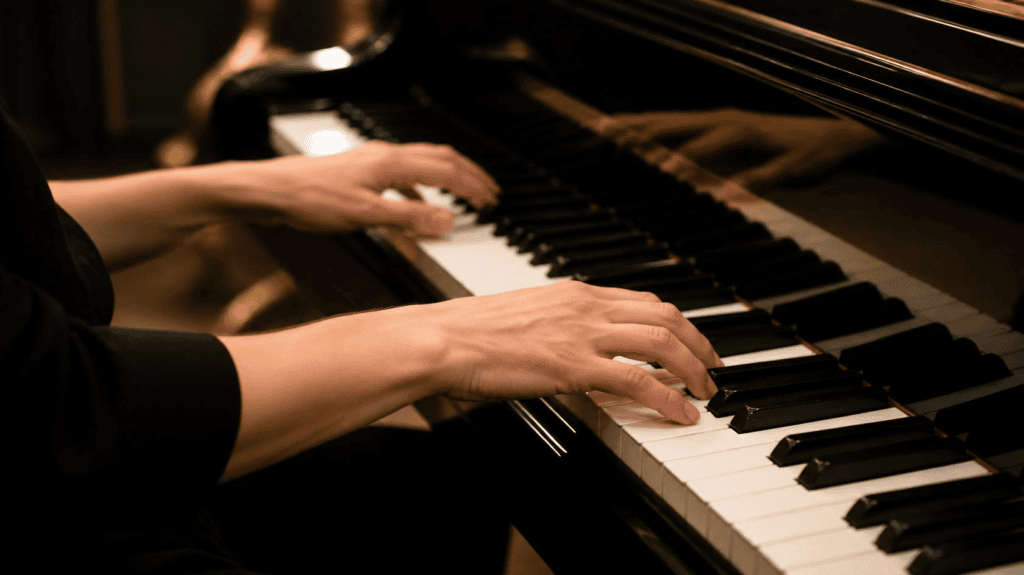
Mistakes Worship Pianists Make During Live Services
Introduction
Understanding the worship pianist mistakes is essential for anyone involved in leading worship through music. Unlike solo performance, worship playing requires sensitivity, awareness, and the ability to support the overall atmosphere.
Even skilled pianists can unintentionally make mistakes that disrupt the flow of worship. Recognizing and correcting these can greatly improve both musical quality and the worship experience.
Common Worship Pianist Mistakes
One of the most common worship pianist mistakes is focusing too much on playing rather than listening. Worship music is about unity, not individual performance.
Pianists should aim to:
Blend with the band
Support the vocals
Enhance the overall sound
This mindset is key to effective worship playing.
Overplaying and Filling Every Space Mistakes Worship Pianists Make During Live Services
A major mistake is playing too much.
❌ Constant fills and runs ❌ No silence between phrases ❌ Overcomplicating simple songs
Instead: ✔ Use space intentionally ✔ Let chords sustain ✔ Keep playing simple
Silence can create a powerful atmosphere.
Not Listening to the Team
Worship is a team effort.
Another of the worship pianist mistakes is not paying attention to:
The lead vocalist
Other instruments
Dynamics of the band
Listening ensures your playing complements the entire group.
Ignoring Dynamics
Dynamics bring life to music.
Common issues: ❌ Playing at the same volume throughout ❌ Sudden loud changes ❌ Not matching the mood of the song
This helps pianists become more confident and effective.
Explore more music courses at The Mystic Keys to start your piano journey with the right foundation.
Conclusion
Understanding the mistakes worship pianists make during live services helps you grow as a musician and a worship leader. By focusing on simplicity, listening, and preparation, you can create a meaningful and powerful worship atmosphere.
👉 In worship, less is often more.
For more information and exciting resources about learning music, visit our website at The Mystic Keys. For more music content and exciting offers follow us on
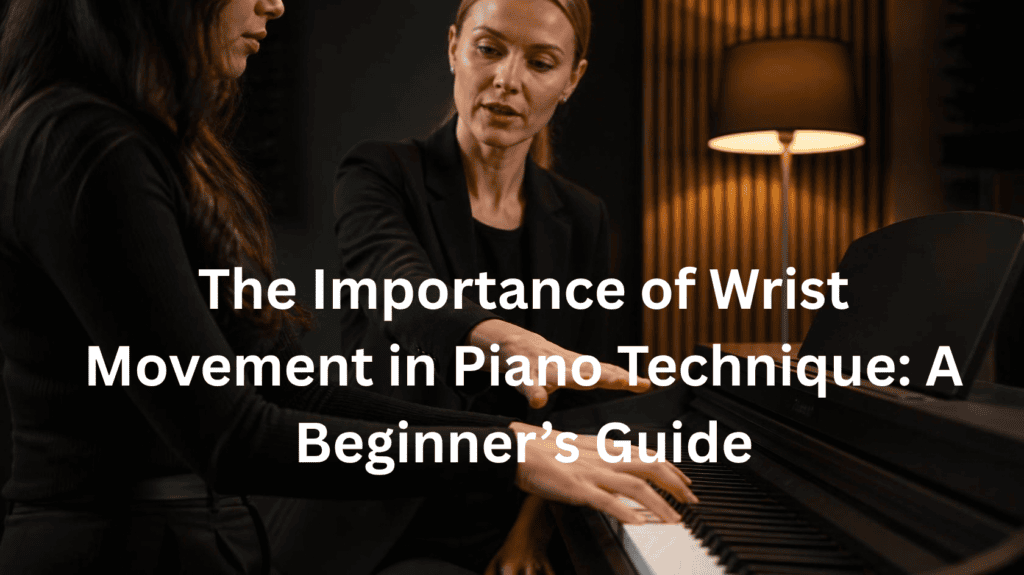
The Importance of Wrist Movement in Piano Technique
Wrist Movement in Piano Technique plays an important role in helping beginners develop comfortable, controlled, and expressive piano playing. When you first learn piano, it is natural to concentrate on your fingers and the notes you need to play. However, your fingers are only one part of the playing mechanism. Your hands, wrists, forearms, and arms all work together to produce smooth and coordinated movements.
For a beginner, understanding Wrist Movement in Piano Technique can prevent the development of unnecessary tension and poor playing habits. The wrist should not be completely stiff, but it should also not move excessively. Instead, it should remain flexible and make small, natural adjustments according to the music you are playing.
Whether you are practicing simple melodies, scales, chords, or your favorite songs, developing good wrist habits from the beginning can make piano playing more comfortable and help you build a strong technical foundation.
What Is Wrist Movement in Piano Technique?
Wrist Movement in Piano Technique refers to the controlled and natural movement of the wrist while playing the piano. The wrist connects the hand and fingers with the forearm, allowing different parts of the arm to work together efficiently.
When playing a simple melody, your fingers may appear to do most of the work. However, your wrist can make subtle adjustments that help your hand remain balanced and comfortable. As you move to different areas of the keyboard, these small movements become increasingly useful.
Good wrist technique does not mean deliberately moving your wrist after every note. Instead, the movement should happen naturally when it helps your hand change position, play a particular technique, or express the music.
For beginners, the main objective is to develop a wrist that is relaxed, flexible, and coordinated with the fingers and forearm.
Why Is Wrist Movement Important for Piano Beginners?
Many beginners focus entirely on finger placement. They learn which finger should play each note but may forget to pay attention to tension in their hands and wrists.
This can make piano playing unnecessarily difficult.
A relaxed wrist allows the fingers to move more freely and helps the hand adapt to different playing positions. It can also support better control when you play softly, loudly, quickly, or slowly.
Proper wrist movement can help beginners develop:
Better finger coordination
Smoother movement between notes
More comfortable chord changes
Better control across the keyboard
Improved musical expression
Greater flexibility
More efficient piano technique
Developing these habits early can be especially helpful because poor technical habits can become difficult to change later.
What Is the Correct Wrist Position for Piano Beginners?
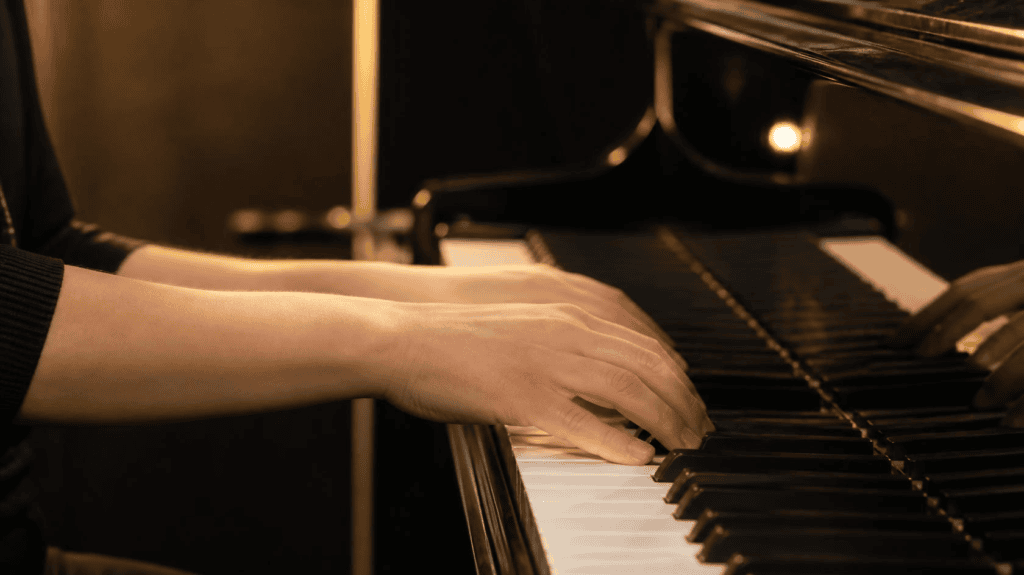
There is no single fixed wrist position that you must maintain for every piece of music. However, your wrist should generally feel comfortable and naturally aligned with your hand and forearm.
When your hands are placed on the keyboard, your fingers should be comfortably curved over the keys. Your wrist should not be extremely high, extremely low, or forced into a rigid position.
Think about maintaining a natural connection between your forearm, wrist, and hand.
Keep Your Wrist Relaxed
One of the most important principles of beginner piano technique is relaxation.
Before you begin practicing, take a moment to relax your shoulders, arms, hands, and wrists. Avoid consciously tightening your wrist while playing.
A relaxed wrist allows small movements to happen naturally.
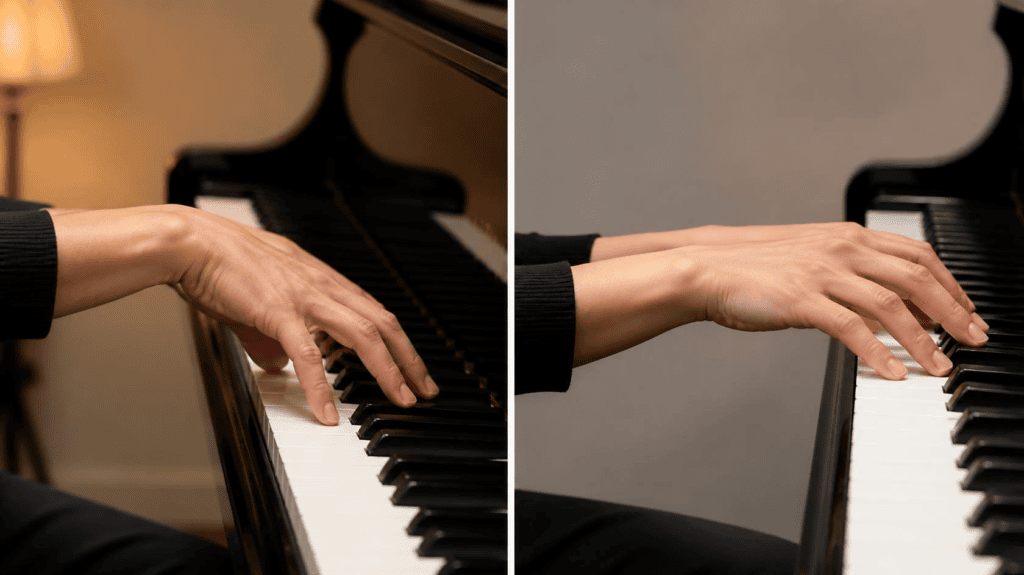
Avoid a Collapsed Wrist
A wrist that drops too low can make your hand position uncomfortable and may restrict finger movement.
Try to keep your wrist comfortably aligned with your hand rather than allowing it to collapse toward the keyboard.
Avoid Holding Your Wrist Too High
The opposite mistake is raising the wrist unnecessarily.
Some beginners believe that a high wrist provides better control. However, holding the wrist too high for extended periods can create tension.
Instead, allow your wrist to find a comfortable position based on what you are playing.
How Does the Wrist Work With the Fingers?
Your fingers do not work independently when you play piano. They are part of a larger movement system involving your hand, wrist, forearm, and arm.
For example, imagine playing a five-finger pattern:
C – D – E – F – G
Your fingers move individually from one key to another. However, your wrist and forearm can make subtle adjustments to keep the hand balanced and comfortable.
As the musical passage becomes larger, these adjustments become more noticeable.
This is particularly important when you begin learning:
Practice moving between two basic chords, such as:
C major → G major → C major
Play each chord slowly.
When changing chords, allow your hand and wrist to reposition naturally rather than keeping the wrist completely frozen.
Wrist Movement When Playing Piano Scales
Scales are one of the best ways for beginners to develop coordination between the fingers, hands, and wrists.
One of the most important challenges when learning scales is moving the thumb smoothly under the hand. Beginners sometimes try to solve this problem using only the thumb.
Instead, think about the movement of the entire hand.
As your fingers move through the scale, your wrist and forearm can make small adjustments that help the hand travel smoothly across the keyboard.
Practice scales slowly at first.
Focus on even notes, relaxed hands, and smooth movement rather than speed.
Once the movement feels comfortable, gradually increase your tempo.
Wrist Movement When Playing Piano Chords
Chords require the fingers to play several notes together, which can sometimes cause beginners to create unnecessary tension.
When playing a chord, avoid pressing the keys with excessive force.
Keep your hand comfortable and allow the wrist to remain flexible.
When moving from one chord to another, the wrist can help the hand reposition itself.
For example, when practicing a simple chord progression, focus on moving your hand efficiently from one chord shape to the next rather than trying to keep the wrist completely still.
Wrist Movement and Musical Expression
Wrist movement is not only about technical comfort. It can also contribute to musical expression.
When playing piano, you need to control dynamics, articulation, phrasing, and tone.
A relaxed and coordinated wrist can support these musical elements.
For example, when playing a soft passage, avoid squeezing the fingers or tightening the wrist. When playing a stronger passage, avoid relying entirely on force from the fingers.
Instead, learn how your fingers, hand, wrist, and arm can work together to create the sound you want.
As you progress, your teacher can help you understand how different movements contribute to different musical effects.
How Much Wrist Movement Is Enough?
A common beginner question is how much the wrist should actually move.
The answer depends on the music.
A simple five-finger exercise may require very little wrist movement. Chord changes may require small adjustments. Scales and arpeggios may involve more coordinated movement across the keyboard.
The important principle is:
Move as much as necessary, but not more than necessary.
Good piano technique is not about making your wrist look active. It is about using efficient movement to support your playing.
If a movement does not help you play more comfortably or musically, you probably do not need to exaggerate it.
How Beginners Can Practice Wrist Movement Safely
When learning Wrist Movement in Piano Technique, beginners should focus on quality rather than simply spending more time practicing.
Start with slow exercises and short practice sessions. Pay attention to how your hands and wrists feel.
A simple practice routine could include:
2 minutes: Relaxation and wrist awareness 5 minutes: Five-finger exercises 5 minutes: Slow scales 5 minutes: Basic chord changes 10 minutes: Apply the technique to a familiar song
Take short breaks during longer practice sessions.
If you experience persistent pain or discomfort while playing, stop practicing and seek guidance from a qualified piano teacher or appropriate healthcare professional rather than attempting to play through the discomfort.
How a Piano Teacher Can Help With Wrist Technique
It can be difficult for beginners to identify technical problems on their own. You may feel that your wrist is relaxed while actually creating unnecessary tension.
A qualified piano teacher can observe your posture, hand position, finger movement, and wrist technique and provide immediate feedback.
This is especially valuable during the early stages of learning because good habits are easier to develop than bad habits are to correct.
If you want structured guidance, you can learn piano lessons online with The Mystic Keys, where live lessons can help beginners develop fundamental piano skills under the guidance of a teacher.
Wrist Movement in Piano Technique is an important foundation for comfortable and effective piano playing. For beginners, the goal is not to keep the wrist completely still or move it constantly. Instead, the wrist should remain relaxed, flexible, and coordinated with the fingers, hand, and forearm.
Start with simple exercises, practice slowly, and pay attention to unnecessary tension. As your coordination improves, your wrist movements will become more natural and automatic.
Remember that good piano technique is not about making large movements. It is about making efficient, controlled movements that help you play comfortably and expressively.
With consistent practice and proper guidance, developing good wrist movement can help you build a strong foundation for your piano playing and prepare you for more advanced techniques in the future.
Intersted in learning music with us? Register now
For more information and exciting resources about learning music, visit our website at The Mystic Keys. For more music content and exciting offers follow us on