Understanding worship piano atmosphere without overplaying is essential for musicians who want to lead worship effectively. In worship settings, the goal is not to showcase technical skill but to create a space where people can connect emotionally and spiritually.
Overplaying can distract from the message, while simplicity and sensitivity can enhance the entire experience.
Worship Piano Atmosphere Without Overplaying
Learning worship piano atmosphere without overplaying starts with understanding your role. As a worship pianist, you are supporting the environment, not dominating it.
Your playing should:
Complement the vocals
Support the mood of the song
Leave space for reflection
This mindset is key to creating a meaningful atmosphere.
Focusing on Simplicity and Space Creates worship piano atmosphere without overplaying
One of the biggest principles is simplicity.
Instead of playing continuously:
Use fewer notes
Leave intentional gaps
Let chords sustain
Silence can be just as powerful as sound in worship music.
Listen to the Band and Vocalists
Active listening is crucial.
To understand how worship pianists create atmosphere without overplaying, you must:
Follow the lead vocalist
Blend with other instruments
Adjust dynamically
Listening ensures your playing fits the overall sound.
Use Chord Voicings Effectively
Chord voicings can create depth without complexity.
Try:
Open chords
Soft inversions
Sustained harmonies
These techniques add richness without making the music busy.
Control Dynamics Carefully
Dynamics play a huge role in atmosphere.
Play softly during verses
Build gradually in choruses
Avoid sudden loud changes
This creates emotional flow in worship music.
Avoid Overplaying
Overplaying happens when you: ❌ Add unnecessary fills ❌ Play too many notes ❌ Compete with vocals
Instead: ✔ Keep it simple ✔ Play only when needed ✔ Support the song
Understand the Purpose of Worship Music
Worship music is about connection, not performance.
When you understand this:
You play with intention
You focus on emotion
You avoid distractions
This naturally improves your playing style.
Tips for Worship Piano Atmosphere Without Overplaying
To improve your approach:
Practice minimal playing
Record and review your sessions
Focus on tone and touch
Stay aware of the overall sound
Small adjustments can make a big difference.
Common Mistakes to Avoid
❌ Overcomplicating chord progressions ❌ Ignoring dynamics ❌ Playing too loudly ❌ Not listening to the band
Avoiding these helps maintain a clean and peaceful atmosphere.
How The Mystic Keys Trains Worship Pianists
At The Mystic Keys, we help students understand how worship pianists create atmosphere without overplaying through:
Practical worship playing techniques
Dynamic control training
Listening-based exercises
Real performance guidance
This helps students become more sensitive and effective musicians.
👉 Explore more music courses at The Mystic Keys to start your piano journey with the right foundation.
Conclusion
Mastering how worship pianists create atmosphere without overplaying is about simplicity, awareness, and intention. By focusing on space, dynamics, and listening, you can create a powerful and meaningful worship experience.
👉 Less playing often creates more impact. Enroll in our piano courses online to master worship piano playing
For more information and exciting resources about learning music, visit our website at The Mystic Keys. For more music content and exciting offers follow us on
Piano learning for advanced learners is a stage where technique, expression, and musical understanding come together. At this level, pianists move beyond basic skills and focus on refining their performance, mastering complex pieces, and developing a unique musical style.
Advanced learning is not just about playing difficult music—it’s about playing with precision, control, and emotional depth.
Piano Learning for Advanced Learners: What Changes at This Level
Understanding piano learning for advanced learners means recognizing the shift from learning notes to mastering interpretation.
At this stage, pianists focus on:
Musical expression and phrasing
Advanced techniques
Performance quality
This transforms playing from mechanical to artistic.
Mastering Advanced Techniques in Piano Learning for Advanced Learners
One key aspect of advanced learning is technique.
Pianists should work on:
Fast scales and arpeggios
Hand independence
Complex rhythms
Dynamic control
These skills are essential for handling challenging compositions confidently.
Developing Musical Interpretation
For piano learning for advanced playing, interpretation becomes crucial.
Instead of just playing correctly, focus on:
Expressing emotions through music
Understanding the composer’s intention
Shaping phrases naturally
This adds depth and personality to performances.
Improving Sight-Reading and Ear Skills
Advanced pianists should continue improving foundational skills.
Work on:
Sight-reading complex scores
Playing by ear
Recognizing chord progressions
These abilities make learning new pieces faster and more efficient.
Structured and Focused Practice
Practice at this level must be intentional.
To improve:
Break difficult sections into smaller parts
Practice slowly before increasing speed
Focus on problem areas
Quality practice matters more than quantity.
Refining Tone and Dynamics
Sound quality is what separates advanced players.
Focus on:
Controlling touch on the keys
Balancing melody and accompaniment
Using dynamics effectively
This creates a rich and professional sound.
Expanding Repertoire
Advanced learners should explore a wide range of music.
Include:
Classical pieces
Contemporary compositions
Different styles and genres
This builds versatility and musical understanding.
Common Challenges for Advanced Learners
❌ Plateaus in progress ❌ Difficulty mastering complex pieces ❌ Lack of motivation ❌ Over-practicing without focus
Recognizing these challenges helps overcome them effectively.
This helps students reach their full potential as musicians.
👉 Explore more music courses at The Mystic Keys to start your piano journey with the right foundation.
Conclusion
Piano learning for advanced learners is about refinement, expression, and mastery. With focused practice and the right guidance, advanced pianists can elevate their skills and perform with confidence and artistry.
👉 At the advanced level, music becomes expression—not just execution.
For more information and exciting resources about learning music, visit our website at The Mystic Keys. For more music content and exciting offers follow us on
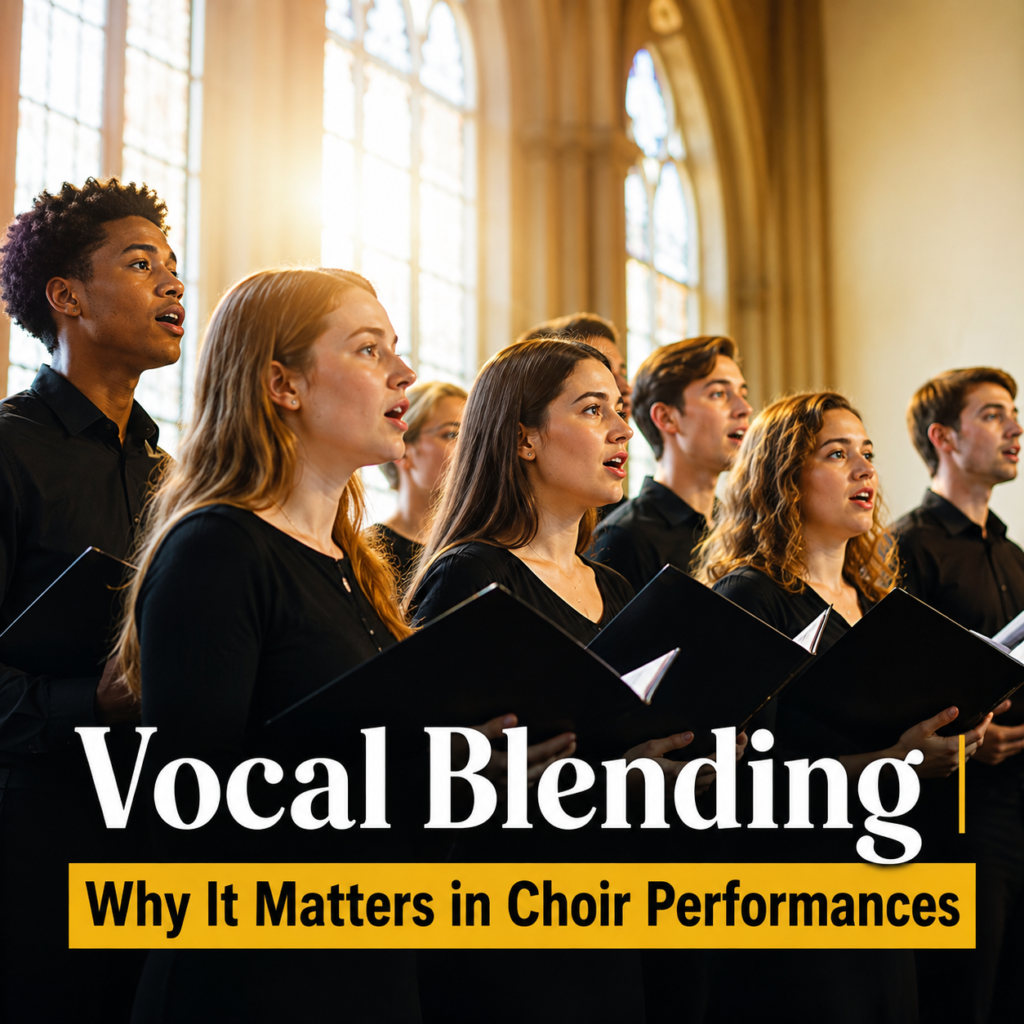
Vocal Blending | Why It Matters in Choir Performances
A choir is made up of many individual voices, each with its own tone, range, character, and emotional quality. Yet, when those voices come together, the goal is not simply to hear every singer separately. This is where vocal blending becomes essential—the ability to bring different voices together in a balanced and unified way. The real beauty of a choir emerges when individual voices blend into one cohesive musical sound, creating a performance that feels connected, expressive, and greater than the sum of its individual parts.
This is where vocal blending becomes essential. It allows singers to balance their voices, match one another’s tone and dynamics, and create a unified sound that feels effortless to the listener. Whether a choir is performing a gentle hymn, a powerful classical arrangement, a contemporary song, or a festive choral piece, effective blending can completely transform the performance.
More than simply singing in tune, blending is about learning how to listen, adjust, respond, and contribute to the overall sound of the ensemble.
What Is Vocal Blending?
Vocal blending is the ability of individual singers to combine their voices so that the choir sounds like a unified musical instrument rather than a collection of separate voices.
Every singer naturally has a distinctive vocal quality. Some voices may be bright and resonant, while others may sound darker, warmer, lighter, or more powerful. These differences are valuable, but if every singer emphasizes their individual tone in the same way, the overall performance can sound uneven.
Blending does not mean making every voice completely identical. Instead, it involves making subtle adjustments in tone, volume, pronunciation, vowel shape, phrasing, and vocal placement so that the voices complement one another.
Think of it like mixing different ingredients in a recipe. Each ingredient has its own character, but the final dish works because everything is balanced. A choir works in much the same way.
Why Does Vocal Blending Matter in a Choir?
A well-blended choir creates a sense of unity that immediately affects how the audience experiences the music. Rather than being distracted by one particularly loud, bright, breathy, or prominent voice, listeners can focus on the melody, harmony, lyrics, and emotion of the performance.
When voices blend successfully, harmonies become richer and more balanced. Chords can sound fuller because no single singer is dominating the musical texture. The result is often described as a “one voice” effect, where the audience hears the choir as a single expressive instrument.
This becomes particularly important when a choir performs music with multiple harmony lines. Sopranos, altos, tenors, and basses may each have different melodies or supporting notes, but their parts must work together. Good blending allows each section to remain distinct while still contributing to the same musical picture.
The effect becomes even more noticeable during softer passages. A quiet section requires singers to control their voices carefully rather than simply reducing volume. When everyone adjusts together, the choir can create an intimate and expressive sound without losing pitch or clarity.
Blending Begins With Listening
One of the most important aspects of vocal blending is something singers often overlook: listening.
Singing in a choir is not just about producing your own part correctly. It is also about hearing what is happening around you. A singer needs to be aware of the voices beside them, the section as a whole, and the balance between different parts.
For instance, if one singer notices that their voice is significantly louder than the people around them, they may need to reduce their volume slightly. Another singer might discover that their vowel sound is different from the rest of the section and adjust it accordingly.
This constant awareness creates a more balanced ensemble.
Interestingly, better blending does not necessarily come from singing less. It comes from singing with greater awareness. Once singers begin listening as carefully as they sing, they become more responsive to the needs of the group.
The Role of Tone and Vocal Quality
Tone is another major factor in creating a unified choir sound. Two singers can sing the same note at the same volume and still sound completely different because of their individual vocal qualities.
A choir therefore needs to develop some consistency in the way its singers approach the sound. This might involve working on vocal placement, resonance, breath support, and overall tone production.
That does not mean every singer should try to change their natural voice. Instead, singers learn to make appropriate adjustments depending on the musical style and the needs of the ensemble.
A bright, energetic pop arrangement may call for a different vocal colour than a soft classical piece. Similarly, a traditional hymn may require a warmer and more rounded sound than a contemporary choral arrangement.
The conductor plays an important role here by helping singers understand the desired vocal character and guiding the choir toward a shared sound.
Vowels Can Make or Break a Choral Sound
One of the simplest yet most powerful elements of vocal blending is vowel matching.
When singers pronounce the same vowel differently, the sound of the choir can become scattered. Even if everyone is singing the correct pitch, inconsistent vowel shapes can make the ensemble sound less unified.
Imagine several singers sustaining the word “ah.” If some singers produce a narrow “ah,” others use a wider sound, and others approach it almost like “uh,” the resulting chord may lack clarity.
Matching vowel shapes helps the voices lock together. It also improves resonance and allows the audience to hear lyrics more clearly.
Consonants matter too. When a choir releases words at different times, the performance can sound untidy. Coordinating consonants, particularly at the beginning and end of phrases, gives the ensemble greater precision.
This is why choral rehearsals often spend considerable time working on pronunciation and diction. The goal is not merely to make the words understandable; it is to make the entire choir articulate them together.
Dynamics Create Unity
Blending is closely connected to dynamics, or changes in volume.
A choir can have excellent pitch and pronunciation, yet still struggle to blend if some singers consistently overpower others. Individual singers need to understand when their part should come forward and when it should become part of the background.
For example, a melody line may need greater prominence while accompanying harmony parts remain softer. During another section, the lower voices might provide the foundation while the upper voices float above them.
Good choir singing involves constantly changing levels of intensity. Singers must respond to the musical structure rather than maintaining the same volume throughout the piece.
When dynamic changes happen together, the choir sounds intentional and expressive. When they happen independently, the performance can lose its shape.
Pitch Accuracy and Blending Go Hand in Hand
Vocal blending cannot be separated from accurate pitch.
Even a beautifully matched vocal tone can sound unsettled when notes are slightly out of tune. This becomes especially noticeable when singers hold sustained harmony notes, because the interaction between the pitches determines whether a chord sounds smooth or tense.
A singer who is slightly sharp or flat may not notice the difference when singing alone. Within a choir, however, that small variation can affect the entire harmony.
Regular ear-training exercises, careful listening, and consistent vocal technique can help singers become more accurate. Over time, they learn not only to sing their own notes but also to recognize how those notes fit within the chord.
That awareness is one of the foundations of strong ensemble singing.
The Conductor’s Role in Vocal Blending
A choir’s conductor has a significant influence on its overall blend. Through gestures, rehearsal techniques, musical interpretation, and vocal direction, the conductor helps singers understand how their individual contributions fit into the larger performance.
During rehearsals, a conductor might ask a particular section to soften, encourage another group to produce a warmer tone, or ask everyone to modify a vowel. These small adjustments can dramatically improve the overall sound.
Conductors also establish expectations about listening and ensemble awareness. When singers understand that their role is not simply to perform their own part but to contribute to the collective sound, the quality of the choir often improves.
At its best, the conductor does not force every voice into the same mould. Instead, they bring different voices together while preserving the musical personality of the group.
Vocal Blending Requires Trust and Teamwork
There is also a human element to blending that goes beyond vocal technique.
Singers need to trust one another. They must be comfortable adjusting their volume, changing their tone, or stepping back when another section carries the musical focus. That requires a mindset of collaboration rather than competition.
A choir is strongest when singers understand that a beautiful performance is not about determining whose voice stands out the most. The objective is to create something that no individual singer could produce alone.
This sense of teamwork can also improve confidence. When singers know they are supported by the voices around them, they can focus more fully on musical expression rather than worrying about every individual note.
How Can Singers Improve Their Vocal Blending?
Improving blend begins with developing strong individual technique. Proper breathing, pitch control, healthy vocal production, and good listening skills provide the foundation for ensemble singing.
During rehearsal, singers can practise sustaining notes together, matching vowel shapes, listening across their section, and following the conductor’s dynamic cues. Recording rehearsals can also be useful because singers often hear the balance differently when listening as an audience member.
Another effective approach is to occasionally change positions within the choir. Singing beside different voices helps singers become more adaptable and prevents them from relying only on the person next to them.
Most importantly, singers should learn to listen before adjusting. Instead of automatically singing louder or softer, they can first identify what the ensemble needs and then make a controlled change.
With consistent practice, these adjustments become increasingly natural.
Vocal Blending and Emotional Expression
It might seem that blending is mainly a technical skill, but it has a powerful connection to emotion.
A choir that blends well can create remarkable contrasts. A quiet passage can feel intimate and vulnerable, while a powerful climax can feel expansive and overwhelming. Because the voices are unified, emotional changes reach the audience with greater clarity.
Consider a choir singing a delicate opening phrase. If every voice has a different tone, volume, and pronunciation, the emotional impact may be diluted. When the singers breathe together, shape the vowels together, and move through the phrase as one, the same music can suddenly feel much more meaningful.
Blending therefore supports interpretation. It gives the choir the control needed to communicate the emotional journey of a piece.
Blending Does Not Mean Losing Individuality
An important misconception about vocal blending is that singers have to suppress their individual voices completely.
That is not the purpose.
A successful choir can contain many different vocal personalities while still sounding unified. Individual character becomes an asset when it is balanced with awareness of the ensemble.
The goal is not “How can I make my voice disappear?” but rather “How can my voice contribute to the sound we are creating together?”
That shift in mindset can make a significant difference. Singers remain expressive while learning when to lead, when to support, and when to become part of the collective sound.
From Individual Voices to One Musical Voice
Ultimately, vocal blending shows how many individual voices can come together as one without losing their unique character. Through careful listening, pitch accuracy, matched vowels, balanced dynamics, and coordinated breathing, singers create a sound that feels unified and emotionally powerful.
When singers listen beyond their own voices and focus on the sound they create together, a choir moves from simply singing together to truly performing as one.
For more information and exciting resources about learning music, visit our website at The Mystic Keys. For more music content and exciting offers follow us on