

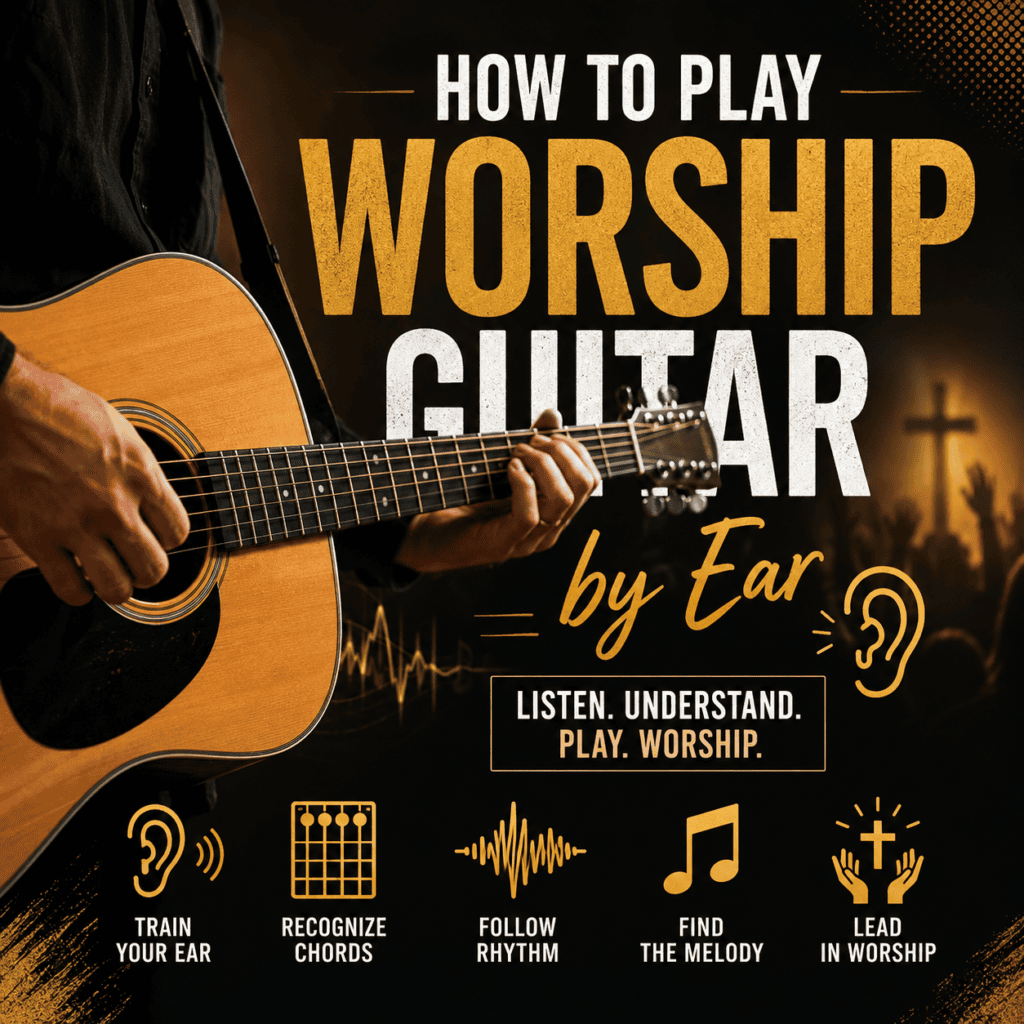
How to Play Worship Guitar by Ear
How to Play Worship Guitar by Ear
Learning how to play worship guitar by ear is one of the most valuable skills a guitarist can develop. Instead of depending completely on chord charts, tabs, or written music, playing by ear allows you to listen carefully to a worship song and understand what the guitar is doing. This skill is especially useful during worship sessions, where songs may change depending on the congregation, the worship leader, or the atmosphere of the service. By developing your musical ear, you can recognize chord movements, identify melodies, follow rhythmic patterns, and adapt your playing more naturally.
Playing worship guitar by ear does not mean that you need to guess every note perfectly from the beginning. It is a gradual process that combines active listening, chord recognition, rhythm training, fretboard knowledge, and consistent practice. Whether you are a complete beginner or an intermediate guitarist who wants to become more confident in worship settings, learning to hear what you play can make your guitar playing more expressive, flexible, and musically independent.
How to Play Worship Guitar by Ear | Understanding What It Really Means
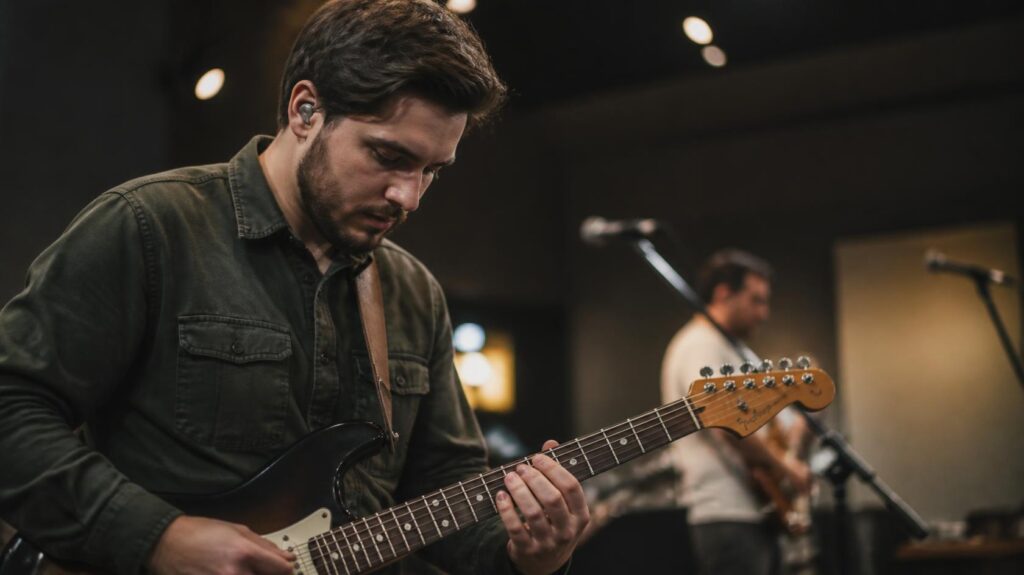
Playing guitar by ear means being able to hear a musical idea and reproduce it on your instrument without needing to see the exact notes or chords written down. For a worship guitarist, this might mean listening to a song and identifying whether the progression moves from the tonic chord to the fourth chord, recognizing when the song changes from the verse to the chorus, or finding the melody played between vocal phrases. Over time, your ears begin to recognize familiar musical patterns, making it easier to respond to songs even when you have never played them before.
A strong musical ear is built through listening with intention rather than simply listening to music in the background. When you hear a worship song, try to focus separately on the bass movement, guitar chords, melody, rhythm, and overall structure. Ask yourself questions such as: Where does the chord change? Does the guitar sound major or minor? Is the guitarist playing individual notes or full chords? Does the rhythm become more energetic during the chorus? These small observations train your brain to connect what you hear with what your fingers need to play.
If you are still developing your basic guitar skills, building a strong foundation through [beginner guitar lessons] can make ear training much easier because you will already understand essential chords, scales, rhythm patterns, and fretboard positions.
How to Play Worship Guitar by Ear by Identifying Major and Minor Chords
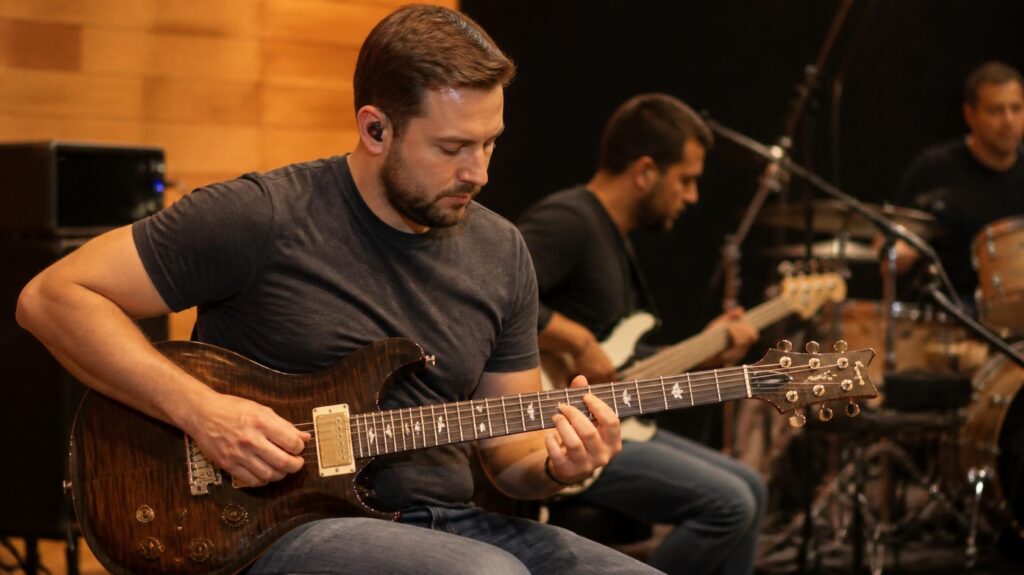
One of the first steps in learning how to play worship guitar by ear is recognizing the difference between major and minor chords. Major chords often have a brighter and more open quality, while minor chords tend to create a darker or more emotional sound. You do not need to understand every aspect of music theory immediately. Instead, begin by training yourself to hear the emotional and tonal difference between these two chord types.
Choose two simple chords, such as G major and E minor, and play them repeatedly. Listen carefully to their individual sounds. Then close your eyes, play one of the chords randomly, and try to identify which one you heard. Repeat this exercise regularly and gradually introduce other common worship guitar chords. As your ears improve, you can begin identifying chord qualities within actual songs rather than isolated exercises.
This is where [music theory for guitarists] can become particularly useful. Understanding keys, chord families, and scale relationships gives your ears a musical framework to work with. Instead of trying to identify every possible chord in isolation, you can begin predicting which chords are likely to appear together within a particular key.
Learn to Recognize Common Worship Chord Progressions
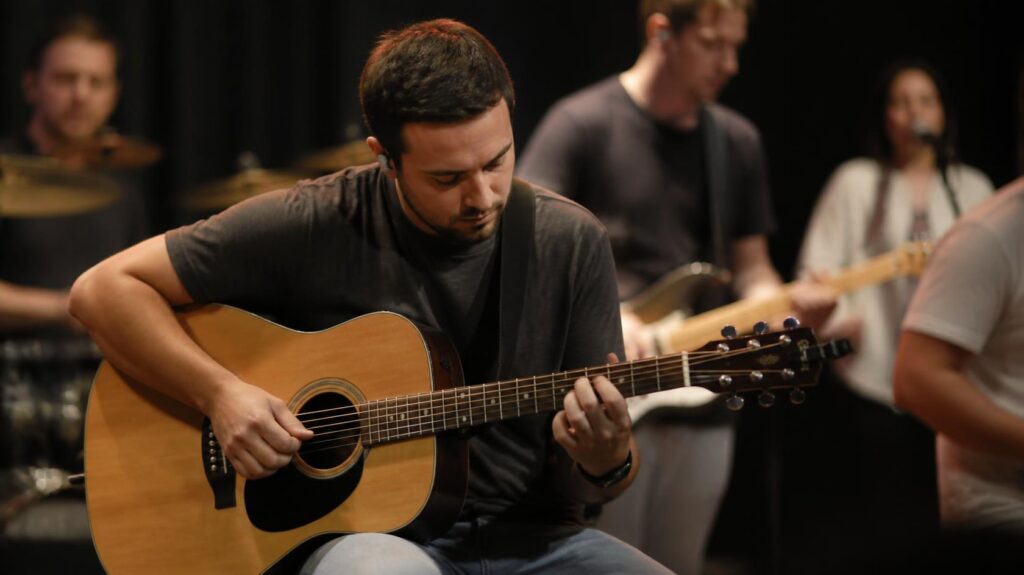
Worship music frequently uses familiar chord progressions, which makes ear training especially rewarding. Once you understand how chords function within a key, you can begin recognizing patterns rather than trying to identify every chord individually. For example, progressions based around the I, V, vi, and IV chords appear in countless contemporary songs. When your ears become familiar with these movements, you may hear a progression and immediately recognize its general structure.
Rather than memorizing hundreds of individual songs, learn to recognize patterns that appear across many songs. Practice playing common progressions in different keys and listen to how the relationship between the chords remains similar even though the actual chord names change. This helps you develop relative hearing, which is far more useful than relying only on absolute pitch.
For example, if you learn the sound of a I–V–vi–IV progression in one key, practice moving it into several other keys. Then listen to worship songs and try to determine whether you hear the same relationship between the chords. This approach can dramatically improve your ability to follow songs during live worship.
How to Play Worship Guitar by Ear and Find the Key of a Song
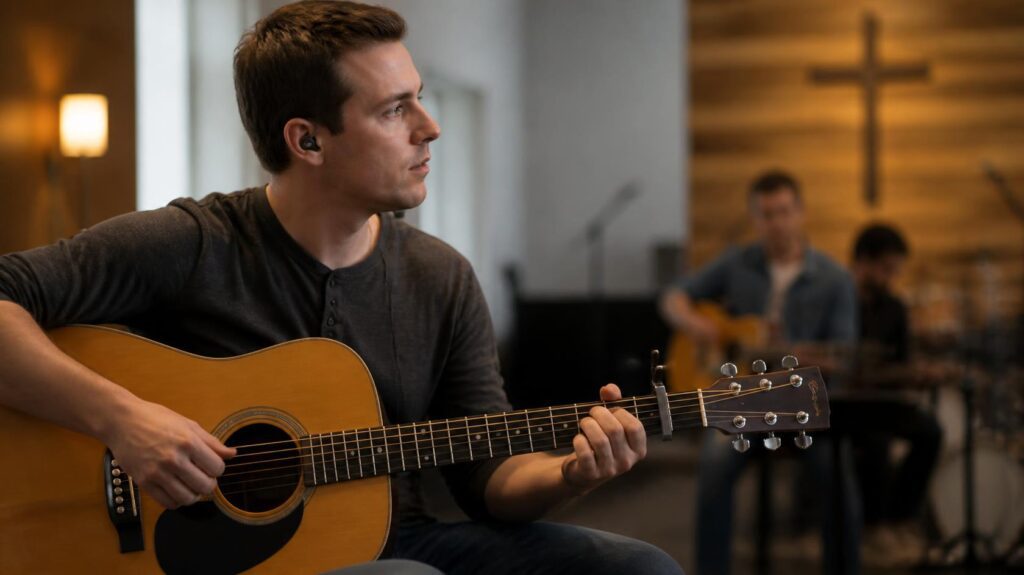
Finding the key is another important part of learning to play worship guitar by ear. The key provides a musical home base and helps you narrow down the chords that are likely to appear in the song. Instead of searching randomly across the fretboard, knowing the key allows you to work within a specific collection of notes and chords.
Start by listening to the final chord or note of a song. In many cases, the ending provides a strong sense of where the music feels resolved. Try humming the note that feels like the musical “home,” then find that note on your guitar. Once you have identified a possible root note, experiment with a major or minor chord built around it and compare the sound with the recording.
You can strengthen this skill through [ear training exercises for musicians], particularly exercises that focus on intervals, scales, chord recognition, and tonal centers. The goal is not to become dependent on guessing. Instead, you want to develop the ability to hear a musical center and locate it confidently on the guitar.
How to Play Worship Guitar by Ear With Guitar Rhythm and Strumming Patterns

Playing worship guitar by ear is not only about finding the correct chords. Rhythm is equally important. A guitarist can play all the right chords and still sound completely different from the original song if the rhythm, dynamics, or strumming pattern is incorrect. Worship guitar often relies on subtle rhythmic changes to support the vocals and build the intensity of a song.
When learning a song by ear, first determine whether the guitar is using downstrokes, alternating strums, arpeggios, muted patterns, or sustained chords. Then listen for where the guitarist leaves space. Silence is often just as important as the notes themselves. Pay attention to whether the guitar becomes softer during a verse, opens up during a chorus, or changes its rhythmic pattern during a bridge.
Try tapping the rhythm with your hand before picking up the guitar. Once you can physically feel the pattern, transfer it to the instrument. This method separates rhythm recognition from chord recognition and makes difficult songs much easier to learn.
Learn to Follow the Melody and Vocal Movement

A worship guitarist should not only listen to the guitar. The vocal melody is one of the most important elements to follow because your guitar playing should support the singer rather than compete with them. When playing by ear, listen carefully to the movement of the vocal line and identify moments where the guitar can reinforce the melody, answer a vocal phrase, or create a simple musical connection between sections.
Start by humming a short vocal phrase from a worship song. Then try to find those notes on your guitar one at a time. This exercise helps connect your inner musical hearing with the fretboard. Eventually, you will become more comfortable hearing a melody and finding it without searching randomly.
This skill can also help you create tasteful [worship guitar fills]. Instead of inserting random licks between vocal phrases, you can build fills from notes that naturally belong to the song’s melody and key. The result is usually more musical, controlled, and supportive.
Practice Worship Songs Without Looking at Chord Charts

Once you have developed some basic ear-training skills, start applying them directly to real worship songs. Choose a song that you already know well and listen to it several times without touching your guitar. Try to identify the song structure, key, chord changes, rhythm, and important musical sections before attempting to play anything.
Then pick up your guitar and try to find the first chord. Once you have found it, listen for where the music moves next. Instead of immediately searching online for the chord progression, give yourself time to work it out. If you get stuck, use a chord chart as a reference after attempting the song by ear. This makes the chart a learning tool rather than a crutch.
You can make this exercise progressively harder by choosing songs with more complex arrangements. Start with simple worship songs and gradually move toward songs containing suspended chords, passing chords, capo positions, inversions, or instrumental sections. Combining [worship guitar lessons] with independent ear-training practice can also help you identify areas where your technique or theory knowledge needs improvement.
How to Play Worship Guitar by Ear With a Regular Ear-Training Routine
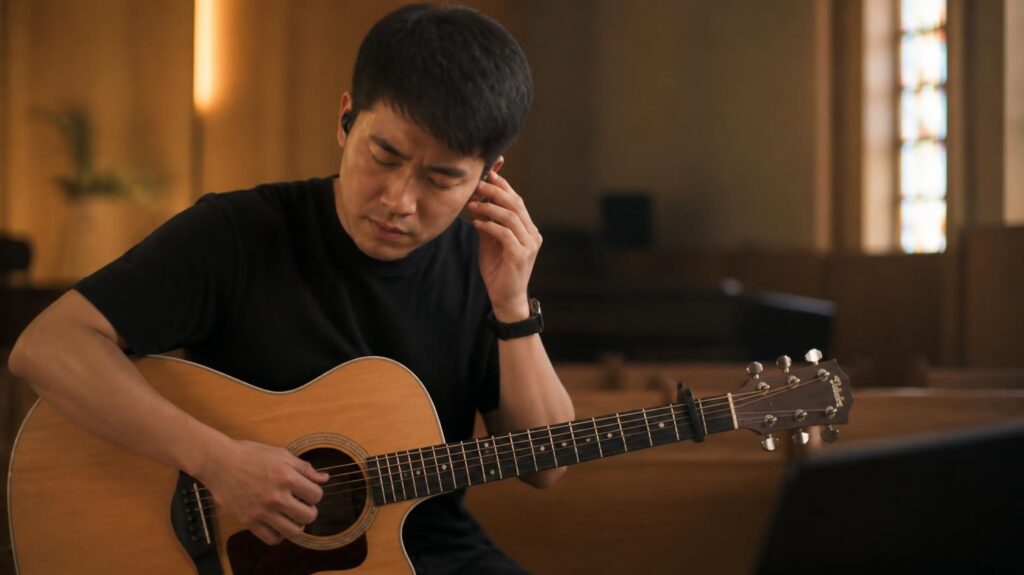
The most effective way to learn how to play worship guitar by ear is to make ear training part of your regular practice routine. You do not need to spend an hour every day doing specialized exercises. Even 10 to 15 minutes of focused listening can produce noticeable improvement when practiced consistently.
A simple routine could include identifying major and minor chords, finding the key of a familiar worship song, recognizing common chord progressions, copying a short melody, and reproducing a rhythm pattern. Once these exercises become easier, challenge yourself with unfamiliar songs. Try to identify the progression, structure, and rhythmic feel before checking any online resources.
Most importantly, remember that playing by ear is a skill that develops gradually. You may initially need several attempts to identify a single chord, but with consistent practice your brain begins recognizing musical relationships more quickly. The goal is not simply to memorize songs; it is to develop an instinctive connection between what you hear and what you play.
Final Thoughts
Learning how to play worship guitar by ear can transform the way you approach worship music. Instead of relying entirely on chord sheets or memorized arrangements, you begin to understand the music through sound. You can recognize chord movements, follow the structure of a song, respond to changes, create tasteful fills, and adapt your playing to different worship situations.
The most important elements are active listening, chord recognition, rhythm awareness, music theory, melody training, and consistent practice. Start with simple songs, work slowly, and give yourself time to develop your musical instincts. As your ear becomes stronger, you will find that learning new worship songs becomes faster and playing alongside other musicians becomes more natural.
If you want to develop stronger technique, musical understanding, and confidence for worship settings, learn guitar lessons online with The Mystic Keys through structured, personalized sessions. Online guitar lessons can help you strengthen your playing, understand worship music more deeply, and continue developing your ear through guided instruction and independent practice.
For more information and exciting resources about learning music, visit our website at The Mystic Keys. For more music content and exciting offers follow us on
Facebook, Instagram, YouTube, LinkedIn, Twitter, Pinterest, and Threads.