


Unusual Musical Instruments You’ve Probably Never Heard Of
Unusual Musical Instruments You’ve Probably Never Heard Of
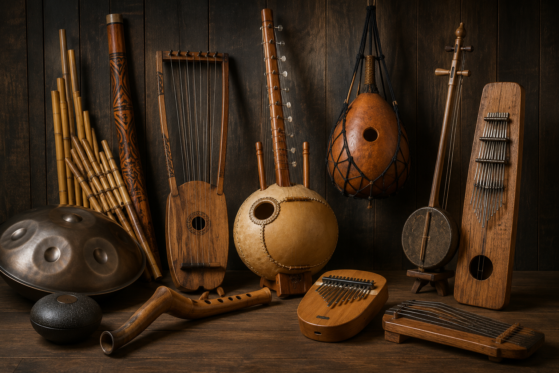
Music has always been a reflection of human creativity, culture, and curiosity. While familiar instruments like the piano, guitar, violin, and drums dominate concerts and playlists, countless unusual musical instruments remain hidden from mainstream attention. Across continents and throughout history, communities have crafted these remarkable instruments using bamboo, glass, metal, clay, water, and even plants. Each one carries a fascinating story, preserving the traditions, craftsmanship, and cultural heritage of the people who created it.
Interestingly, many of these unusual instruments produce sounds unlike anything heard in mainstream music. Some create haunting echoes that resemble voices from nature, while others generate rhythmic vibrations that can feel almost hypnotic. As a result, they continue to inspire musicians, composers, and instrument makers looking for fresh sounds and new musical possibilities.
In this article, we will explore some of the world’s most unusual musical instruments, discover where they originated, understand how they are played, and learn why they deserve far more recognition than they currently receive.
Why Do Unusual Musical Instruments Exist?
Throughout history, different civilizations have created instruments based on the materials available in their surroundings. Forest communities relied on bamboo, mountain cultures carved wood into resonating chambers, while coastal regions often incorporated shells and natural fibers into their musical traditions. Consequently, every instrument reflects not only musical expression but also geography, lifestyle, and cultural identity.
At the same time, innovation has always played an important role in music. Inventors constantly experiment with new ways to create sounds that traditional instruments cannot produce. Some unusual instruments were developed for ceremonial purposes, whereas others were designed purely for artistic exploration. Today, musicians continue blending ancient traditions with modern technology, allowing forgotten instruments to find new audiences across the globe.

The Hang Drum – One of the Most Relaxing Unusual Musical Instruments
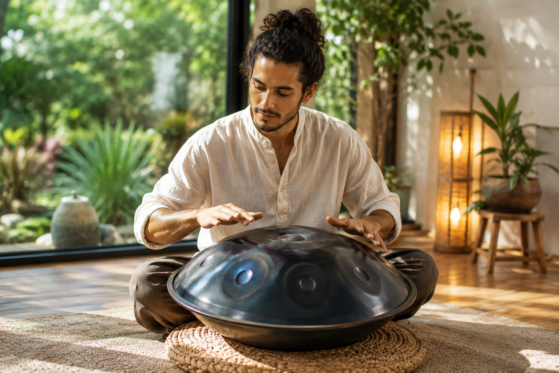
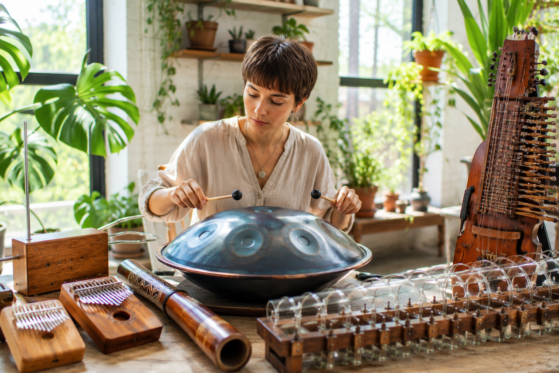
Despite looking like two steel bowls joined together, the Hang Drum produces warm, melodic tones that many listeners compare to bells, harps, and singing bowls. Invented in Switzerland in 2000, this relatively new instrument quickly gained popularity because of its calming and meditative sound.
Instead of striking it with sticks, players gently tap different sections of the steel surface using their fingers and palms. Every note resonates beautifully, creating soothing melodies that flow effortlessly together. Furthermore, each Hang Drum is carefully tuned by hand, making every instrument slightly unique.
Its peaceful sound has made it a favorite for meditation sessions, yoga classes, relaxation music, and ambient performances around the world.
The Theremin – One of the Most Fascinating Unusual Musical Instruments
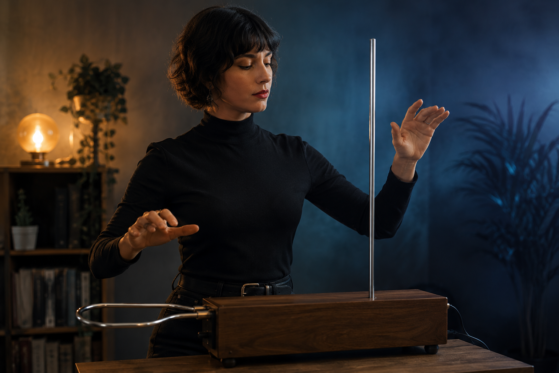
Imagine playing music without ever touching the instrument. That is exactly what makes the Theremin so remarkable. Invented by Russian physicist Léon Theremin in the early twentieth century, it became one of the world’s first electronic musical instruments.
The performer controls pitch and volume by moving both hands through electromagnetic fields surrounding two antennas. One hand changes the note, while the other adjusts the loudness. Because there are no keys, strings, or buttons, even the smallest movement affects the sound.
Its eerie, floating tone became especially popular in classic science fiction films. Nevertheless, modern musicians have embraced the Theremin in orchestras, experimental music, jazz, and electronic performances because of its expressive and otherworldly character.
The Nyckelharpa – A Hidden Gem Among Unusual Musical Instruments
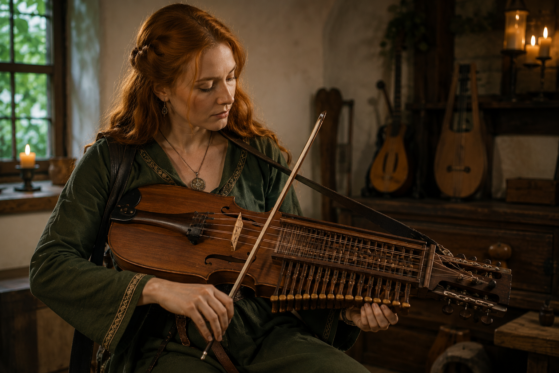
The Nyckelharpa combines features of both a violin and a keyboard, making it one of the most distinctive string instruments ever created. Originating in Sweden more than six hundred years ago, it continues to be an important part of Scandinavian folk music.
Rather than pressing strings directly with the fingers, players use wooden keys attached to small tangents. These keys shorten the vibrating length of the strings while a bow produces the sound. Additionally, several sympathetic strings vibrate naturally alongside the played notes, creating a rich and shimmering resonance.
Although deeply rooted in tradition, the Nyckelharpa has recently gained attention among contemporary folk musicians who appreciate its unique tonal qualities.
The Glass Armonica – One of the Most Delicate Unusual Musical Instruments
Few instruments appear as delicate or magical as the Glass Armonica. Invented by Benjamin Franklin in 1761, it transformed the simple act of rubbing glass into an elegant musical performance.
The instrument consists of rotating glass bowls of different sizes mounted on a horizontal spindle. As the bowls spin, the musician lightly touches their wet fingers against the glass, producing clear and ethereal notes that seem almost to float through the air.
Many famous composers, including Mozart and Beethoven, wrote music specifically for the Glass Armonica. However, its popularity gradually declined over time because it was difficult to transport and required careful maintenance. Even so, modern performers occasionally revive this beautiful instrument in concerts and recordings.

The Didgeridoo – An Ancient Unusual Musical Instrument with a Powerful Voice
The Didgeridoo is one of the oldest wind instruments still played today. Developed by Indigenous Australians thousands of years ago, it carries profound cultural and spiritual significance.
Traditionally made from eucalyptus branches naturally hollowed by termites, the instrument produces a deep, continuous drone. Players achieve this remarkable effect through circular breathing, a technique that allows them to inhale through the nose while simultaneously pushing stored air from the cheeks.
Beyond its distinctive sound, the Didgeridoo often accompanies storytelling, ceremonies, and traditional dances. Consequently, it remains an enduring symbol of Australia’s Indigenous musical heritage.

The Waterphone – Creating Mystery Through Sound
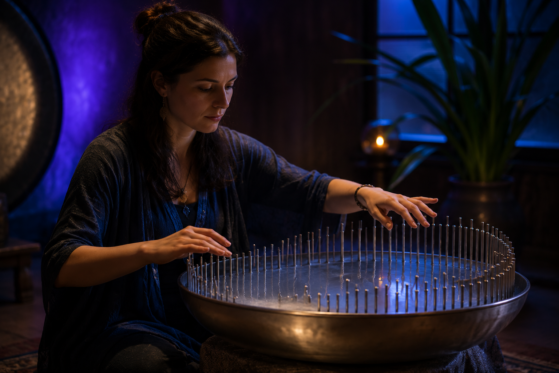
If you’ve ever watched a suspense or horror movie, you may have already heard the haunting sound of a Waterphone without realizing it.
This unusual instrument features a stainless-steel resonating bowl filled with a small amount of water. Metal rods of varying lengths extend upward from the bowl, and musicians create sound by striking or bowing these rods. Since the water inside continuously shifts, the pitch constantly changes, producing eerie, unpredictable tones.
Because of its mysterious character, the Waterphone has become a favorite in film scoring, theatrical productions, and experimental music performances.
The Hydraulophone – Music Played with Water
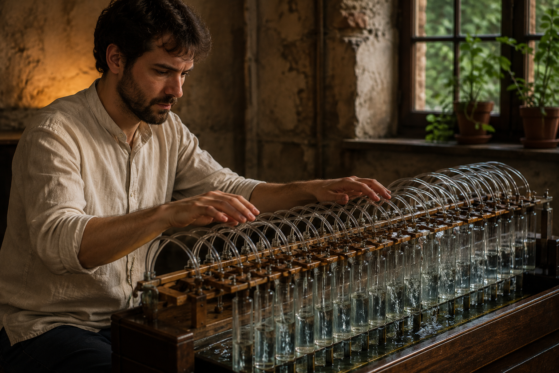
Unlike nearly every other instrument, the Hydraulophone uses flowing water instead of air to produce sound. Players block individual water jets with their fingers, causing pressure changes that generate musical notes.
Besides being visually fascinating, the instrument offers a highly interactive playing experience. Every touch influences the sound differently, encouraging musicians to experiment with rhythm and melody in creative ways.
Many public parks and science museums feature Hydraulophones because they combine education, entertainment, and music in a wonderfully engaging form.
The Kalimba – The Thumb Piano with a Beautiful Voice
Although the Kalimba has become increasingly popular in recent years, many people are still unfamiliar with its rich history. Originating in Africa, this compact instrument consists of metal tines mounted on a wooden resonating body.
Players pluck the metal keys using their thumbs, creating soft, bell-like tones that are both relaxing and expressive. Moreover, its portable size makes it an excellent instrument for beginners as well as experienced musicians.
Today, the Kalimba appears in folk music, worship music, film soundtracks, and even modern pop arrangements, proving that ancient instruments can adapt beautifully to contemporary styles.

The Singing Ringing Tree – A Musical Sculpture
Not every musical instrument fits inside a concert hall. The Singing Ringing Tree is an outdoor sculpture that transforms the power of wind into haunting musical sounds.
Constructed from numerous galvanized steel pipes arranged in a tree-like shape, the sculpture captures moving air and converts it into gentle harmonies. Depending on wind speed and direction, the resulting sounds constantly change, ensuring that no two performances are exactly alike.
Rather than being played by a musician, nature itself becomes the performer, making this one of the most unusual musical creations in the world.

Why Unusual Musical Instruments Matter Today
Many people assume that only widely known instruments shape the future of music. In reality, unusual instruments continually influence composers, filmmakers, sound designers, and performers searching for fresh sonic textures. As musical boundaries expand, these rare creations provide inspiration that conventional instruments sometimes cannot.
Furthermore, preserving these instruments helps protect valuable cultural traditions that might otherwise disappear. Every unusual instrument represents generations of craftsmanship, storytelling, and artistic innovation. Learning about them therefore allows us to appreciate the incredible diversity of musical expression across different societies.
Modern musicians are also rediscovering these forgotten sounds through collaborations, digital recordings, and international music festivals. Consequently, instruments that once belonged to isolated communities are now reaching listeners around the globe.
Could You Learn One of These Instruments?
Absolutely. While some rare instruments require specialized teachers or custom-built equipment, many have become easier to access than ever before. Online tutorials, virtual lessons, and international music stores have opened opportunities for curious learners to explore sounds beyond traditional instruments.
Naturally, mastering an unusual instrument still requires patience and consistent practice. Yet the experience can be incredibly rewarding because it encourages musicians to think differently about rhythm, melody, and expression. Whether someone chooses the peaceful Hang Drum, the fascinating Theremin, or the gentle Kalimba, every new instrument offers a fresh musical adventure.
Final Thoughts on Unusual Musical Instruments
The world of music extends far beyond the instruments most of us encounter every day. Hidden within different cultures and innovative inventions are remarkable creations capable of producing sounds that surprise, inspire, and captivate audiences. Each unusual instrument carries its own history, personality, and artistic purpose, reminding us that music has no limits.
Exploring these rare instruments not only broadens our appreciation for global musical traditions but also encourages creativity in our own musical journeys. Whether you’re learning a familiar instrument or simply expanding your musical knowledge, discovering these hidden gems can deepen your understanding of music as a universal language. At The Mystic Keys, we believe that every musical journey begins with curiosity, and exploring the incredible diversity of instruments from around the world is a wonderful way to inspire a lifelong love for music.
After all, sometimes the most unforgettable melodies come from instruments we’ve never even heard of before.
For more information and exciting resources about learning music, visit our website at The Mystic Keys. For more music content and exciting offers follow us on
Facebook, Instagram, YouTube, LinkedIn, Twitter, Pinterest, and Threads.