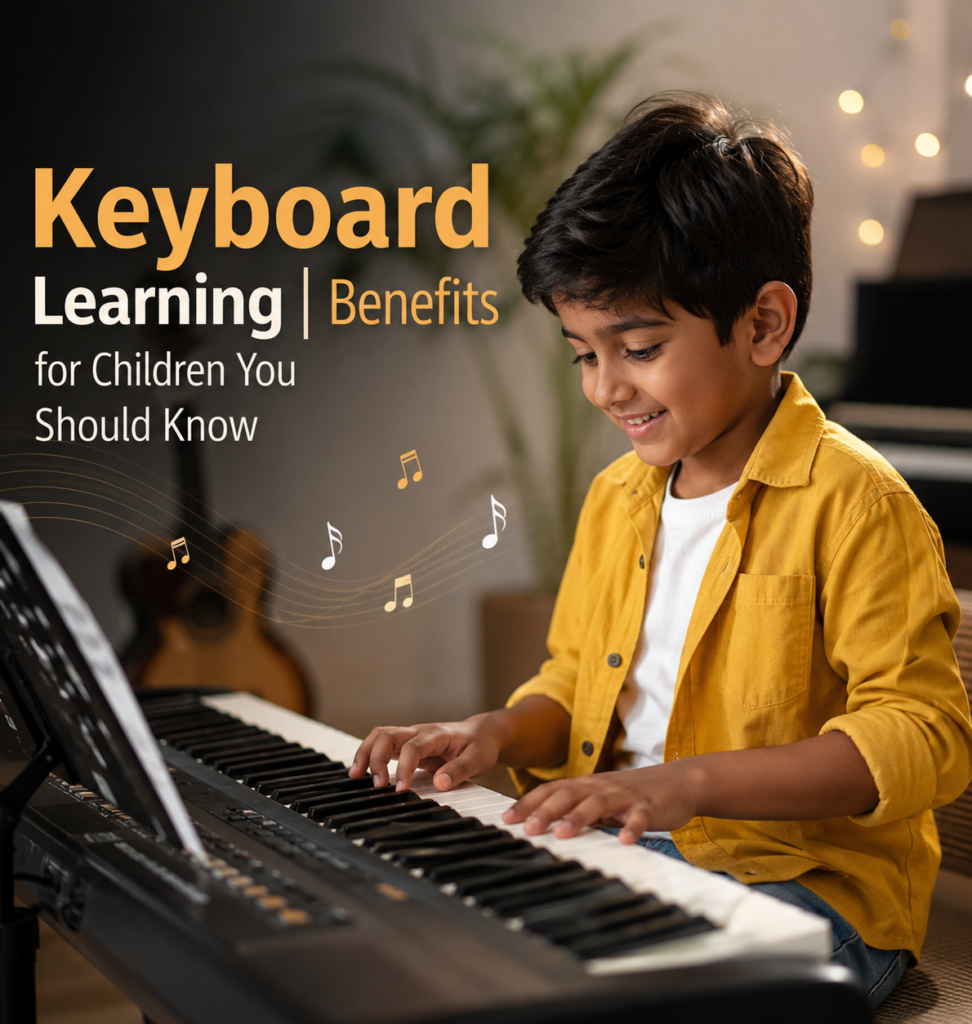
Keyboard Learning | Benefits for Children You Should Know
Keyboard Learning | Benefits for Children You Should Know
Music has always been an essential part of a child’s growth and development. Whether it is humming a favorite tune, clapping to a rhythm, or experimenting with sounds, children naturally respond to music from an early age. Among the many instruments available today, keyboard learning has become one of the most popular ways to introduce young learners to the world of music. With its approachable design, versatility, and engaging nature, the keyboard provides an excellent foundation for children who are just beginning their musical journey.
Many parents often wonder whether enrolling their child in keyboard lessons is worthwhile. Some worry about balancing music with academics, while others question if their child is too young or lacks musical talent. In reality, learning the keyboard offers benefits that go far beyond simply playing songs. It nurtures cognitive abilities, strengthens emotional well-being, builds confidence, and develops valuable life skills that children carry into adulthood.
As technology continues to shape education, creativity and adaptability have become increasingly important. Keyboard learning encourages both while providing children with an enjoyable and productive activity. Instead of viewing music lessons as an extracurricular hobby, many educators now recognize them as an investment in a child’s overall development.
Let’s explore the many benefits of keyboard learning and discover why it can become one of the most rewarding experiences for your child.
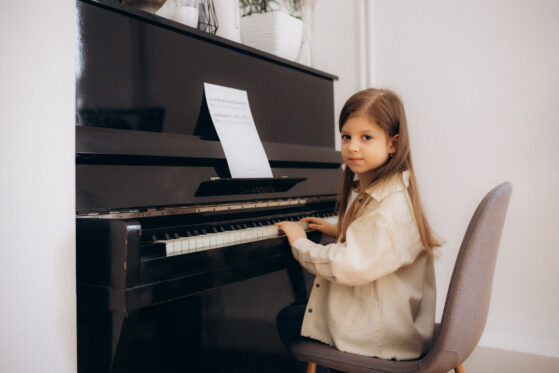
Why Keyboard Learning Is an Ideal First Step in Music
Every musical journey begins with choosing the right instrument. For children, the keyboard offers several advantages that make the learning process enjoyable rather than overwhelming.
Unlike instruments that require significant physical strength or advanced coordination, a keyboard allows children to produce pleasant sounds from the very first lesson. Pressing a key immediately creates a clear musical note, giving young learners an instant sense of accomplishment.
Another major advantage lies in its visual layout. The organized pattern of black and white keys helps children understand musical relationships more easily. Concepts such as scales, chords, intervals, and melodies become far more accessible because children can actually see how music is structured.
Moreover, keyboards are remarkably versatile. Students can explore piano sounds, orchestral instruments, electronic music, and countless other tones using a single instrument. This variety keeps lessons exciting and encourages experimentation, making practice sessions something children genuinely look forward to.
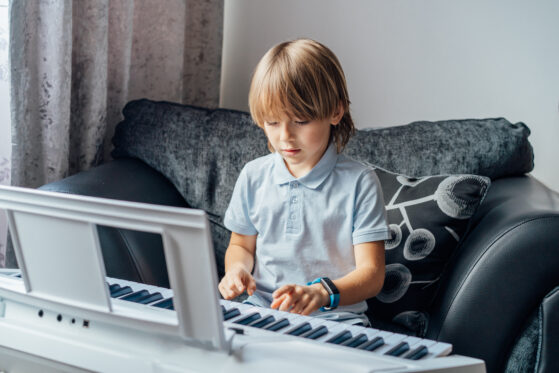
How Keyboard Learning Strengthens Brain Development
One of the most researched benefits of learning a musical instrument is its positive effect on brain development. Playing the keyboard requires multiple areas of the brain to work together simultaneously.
Children must read notes, recognize rhythms, coordinate both hands, listen carefully, and anticipate upcoming musical passages. Each of these actions strengthens neural connections and enhances communication between different parts of the brain.
As lessons progress, young learners develop sharper thinking skills. Memory improves because they repeatedly recall musical patterns, finger placements, and pieces they have practiced. Attention span also increases as children learn to remain focused throughout a lesson or practice session.
These improvements frequently extend into everyday academic activities. Reading comprehension, mathematical reasoning, and problem-solving abilities often benefit from the disciplined thinking that music education encourages.
Rather than simply memorizing information, children learn how to process multiple tasks at once—a valuable ability in both school and life.
Improves Hand-Eye Coordination and Motor Skills
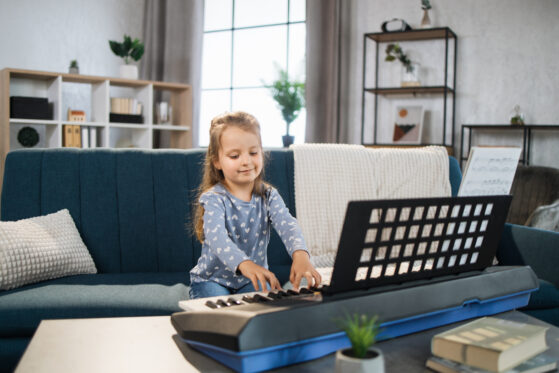
Keyboard learning is an excellent activity for developing fine motor skills. Every lesson requires children to synchronize visual information with physical movement.
While reading music, they must identify notes on the page and immediately translate them into finger movements on the keyboard. At the same time, both hands often perform different actions, demanding coordination and precision.
Gradually, these repeated movements improve finger strength, flexibility, and dexterity. Such improvements can positively influence handwriting, drawing, typing, crafting, and many other daily activities that require careful hand control.
Equally important is the development of timing. Playing music involves maintaining a steady rhythm while coordinating multiple actions simultaneously. Over time, children become more physically coordinated and develop greater body awareness.
Enhances Memory and Concentration
Modern children face countless distractions throughout the day. Developing sustained concentration has therefore become more important than ever.
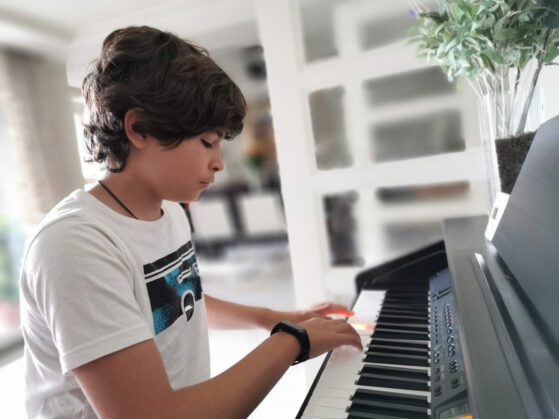
Keyboard practice naturally trains children to focus for extended periods. Learning even a short musical piece requires careful listening, observation, repetition, and attention to detail.
Each practice session strengthens both short-term and long-term memory. Students remember note names, rhythmic patterns, dynamic markings, finger positions, and entire compositions. With continued practice, recalling this information becomes easier and faster.
Furthermore, children begin noticing small details that they may have overlooked before. They become more attentive to rhythm changes, tempo variations, and expressive markings, gradually building stronger observation skills.
This improved concentration often carries over into homework, classroom participation, and independent study.
Keyboard Learning Encourages Discipline and Consistency
Success in music rarely happens overnight. Progress comes through regular practice, patience, and persistence.
Keyboard learning gently introduces children to the importance of consistent effort. They discover that practicing a little each day produces far better results than waiting until the last minute.
Over weeks and months, children experience firsthand how dedication leads to improvement. Songs that once seemed difficult gradually become manageable through steady practice.
This lesson extends well beyond music. The understanding that meaningful achievements require commitment helps children develop healthy study habits and a stronger work ethic in many areas of life.
Instead of becoming discouraged by challenges, young learners begin appreciating the value of perseverance.
Builds Confidence Through Achievement
Every child benefits from opportunities to experience success.
Learning the keyboard provides frequent moments of accomplishment. Mastering a new song, remembering an entire piece, or performing confidently in front of family members creates genuine pride.
Initially, children may hesitate when faced with unfamiliar music. As their skills improve, however, they begin trusting their own abilities. Each milestone reinforces the belief that they can overcome challenges through effort.
Confidence gained through music often influences other aspects of life as well. Children become more willing to participate in classroom discussions, join school activities, and explore new experiences.
Perhaps most importantly, they learn that mistakes are simply part of the learning process rather than signs of failure.
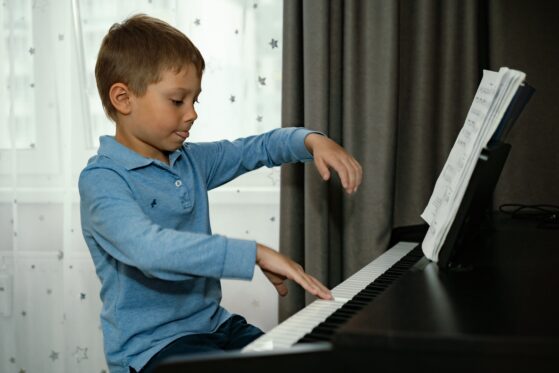
Develops Creativity and Musical Expression
While technique is an important part of keyboard learning, creativity remains equally valuable.
Children gradually move beyond simply pressing the correct keys. They begin experimenting with different dynamics, tempos, and styles, adding their own personality to every performance.
Improvisation exercises encourage imagination, allowing students to create original melodies and explore musical ideas freely. This creative freedom helps children express emotions that may be difficult to communicate through words.
Artistic expression also supports emotional development. Music becomes a healthy outlet for happiness, excitement, frustration, or sadness, giving children a constructive way to process their feelings.
As creativity grows, children often become more confident thinkers in other creative activities such as storytelling, drawing, writing, and drama.
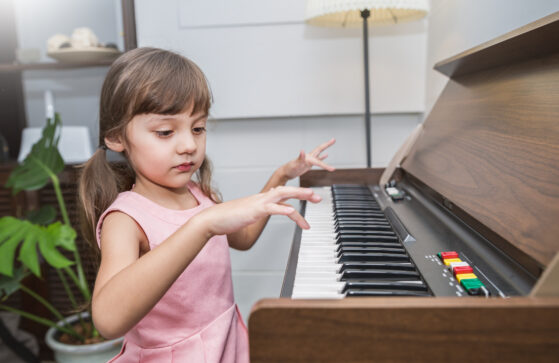
How Keyboard Learning Supports Academic Performance
Although keyboard lessons are not designed solely to improve grades, many academic skills naturally develop alongside musical training.
Reading sheet music strengthens pattern recognition and sequential thinking. Rhythm develops mathematical understanding through counting and fractions. Memorizing musical passages reinforces recall techniques used in classroom learning.
Beyond these connections, keyboard study encourages careful listening and following instructions. Students also become accustomed to breaking larger challenges into smaller, manageable steps.
This structured approach often makes school assignments feel less intimidating.
As a result, many children develop greater confidence when approaching complex academic tasks.
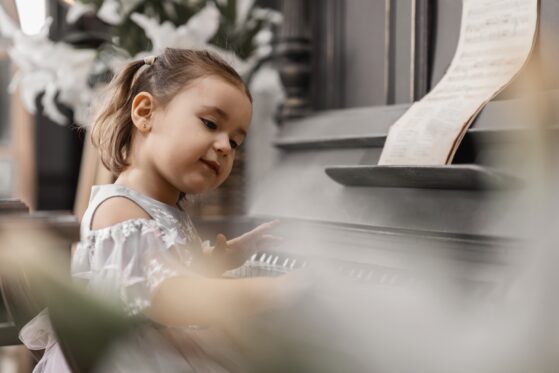
Teaches Patience and Problem-Solving
Learning music involves overcoming obstacles one step at a time.
A challenging section of a song cannot usually be mastered immediately. Children learn to slow down, identify mistakes, practice difficult passages repeatedly, and gradually improve.
This process teaches patience in a practical way.
Rather than expecting instant success, students become comfortable with gradual progress. They also learn how to analyze problems instead of becoming frustrated by them.
Such experiences build resilience and encourage a positive attitude toward learning itself.
Over time, children understand that improvement comes through thoughtful effort rather than quick results.
Encourages Emotional Well-Being
Music has a unique ability to influence emotions.
Playing the keyboard provides children with a relaxing and enjoyable activity that helps reduce stress after busy school days. Focusing on melodies and rhythms creates a calming effect while offering a welcome break from academic pressures.
Music also provides a safe environment for emotional expression. Children who may struggle to describe their feelings verbally often find comfort in expressing themselves through performance.
Regular practice can contribute to emotional balance, helping children feel more centered and confident.
Consequently, keyboard learning supports not only intellectual development but emotional health as well.
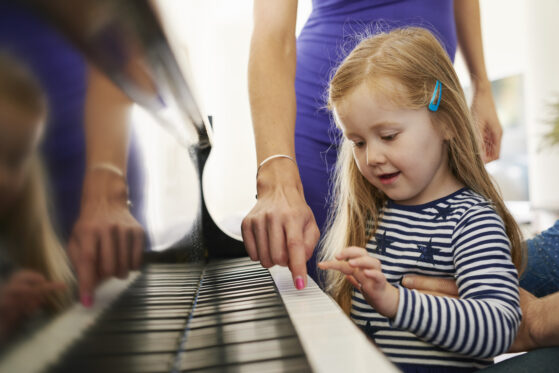
Keyboard Learning Improves Listening Skills
Effective musicians are also excellent listeners.
Keyboard students learn to recognize pitch, rhythm, timing, dynamics, and musical expression. They become increasingly aware of subtle differences in sound that others may not notice.
These listening skills extend into everyday communication. Children become more attentive during conversations, classroom lessons, and group activities because they have learned the importance of careful observation.
Better listening often leads to stronger communication and improved relationships with teachers, friends, and family members.
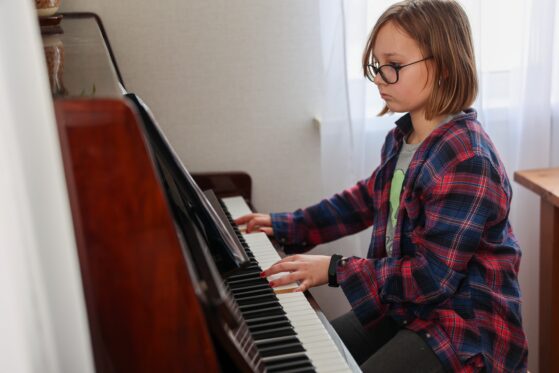
Promotes Social Development
Although keyboard practice often takes place individually, music itself is highly social.
Children frequently participate in recitals, group classes, ensembles, or collaborative performances. These experiences teach cooperation, mutual respect, and teamwork.
Performing alongside others also develops valuable communication skills. Students learn how to listen, adapt, and contribute to a shared musical experience.
Meeting fellow young musicians can create lasting friendships built around common interests.
Such opportunities help children become more comfortable interacting in new environments.
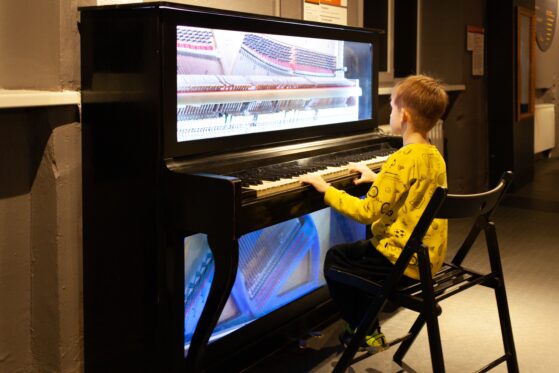
Introduces Lifelong Appreciation for Music
Perhaps the greatest gift of keyboard learning is developing a lasting relationship with music.
Even if children eventually pursue different careers, the skills and appreciation gained through music remain with them throughout life.
Many adults continue playing for relaxation, personal enjoyment, family gatherings, or creative fulfillment years after their formal lessons end.
Having the ability to sit down and play favorite songs becomes a lifelong source of happiness.
More importantly, children develop a deeper understanding of music that enriches concerts, cultural experiences, and everyday life.
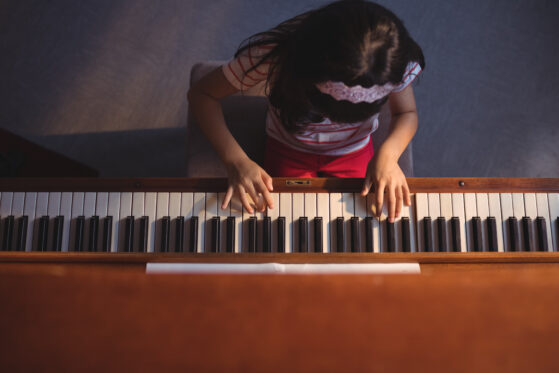
How Parents Can Support Keyboard Learning
Parental involvement plays an important role in helping children enjoy music lessons without unnecessary pressure.
Creating a consistent practice routine encourages steady improvement while preventing practice from feeling like a chore. A quiet, comfortable space with minimal distractions also helps children stay focused.
Positive encouragement makes a significant difference. Celebrating small milestones often motivates children far more effectively than emphasizing perfection.
Parents should also remember that every child learns at a different pace. Comparing progress with others can reduce motivation, whereas recognizing individual growth builds confidence and enthusiasm.
Above all, maintaining a sense of enjoyment keeps children engaged for the long term. When learning remains fun, curiosity naturally drives improvement.
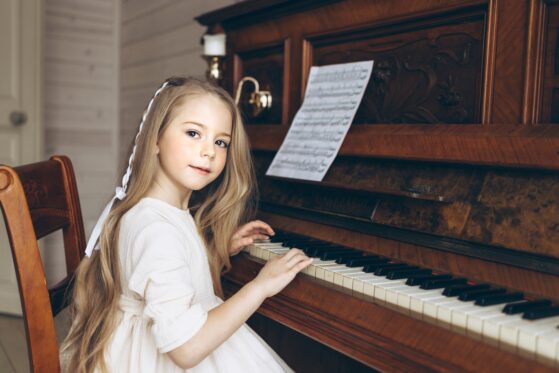
Final Thoughts on Keyboard Learning
Keyboard learning offers far more than musical knowledge. It strengthens the mind, improves coordination, nurtures creativity, builds confidence, and teaches valuable life lessons that extend well beyond the classroom.
Every practice session contributes to a child’s intellectual, emotional, and personal growth. Along the way, young learners discover patience, perseverance, discipline, and the joy of expressing themselves through music. With the growing availability of Keyboard Classes Online, children can now learn from the comfort of home while enjoying structured and engaging lessons.
Although becoming a skilled musician takes time, the journey itself is filled with meaningful rewards. Each new melody mastered represents another step toward greater confidence and lifelong learning.
For parents seeking an activity that combines education, creativity, and enjoyment, keyboard lessons remain one of the most enriching choices available. At The Mystic Keys, children are encouraged to develop their musical abilities in a supportive environment, creating skills and memories that continue to benefit them for years to come.
For more information and exciting resources about learning music, visit our website at The Mystic Keys. For more music content and exciting offers follow us on
Facebook, Instagram, YouTube, LinkedIn, Twitter, Pinterest, and Threads.