Learning to count beats correctly is one of the most powerful skills you can develop as a pianist. It quietly shapes everything—from how steady your rhythm feels to how confidently you perform in front of others. While many beginners focus heavily on notes and finger placement, rhythm often becomes the invisible thread that holds the entire performance together. Once that thread is weak or inconsistent, even the most beautiful melody can feel unstable.
Understanding how to count properly doesn’t just improve timing; it also builds musical awareness. As you grow more comfortable with counting, you begin to feel music in structured time rather than guessing your way through it. That shift changes everything about how you play.
Why Count Beats Matters More Than You Think
At first glance, counting might feel mechanical or even restrictive. However, it actually gives music its natural flow and emotional shape. Without a steady sense of beat, notes can become disconnected, and phrases lose their direction.
When you count consistently, you are essentially building a rhythm map in your mind. This map guides your fingers even when the passage becomes complex or fast. Over time, your reliance on counting decreases, but the internal sense of rhythm remains strong.
Interestingly, many advanced pianists still rely on mental counting when learning new pieces. This shows that counting is not just for beginners—it is a lifelong tool for musical precision.
Understanding the Pulse Before the Notes
Before diving into counting patterns, it helps to understand the idea of a steady pulse. The pulse is the underlying heartbeat of any piece of music. It continues whether you play a note or not.
While practicing, try tapping your foot or gently nodding your head to the beat. This physical connection reinforces timing in a way that purely mental counting sometimes cannot achieve. As this becomes more natural, your body begins to synchronize with the rhythm automatically.
From here, counting becomes less about effort and more about alignment with that internal pulse. Instead of forcing numbers, you start placing them naturally over a stable foundation.
Starting Simple: Counting in 4/4 Time
Most beginner piano pieces are written in 4/4 time, which is often called “common time.” This simply means there are four beats in every measure.
Instead of rushing through notes, you can calmly count: “One – two – three – four” and repeat consistently.
While practicing, it helps to say the numbers out loud. This might feel unusual at first, but vocal counting strengthens timing far more effectively than silent thinking. Once comfortable, you can reduce the volume of your voice and eventually count internally.
Gradually, you begin to notice how each note fits into a specific beat rather than floating randomly in time.
Subdividing Count Beats for Better Control
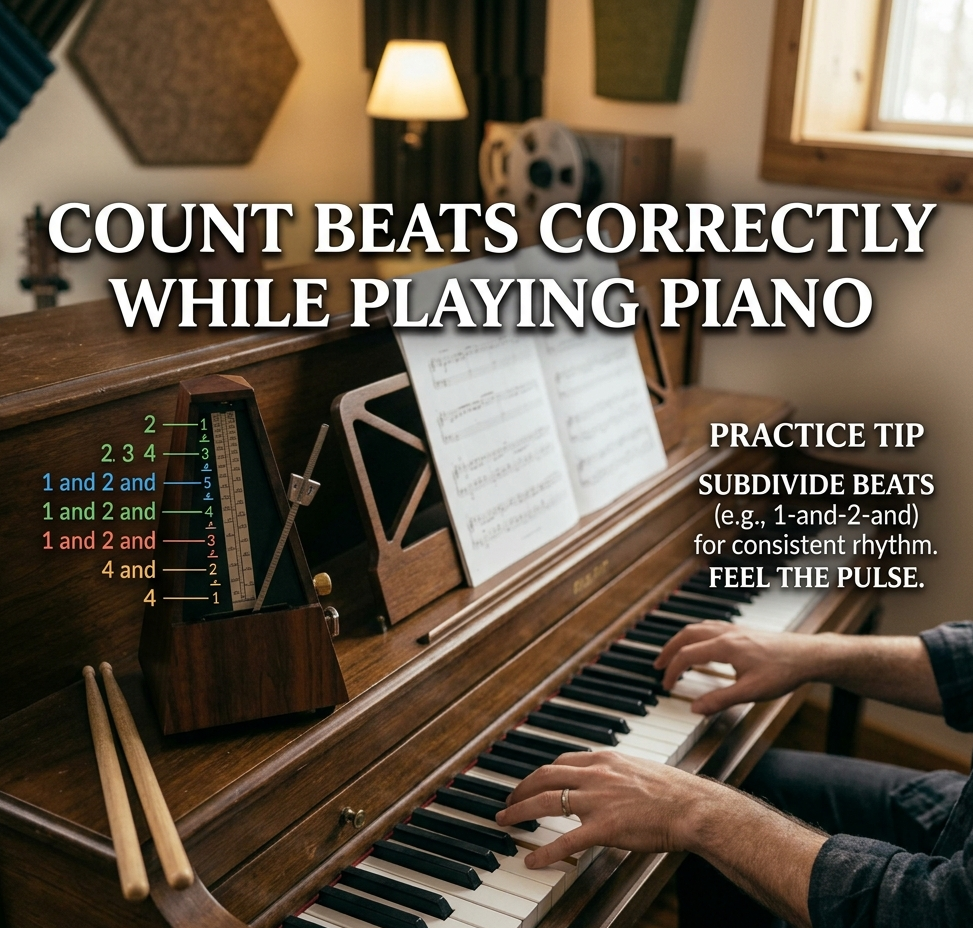
As pieces become more advanced, counting only whole beats is no longer enough. This is where subdivision becomes essential. Subdividing means breaking each beat into smaller parts, such as “1 and 2 and 3 and 4 and.”
At first, this can feel like extra mental effort. However, it quickly becomes a natural habit with practice. Subdivision helps you place faster notes more accurately and prevents rushing or dragging.
While practicing slowly, you might notice that subdivision reveals hidden rhythmic patterns that were not obvious before. This deeper awareness makes your playing cleaner and more controlled, especially in faster passages.
Using a Metronome to Strengthen Count Beats
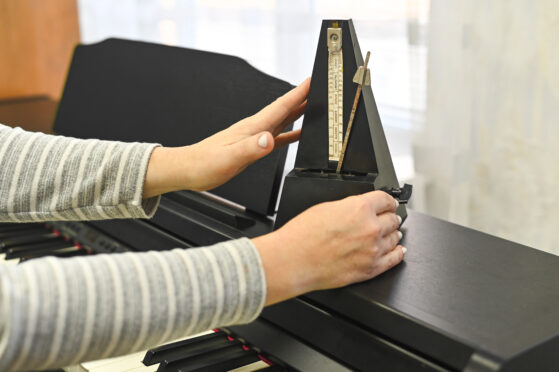
A metronome is one of the most effective tools for developing rhythm, but it should be used wisely. Rather than depending on it all the time, treat it as a guide that checks your internal timing.
Start by setting a slow tempo where you can comfortably count along. As you play, focus on locking your beats with the click instead of chasing it. Over time, you will notice that your internal sense of timing begins to match the metronome naturally.
Once that happens, you can occasionally turn it off and test how steady your internal pulse really is. This balance between guided practice and independent control is what builds strong rhythmic confidence.
Feeling Rhythm Through Musical Phrases
As your counting improves, it becomes important to move beyond mechanical numbers and start feeling musical phrases. Music is not just a sequence of beats; it is a flow of ideas shaped by rhythm.
While counting remains the backbone, your attention gradually shifts toward expression. Certain beats feel stronger, while others feel lighter. This natural rise and fall gives music its emotional character.
At this stage, counting supports expression rather than restricting it. You are no longer just counting time—you are shaping sound within time.
Common Mistakes in Count Beats Practice
One of the most common challenges is speeding up during difficult passages. This usually happens when counting becomes inconsistent or is completely abandoned under pressure. Slowing down practice and reintroducing counting often solves this issue quickly.
Another frequent mistake is counting too loudly or rigidly during performance. While vocal counting is helpful in practice, it should become internal and natural over time. Otherwise, it can interfere with musical expression.
A third issue arises when students skip subdivision altogether. This often leads to uneven rhythm in faster sections. Revisiting slow, subdivided practice can restore clarity and control.
Building a Strong Internal Rhythm
Eventually, the goal is not to count forever, but to develop an internal sense of rhythm so strong that counting happens automatically in your mind. This internalization allows you to focus more on emotion, dynamics, and interpretation.
As this skill develops, you may notice that even unfamiliar pieces become easier to approach. Your brain starts recognizing rhythmic patterns more quickly, and your fingers respond with greater confidence.
With consistent practice, rhythm stops feeling like a separate task and becomes a natural part of your playing identity.
Final Thoughts on Count Beats
Counting beats correctly while playing piano is not just a beginner exercise—it is a foundational musical skill that influences every level of performance. While it may seem technical at first, it gradually transforms into something intuitive and deeply musical.
As you continue practicing, patience plays a key role. Each small improvement in timing adds up over time, shaping a more confident and expressive pianist. In the end, strong rhythm does more than keep you in time—it brings your entire performance to life.
This is exactly why structured guidance matters so much in your musical journey. With consistent support from platforms like The Mystic Keys – Piano Lessons Online, learners can build strong rhythmic foundations while developing real musical confidence step by step.
For more information and exciting resources about learning music, visit our website at The Mystic Keys. For more music content and exciting offers follow us on
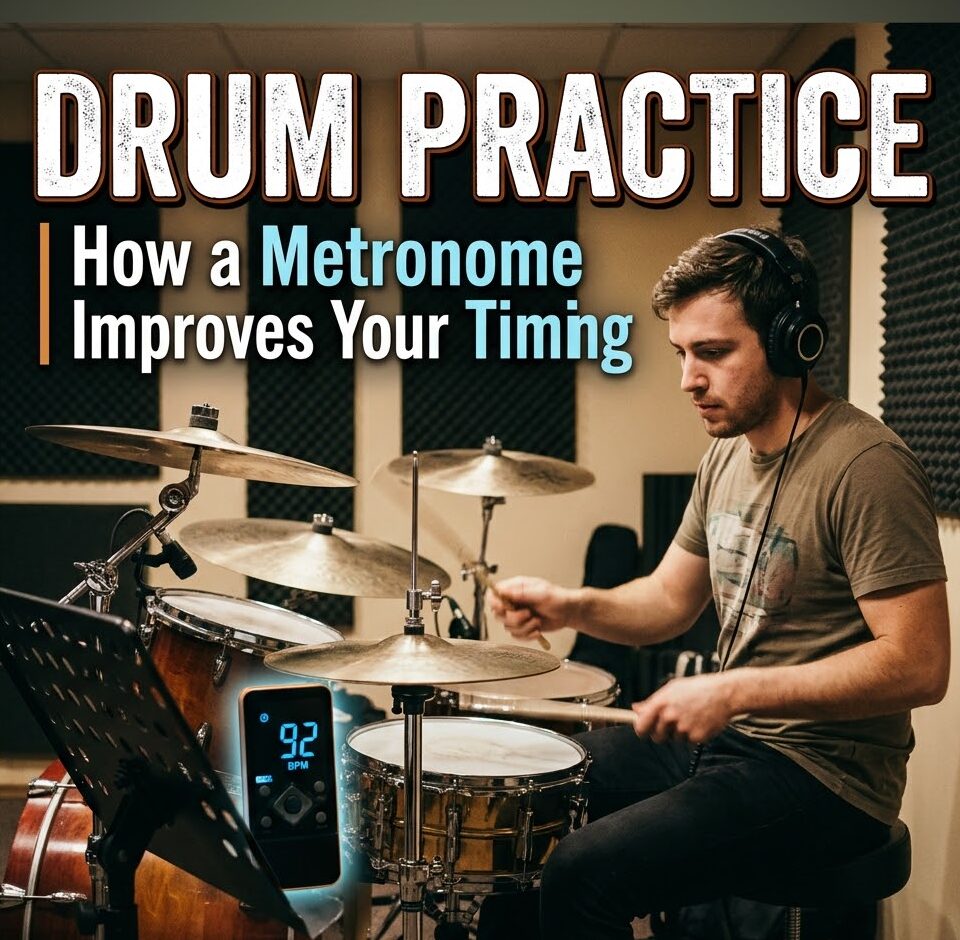
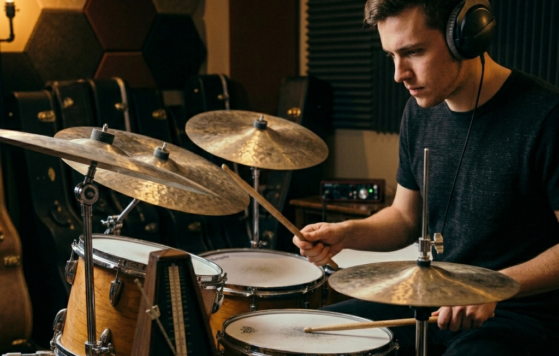
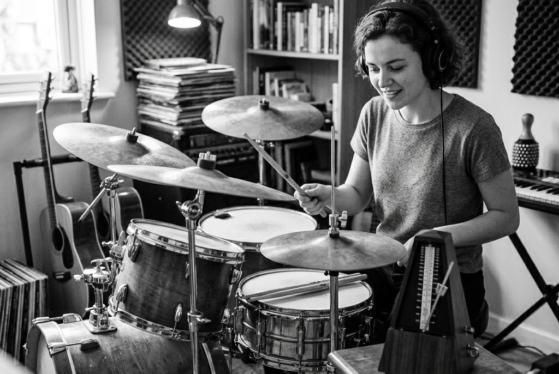
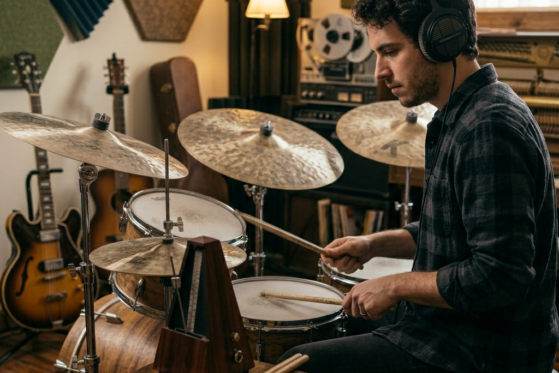
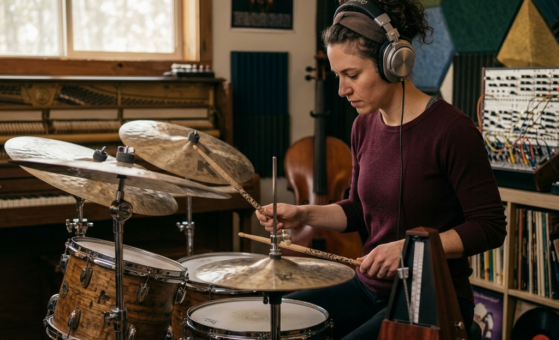
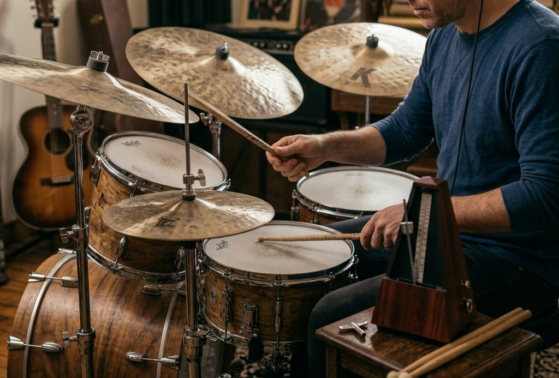
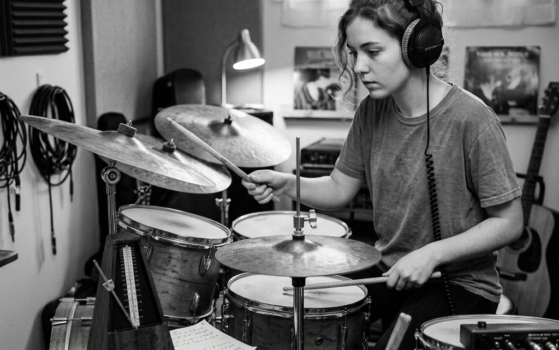
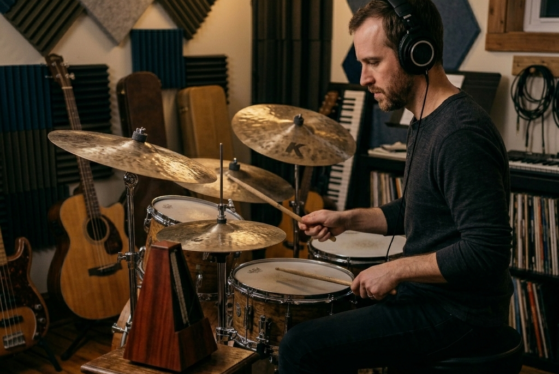
Drum Practice | How a Metronome Improves Your Timing
Learning the drums is an exciting journey filled with energy, creativity, and constant growth in Drum Practice. From the first basic beat to advanced fills and complex rhythms, every drummer eventually discovers that timing is the foundation of great playing. Speed, power, and flashy techniques may impress people for a moment, but solid timing is what truly separates a good drummer from a great one. That is exactly where a metronome becomes an essential practice partner.
Many beginners avoid using a metronome because it feels strict or repetitive at first. Some even believe it limits creativity. In reality, the opposite is true. A metronome trains your internal sense of rhythm, sharpens your consistency, and helps you play with greater confidence. Whether you are practicing simple grooves, recording in a studio, or performing live with a band, accurate timing keeps everything together.
As your drumming skills improve, timing becomes even more important. Faster songs, complicated fills, and changing tempos demand precision that cannot be developed through random practice alone. A metronome acts like a guide that keeps you aware of every beat and every subdivision. Over time, this awareness transforms the way you play music.
Drum Practice and Why Timing Matters So Much in Drumming
Drummers are often called the backbone of a band for a reason. Every instrument relies on the drummer to maintain a steady groove and consistent pulse. If the timing becomes unstable, the entire performance can feel messy or uncomfortable, even if the musicians are technically skilled.
Strong timing creates a sense of control and musical balance. It allows songs to flow naturally while helping other musicians stay locked into the rhythm. Audiences may not always understand the technical side of drumming, but they can instantly feel when a groove is tight and steady.
At the same time, timing is not just about playing exactly on the beat. Good drummers learn how to control the feel of the music. Some grooves sit slightly behind the beat for a relaxed vibe, while others push forward with excitement and energy. However, these subtle adjustments only work when the drummer first develops a reliable sense of time.
Without proper timing practice, drummers often rush during exciting sections or slow down during difficult patterns. These changes may happen unconsciously, especially during fills or transitions. A metronome helps identify these weaknesses and gradually trains the mind and body to stay consistent.
Understanding What a Metronome Actually Does
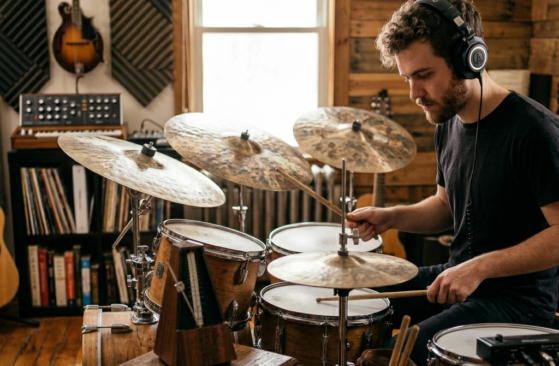
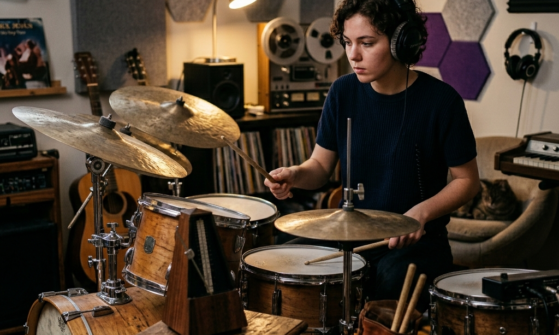
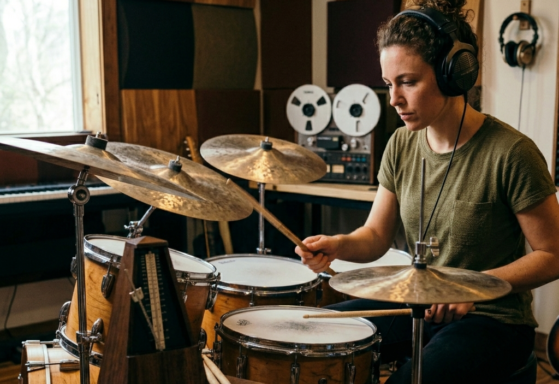
A metronome produces a steady pulse at a selected tempo, usually measured in beats per minute or BPM. Each click represents a beat that helps musicians maintain consistent timing while practicing.
Although the concept sounds simple, the benefits are extremely powerful. Practicing with a metronome forces drummers to listen carefully and stay synchronized with the pulse. Instead of relying on guesswork, they learn to place every stroke accurately within the rhythm.
Modern metronomes come in different forms. Traditional mechanical metronomes still exist, but most drummers now use digital metronomes, smartphone apps, or built-in metronome features in music software. Some models even include advanced features like subdivisions, accent patterns, and tempo training modes.
Despite these variations, the core purpose remains the same. The metronome acts as an external timekeeper until the drummer develops a strong internal clock. Eventually, this sense of timing becomes natural and instinctive.
Drum Practice and Building Consistency Through Repetition
One of the biggest advantages of metronome practice is consistency. Many drummers can play a groove correctly once or twice, but maintaining that groove steadily for several minutes is a completely different challenge.
When practicing without a metronome, it is easy to ignore small timing mistakes. A drummer may gradually speed up during exciting sections or drag slightly during complex fills without noticing it. These habits can become deeply ingrained over time.
A metronome immediately exposes these inconsistencies. Every rushed note or delayed beat becomes noticeable because it clashes with the steady click. While this can feel uncomfortable initially, it is actually one of the fastest ways to improve.
As practice continues, drummers begin to develop better control over their movements. Their hands and feet learn to work together more smoothly, and the groove starts feeling more balanced. Eventually, staying in time becomes less of a struggle and more of a natural habit.
Consistency also improves musical confidence. When drummers trust their timing, they can focus more on creativity, expression, and interaction with other musicians instead of constantly worrying about staying on beat.
How a Metronome Improves Muscle Memory
Drumming involves a strong physical connection between the brain and the body. Every groove, fill, and rhythm pattern relies on coordinated muscle movements that become stronger through repetition.
A metronome helps reinforce correct movement patterns by providing a stable rhythmic framework. Practicing exercises repeatedly at a controlled tempo allows the body to memorize accurate timing and motion simultaneously.
This process is especially important when learning difficult techniques. Fast double bass patterns, intricate hand combinations, or complex syncopated grooves can easily become sloppy if practiced inconsistently. Starting slowly with a metronome ensures that each movement remains clean and controlled before increasing the speed.
Gradual tempo increases are extremely effective because they train the muscles progressively rather than forcing them to adapt too quickly. Over time, the drummer develops precision, endurance, and smoother execution.
Furthermore, accurate muscle memory reduces unnecessary tension. Drummers who rush or fight against the beat often become physically tense, which can limit speed and control. Metronome practice encourages relaxation by promoting even and efficient movements.
Drum Practice and Developing Better Groove and Feel
Many people mistakenly assume that Drum Practice with a metronome makes drumming robotic. In reality, it actually improves groove and musical feel.
A strong groove depends on control. Drummers who understand exactly where the beat sits can shape the feel of the music more effectively. They can intentionally play slightly behind the beat for a laid-back pocket or drive slightly ahead for extra intensity without losing stability.
Metronome practice also improves subdivision awareness. Instead of only hearing the main beats, drummers begin to feel eighth notes, triplets, sixteenth notes, and other rhythmic layers internally. This deeper rhythmic understanding creates smoother transitions and tighter grooves.
As the internal pulse becomes stronger, drummers stop depending entirely on the click itself. They begin feeling the rhythm naturally within their body and mind. At that stage, the metronome no longer feels restrictive. Instead, it becomes a supportive guide that strengthens musical freedom.
Practicing Slowly Creates Faster Progress
Drum Practice – One of the most valuable lessons a metronome teaches is patience. Many drummers want to play fast immediately, especially when practicing exciting fills or advanced techniques, but rushing through exercises often leads to sloppy habits and inconsistent timing.
Slow practice builds a much stronger foundation. Using a metronome at lower tempos allows drummers to focus carefully on accuracy, stick control, foot coordination, and note placement, so every movement becomes more deliberate and controlled.
As confidence increases, the tempo can gradually rise without sacrificing clarity. This step-by-step process creates cleaner technique and more reliable speed development, which stays with the drummer even in more complex musical situations.
Interestingly, slow tempos are often harder than fast ones because they expose timing gaps more clearly. Holding steady time at 50 BPM requires deep concentration and rhythmic awareness, and practicing at these slower speeds strengthens internal timing dramatically.
Eventually, difficult patterns that once felt impossible begin to feel natural because the drummer developed them correctly from the beginning.
Improving Band Performance and Live Playing
Playing alone is very different from playing with other musicians. In a band setting, timing issues become much more noticeable because everyone depends on the drummer’s pulse.
Drummers with strong metronome training usually adapt more easily during rehearsals and performances. They maintain steadier tempos, recover from mistakes faster, and provide a more dependable rhythmic foundation for the group.
Studio recording also becomes much smoother. Many modern recordings use click tracks to keep songs perfectly aligned for editing and production purposes. Drummers who already practice with a metronome often feel comfortable in these situations, while others may struggle to stay locked to the click.
Live performances benefit as well. Adrenaline often causes musicians to speed up during exciting moments. Consistent metronome practice helps drummers resist this tendency and maintain better control throughout an entire set.
Because of this reliability, drummers with strong timing are usually more respected and trusted by fellow musicians.
Creative Ways to Practice With a Metronome
Metronome practice does not need to feel boring or repetitive. In fact, there are many creative methods that make timing exercises more engaging and musically rewarding.
Some drummers practice grooves while placing the metronome click only on beats two and four instead of every beat. Others use slower click settings that force them to internally track subdivisions between clicks. These methods strengthen internal timing even further.
Practicing fills with a metronome is equally valuable. Many drummers lose timing during transitions, especially when moving around the drum kit quickly. A steady click helps maintain control while improving fluidity.
Another useful approach involves practicing dynamic control. Drummers can work on playing softly, loudly, or with gradual volume changes while still staying perfectly in time. This builds musical expression alongside rhythmic precision.
Experimenting with different genres also improves versatility. Rock, jazz, funk, blues, and Latin rhythms all require slightly different timing feels. Using a metronome while exploring these styles helps drummers adapt more confidently.
Overcoming the Frustration of Metronome Practice
Almost every drummer experiences frustration when first using a metronome regularly. The click can feel unforgiving because it immediately reveals mistakes that may have gone unnoticed before.
However, this discomfort is actually part of the learning process. Improvement often begins when weaknesses become visible. Instead of viewing the metronome as criticism, it helps to think of it as honest feedback.
Progress may seem slow initially, but consistency produces remarkable results over time. Even practicing with a metronome for fifteen to twenty minutes daily can create noticeable improvements in timing and confidence.
It is also important to remain patient during difficult exercises. Perfect timing does not develop overnight. The goal is gradual improvement rather than instant perfection.
As drummers become more comfortable with the click, many eventually discover that they enjoy the challenge. What once felt restrictive starts feeling satisfying because the groove becomes tighter and more controlled.
Conclusion
A metronome is far more than a simple clicking device in Drum Practice. It is one of the most powerful tools a drummer can use to build timing, consistency, control, and musical confidence. While practicing with a metronome may feel challenging at first, the long-term benefits are enormous. Platforms like The Mystic Keys –Drums Lessons Online also help students integrate such tools into structured learning, making timing practice more guided and effective.
Strong timing improves every aspect of drumming. Grooves become tighter, fills sound cleaner, band performances feel more stable, and recording sessions become less stressful. Most importantly, drummers gain a deeper connection to rhythm itself.
The journey toward excellent timing requires patience and regular practice, but every session with a metronome strengthens the internal sense of pulse that great musicians rely on. Over time, the click transforms from an external guide into an internal instinct.
For any drummer who truly wants to improve, consistent metronome practice is not just helpful—it is essential.
For more information and exciting resources about learning music, visit our website at The Mystic Keys. For more music content and exciting offers follow us on
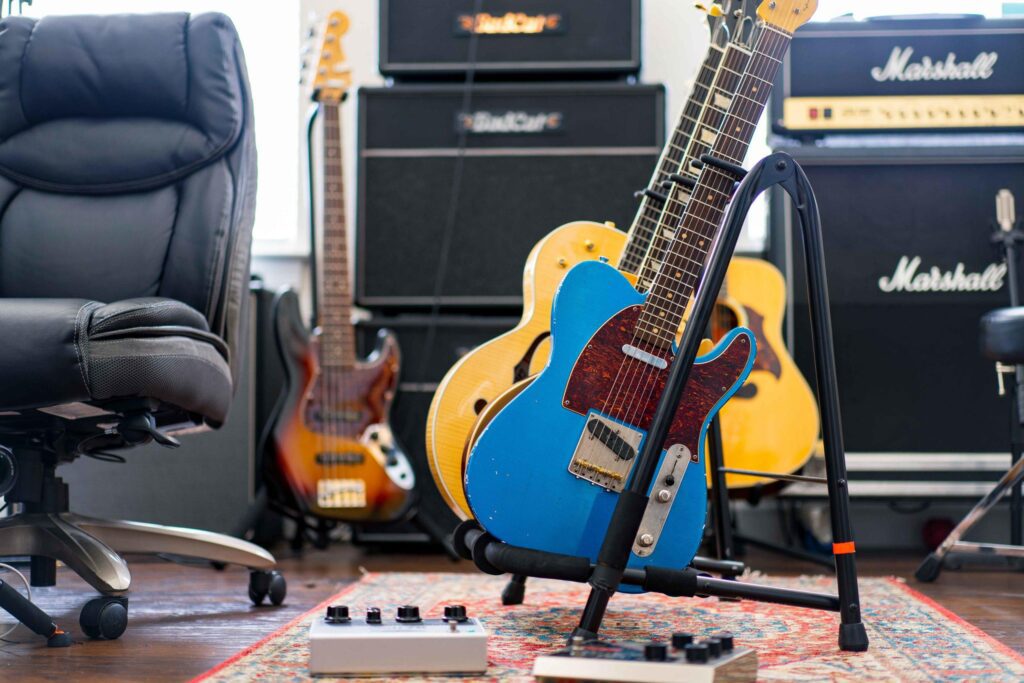
Building a Guitar Section for Your Church Worship Team
A strong guitar section can transform the sound of a worship team. Whether your church has a small acoustic setup or a full contemporary worship band, guitarists help create energy, depth, and musical flow during worship. Building a Guitar Section for Your Church Worship Team requires more than simply gathering musicians. It involves training, teamwork, spiritual growth, sound balance, and proper leadership.
In this guide, we will explore Building a Guitar Section for Your Church Worship Team, train guitar players effectively, and create a worship environment that supports congregational singing.
Why the Guitar Section Matters in Worship
The guitar plays a major role in modern worship music. Acoustic guitars often provide rhythm and warmth, while electric guitars add atmosphere, dynamics, and melodic layers. A well-organized guitar section helps:
Support congregational singing
Strengthen the rhythm section
Add emotional depth to worship songs
Create smooth song transitions
Improve overall band balance
Many contemporary worship ministries depend heavily on guitars because they are versatile and suitable for both small and large church settings.
Choosing the Right Guitarists for Your Worship Team
Not every skilled guitarist automatically becomes a great worship team member. When selecting players for the guitar section, focus on both musical ability and spiritual maturity.
Important Qualities to Look For
Ability to play in time
Willingness to learn and adapt
Team-oriented attitude
Consistency in rehearsals
Understanding of worship dynamics
Humility and discipline
A worship guitarist should know how to serve the song instead of trying to dominate it.
Acoustic Guitar vs Electric Guitar in Worship
Both acoustic and electric guitars serve different purposes in church music.
Acoustic Guitar
The acoustic guitar is often the foundation of worship music. It provides rhythm, chord structure, and natural warmth.
Best Uses
Leading worship
Small church settings
Prayer sessions
Soft worship moments
Skills Needed
Strumming patterns
Smooth chord transitions
Capo usage
Dynamic control
Electric Guitar
Electric guitars help create atmosphere, lead melodies, and modern worship textures.
Best Uses
Contemporary worship songs
Musical builds and transitions
Instrumental sections
Ambient worship sounds
Skills Needed
Delay and reverb control
Picking techniques
Understanding song dynamics
Playing tasteful lead parts
Training Your Church Guitar Team
A strong worship guitar section grows through regular practice and structured training.
Good worship musicians listen more than they play.
Organizing Rehearsals Effectively
Worship Band Rehearsal
Rehearsals should be organized and productive.
Rehearsal Tips
Share chord charts before practice
Use the original song recordings
Begin with prayer
Focus on transitions between songs
Record rehearsals for review
Avoid turning rehearsals into long jam sessions. The goal is preparation for worship ministry.
Creating the Right Guitar Tone for Worship
Tone is important in worship music because it affects the atmosphere of the service.
Acoustic Guitar Tone Tips
Use light compression
Avoid excessive bass
Keep strumming balanced
Tune properly before every rehearsal
Electric Guitar Tone Tips
Use delay and reverb tastefully
Avoid overpowering distortion
Blend with keyboards and vocals
Adjust tone for different songs
A good worship tone supports the congregation without becoming distracting.
Balancing Multiple Guitarists
Some churches have several guitar players on the worship team. Proper arrangement prevents sound clutter.
Ways to Balance the Guitar Section
One guitarist handles rhythm
Another plays ambient textures
Use different chord voicings
Avoid everyone strumming constantly
Pan guitars slightly left and right in the mix
Each guitarist should have a clear role in the arrangement.
Essential Gear for Church Guitarists
Worship Guitar Equipment
Recommended Equipment
Reliable guitar
Tuner pedal
Capo
DI box for acoustic guitars
Delay and reverb pedals
In-ear monitors if available
Expensive gear is not necessary. Consistency and proper setup matter more.
Encouraging Spiritual Growth in the Guitar Team
A worship team is more than a music group. Spiritual health matters deeply.
Ways to Build Spiritual Unity
Pray together regularly
Study worship scriptures
Encourage humility
Build friendships within the team
Remember the purpose of worship ministry
Musical excellence and spiritual maturity should grow together.
Common Mistakes Worship Guitar Teams Should Avoid
Overplaying
Too many guitar parts can distract from worship.
Ignoring Dynamics
Playing loudly throughout every song removes emotional depth.
Poor Preparation
Unprepared musicians create unnecessary stress during services.
Chasing Performance Over Worship
The goal is leading people into worship, not showcasing talent.
Building a Long-Term Guitar Ministry
Developing a strong guitar section takes time. Churches should invest in mentoring younger musicians and creating opportunities for growth.
Long-Term Strategies
Offer regular training sessions
Encourage beginners
Rotate team members wisely
Create worship workshops
Build a culture of learning
Consistency helps build a worship ministry that remains healthy for years.
Building a guitar section for your church worship team requires leadership, training, teamwork, and spiritual focus. A well-trained guitar team can strengthen congregational worship, support vocalists, and create meaningful worship experiences.
Whether your church uses acoustic worship, contemporary worship, or a blended style, developing guitarists intentionally will help your worship ministry grow in excellence and unity. Our Worship Piano & Singing Lessons Online help students build musical confidence, improve worship skills, and grow as effective worship team members.
By focusing on musical skill, proper rehearsal structure, sound balance, and spiritual maturity, your worship team can create an atmosphere where people connect deeply with God through music.
Intersted in learning music with us? Register now
For more information and exciting resources about learning music, visit our website at The Mystic Keys. For more music content and exciting offers follow us on