

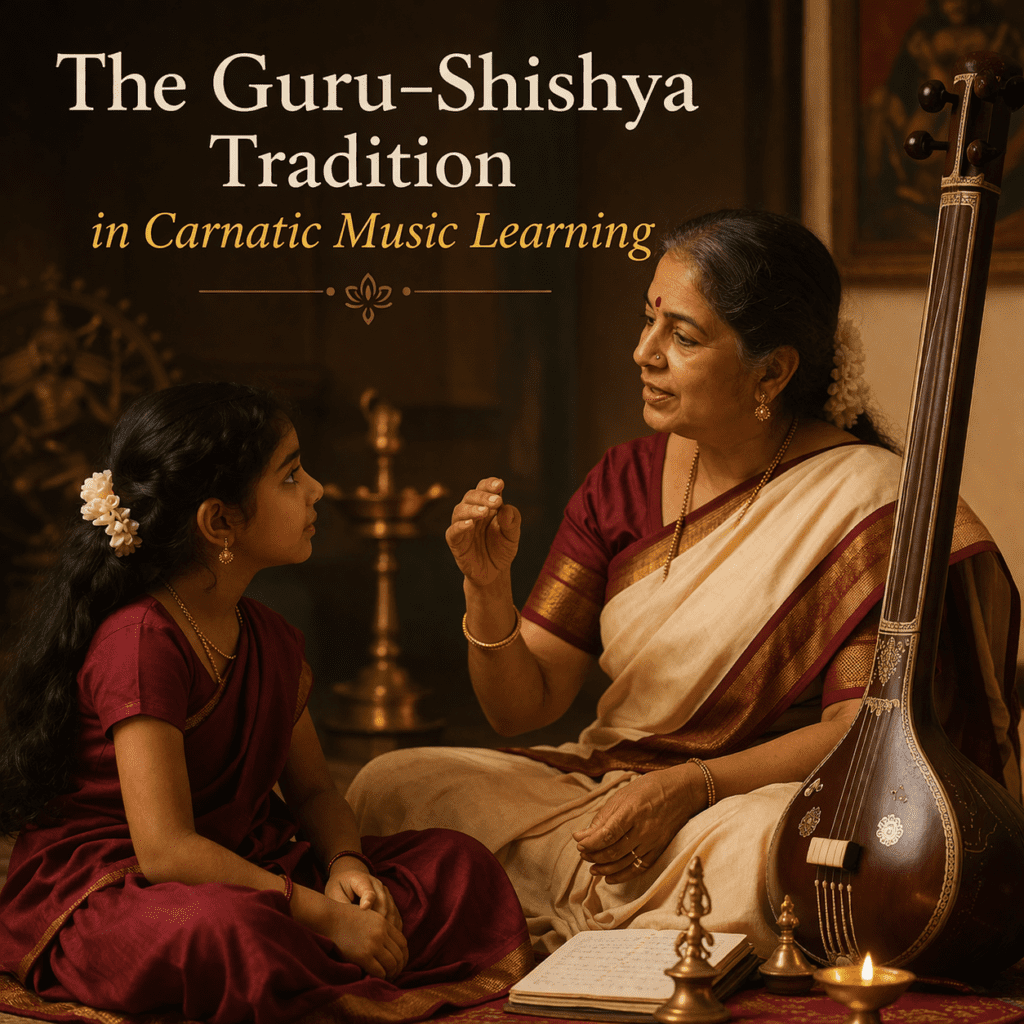
The Guru–Shishya Tradition in Carnatic Music Learning
The Guru–Shishya Tradition in Carnatic Music Learning
Carnatic music is one of the oldest and most sophisticated classical music traditions in the world. At the heart of its learning process lies a deeply respected system known as the Guru–Shishya tradition. This centuries-old method of teaching is not merely about transferring musical knowledge; it is a spiritual and cultural journey that shapes the student’s discipline, devotion, and artistic expression. Unlike modern classroom teaching methods, the Guru–Shishya tradition in Carnatic music learning focuses on a personal and immersive relationship between the teacher (Guru) and the student (Shishya). This approach allows students to absorb not only the technical aspects of music but also the philosophy, emotion, and cultural depth behind every composition.
Even in the modern digital era, this tradition continues to play a crucial role in shaping some of the finest Carnatic musicians. Understanding this system helps us appreciate why Carnatic music has preserved its authenticity and richness for generations.
The Origins of Guru Shishya in Carnatic Music
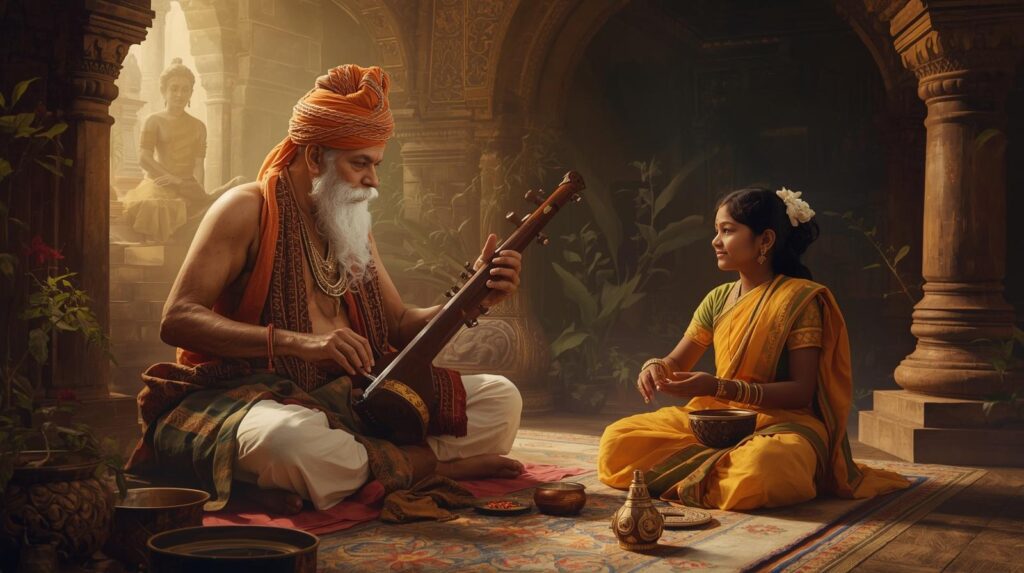
The Guru–Shishya tradition in Carnatic music learning dates back thousands of years and is deeply rooted in Indian culture and spiritual philosophy. Historically, students would live with their Guru in a system known as Gurukul, where education was a continuous process integrated into daily life.
In this environment, music was not taught through textbooks or rigid syllabi. Instead, knowledge was transmitted through oral instruction, observation, and constant practice. Students learned by listening carefully, repeating phrases, and gradually mastering complex ragas and compositions.
Carnatic music composers such as Tyagaraja, Muthuswami Dikshitar, and Syama Sastri were all part of this traditional lineage. Their compositions and teaching methods have been passed down through generations of teachers and disciples.
This lineage-based learning ensures that the authentic style and interpretation of music remain intact, making the Guru–Shishya tradition an essential pillar of Carnatic music education.
The Role of the Guru in Carnatic Music
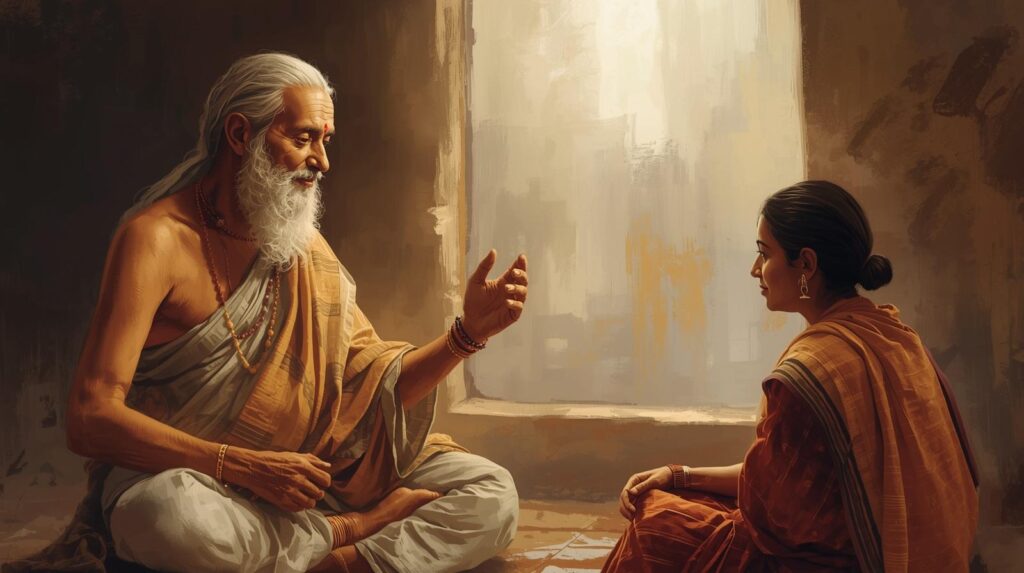
In the Guru–Shishya tradition, the Guru is far more than just a teacher. The Guru acts as a mentor, guide, philosopher, and source of inspiration for the student.
A Carnatic music Guru helps the student develop several essential aspects of musical learning:
- Understanding ragas and their emotional depth
- Mastering rhythm and tala structures
- Learning kritis and compositions with correct expression
- Developing improvisation skills such as alapana and kalpana swaras
- Cultivating discipline, patience, and devotion toward music
The Guru carefully observes the student’s progress and tailors lessons according to the student’s ability and potential. This personalized guidance is one of the greatest strengths of the Guru–Shishya tradition.
More importantly, the Guru also teaches the values and ethics of a musician, helping students understand that music is not just a skill but a lifelong spiritual practice.
The Role of the Shishya in Carnatic Music
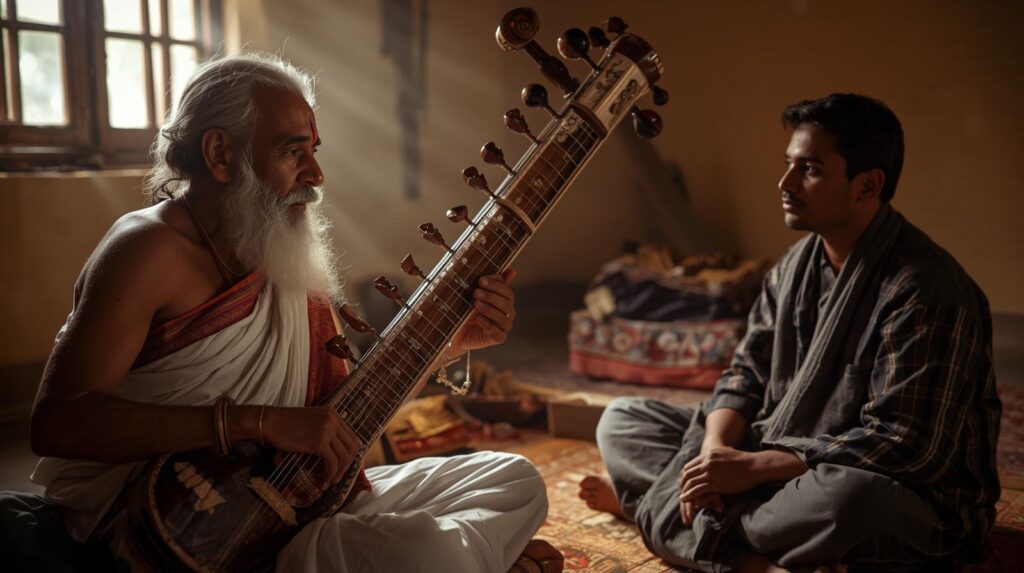
The student, or Shishya, plays an equally important role in the Guru–Shishya tradition in Carnatic music learning. A Shishya is expected to approach learning with humility, dedication, and respect toward the Guru.
Traditionally, students spent years mastering the fundamentals before moving on to advanced compositions and improvisational techniques. This process requires:
- Daily and consistent practice
- Deep listening and observation
- Patience in learning complex musical structures
- Respect and gratitude toward the teacher
Carnatic music is highly intricate, with elaborate ragas and rhythmic patterns. Without discipline and devotion, it becomes difficult for students to fully absorb the depth of this musical tradition.
The Guru–Shishya relationship is built on trust and mutual respect, allowing the student to grow both musically and personally.
Learning Through Oral Tradition in Guru Shishya in Carnatic Music
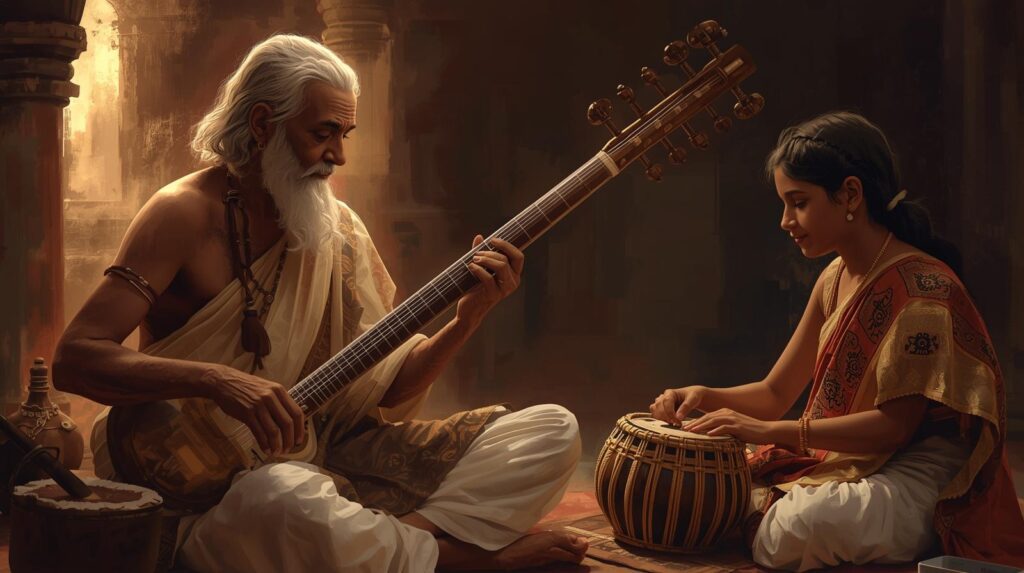
One of the defining characteristics of the Guru–Shishya tradition in Carnatic music learning is its strong reliance on oral transmission.
Rather than learning from written notation alone, students learn directly by listening to the Guru sing or demonstrate musical phrases. This method helps students develop:
- Accurate pitch and tonal understanding
- Proper pronunciation of lyrics
- Subtle ornamentations known as gamakas
- Emotional expression in compositions
Carnatic music is rich in microtonal variations and improvisational elements that cannot always be captured through written notation. The oral learning process ensures that students understand the true essence of the music rather than just its technical structure.
Through repeated listening and practice, students gradually internalize the nuances that define authentic Carnatic performance.
The Evolution of Guru Shishya in Carnatic MusicMusic in Modern Times

While the traditional Gurukul system involved students living with their teacher, the Guru–Shishya tradition in Carnatic music learning has evolved with time.
Today, many students learn Carnatic music through:
- Music academies and institutions
- Private one-on-one lessons
- Online Carnatic music classes
- Virtual learning platforms
Despite these modern formats, the core values of the Guru–Shishya relationship remain unchanged. The focus continues to be on personalized teaching, close mentorship, and deep musical understanding.
Online music schools such as Mystic Keys have made it possible for students across the world to learn Carnatic music while still maintaining the essence of this traditional teaching method.
Through technology, the Guru–Shishya tradition has expanded globally, connecting teachers and students across continents.
Why Guru Shishya in Carnatic Music Remains Essential Today
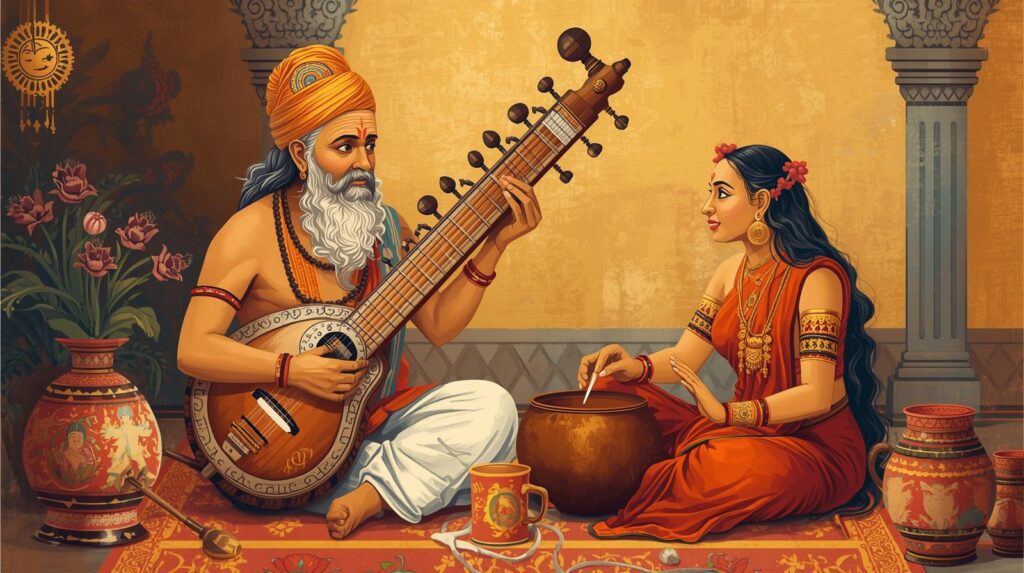
Carnatic music is not merely a technical art form—it is a living cultural and spiritual heritage. The Guru–Shishya tradition plays a vital role in preserving this heritage by ensuring that musical knowledge is passed down authentically.
This system continues to thrive because it offers several unique advantages:
- Personalized and in-depth musical training
- Strong mentorship between teacher and student
- Preservation of traditional styles and interpretations
- Holistic development of musicianship and character
Many of the greatest Carnatic musicians attribute their success to the guidance and blessings of their Gurus.
By maintaining this tradition, Carnatic music continues to flourish while staying connected to its roots.
Conclusion
The Guru–Shishya Tradition in Carnatic Music learning represents one of the most powerful and enduring educational systems in the world of classical music. Built on trust, respect, discipline, and deep devotion to the art, this tradition forms the foundation of how Carnatic music has been preserved and passed down through generations. Even in today’s modern learning environment, the essence of the Guru–Shishya tradition in Carnatic music learning continues to guide aspiring musicians around the world. By honoring and adapting this timeless system, we ensure that the beauty, depth, and authenticity of Carnatic music remain alive for future generations.
For students who wish to experience this traditional approach with modern convenience, The Mystic Keys offers Carnatic Vocals lessons online, allowing learners to connect with experienced teachers while maintaining the spirit of the Guru–Shishya tradition.
For more information and exciting resources about learning music, visit our website at The Mystic Keys. For more music content and exciting offers follow us on
Facebook, Instagram, YouTube, LinkedIn, Twitter, Pinterest, and Threads.