Simple Piano Exercises to Improve Finger Strength
Simple Piano Exercises to Improve Finger Strength
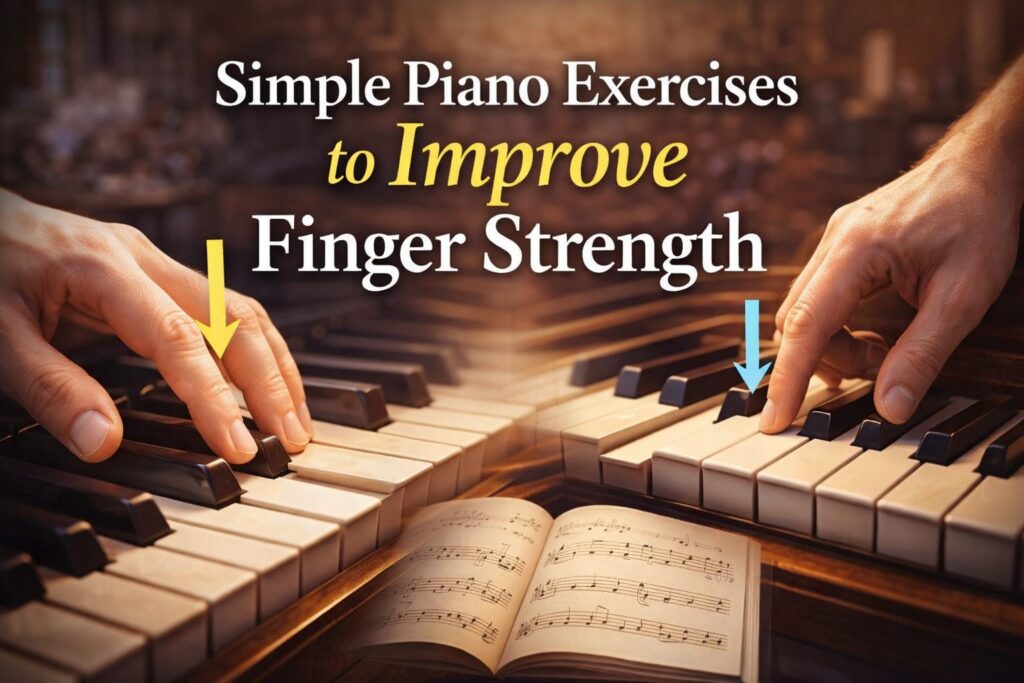
Learning piano requires more than just understanding notes and rhythm. One of the most important skills every pianist must develop is strong and flexible fingers. Without proper finger strength, it becomes difficult to control dynamics, maintain speed, and play complex passages smoothly. This is why simple piano exercises to improve finger strength are essential for beginners as well as intermediate players. Practicing the right exercises daily helps develop muscle memory, improves coordination, and allows pianists to play with greater accuracy and confidence. Whether you are just starting your musical journey or looking to refine your technique, incorporating simple piano exercises to improve finger strength into your practice routine can significantly enhance your playing ability.
Why Finger Strength Matters in Piano Playing
Playing the piano may look effortless when performed by professionals, but behind that smooth performance lies years of technical development. Finger strength is essential because each finger must move independently while maintaining control and balance.
Without proper strength and coordination, pianists often face problems such as uneven notes, difficulty playing fast passages, or tension in the hands.
Stronger fingers help musicians:
* Play notes clearly and evenly
* Maintain better hand control
* Increase speed and accuracy
* Reduce fatigue during long practice sessions
* Perform complex pieces more comfortably
Developing finger strength also improves finger independence, allowing each finger to move freely without affecting the others.
5 Simple Piano Exercises to Improve Finger Strength
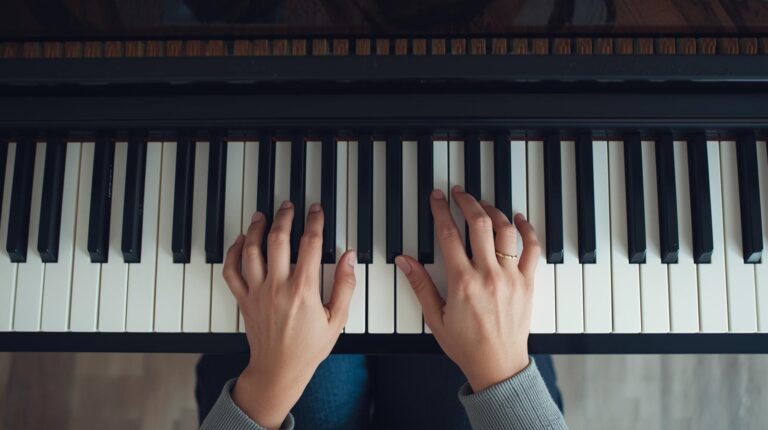
Before starting exercises, it’s helpful to understand the concept of finger independence.
Each finger should be able to press a key without forcing the other fingers to move unnecessarily. However, beginners often find that when they move one finger, the others move along with it.
This happens because the muscles controlling our fingers are naturally connected.
Through regular practice and specific exercises, pianists gradually train their hands to move more independently, resulting in smoother and more precise playing.
Exercise 1: The Five-Finger Pattern
The five-finger exercise is one of the most basic and effective ways to build finger strength.
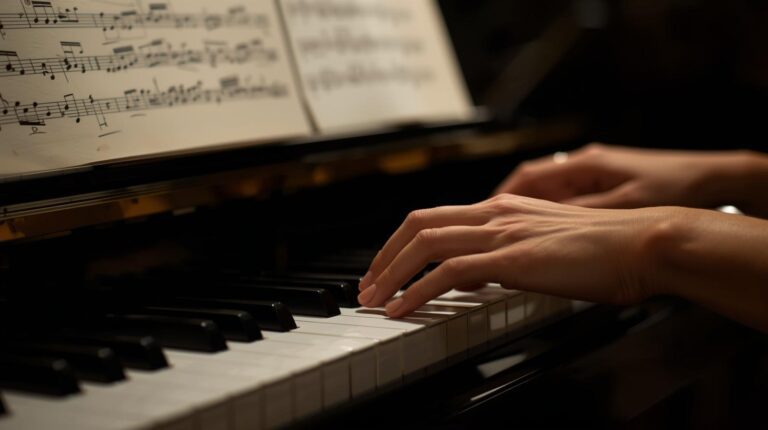
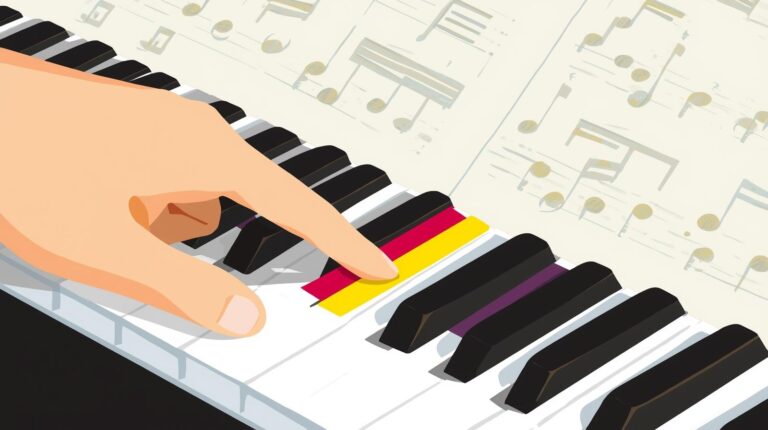
Place your right hand on the piano so that each finger rests on the following notes:
C – D – E – F – G
Finger numbers:
1 – Thumb
2 – Index
3 – Middle
4 – Ring
5 – Little finger
Play each note slowly in order:
C – D – E – F – G
Then move backward:
G – F – E – D – C
Focus on keeping your hand relaxed while pressing each key clearly.
Repeat this exercise several times until the movement feels natural.
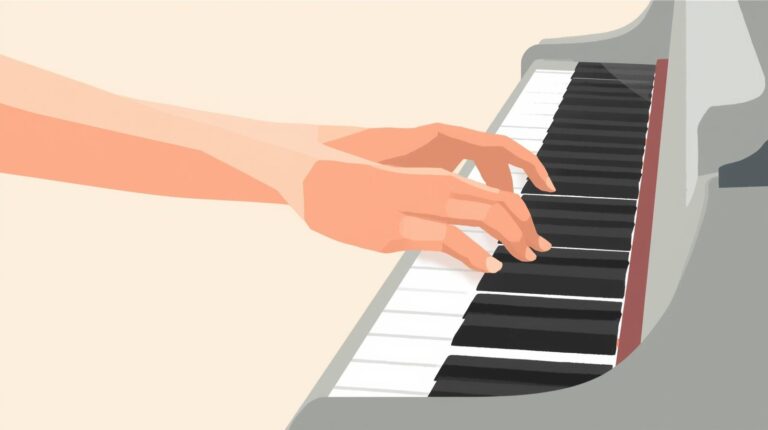
Exercise 2: Finger Lifting Practice
This exercise helps improve finger control and independence.
Place your hand on five consecutive keys just like in the previous exercise.
Now try lifting one finger at a time while keeping the other fingers resting on the keys.
For example:
Lift only the index finger while keeping the other fingers still.
Then repeat with:
* Middle finger
* Ring finger
* Little finger
This exercise strengthens the small muscles in your hand and helps prevent unnecessary movement while playing.
Exercise 3: Slow Repetition Exercise
Choose a single note on the keyboard and play it repeatedly with one finger.
Play the note slowly and evenly while maintaining consistent pressure.
For example:
Press the note with your index finger 10 times slowly.
Then repeat the same exercise with the other fingers.
This builds endurance and control in each finger.
Exercise 4: Hanon Exercises

One of the most famous collections of finger exercises comes from the book The Virtuoso Pianist by Charles-Louis Hanon.
These exercises are designed specifically to strengthen fingers and improve technical control.
Hanon exercises focus on:
* Even finger movement
* Strength development
* Speed improvement
* Coordination between both hands
Many professional pianists still practice Hanon exercises regularly to maintain their technique.
Exercise 5: Scale Practice
Practicing scales is another excellent way to develop finger strength.
Start with simple scales such as the C major scale.
Play the scale slowly using proper fingering while focusing on smooth transitions between notes.
Gradually increase the speed as your fingers become more comfortable.
Scales also help pianists learn the layout of the keyboard and develop muscle memory.
Exercise 6: Playing Soft and Loud
Dynamic control is another way to build finger strength.
Choose a simple five-note pattern and try playing it:
* Very softly
* Very loudly
Switch between these dynamics while maintaining control.
This exercise trains your fingers to apply different levels of pressure while playing.
Tips to Avoid Hand Tension
While building finger strength is important, it is equally important to avoid unnecessary tension.
Many beginners press the keys too hard or hold their hands stiffly, which can lead to fatigue or discomfort.
Here are a few helpful tips:
* Keep your wrists relaxed
* Avoid pressing keys with excessive force
* Take short breaks during practice
* Maintain proper hand posture
* Keep fingers naturally curved
Relaxation and control should always work together.
How Simple Piano Exercises Improve Finger Strength
Finger exercises do not need to take a long time.
In fact, most piano teachers recommend practicing technical exercises for 10 to 15 minutes daily before playing songs or pieces.
Consistency matters more than long practice sessions. Practicing regularly helps your fingers develop strength gradually without causing strain.
Over time, these small improvements add up and significantly improve your playing ability.
The Role of Technique in Piano Learning
Finger strength is only one part of piano technique. Good playing also requires coordination between the hands, rhythm control, posture, and musical expression.
As students continue practicing, they begin to combine technical exercises with musical pieces. This allows them to apply their developing skills in real musical situations.
Technique exercises act like a warm-up for musicians, preparing the hands for more challenging playing.
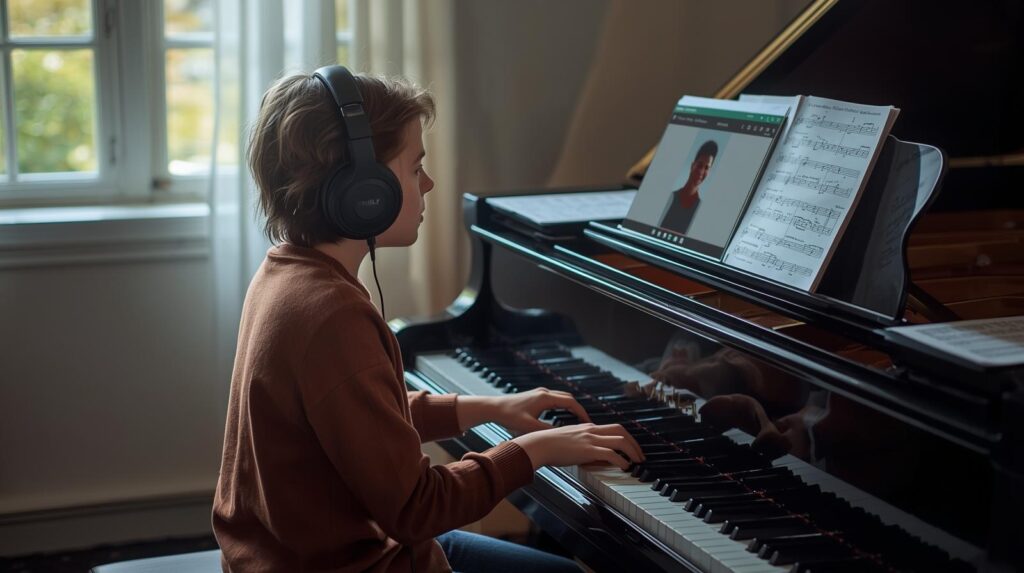
How Online Piano Lessons Can Help
Learning the correct technique from the beginning can make a huge difference in a student’s progress. Many beginners unknowingly develop habits that limit their finger strength or cause tension.
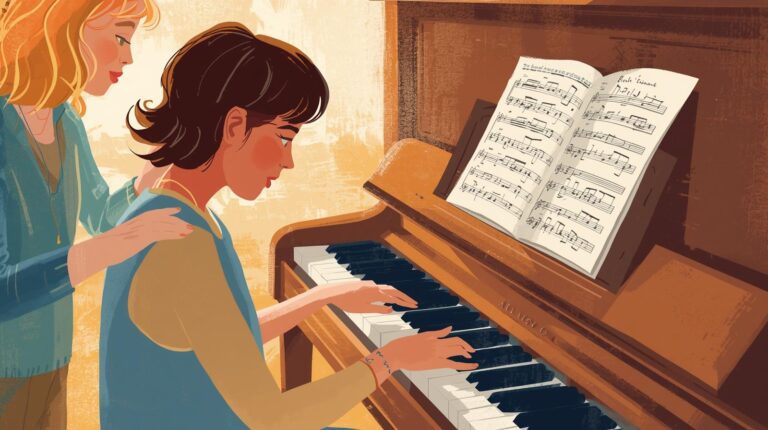
Working with an experienced teacher helps students:
* Develop proper hand posture
* Learn correct fingering techniques
* Improve finger independence
* Avoid common technical mistakes
* Progress more efficiently
Guided practice ensures that exercises are performed correctly and effectively.
About The Mystic Keys
The Mystic Keys is an online music academy dedicated to helping students develop strong musical skills through structured and personalized lessons. The academy offers one-on-one online classes in instruments such as Piano Lessons Online, guitar, vocals, drums, Hindustani music, and more.
Students receive individual attention from experienced teachers who guide them through technique development, music theory, and performance skills. Each lesson includes personalized feedback, practice materials, and recorded sessions so students can review their learning anytime.
The Mystic Keys also prepares students for internationally recognized music certifications such as Trinity College London exams, helping learners achieve professional milestones in their musical journey.
Final Thoughts
Improving finger strength is an essential part of becoming a confident piano player. Through simple exercises, consistent practice, and proper technique, beginners can gradually develop stronger fingers and better control over the keyboard.
The key is patience and consistency. Even a few minutes of daily finger exercises can significantly improve your playing over time.
As your fingers become stronger and more independent, playing the piano becomes smoother, faster, and far more enjoyable.
With dedication and the right guidance, every student can build the technical foundation needed to explore the beautiful world of music.
For more information and exciting resources about learning music, visit our website at The Mystic Keys. For more music content and exciting offers follow us on
Facebook, Instagram, YouTube, LinkedIn, Twitter, Pinterest, and Threads.