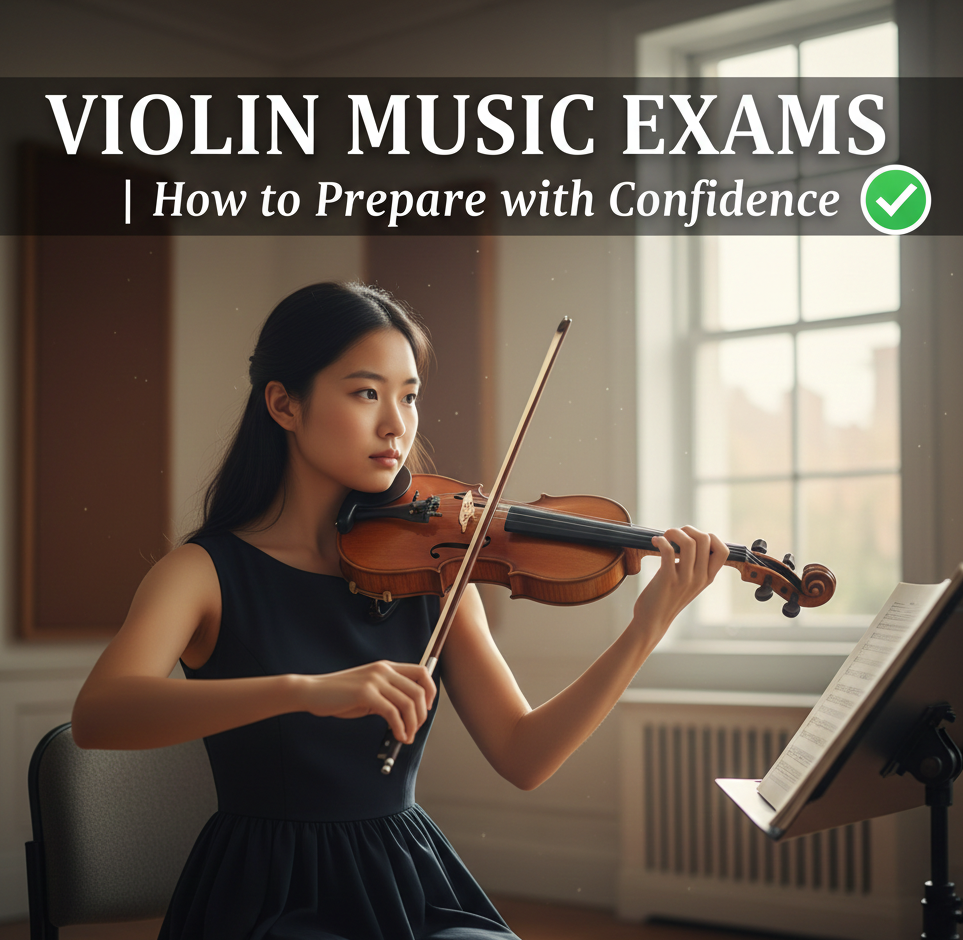
Violin Music Exams | How to Prepare with Confidence
Violin Music Exams | How to Prepare with Confidence
Preparing for Violin Music Exams can feel like standing at the edge of a stage before the curtains rise. There’s anticipation, excitement, and perhaps a flutter of nerves. Whether you’re preparing for graded exams from institutions like ABRSM (Associated Board of the Royal Schools of Music) or Trinity College London, or appearing for practical assessments under Rockschool, the experience is about much more than marks. It’s about growth, discipline, artistry, and discovering your own musical voice.
Confidence in exams doesn’t come from last-minute practice. It grows steadily—like tone quality—through thoughtful preparation, consistency, and understanding what the exam truly demands. Let’s walk through how you can prepare thoroughly and walk into your violin exam room feeling grounded and self-assured.
Understanding the Structure of Violin Music Exams Before You Begin
The first step toward confidence is clarity. Many students feel anxious simply because they don’t fully understand what the exam involves. Violin music exams typically assess multiple components: performance pieces, scales and arpeggios, sight-reading, and aural skills. Each section carries its own weight and requires a slightly different type of preparation.
Instead of diving straight into playing your pieces repeatedly, begin by carefully reviewing the syllabus. Notice the technical expectations for your grade. Observe tempo markings, articulation, bowing patterns, and stylistic requirements. When you understand exactly what is expected, your practice becomes purposeful rather than reactive.
This awareness changes your mindset. You are no longer “hoping” to do well—you are preparing strategically.

Building a Strong Technical Foundation
Confidence in performance is rooted in technical security. If your fingers hesitate during shifts or your bow feels unstable in fast passages, nerves can easily magnify those weaknesses during the exam.
That’s why scales and arpeggios are not just exam requirements—they are your daily training ground. Practising them slowly and mindfully develops intonation, finger strength, and bow control. Over time, this technical fluency begins to reflect naturally in your pieces.
Rather than treating scales as a checklist, use them as tools. Listen carefully to tone production. Maintain consistent bow distribution. Work on evenness in slurred passages. When technique becomes reliable, your mind is free to focus on musical expression rather than survival.
And that freedom is where confidence begins to bloom.

Moving from Notes to Music
Once the technical framework is in place, your preparation must shift from “playing correctly” to “playing musically.” Examiners listen for more than accuracy. They listen for phrasing, dynamics, stylistic understanding, and emotional sensitivity.
This transition requires deliberate listening. Record yourself often. Compare your interpretation with professional recordings. Study the musical era of your pieces—Baroque phrasing differs from Romantic lyricism. When you understand the character of the music, your performance becomes convincing rather than mechanical.
Importantly, give yourself time to internalise the music. Practise sections hands separately if needed, sing the melody, and visualise finger patterns away from the instrument. The deeper your familiarity, the steadier your performance will feel under pressure.
Developing Sight-Reading and Aural Confidence
Many violin students spend the majority of their preparation time on performance pieces and neglect sight-reading or aural tests until the final weeks. Unfortunately, this often leads to avoidable stress.
Sight-reading improves dramatically with regular exposure. Even five minutes daily of reading unfamiliar music sharpens pattern recognition and rhythm accuracy. Over time, your eyes begin to anticipate intervals and bowings naturally.
Similarly, aural training strengthens your musical ear. Practise identifying intervals, clapping rhythms, and singing back phrases. These skills not only help in exams but deepen your overall musicianship.
When these components become part of your routine rather than last-minute additions, your exam preparation feels balanced—and balance reduces anxiety.

Facing Violin Music Exams with Calm and Confidence on the Day
Preparation isn’t complete until you’ve practised performing under mild pressure. Many students play beautifully in their practice room but feel unsettled in an exam setting.
To bridge this gap, simulate exam conditions. Play your full programme without stopping, even if mistakes occur. Ask a teacher, friend, or family member to listen. Practise walking into the room, adjusting your music stand, tuning calmly, and announcing your pieces clearly.
These small rehearsals condition your mind and body to stay steady. When the actual exam day arrives, it feels familiar rather than intimidating.
And familiarity breeds confidence.
Managing Nerves with Perspective
It’s important to acknowledge that some nervousness is natural. In fact, a small amount of adrenaline can enhance focus and energy. The goal is not to eliminate nerves entirely but to manage them constructively.
Deep breathing before playing helps regulate tension. Gentle stretching keeps your shoulders and arms relaxed. Most importantly, shift your perspective: an exam is not a judgment of your worth as a musician. It is simply a snapshot of your progress at a particular moment.
When you view the experience as part of a long musical journey rather than a final verdict, the pressure softens. You begin to play for expression rather than perfection.
Structuring a Realistic Practice Schedule
Consistency outweighs intensity. Instead of long, exhausting practice sessions close to the exam date, create a steady weekly routine. Divide your practice time between technical work, repertoire, and supporting skills like sight-reading.
As the exam approaches, gradually increase full run-throughs of your pieces. In the final week, focus more on musical refinement and mental readiness rather than drastic technical changes.
Rest is equally important. Over-practising can lead to physical strain and mental fatigue. Trust the preparation you’ve built over weeks and months.
The Day Before and the Day Of Violin Music Exams
The day before your exam should feel calm and controlled. Light practice is helpful, but avoid overworking difficult passages. Review tricky sections once or twice, then let them rest. Prepare your instrument, rosin, shoulder rest, and sheet music in advance.
On exam day, arrive early. Tune carefully. Take a few slow breaths before beginning. Remember that the examiner wants you to succeed—they are listening for your strengths, not waiting for your mistakes.
When you start playing, focus on the opening phrase rather than the entire piece. Let the music guide you forward, one section at a time.
Looking Beyond Results in Your Violin Music Exams Journey
After the exam ends, something important happens: growth continues. Regardless of the result, you will have strengthened your discipline, refined your technique, and developed greater confidence in performance. You will have learned how to prepare systematically, manage pressure, and present your music with clarity and poise.
Exams from respected boards like ABRSM, Trinity College London, and Rockschool are milestones—not destinations. Each grade represents another meaningful step in a lifelong relationship with music.
With guided support from The Mystic Keys, students preparing through structured Violin Lessons Online receive focused mentorship, personalised practice strategies, and mock exam training that builds true readiness. The right guidance transforms exam preparation from something stressful into something empowering.
Confidence, ultimately, is not about believing you will play perfectly. It is about trusting your preparation, embracing the moment, and allowing your violin to speak.
And when you walk into your next exam with that mindset, supported by consistent effort and the right learning environment, you won’t just be prepared—you’ll be empowered.
For more information and exciting resources about learning music, visit our website at The Mystic Keys. For more music content and exciting offers follow us on
Facebook, Instagram, YouTube, LinkedIn, Twitter, Pinterest, and Threads.