Benefits of Piano | Why Learning It Is Rewarding at Any Age
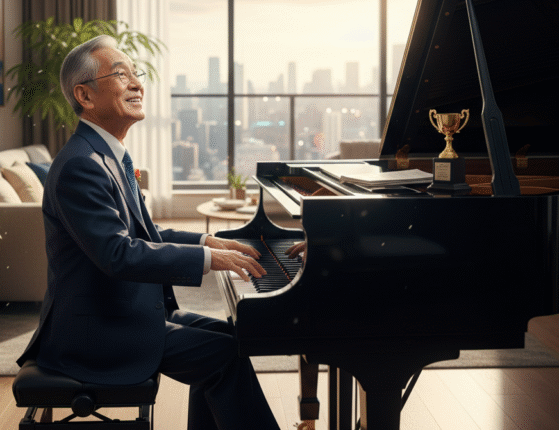
Learning to play the piano is often associated with children or young adults, but this assumption is far from reality. The piano is a lifelong companion that brings joy, learning, and personal growth at any stage of life. From boosting brain function to fostering emotional expression, the advantages of picking up this instrument are vast. Let’s explore the key benefits of piano for people of all ages.
Cognitive Boost | Key Benefits of Piano for the Brain
One of the most significant benefits of piano is its ability to enhance cognitive function. Playing the piano engages both hands independently, requires reading music, and often involves memorizing complex compositions.
For adults, this mental stimulation improves memory, focus, and problem-solving skills. Children benefit by developing sharper analytical thinking and mathematical skills. Essentially, practicing piano is like giving your brain a full workout—one that is both fun and highly effective in maintaining mental agility.
Emotional Benefits of Piano | Express Yourself Through Music
Another profound benefit of piano is its ability to foster emotional expression. Music allows individuals to translate feelings into sound, providing a healthy outlet for stress and emotions.
Adults often find solace in expressing their day-to-day feelings through melody, while children and teenagers develop a sense of emotional awareness and confidence. Over time, the ability to communicate through music strengthens empathy, creativity, and emotional intelligence, making the piano a tool for personal growth as much as for skill-building.
Discipline and Patience | Benefits of Piano in Personal Growth
Mastering piano requires consistent practice, attention to detail, and patience. Each small milestone, from learning a new chord to completing a challenging piece, teaches perseverance.
Young learners gain lessons in goal-setting and persistence, while adults experience improved focus and time management. These benefits of piano extend far beyond music, shaping character, resilience, and a mindset that embraces challenges patiently.
Physical Coordination and Motor Skills
The piano engages the whole body—hands, feet, and eyes—combining mental focus with physical movement. This helps improve dexterity, hand-eye coordination, and overall motor skills.
For children, it builds fine motor skills and multitasking ability. Older adults maintain hand flexibility and reduce motor decline. Over time, these skills translate into smoother, more confident movements in daily life.
In addition, learning to coordinate different actions simultaneously challenges the brain, enhancing cognitive function along with physical control. Practicing scales and complex pieces gradually strengthens precision and timing. Even simple daily tasks can feel easier as a result of these improvements. The rhythmic and repetitive nature of piano practice also improves focus and patience. Overall, the benefits extend far beyond the keyboard, impacting both mind and body.
Stress Relief and Mental Well-Being | Benefits of Piano in Daily Life
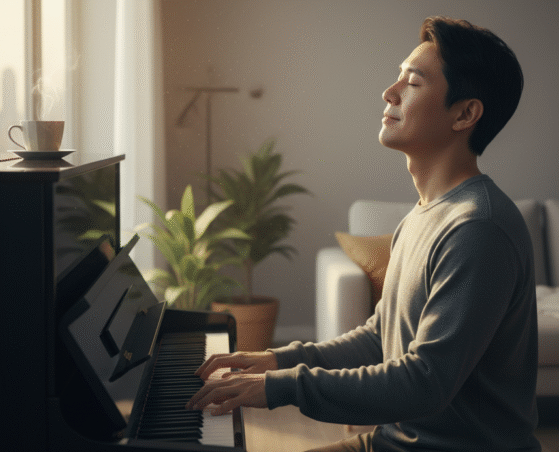
One of the immediate benefits of piano is its calming effect on the mind. Playing music reduces stress by lowering cortisol levels and promoting relaxation.
Adults juggling work and life responsibilities can find peace at the piano, while children enjoy a productive, focused outlet for excess energy or emotions. The act of creating music becomes a form of mindfulness, helping individuals stay present and mentally balanced.
Creativity and Improvisation
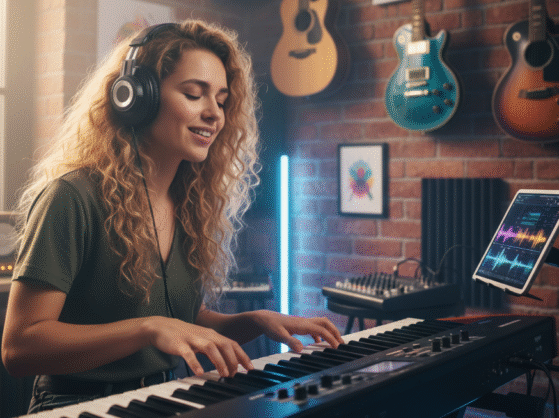
Learning piano not only teaches structure and discipline but also naturally opens the door to creativity. Once the basics are mastered, students can move beyond following notes to improvisation, composing their own pieces, or experimenting with different musical styles. This shift from structured practice to creative exploration allows for endless self-expression.
For children, this creative freedom encourages imaginative thinking, problem-solving, and curiosity, as they learn to play with sounds and patterns in playful yet meaningful ways. Adults, on the other hand, often find a renewed sense of joy and inspiration in exploring new musical horizons, discovering personal style, and experimenting with original compositions. Over time, the creativity sparked at the piano doesn’t stay confined to music—it often spills over into other areas of life, enhancing problem-solving, innovation, and creative thinking in daily routines.
Confidence and Lifelong Achievement
The benefits of piano extend to building self-esteem and confidence. Each piece learned and every performance—no matter how small—offers a sense of accomplishment.
Children gain confidence in their abilities, adults enjoy personal satisfaction in mastering something new, and all ages can take pride in their progress. Over time, piano becomes a lifelong source of joy and inspiration, reinforcing that age is never a barrier to achievement.
Social Connections and Community
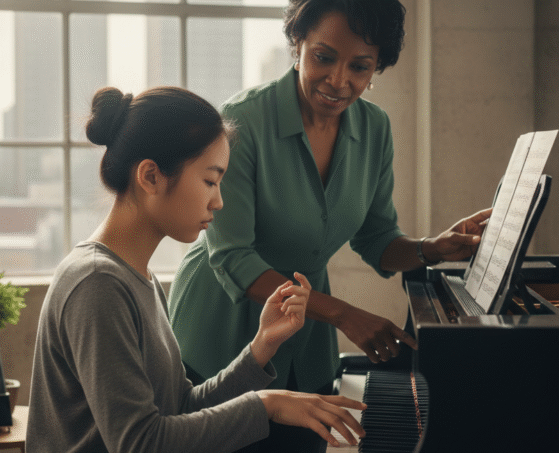
Playing the piano also opens doors to social opportunities, gradually connecting learners to a wider musical community. Through recitals, group classes, or collaborative projects, students not only share their love for music but also begin to interact, cooperate, and support each other in meaningful ways. This interaction helps children develop teamwork and social skills, while adults gain shared experiences and cultural enrichment. Over time, being part of such a community fosters belonging and can even lead to lasting friendships, adding yet another dimension to the benefits of piano.
Academic and Career Advantages
Studies have shown that learning music can positively influence academic performance. Skills developed through piano—like focus, discipline, and problem-solving—translate into better performance in subjects such as math, reading, and language.
For adults, musical training can enhance professional skills like creativity, multitasking, and concentration. Whether for personal enrichment or career development, the benefits of piano are practical as well as artistic.
Lifelong Enjoyment and Mental Stimulation
Perhaps the most beautiful aspect of piano is that it’s a skill that can be enjoyed for life. You can explore new genres, compose music, or perform at any age.
Children discover joy in playful improvisation, while adults find satisfaction in mastering complex pieces or revisiting classics. This lifelong engagement keeps the mind active, nurtures creativity, and provides continuous personal fulfillment.
Conclusion
Learning piano transcends age boundaries. From cognitive improvement and emotional growth to discipline, coordination, confidence, and social connection, the benefits of piano touch nearly every aspect of life. Whether you are a child exploring a new hobby or an adult seeking personal growth and stress relief, starting piano lessons can open doors to creativity, mental stimulation, and profound joy.
At The Mystic Keys, our Piano Lessons Online are designed for learners of all ages, helping you experience these benefits from the comfort of your home. Every note played, every chord mastered, and every melody created is a step toward a richer, more rewarding life. With The Mystic Keys, the piano isn’t just an instrument—it’s a lifelong journey of learning, expression, and fulfillment.
For more information and exciting resources about learning music, visit our website at The Mystic Keys. For more music content and exciting offers follow us on
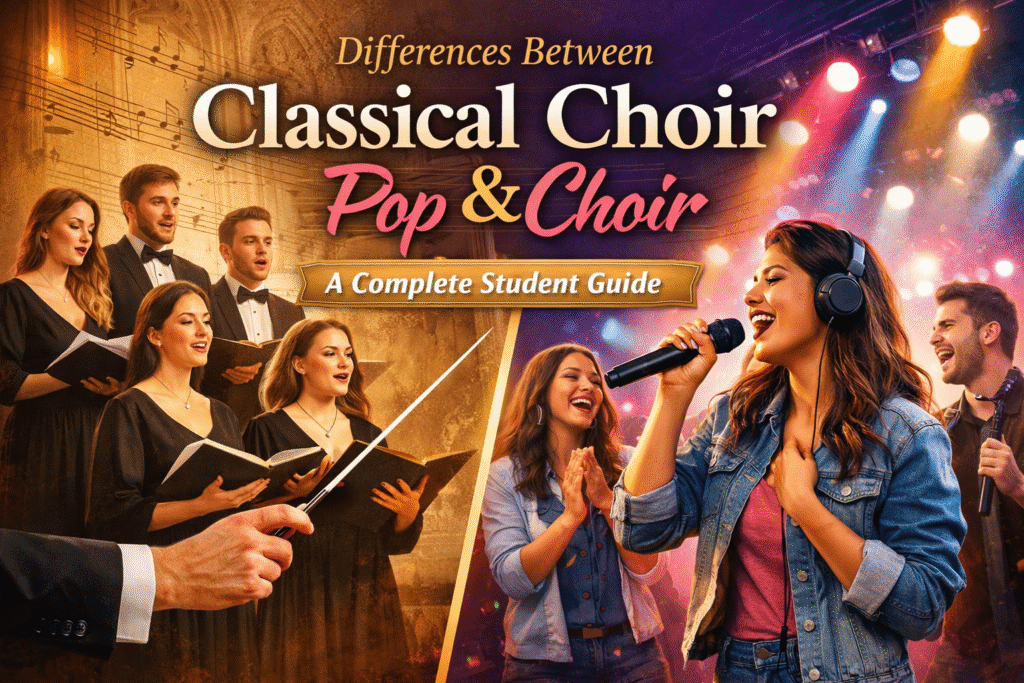
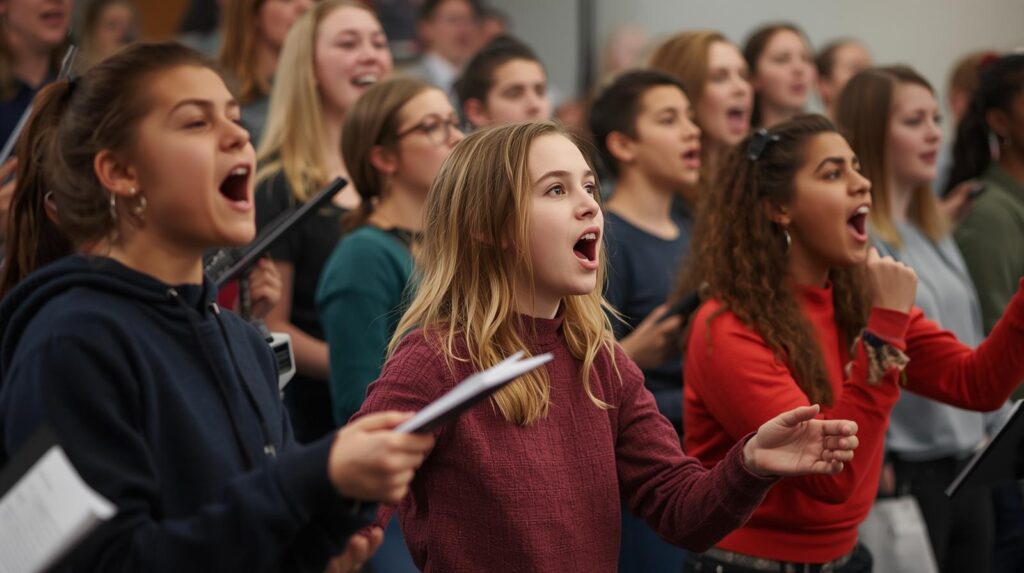
Understanding the differences between Classical Choir and Pop Choir is important for students, parents, and anyone interested in group singing. Choir singing is one of the most powerful and beautiful ways to experience music. Singing together builds discipline, confidence, listening skills, and emotional connection—but not all choirs follow the same style or approach.
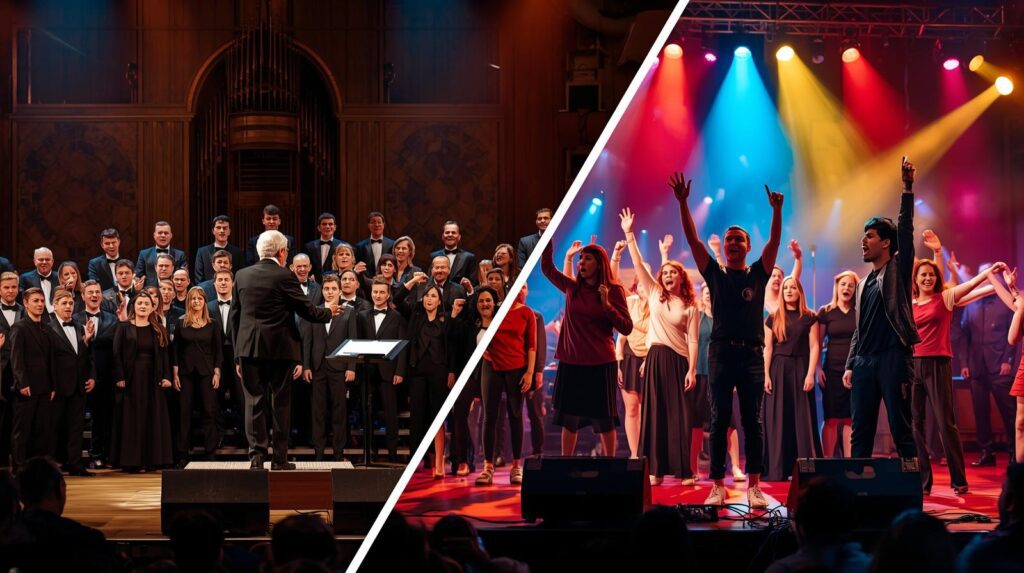
Two of the most popular choir types today are Classical Choirs and Pop Choirs. While both involve singing as a group, they are very different in terms of vocal technique, musical training, performance style, and overall purpose.
This blog will help you clearly understand the differences between Classical Choir and Pop Choir, even if you are a complete beginner or a student with no prior music knowledge.
What Is a Classical Choir?
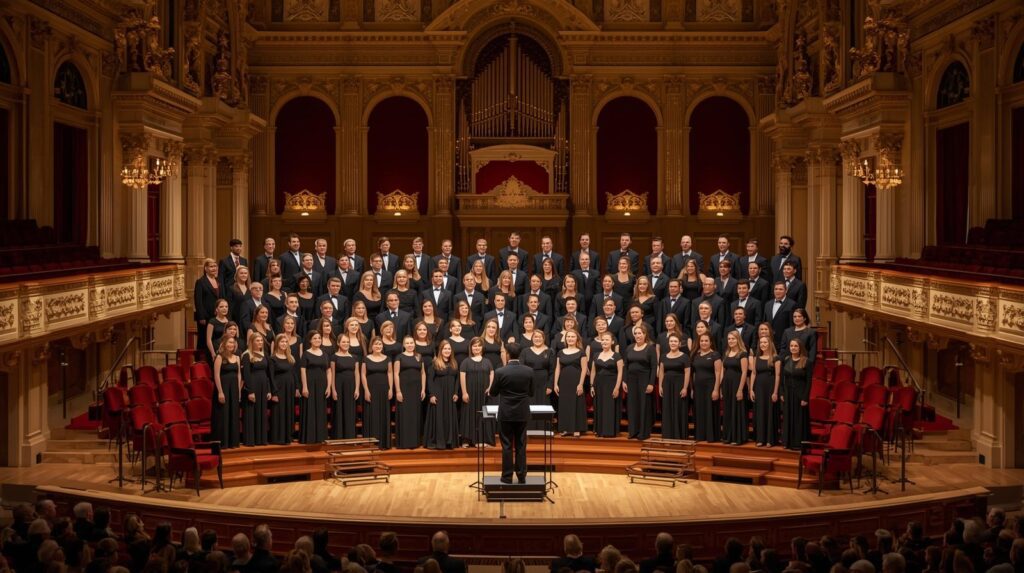
A Classical Choir focuses on traditional and formal music styles that have been developed over centuries. These choirs usually perform music written by famous classical composers and follow strict musical rules.
Key Characteristics of a Classical Choir
1.Music Style Classical choirs sing:
Western classical music
Sacred music (church music)
Choral works by composers like Bach, Mozart, Beethoven, Handel, and Brahms
The music is usually written in sheet music and follows fixed structures.
Students also learn pronunciation and meaning of these languages.
4. Discipline and Structure Classical choirs follow:
A conductor strictly
Written scores
Fixed rehearsal methods
Precision and accuracy are very important.
What Is a Pop Choir?
A Pop Choir focuses on modern, popular, and contemporary music. These choirs are more relaxed, expressive, and flexible in style.
Key Characteristics of a Pop Choir
1. Music Style Pop choirs sing:
Pop songs
Rock, jazz, gospel, musical theatre
Film songs and contemporary hits
Songs are often familiar and relatable to students.
2. Vocal Technique Pop choir singers:
Use microphones
Sing in natural, speech-like voices
Use stylistic effects like slides, riffs, and vocal runs
Expression and emotion are more important than perfection.
3. Language and Lyrics Pop choirs mostly sing in:
English
Regional or popular languages
Lyrics are easy to understand and emotionally engaging.
4. Freedom and Creativity Pop choirs encourage:
Movement and choreography
Clapping and body rhythm
Personal style and stage presence
It feels energetic and fun.
Main Differences Between Classical Choir and Pop Choir
1. Music Style
Classical Choir: Traditional, formal, structured music
Pop Choir: Modern, casual, and popular music
2. Training Method
Classical Choir: Strong focus on technique, reading music, discipline
Pop Choir: Focus on listening, expression, rhythm, and performance
3. Use of Microphones
Classical Choir: Usually no microphones
Pop Choir: Microphones are commonly used
4. Performance Style
Classical Choir: Standing still, formal posture
Pop Choir: Movement, energy, interaction with audience
5. Learning Approach
Classical Choir: Sheet music and theory-based learning
Pop Choir: Learning by ear, recordings, and repetition
Which Choir Is Better for Students?
There is no “better” choir — it depends on the student’s goals.
Classical Choir Is Best If:
You want strong vocal foundations
You plan to take international music exams
You are interested in music theory and classical training
Pop Choir Is Best If:
You enjoy modern songs
You want confidence and stage presence
You prefer fun, energetic group singing
Many professional singers actually start with classical training and later explore pop music.
Can Students Learn Both?
Yes — and it’s highly recommended.
Learning Classical Choir builds:
Vocal control
Discipline
Musical accuracy
Learning Pop Choir builds:
Confidence
Expression
Performance skills
Together, they create a complete musician.
Understanding the difference between Classical Choir and Pop Choir helps students, parents, and music lovers make the right choice for their musical journey.
Pop Choir builds confidence and enjoyment, helping singers perform with expression, stage presence, and teamwork.
Both paths are valuable and meaningful, and both offer lifelong benefits. No matter which one you choose, choir singing teaches teamwork, listening, discipline, and emotional expression — skills that last a lifetime.
Ready to start your journey? Join our Choir Training Workshop and experience hands-on coaching, fun exercises, and expert guidance that will take your singing to the next level. Click here to enroll now and secure your spot!
Intersted in learning music with us? Register now
For more information and exciting resources about learning music, visit our website at The Mystic Keys. For more music content and exciting offers follow us on