Why Children Lose Interest in Piano (And What Parents Can Do)
Why Children Lose Interest in Piano (And How Parents & Teachers Can Help)
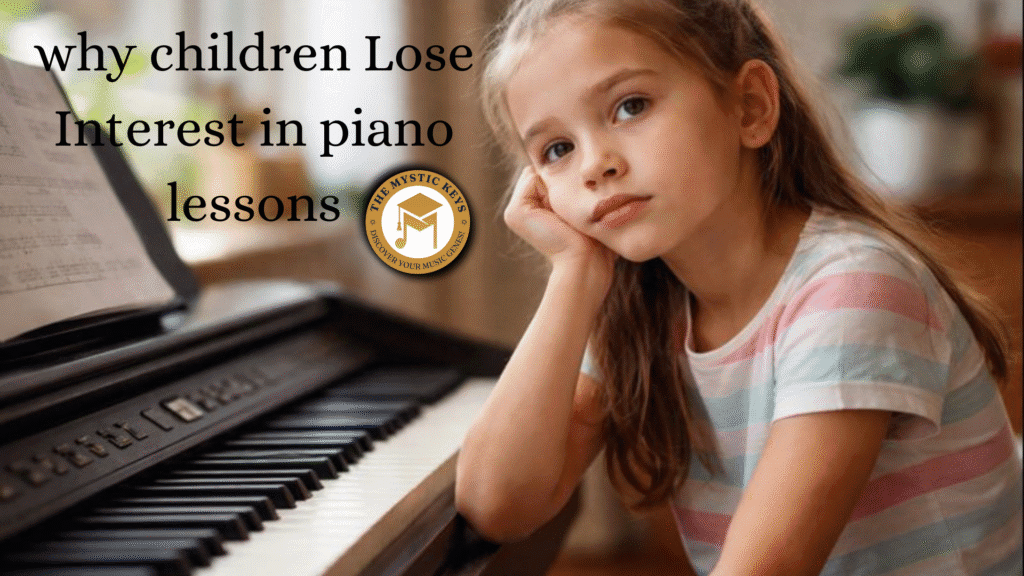
Learning the piano is often one of the first musical journeys children begin. Parents enroll their kids with excitement, teachers start with enthusiasm, and children initially enjoy pressing keys and discovering sounds. Yet, after a few months—or sometimes even weeks—many parents start wondering why children lose interest in piano lessons. This is a common challenge in music education, and understanding the reasons behind it is the first step to preventing it.

1. Why Children Lose Interest in Piano Practice
One of the most common reasons children lose interest in piano is forced or monotonous practice. When practice becomes a daily obligation rather than an enjoyable activity, children start associating the piano with pressure, stress, and boredom instead of curiosity and joy. Repeating the same exercises without variety or meaning makes learning feel mechanical, turning music into a task rather than an experience.
Over time, this creates emotional resistance. Children begin to feel mentally tired even before sitting at the piano. The instrument no longer feels like a place of creativity—it feels like responsibility. This emotional association is one of the fastest ways interest disappears.
What helps: Short, focused practice sessions, gamified exercises, and clear, achievable goals can make practice feel rewarding instead of tiring. Introducing creativity, variety, and choice into practice—such as fun challenges, rhythm games, and favorite songs—helps children feel emotionally connected to the instrument. When practice feels like play rather than pressure, motivation grows naturally and consistency becomes effortless.
2. Lack of Progress – A Key Reason Why Children Lose Interest in Piano
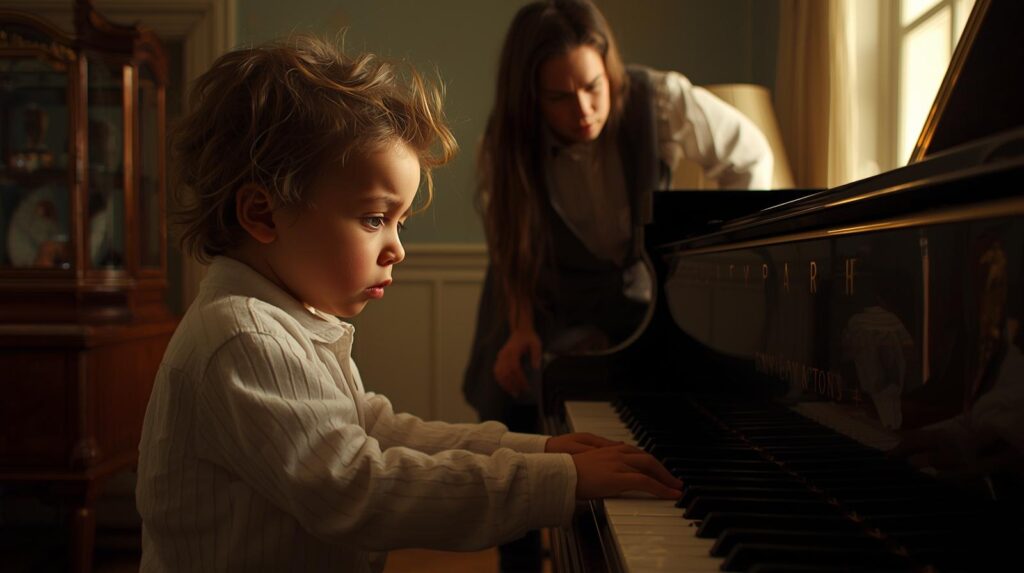
Children often expect quick progress. In a world of instant results, fast apps, and immediate digital rewards, piano learning feels slow and demanding. When children realize that progress requires patience, repetition, and discipline, frustration begins to build—especially if they compare themselves to others.
This frustration often leads to self-doubt. Children may start believing they are “not talented” or “not good at music,” even though they are simply in the normal learning phase. These negative beliefs slowly weaken confidence and emotional attachment to the instrument.
What helps: Celebrating small wins, tracking progress, recording performances, and reminding children how far they’ve come helps them see growth clearly. Progress must be visible, felt, and acknowledged to keep motivation alive.
3. Music Feels Unrelatable

Traditional beginner piano pieces, while technically useful, do not always connect with a child’s personal taste or emotional world. When children are repeatedly asked to practice music they neither enjoy nor recognize, learning can begin to feel forced rather than inspiring, causing their emotional connection to the instrument to slowly fade. Over time, the piano may start to feel like a task instead of a source of joy and self-expression.
What helps: Creating a balance between foundational exercises and music that feels familiar and meaningful makes a powerful difference. By mixing technical learning with movie themes, hymns, popular melodies, or songs the child genuinely loves, lessons become more relevant, engaging, and exciting—helping children build skills while staying emotionally connected to the music they play.
If you want, I can also make this more parent-focused, more academic, or more promotional for The Mystic Keys
4. Too Much Pressure from Adults
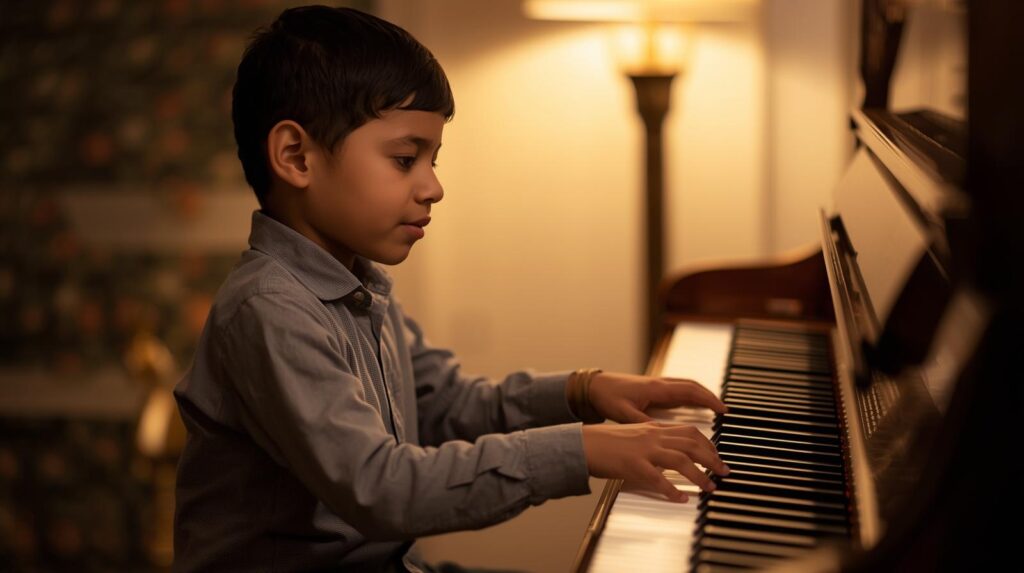
High expectations from parents or constant correction from teachers can unintentionally drain a child’s confidence. When mistakes are highlighted more than effort, children begin to associate piano with fear of failure instead of joy of learning.
This pressure creates anxiety, performance stress, and emotional withdrawal. Children may continue lessons physically, but mentally and emotionally they disconnect.
What helps: Encouragement, positive reinforcement, and emotional safety. When children feel supported instead of judged, they develop confidence, resilience, and a healthy relationship with learning music.
5. One-Size-Fits-All Teaching Approach

Every child learns differently. Some are visual learners, some auditory, some emotional, some kinesthetic. A rigid teaching structure ignores individuality and creates disconnect.
When children feel misunderstood in their learning style, they feel unseen as individuals. This emotional gap slowly breaks motivation and trust in the learning process.
What helps: With The Mystic Keys, children learn through personalized lessons tailored to their unique learning style, pace, and personality—making all the difference
6. Busy Schedules and Screen Distractions
Between schoolwork, tuition, activities, and screen time, piano slowly loses priority. Without structure, consistency breaks, and learning becomes irregular.
Digital stimulation also lowers patience and focus, making slow learning processes like music feel boring.
What helps: A fixed, stress-free routine and healthy screen balance. When piano becomes part of daily rhythm, not an extra burden, consistency becomes natural.
7. No Sense of Purpose
When children don’t understand why they are learning piano beyond exams, grades, or certificates, motivation fades. Learning without purpose feels empty.
Children need meaning, not just structure.
What helps: Opportunities to perform, accompany singing, play for family, participate in recitals, worship, or community events. Purpose transforms learning into identity and pride.
Children don’t lose interest in piano because they dislike music—they lose interest because the learning process stops feeling joyful. With the right balance of encouragement, creativity, patience, and personalization, piano lessons can become something children look forward to, not avoid.
When learning is engaging and truly impactful, piano lessons online become more than practice—they become a lifelong journey with music.
Intersted in learning music with us? Register now
For more information and exciting resources about learning music, visit our website at The Mystic Keys. For more music content and exciting offers follow us on
Facebook, Instagram, YouTube, LinkedIn, Twitter, Pinterest, and Threads.