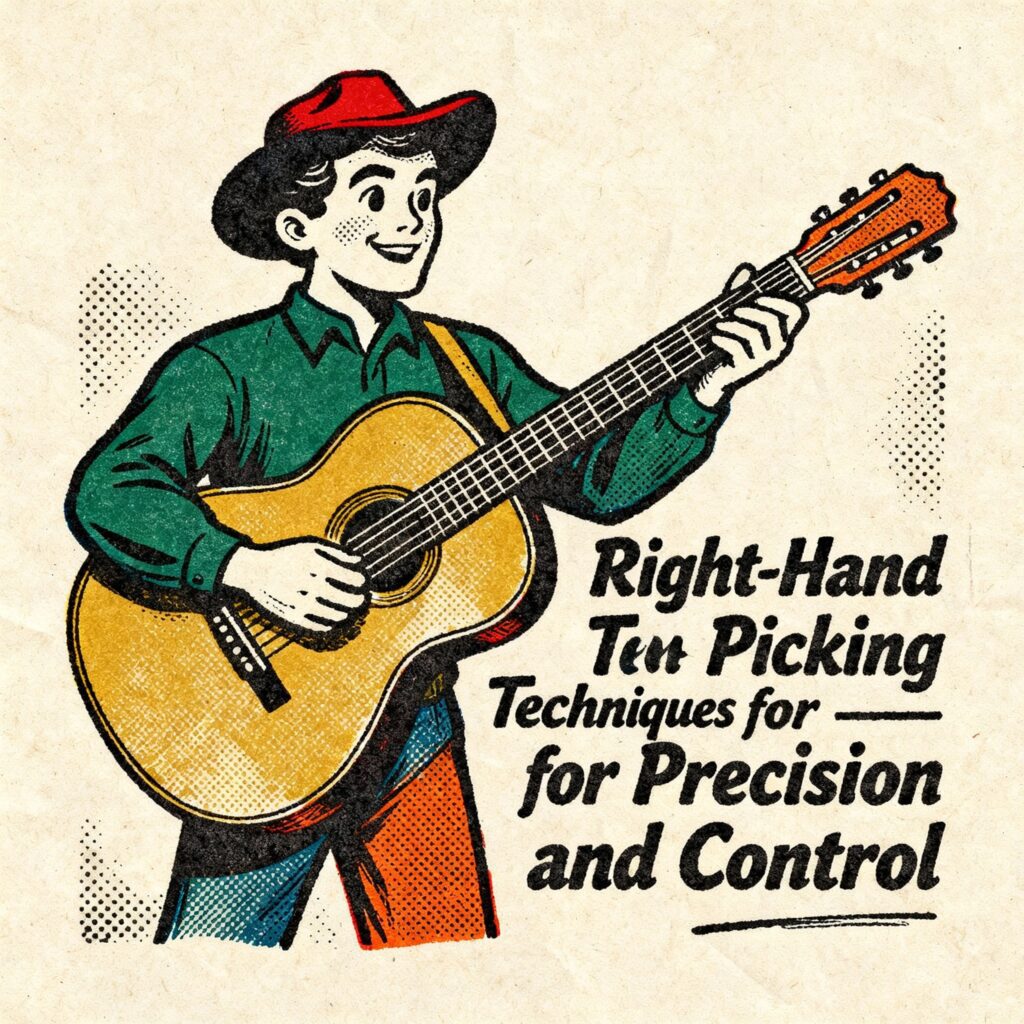
Right-Hand Picking Techniques for Precision and Control
Mastering right-hand picking techniques is one of the most important steps in becoming a confident and expressive guitarist. While many players focus heavily on fretting-hand strength and chord shapes, true clarity, speed, and musical control begin with the picking hand. Whether you play acoustic or electric guitar, your right hand determines timing accuracy, articulation, tone quality, and dynamic expression.
For students learning through structured programs at The Mystic Keys, right-hand development is treated as a foundational skill rather than an afterthought. With the right approach, disciplined practice, and musical awareness, any guitarist can develop precision and control that translates seamlessly across styles—from worship and pop to rock, blues, and contemporary instrumental music.
Why Right-Hand Control Is Essential for Guitarists
The picking hand acts as the engine of your sound. Even if your left-hand technique is strong, inconsistent picking can lead to:
Uneven rhythm and timing issues
Unwanted string noise
Sloppy fast passages
Limited dynamic expression
Strong right-hand picking techniques help guitarists:
Maintain rhythmic stability
Achieve clean note separation
Control volume and articulation
Play confidently at varying tempos
This is especially important for musicians performing live, recording, or playing in ensemble settings.
Understanding Pick Grip and Angle
Before exploring advanced techniques, proper pick grip is essential.
Key Principles of a Proper Pick Grip
Hold the pick firmly, but without tension
Use the thumb and index finger only
Avoid gripping too close to the tip
Keep the wrist relaxed and flexible
Pick Angle for Better Control
Angling the pick slightly (rather than striking the string flat) reduces resistance and improves speed and tone. A subtle angle allows smoother string contact and prevents harsh attack.
Alternate Picking for Consistency and Speed
Alternate picking is one of the most fundamental right-hand picking techniques, especially for melodic playing.
What Is Alternate Picking?
It involves alternating between:
Downstrokes
Upstrokes
This technique promotes efficiency and balance in motion.
Benefits of Alternate Picking
Improved speed control
Better rhythmic consistency
Reduced hand fatigue
Cleaner note transitions
Practicing alternate picking slowly with a metronome helps build long-term accuracy and confidence.
Economy Picking for Smooth Transitions
Economy picking blends alternate picking with sweep-like motions to minimize unnecessary movement.
Why Use Economy Picking?
Reduces motion during string changes
Improves phrasing flow
Enhances speed in scale passages
This approach is particularly effective for guitarists playing modern worship, fusion, and melodic lead styles.
Sweep Picking for Arpeggio Precision
Sweep picking is a more advanced technique that focuses on fluid motion across strings.
Core Elements of Sweep Picking
One continuous picking motion
Muting unused strings
Coordinated left-hand synchronization
While often associated with fast arpeggios, sweep picking also helps guitarists understand motion economy and dynamic control.
Fingerstyle and Hybrid Picking Techniques
Not all right-hand control depends on a pick.
Fingerstyle Benefits
Greater tonal variation
Independent control of bass and melody
Expressive phrasing
Hybrid Picking
Hybrid picking combines:
Pick usage
One or more fingers
This technique allows guitarists to play complex patterns while maintaining rhythmic stability.
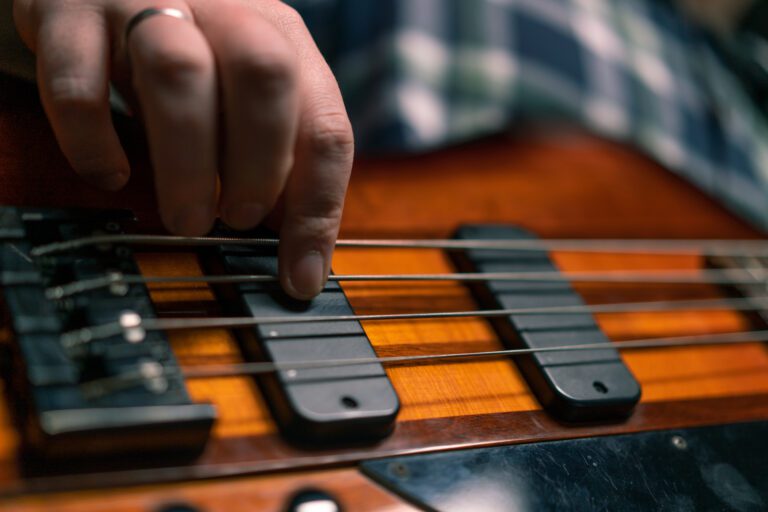
Palm Muting for Dynamic Control
Palm muting is essential for controlling resonance and shaping tone.
Consistent metronome work builds confidence and eliminates rushed or uneven playing.
Avoiding Common Right-Hand Mistakes
Many guitarists struggle with precision due to small but impactful errors.
Common Issues to Watch For
Excessive wrist tension
Over-gripping the pick
Inconsistent pick depth
Ignoring string muting
Identifying and correcting these habits early leads to faster progress and better musical results.
Applying Right-Hand Techniques in Musical Contexts
Technical skill becomes meaningful only when applied musically.
Practice Suggestions
Apply picking exercises to real songs
Practice dynamic variations
Record yourself to track clarity
Focus on tone, not just notes
At The Mystic Keys, students are encouraged to apply technique directly to worship music, contemporary songs, and performance pieces to ensure real-world improvement.
Building a Daily Right-Hand Practice Routine
Consistency matters more than duration.
Sample Practice Structure
Warm-up exercises (5–10 minutes)
Technique focus (alternate, economy, or fingerstyle)
Song application
Cool-down and reflection
This balanced approach strengthens technique while keeping practice engaging and musical.
Conclusion: Mastery Comes from Control, Not Force
Developing strong right-hand picking techniques is a journey that rewards patience, awareness, and consistent practice. Precision and control are not achieved through speed alone, but through relaxed movement, intentional repetition, and musical application.
For guitarists looking to refine their skills through guided instruction, structured learning environments such as Guitar Lessons Online provide the clarity and mentorship needed to progress confidently.
At The Mystic Keys, technique is always taught with purpose—helping musicians not only play better, but play with meaning, confidence, and musical depth.
Intersted in learning music with us? Register now
For more information and exciting resources about learning music, visit our website at The Mystic Keys. For more music content and exciting offers follow us on
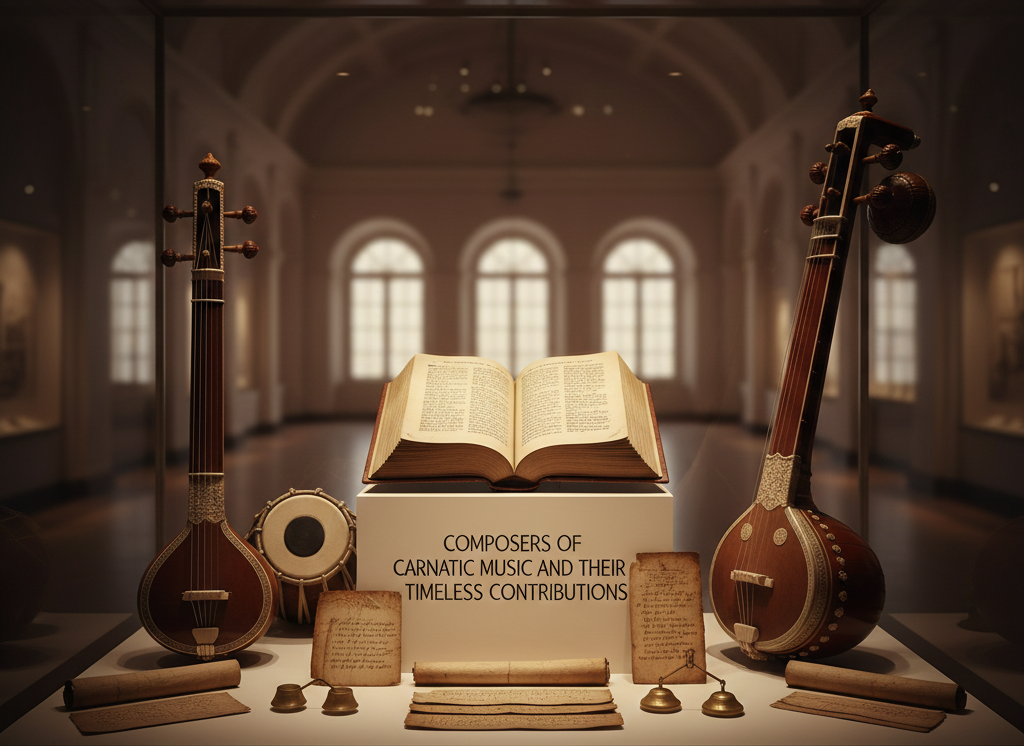
Composers of Carnatic Music and Their Timeless Contributions
Carnatic music transcends a classical system—it thrives as a living tradition shaped by inner purpose, emotional depth, and lifelong discipline. The famous composers of Carnatic music did more than create melodies; they demonstrated how motivation drives creativity when artists align their work with devotion and meaning. Their compositions continue to guide musicians and listeners alike, offering lessons both musically and philosophically. Each raga, tala, and lyric reflects their commitment to perfection and their relentless pursuit of artistic expression. By observing their dedication, we see how focused effort transforms talent into timeless artistry.
By exploring their lives and creative journeys, we can understand how sustained motivation fuels timeless creativity. These composers faced challenges, personal struggles, and societal expectations, yet they continued to compose with unwavering passion. Their work shows that motivation grows when purpose and discipline intersect. Every composition they left behind serves as both a musical treasure and a blueprint for cultivating perseverance. Through their example, we learn that true inspiration comes from commitment, devotion, and the courage to pursue one’s calling fully.
The Spiritual Foundation of Carnatic Music and Its Composers
At its core, Carnatic music is devotional. For its composers, music was a spiritual language rather than a performative act. The composers of Carnatic music were deeply rooted in bhakti, where every raga and lyric became a form of prayer.
This spiritual grounding shaped their motivation. Instead of external rewards, they were driven by inner fulfillment and surrender. When creativity is anchored in belief and discipline, it transcends time—this is why their compositions still resonate centuries later.
Composers of Carnatic Music and Motivation Through Devotion | Saint Tyagaraja
Saint Tyagaraja stands as one of the most influential composers of Carnatic music, embodying devotion-driven motivation. His kritis reflect an intimate, emotional relationship with Lord Rama, filled with longing, gratitude, and humility.
What makes Tyagaraja’s journey remarkable is his conscious rejection of wealth and royal patronage. His motivation came from faith, not comfort. Even in personal struggle, his creative output remained unwavering, teaching us that when motivation is rooted in values, it becomes resilient.
Through Tyagaraja, we see that motivation flourishes when purpose outweighs pressure.
Intellectual Depth and Discipline Among Composers of Carnatic Music | Muthuswami Dikshitar
While Tyagaraja’s music flows with emotional warmth, Muthuswami Dikshitar represents the scholarly dimension among composers of Carnatic music. His motivation was driven by curiosity, knowledge, and exploration.
Dikshitar’s compositions are rich with Sanskrit lyrics, rare ragas, and intricate melodic structures. His work reflects patience and precision—proof that motivation can also be quiet, methodical, and sustained through lifelong learning.
His legacy teaches us that motivation deepens when nurtured by discipline and intellectual engagement, reminding us that mastery is built through thoughtful persistence.
Emotional Intensity in the Works of Composers of Carnatic Music | Syama Sastri
Among the composers of Carnatic music, Syama Sastri displayed profound emotional intensity and rhythmic sophistication. His devotion to Goddess Kamakshi shaped the emotional core of his musical expression.
Although he composed fewer kritis than his contemporaries, each piece conveys immense depth. This demonstrates an important truth about motivation: authenticity matters more than quantity.
Syama Sastri’s life shows that motivation aligned with emotion produces art that leaves a lasting impact, regardless of scale.
The Carnatic Trinity | How Composers of Carnatic Music Shaped Sustainable Motivation
The Carnatic Trinity—Tyagaraja, Dikshitar, and Syama Sastri—leaves a powerful legacy that teaches us how motivation works. Each composer embodies a unique motivational force: Tyagaraja inspires through devotion, Dikshitar through intellect, and Syama Sastri through emotional depth.
Together, these composers of Carnatic music show that motivation grows from personal purpose and flourishes through daily discipline and routine. Their lives prove that inspiration does not happen by chance; they cultivate it every day through steadfast commitment to their art.
The Trinity’s Collective Legacy | A Blueprint for Sustainable Motivation
The tradition did not end with the Carnatic Trinity. Purandara Dasa built the foundation of Carnatic pedagogy, designing structured compositions that guide beginners and spark musical motivation. He made learning accessible, disciplined, and devotional, ensuring students connect deeply with the art from the start.
Swati Tirunal and Papanasam Sivan carried this legacy forward. They preserved classical purity while innovating with evolving musical expression and lyrical richness. These composers of Carnatic music demonstrate that motivation thrives when we honor tradition and actively adapt it to changing times.
How Motivation Really Works | Lessons from Carnatic Music Composers
Across generations, composers of Carnatic music demonstrate a shared truth: motivation is not a fleeting emotion but a disciplined way of life.They cultivate it through devotion, intellectual curiosity, emotional honesty, and consistent daily practice. Instead of waiting for inspiration, they commit themselves to their art every single day. This steady dedication allows creativity to deepen over time. Through their lives, motivation emerges as a habit, not a moment.
Their journeys show that true motivation does not rely on recognition or external rewards. They draw strength from purpose, faith, and inner conviction rather than applause. Even during personal struggle or isolation, their creative spirit continues to grow. By staying aligned with meaning, they allow motivation to renew itself naturally. Their legacy proves that purpose sustains passion far longer than praise.
Conclusion | Timeless Music, Timeless Motivation
The famous composers of Carnatic music lived with purpose, not for legacy, and their timeless creations continue to inspire through genuine inner motivation. When we study their journeys, we understand that motivation grows through daily effort—built note by note, practice by practice. At The Mystic Keys, our Carnatic Vocal Lessons Online carry forward this spirit, treating Carnatic music as both an artistic treasure and a living lesson in how true motivation works.
Through guided training and structured practice, learners connect with the same discipline that shaped the great composers. Each lesson encourages consistency, emotional expression, and steady musical growth. Students actively develop patience, focus, and confidence through regular riyaaz. This approach turns Carnatic learning into a purposeful journey rather than a short-term achievement.
Intersted in learning music with us? Register now
For more information and exciting resources about learning music, visit our website at The Mystic Keys. For more music content and exciting offers follow us on
Arranging Pop Songs for Choirs | A Beginner’s Guide
Arranging pop songs for choirs is one of the most exciting skills a music director or arranger can learn. Popular music is instantly relatable, emotionally engaging, and highly adaptable for vocal ensembles of all sizes. Whether you lead a school choir, church choir, or community ensemble, learning how to turn a pop song into a strong choral arrangement can elevate performances and keep singers motivated.
This beginner’s guide to arranging pop songs for choirs will walk you through the essential concepts, tools, and creative decisions needed to create effective, singable, and impactful arrangements.
Why Arrange Pop Songs for Choirs?
Pop songs bring familiarity and freshness to choral repertoire. Choir members often connect more deeply with songs they already love, which improves rehearsal engagement and performance confidence. From contemporary worship settings to school concerts and social media performances, pop choir arrangements are increasingly popular.
Arranging pop music for choirs also helps beginners understand harmony, voice leading, and musical texture in a practical way. Many pop songs are built on simple chord progressions, making them ideal learning material for new arrangers.
Step 1: Choose the Right Pop Song
Selecting the right song is the foundation of a successful choir arrangement. Not every pop song works well for vocal ensembles.
When choosing a song, consider:
A strong, memorable melody
Clear chord progressions
Appropriate lyrics for your choir’s audience
A comfortable vocal range
Emotional impact and message
Songs with repetitive structures, clear verses, choruses, and bridges are usually easier to arrange for beginner choir arrangers.
Step 2: Understand the Original Song Structure
Before arranging, study the original version carefully. Identify:
These tools allow you to hear playback, adjust harmonies, and prepare professional sheet music.
Arranging pop songs for choirs is a rewarding creative skill that blends musical knowledge with artistic expression. By starting simple, respecting vocal ranges, and focusing on clarity and emotion, even beginners can create compelling choral arrangements.
With practice and experimentation, your pop choir arrangements will become more confident, expressive, and performance-ready. Choirs today are embracing contemporary music more than ever—and your arrangements can help lead that movement.
Intersted in learning music with us? Register now
For more information and exciting resources about learning music, visit our website at The Mystic Keys. For more music content and exciting offers follow us on
Practicing Guitar for Worship | Turning Practice into Purpose
Playing guitar for worship is very different from practicing guitar for performance or personal achievement. Worship music is not about perfection, speed, or showing skill—it’s about serving, supporting congregational singing, and creating an atmosphere where hearts can connect with God. Yet, many worship guitarists struggle with consistency, motivation, and effective practice.
Efficient practice for worship requires not just better techniques, but a deeper understanding of why we practice andhow motivation truly works. When purpose and method align, practice becomes meaningful instead of mechanical.
Understanding the Purpose Behind Worship Guitar Practice
Before talking about practice routines, it’s important to understand the foundation. Worship guitar practice is not simply about learning songs—it is about preparing yourself as a vessel.
When your motivation is rooted only in learning chords or mastering strumming patterns, practice can feel repetitive and tiring. However, when your motivation is rooted in service—helping a congregation sing confidently, supporting the worship leader, and enhancing the message of the song—practice takes on a deeper meaning.
This mindset shift is crucial. Instead of asking,“How long should I practice?”, begin asking, “How can my practice help others worship better?”That question alone can transform your motivation.
How Motivation Really Works When Practicing Guitar for Worship
Motivation is often misunderstood. Many guitarists wait to feel inspired before practicing, but real motivation usually comes after action, not before it.
In worship music, motivation grows when:
You see your playing helping others sing
You feel more confident during services
You experience peace and focus while practicing
This means consistency matters more than intensity. Short, focused practice sessions done regularly will build momentum. Once progress becomes visible—cleaner transitions, steadier rhythm, better tone—motivation naturally increases.
Rather than forcing motivation, create conditions where motivation can grow.
Practicing Guitar with Intention Instead of Just Time
One of the biggest mistakes worship guitarists make is practicing without direction. Playing through songs casually may feel productive, but it often leads to slow improvement.
Efficient worship practice begins with intention. Instead of practicing everything at once, focus on one clear goal per session—such as improving smooth chord transitions or locking in rhythm with a metronome.
This approach reduces frustration. When you know exactly what you’re working on, practice feels purposeful, and small wins keep motivation alive. Over time, these focused efforts add up to noticeable improvement during actual worship sets.
Learning Songs in a Worship-Centered Way
When practicing worship songs, it’s easy to get distracted by fancy fills or complex strumming patterns. However, worship guitar often thrives on simplicity and consistency.
Focus first on:
The song structure
The groove and tempo
Clean chord changes
Once the foundation is solid, you can add light embellishments if appropriate. Practicing this way ensures that your playing supports the worship atmosphere rather than distracting from it.
As you become more reliable rhythmically, worship leaders and fellow musicians will trust your playing more—this external feedback is a powerful motivator.
Practicing Guitar Consistently Through Small Daily Habits
Consistency is the secret behind efficient practice, especially for worship musicians who may be balancing work, family, and ministry.
Instead of waiting for long practice sessions, build small daily habits. Even 15–20 minutes of focused practice can be highly effective when done consistently. These short sessions reduce mental resistance and make it easier to start.
Over time, consistency builds confidence, and confidence fuels motivation. You’ll notice that playing during services feels calmer, more controlled, and more joyful.
Practicing Spiritually as Well as Musically
Worship guitar practice is unique because it involves both skill and spirit. Including a spiritual element in your practice can greatly enhance motivation.
Before or after practicing, take a moment to reflect on the lyrics you’re playing or pray briefly. This helps connect technique with purpose. When practice feels spiritually grounded, it becomes less of a chore and more of preparation.
This connection often leads to deeper focus and a stronger emotional connection to the music during actual worship.
Embracing Progress Over Perfection
Many worship guitarists lose motivation because they compare themselves to others—especially skilled musicians online or in larger churches. This comparison can quickly drain joy.
Efficient practice means embracing progress over perfection. Each improvement, no matter how small, is valuable. Clean transitions, steady tempo, and confident playing matter far more than complexity.
When you measure success by growth rather than flawlessness, practice becomes encouraging instead of discouraging.
Staying Motivated Through Community and Feedback
Finally, motivation thrives in community. Playing regularly with a worship team, receiving gentle feedback, and growing together can significantly improve both skill and enthusiasm.
When others appreciate your consistency and reliability, it reinforces your sense of purpose. This external encouragement often renews internal motivation, especially during seasons when practice feels difficult.
Conclusion | Let Purpose Lead Your Practice
Practicing guitar efficiently for worship is not about doing more—it’s about practicing with purpose, consistency, and heart. At The Mystic Keys, this belief shapes the way musicians are guided to grow: when motivation is rooted in service rather than self-performance, practice becomes meaningful and sustainable.
By understanding how motivation truly works, focusing on intentional practice, and staying connected to the spiritual purpose of worship, you’ll not only improve as a guitarist—but also grow as a worshipper. This thoughtful, worship-centered approach is at the heart of how The Mystic Keys designs its online guitar lessons.
In the end, the goal is simple: to play in a way that helps others lift their voices and hearts in worship. When that becomes your motivation, practice naturally follows—and music becomes ministry.
Intersted in learning music with us? Register now
For more information and exciting resources about learning music, visit our website at The Mystic Keys. For more music content and exciting offers follow us on
Lessons We Can Learn from the Greatest Guitar Legends
The history of music is filled with extraordinary guitarists whose influence reaches far beyond their technical ability. From soulful blues pioneers to revolutionary rock icons and modern virtuosos, the world’s greatest players didn’t just master the guitar — they reshaped how we understand music, expression, and creativity. The most valuable guitar legends lessons are not only about speed, scales, or tone, but about mindset, discipline, emotion, and individuality.
At The Mystic Keys, we believe learning music is as much about personal growth as it is about technique. When students study the journeys of legendary guitarists, they begin to see that greatness is not accidental. It is built patiently, deliberately, and authentically. This article explores timeless guitar legends lessons that every guitarist — beginner to advanced — can apply to their own musical journey.
Passion Comes Before Perfection
One of the clearest guitar legends lessons is that passion always comes first. Legendary guitarists did not wait until they were perfect to express themselves. Many of them played with raw emotion long before their technique was fully refined. Their love for music pushed them to keep going even when they struggled.
Instead of chasing flawlessness, they focused on connection — with the instrument, the audience, and themselves. This teaches modern learners that emotional honesty matters more than technical perfection. Playing from the heart builds authenticity, and authenticity is what listeners remember.
Practice Is Non-Negotiable, Even for Geniuses
A common myth is that great guitarists were simply born gifted. In reality, behind every legend lies countless hours of focused practice. One of the most practical guitar legends lessons is the importance of consistency.
Great players practiced daily, refined small details, and returned to basics repeatedly. They didn’t rush growth; they respected it. Scales, rhythm exercises, chord transitions, and timing drills formed the foundation of their mastery.
For students at THE Mystic Keys, this reinforces an essential truth: talent opens the door, but discipline keeps you moving forward.
Develop Your Own Sound, Not Someone Else’s
The greatest guitarists are instantly recognizable — not because they followed trends, but because they created their own voice. One of the most inspiring guitar legends lessons is the value of individuality.
Rather than copying others endlessly, legendary players absorbed influences and then transformed them. They experimented with tone, phrasing, dynamics, and articulation until their sound became unique.
This lesson reminds musicians that imitation is a starting point, not a destination. True artistry emerges when players stop trying to sound like everyone else and start sounding like themselves.
Simplicity Can Be More Powerful Than Speed
Many legendary guitar moments are surprisingly simple. A single note played with feeling can be more impactful than a fast, complex run. One of the most overlooked guitar legends lessons is learning when not to play.
Great guitarists understood space, silence,and restraint. They knew that music breathes when notes are chosen carefully. This teaches musicians to focus on tone, timing, and phrasing rather than speed alone.
At The Mystic Keys, students learn that musical maturity often means playing less — but playing it better.
Master the Fundamentals Before Breaking the Rules
Legends are often praised for breaking musical rules, but they first mastered the fundamentals. Another essential guitar legends lesson is that freedom comes from understanding structure.
Scales, harmony, rhythm, and technique gave legendary players the confidence to experiment creatively. Because they understood the rules deeply, they knew exactly how and when to bend them.
This encourages learners to respect foundational training instead of skipping it. Strong basics empower creativity rather than limit it.
Emotion Is a Skill You Can Develop
Expressiveness is not magic — it is a skill that can be practiced. One of the most meaningful guitar legends lessons is learning how emotion is intentionally crafted through dynamics, vibrato, bends, articulation, and timing.
Legendary guitarists studied how music makes people feel. They shaped phrases carefully and used subtle techniques to convey sadness, joy, tension, or hope.
Many guitar legends remained relevant across decades because they evolved. They explored new genres, collaborated with younger artists, and adapted to changing musical landscapes. This adaptability is one of the most valuable guitar legends lessons for long-term success.
Rather than resisting change, they embraced growth. This mindset allowed them to stay inspired and connected to new audiences.
For modern musicians, this lesson highlights the importance of staying curious and open-minded.
Learn to Listen as Much as You Play
Great guitarists are exceptional listeners. One of the most important guitar legends lessons is learning to listen deeply — to other musicians, to rhythm, and to silence.
Listening improves timing, dynamics, and musical interaction. Legends knew when to lead and when to support. They played with the music, not over it.
This lesson is especially valuable for ensemble playing, worship music, bands, and collaborative settings taught at THE Mystic Keys.
Confidence Comes from Preparation, Not Ego
Stage confidence didn’t come from arrogance — it came from preparation. Legendary guitarists trusted their practice. One of the most practical guitar legends lessons is understanding that confidence is built privately before it is displayed publicly.
Preparation reduces fear and allows musicians to be present in the moment. This transforms performances into experiences rather than tests.
Failure Is Part of the Journey
Behind every success were countless mistakes. One of the most reassuring guitar legends lessons is that failure is not a setback — it is feedback.
Legends struggled, sounded bad at times, and faced rejection. What separated them was resilience. They learned from mistakes instead of quitting.
This lesson encourages students to view challenges as growth opportunities, not limitations.
Music Is About Communication, Not Competition
Legendary guitarists weren’t trying to be the fastest or loudest — they were trying to say something meaningful. One of the most human guitar legends lessons is remembering that music exists to connect people.
When musicians shift focus from comparison to communication, their playing becomes more sincere and impactful. This mindset creates fulfillment beyond technical achievement.
Applying Guitar Legends Lessons to Your Own Journey
You don’t need to be famous to apply these lessons. Whether you’re learning guitar for worship, personal growth, or professional goals, these principles remain relevant.
At The Mystic Keys, we guide students to apply guitar legends lessons practically — through structured learning, personalized feedback, and supportive mentorship. The goal is not imitation, but transformation.
Conclusion: Greatness Is Built, Not Borrowed
The greatest guitarists didn’t follow shortcuts — they followed purpose. Their journeys teach us that mastery is a blend of discipline, creativity, humility, and passion. The most powerful guitar legends lessons remind us that music is not about perfection, but about expression, connection, and growth.
When you study the legends with the right mindset, you don’t just learn how to play better — Guitar Lessons Online you learn how to think like a musician. And that mindset is what shapes lifelong musical journeys.
At The Mystic Keys, we believe every student carries the potential to grow, express, and inspire — one meaningful note at a time.
Intersted in learning music with us? Register now
For more information and exciting resources about learning music, visit our website at The Mystic Keys. For more music content and exciting offers follow us on
Playing fast on the guitar is exciting, but learning how to play guitar cleanly at high speed is what truly defines a skilled guitarist. Many players increase tempo quickly but struggle with unwanted noise, missed notes, sloppy timing, and tension. Clean technique is not about talent alone—it is about control, awareness, and smart practice methods that allow speed and clarity to work together.
Why It’s Hard to Play Guitar Cleanly at High Speed
Speed amplifies everything—both good and bad habits. At slow tempos, mistakes can hide. At fast tempos, they become obvious.
Common reasons clean playing falls apart include:
Excess finger tension
Poor picking control
Inefficient finger movement
Lack of synchronization between hands
Rushing instead of staying in time
Understanding these causes is the first step toward fixing them.
The Importance of Relaxation and Control
Speed does not come from force. It comes from efficiency.
When muscles tense up, movement becomes restricted. Clean fast guitar playing requires relaxed hands that move only as much as necessary.
Key relaxation principles include:
Keeping the shoulders relaxed
Avoiding gripping the neck too tightly
Letting the wrist move naturally
Stopping immediately if pain or strain appears
At The Mystic Keys, students are taught that relaxation is a technical skill, not an afterthought.
Left-Hand Techniques to Play Guitar Cleanly at Faster Tempos
Your fretting hand plays a major role in clarity. Sloppy finger placement leads to buzzing, muted notes, and inconsistent tone.
Economy of motion is essential. The less distance your fingers travel, the cleaner and faster your playing becomes.
Right-Hand Picking Accuracy at High Speed
Many guitarists blame their left hand when the real issue lies in the picking hand.
Clean fast guitar playing depends heavily on precise picking technique.
Important picking principles include:
Using small, controlled pick movements
Maintaining consistent pick angle
Avoiding exaggerated arm motion
Letting the wrist do most of the work
Speed picking is about control, not aggression.
Synchronizing Both Hands Perfectly
One of the biggest challenges at high speed is hand synchronization. If the picking hand and fretting hand are not perfectly aligned, clarity disappears.
To improve synchronization:
Practice very slowly with intention
Focus on note-to-pick alignment
Stop immediately when timing breaks
Use repetition instead of rushing
Synchronization must be trained deliberately—it does not happen automatically.
Why Slow Practice Is Essential for Fast Playing
This may feel counterintuitive, but slow practice is the fastest way to improve speed.
At The Mystic Keys, slow practice is never skipped, even for advanced players.
Using a Metronome to Play Guitar Cleanly and in Time
A metronome is one of the most powerful tools for developing clean speed if used correctly.
Effective metronome practice includes:
Starting well below your maximum speed
Increasing tempo gradually
Staying relaxed at every tempo
Never sacrificing clarity for speed
Speed gained without control is not real progress.
Muting Techniques to Control String Noise
Unwanted string noise is one of the biggest enemies of clean fast guitar playing.
Muting techniques help eliminate noise and improve precision.
Key muting methods include:
Using the palm of the picking hand
Lightly resting unused fretting fingers
Controlling open strings intentionally
Practicing isolated string transitions
Clean playing is as much about silence as it is about sound.
Developing Finger Independence
At high speed, weak finger independence causes uneven tone and missed notes.
Finger independence can be improved through:
Controlled scale exercises
Chromatic finger drills
Slow, focused repetition
Equal pressure across all fingers
Balanced finger strength leads to consistent clarity.
Choosing the Right Practice Material
Not all exercises build clean speed effectively. Random fast playing often reinforces bad habits.
Choose practice material that:
Targets specific weaknesses
Encourages relaxed movement
Allows clear listening
Can be controlled at multiple tempos
Structured practice always beats random repetition.
Improving Articulation and Note Definition
At high speed, notes often blur together. Clean articulation ensures every note is heard clearly.
To improve articulation:
Focus on consistent pick attack
Maintain even finger pressure
Avoid rushing transitions
Listen critically while practicing
Articulation is what makes fast playing musical rather than messy.
Why Tone and Setup Matter
Your instrument setup affects clarity more than many players realize.
For clean fast guitar playing, consider:
Proper string height
Comfortable string gauge
Well-maintained frets
Stable tuning
A poorly set-up guitar makes clean speed unnecessarily difficult.
Mental Focus and Speed Control
Speed is not just physical—it is mental.
When players panic at higher tempos, mistakes increase.
Mental strategies include:
Staying calm during fast passages
Thinking in phrases, not individual notes
Trusting muscle memory
Avoiding overthinking during performance
Confidence supports clarity.
How Guided Training Accelerates Clean Speed Development
Learning clean speed alone can be frustrating. Guided instruction helps identify issues quickly and prevents bad habits.
Guided learning offers:
Personalized feedback
Structured progression
Technique correction
Long-term consistency
This is why students progress faster with professional support.
Building Long-Term Speed Without Injury
Speed should never cause pain.
Healthy practice habits include:
Taking regular breaks
Stretching hands gently
Stopping when discomfort appears
Prioritizing technique over endurance
Sustainable progress matters more than short-term gains.
How Anyone Can Learn to Play Guitar Cleanly at Any Speed
Playing guitarcleanly even at high speed is not reserved for elite musicians. It is a learnable skill built through awareness, patience, and correct technique.
When you focus on relaxation, synchronization, clarity, and intelligent practice, speed becomes a natural result—not a struggle.
At The Mystic Keys, Guitar Lessons Online students are guided step by step to develop clean fast guitar playing that sounds confident, musical, and controlled. With the right approach, clarity and speed can coexist beautifully.
Intersted in learning music with us? Register now
For more information and exciting resources about learning music, visit our website at The Mystic Keys. For more music content and exciting offers follow us on