Trinity Piano Exams Guide | Everything You Need to Know
Trinity piano exams are widely respected across the world for their balanced, musician‑friendly approach to assessment. Designed by Trinity College London, these exams focus not only on technical accuracy but also on musical expression, creativity, and real performance skills. Whether you are a beginner stepping into formal music education or an advanced pianist refining your artistry, Trinity piano exams offer a structured yet flexible pathway to progress.
This comprehensive guide will walk you through everything you need to know about Trinity piano exams—from exam structure and syllabus details to preparation strategies and long‑term benefits—so you can approach your journey with confidence and clarity.
Understanding Trinity Piano Exams and Their Philosophy
At their core, Trinity piano exams are designed to evaluate a student’s overall musicianship rather than just rote learning. Unlike many traditional exam systems that emphasize reproduction of set pieces, Trinity encourages interpretative freedom, technical understanding, and musical communication.
The exams are globally recognized and align with international music education standards. They are particularly valued for their practical relevance, making them suitable for students who wish to perform, teach, or pursue music professionally, as well as for hobbyists seeking structured growth.
Trinity Piano Exams | Grades and Progression Pathway
Trinity piano exams are structured from Initial Grade through Grade 8, followed by advanced diplomas. Each level builds progressively, allowing students to develop technical control, musical awareness, and performance confidence over time.
The Initial Grade is ideal for beginners who are just becoming familiar with the instrument and basic notation. Grades 1 to 3 focus on foundational skills such as hand coordination, rhythm, and simple expression. As students move into Grades 4 and 5, they encounter more complex textures, broader stylistic demands, and increased technical challenges.
Grades 6 to 8 represent an advanced stage where musical maturity, stylistic understanding, and interpretative depth become essential. At this level, students are expected to demonstrate strong technical command alongside convincing musical communication.
Trinity Piano Exams | Grade Exams and Performance Grades Explained
Trinity offers students a choice between two exam formats: Grade Exams and Performance Grades, letting them select the pathway that best suits their musical goals.
Students take Grade Exams, which follow a traditional structure balancing performance with technical and theoretical skills. Examiners assess their technical work, supporting tests such as sight reading or aural skills, and musical knowledge, in addition to the pieces they play.
Performance Grades focus almost entirely on playing music. They emphasize stage presence, program building, and expressive performance, appealing especially to students who pursue concerts, competitions, or contemporary performance contexts.
Trinity Piano Exams Syllabus and Repertoire Choices
Trinity designs its piano syllabus to be diverse and inclusive. Each grade offers a wide range of repertoire across classical, romantic, modern, and contemporary styles. Jazz-influenced pieces and film-style compositions also feature in the syllabus, reflecting modern musical preferences. This variety allows students to explore different sound worlds and performance approaches from an early stage.
Students choose pieces from different repertoire lists, each highlighting contrasting moods, techniques, and musical periods. This structure builds versatility and helps students develop a well-rounded musical identity. It also prepares them to adapt easily to new musical challenges as they progress through higher grades.
Trinity also allows students to perform own-choice pieces that meet syllabus requirements. This flexibility lets students connect more deeply with their music. As a result, performances often feel more confident, personal, and expressive.

Technical Work and Supporting Tests
Trinity piano exams place strong emphasis on technical development, assessing it in a practical and musical manner. The syllabus selects scales, arpeggios, and exercises specifically to support the technical demands of the chosen repertoire, ensuring that technique develops in direct connection with real music-making.
Supporting tests further strengthen the evaluation of overall musicianship. Depending on the grade, students demonstrate skills in sight reading, aural awareness, improvisation, or musical knowledge. Trinity’s option to choose improvisation stands out in particular, as it actively encourages creativity and spontaneous musical expression.
Together, these components help students grow not only into confident performers but also into adaptable, musically aware pianists.

Marking Criteria and Assessment Approach
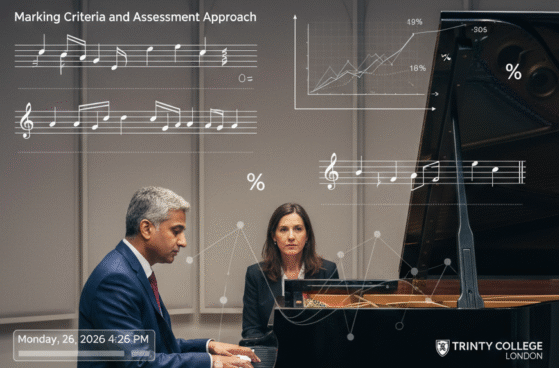
Trinity uses a transparent and encouraging marking system. Examiners actively evaluate performances for technical accuracy, musical interpretation, stylistic awareness, and overall communication. Instead of concentrating only on errors, they focus on how convincingly students convey the character and intent of the music.
Examiners provide detailed, constructive feedback that clearly highlights strengths and identifies areas for improvement. As a result, Trinity exams function not merely as assessments but as meaningful learning experiences that support long-term musical growth.
How to Prepare Successfully for Trinity Piano Exams
Preparing successfully for Trinity piano exams requires more than repetitive practice of pieces. Students strengthen their performance by exploring the musical context of their repertoire, listening to professional recordings, and actively shaping tone, articulation, and dynamics.
Regular mock performances build confidence and significantly reduce exam anxiety. Because Trinity places strong emphasis on musical communication, students should perform frequently for small audiences such as family members, friends, or classmates to recreate the exam atmosphere.
Students must also integrate technical work and supporting tests into their daily practice routines. When they practice these skills alongside repertoire, they naturally support musical expression instead of feeling like isolated exam requirements.
Digital Exams and Modern Flexibility
Trinity meets modern learning needs by offering digital exam options. Students record and submit their performances online, making the exam process more accessible and flexible, especially for those with limited access to exam centers.
Trinity uses the same marking standards for digital exams as for face-to-face assessments, ensuring fairness and consistency. This approach makes Trinity piano exams particularly appealing in today’s evolving educational landscape.

Benefits of Taking Trinity Piano Exams
Choosing Trinity piano exams gives students long-term benefits that go far beyond certification. Students build strong performance skills, develop creative confidence, and gain a deeper understanding of music as a powerful form of expression. By emphasizing choice and individuality, Trinity keeps learners motivated and encourages a lasting engagement with music.
Trinity qualifications enjoy international recognition and actively support academic applications, teaching credentials, and professional portfolios. More importantly, these exams shape students into thoughtful, expressive musicians, equipping them with skills that continue to serve them well beyond the exam room.

Final Thoughts
Trinity piano exams offer a refreshing, holistic approach to music assessment. They actively encourage creativity, clear musical communication, and deep musical understanding alongside technical skill, helping pianists grow with confidence at every stage of their journey.
Whether you are preparing for your first piano exam or pursuing advanced certification, Trinity provides a pathway that values individuality and celebrates the joy of making music. With focused preparation, consistent practice, and guided instruction from The Mystic Keys, students can turn Trinity piano exams into meaningful milestones that shape them into expressive and confident musicians.
For more information and exciting resources about learning music, visit our website at The Mystic Keys. For more music content and exciting offers follow us on
Facebook, Instagram, YouTube, LinkedIn, Twitter, Pinterest, and Threads.