Trinity Assessment | Understanding the True Level of Difficulty
Music exams can intimidate, especially when you try to understand what each level expects of you. The Trinity Assessment, a globally recognized music examination system, evaluates your technical skill, musical understanding, and expressive ability. It pushes you to master not just the notes, but also timing, phrasing, and musical expression. Every grade introduces new challenges, requiring focused practice and a deep connection with your instrument. By approaching each stage thoughtfully, you can transform anxiety into confidence and growth.
In this blog, we explore the nuances of the Trinity Assessment and reveal what makes it both challenging and rewarding for musicians of all ages. From sight-reading and improvisation to performance and theory, every component tests different aspects of your musicianship. Understanding the expectations at each level helps you prepare effectively and progress steadily. Whether you are a beginner or an advanced student, the Trinity Assessment provides a clear roadmap for improving your skills and achieving musical excellence.
What Is the Trinity Assessment?
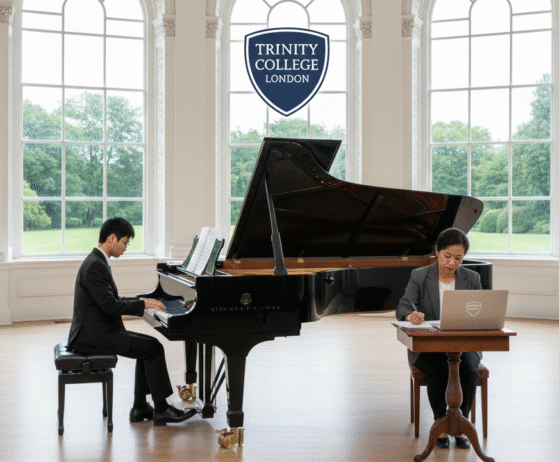
The Trinity Assessment is more than just a test—it’s a comprehensive evaluation of your musical journey. Unlike other exams that focus solely on technical ability, Trinity emphasizes a balanced approach: performance, musicianship, and understanding of theory. Each grade is carefully structured to progress in complexity, preparing students not just to play notes correctly but to perform with confidence and musicality.
Transitioning from one grade to the next is not just about learning harder pieces; it’s about developing a deeper connection with music. The assessment challenges students to interpret music, express emotion, and demonstrate control over rhythm and tone. This holistic approach is what often surprises newcomers who underestimate the true difficulty of the exam.
The Gradual Rise in Difficulty
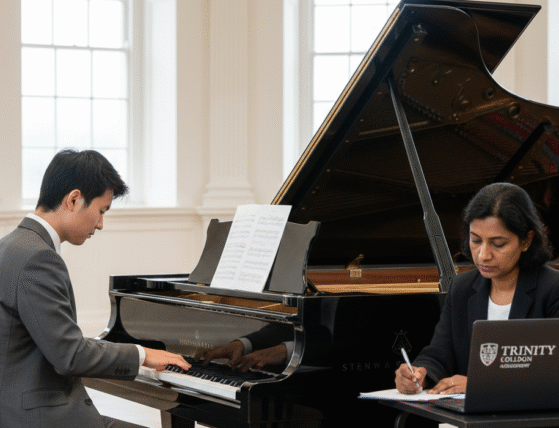
One of the most misunderstood aspects of the Trinity Assessment is the gradual increase in difficulty between grades. Many assume that the difference between Grade 1 and Grade 5 is minimal, but each step introduces more complex techniques, advanced rhythms, and nuanced expression.
For example, early grades may focus on fundamental scales, simple pieces, and basic sight-reading. By mid-level grades, students encounter more challenging fingerings, varied articulations, and intricate time signatures. The higher grades demand a combination of technical mastery and expressive interpretation, making it clear that success is measured not just by hitting the right notes but by bringing the music to life.
This gradual rise ensures that musicians are constantly challenged without being overwhelmed, striking a balance between skill development and motivation.
Trinity Assessment| Performance vs Musicianship
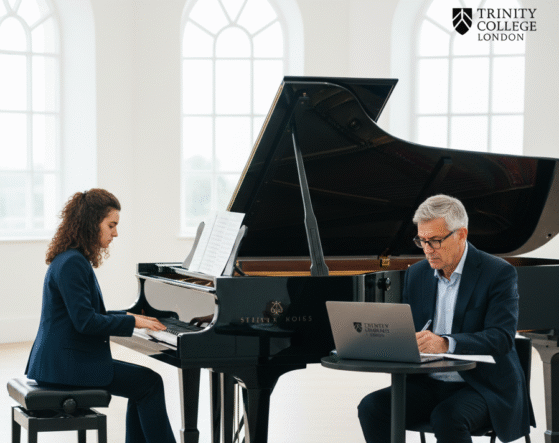
A unique aspect of the Trinity Assessment is its dual focus: performance and musicianship. While performing a prepared piece accurately is important, examiners place equal emphasis on how well students understand music theory, improvisation, and sight-reading.
In practice, this means that a technically perfect performance may not score as highly as one that demonstrates musical awareness. Students are encouraged to explore dynamics, phrasing, and stylistic nuances, showing a deep comprehension of the pieces they perform. This is where the difficulty of the Trinity Assessment often becomes evident—success requires not just practice but genuine musical insight.
Transitioning smoothly between these areas—technical skill, musicality, and theoretical knowledge—can feel daunting at first. However, the holistic nature of Trinity ensures that students emerge as well-rounded musicians rather than simply skilled performers.
Understanding the True Challenge
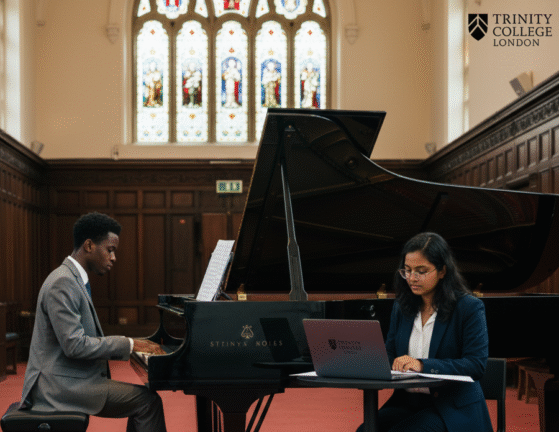
So, what makes the Trinity Assessment truly difficult? It challenges students not just with complex music but by demanding the integration of skill, expression, and mental preparedness. Each grade requires students to concentrate deeply, build confidence, and internalize pieces rather than rely solely on memorization.
The performance setting can further amplify the challenge. Even experienced musicians often find the live, one-on-one evaluation nerve-wracking. This experience helps students develop resilience and stage presence—skills that prove invaluable in any musical career.
Difficulty also varies from student to student. What challenges one learner may feel natural to another. Trinity designs its assessments with this in mind, providing a clear roadmap for incremental growth while encouraging personal expression at every level.
Preparing for Success in Trinity Assessment
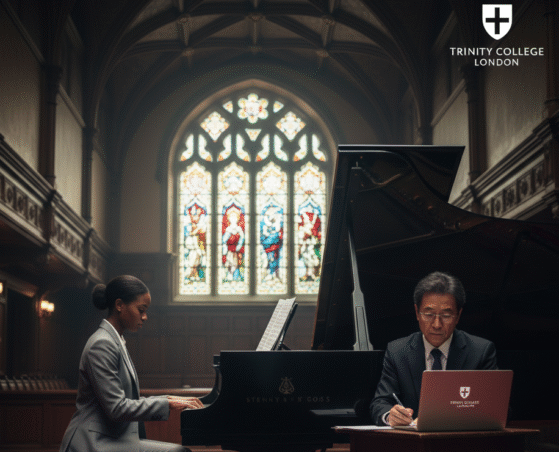
Understanding the level of difficulty comes first; students build confidence through thorough preparation. They can acclimate to both technical and expressive demands by following structured practice routines, receiving consistent guidance from teachers, and performing in mock exams.
Mindset also plays a crucial role. Students who recognize the Trinity Assessment as a learning journey rather than just a test experience less performance anxiety. Each grade gives them a new opportunity to improve, explore, and enjoy music in a structured yet expressive way.
Finally, students transform perceived difficulty into actionable insights by embracing feedback from examiners instead of fearing it. This approach allows them to grow at a pace that suits their abilities.

Conclusion
At The Mystic Keys, we guide students through the Trinity Assessment, a comprehensive music evaluation. It challenges students to combine technical skill, musicality, and theoretical knowledge. By practicing steadily and approaching it holistically, students master each step with confidence.
The Trinity Assessment is more than an exam—it’s a journey to becoming an expressive, skilled, and resilient musician. Knowing its true difficulty helps teachers and students tackle it with clarity and purpose.
Our structured approach ensures students grow in technique, rhythm, and musical understanding. We focus on building confidence, creativity, and stage presence. With consistent guidance and practice, every student can rise to the challenge and enjoy the art of music fully.
For more information and exciting resources about learning music, visit our website at The Mystic Keys. For more music content and exciting offers follow us on
Facebook, Instagram, YouTube, LinkedIn, Twitter, Pinterest, and Threads.