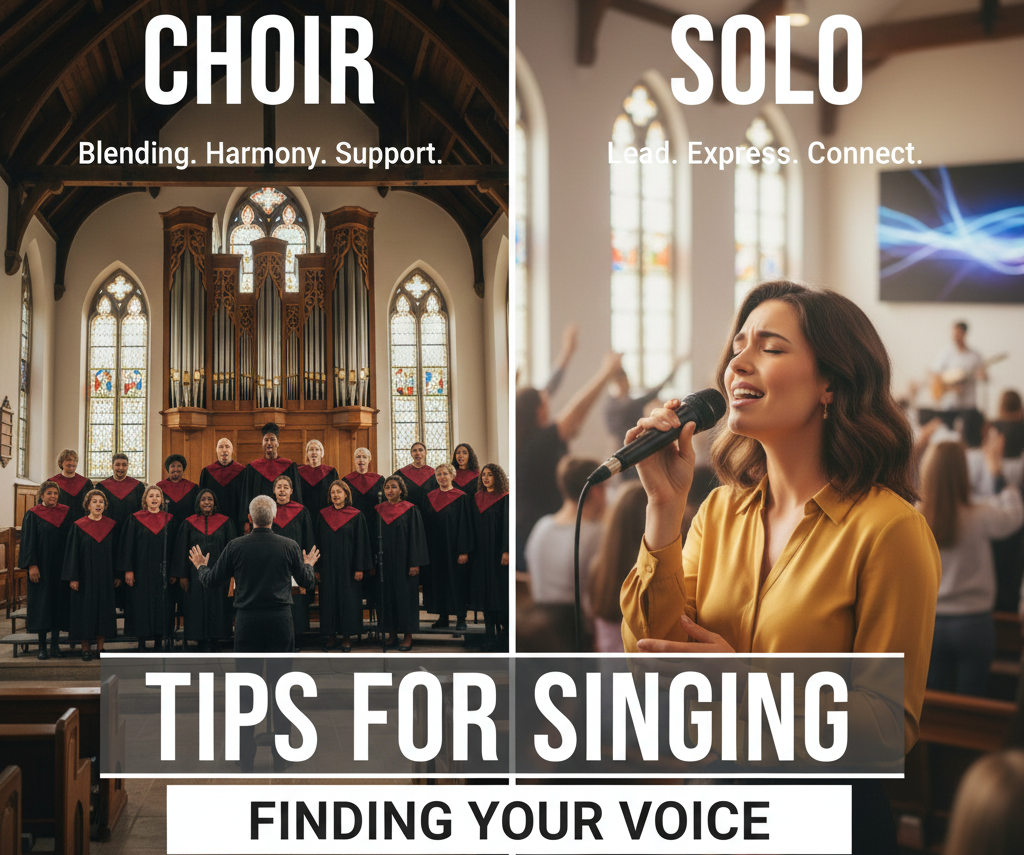
Tips for Singing in a Choir vs. Solo Worship | Finding Your Voice
Worship through music has always held a sacred power. It unites, heals, uplifts, and creates moments of reflection that touch the soul. Whether you are singing alone with a microphone or standing among many voices in a choir, the way you use your voice—and the way the music flows through you—changes with each setting. In this guide, we will explore practical tips for singing that help you adapt vocally, emotionally, and spiritually between solo worship and choir performance, while drawing inspiration from real-world examples in popular music to guide your growth as a worship singer.
Understanding the Heart of Worship Singing
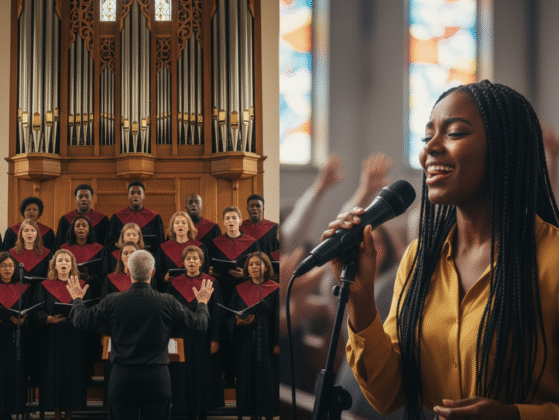
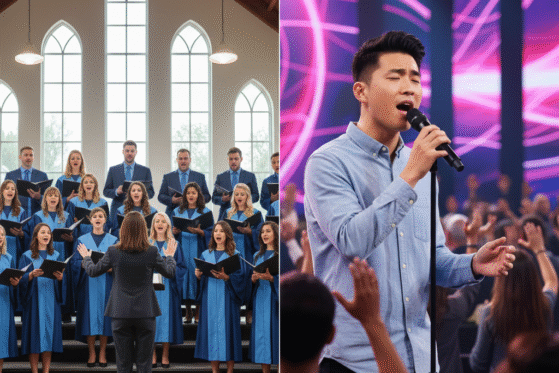
Before exploring the differences, it’s important to understand the emotional foundation behind worship singing. Solo worship often invites listeners into a private encounter, much like the vulnerability in Lewis Capaldi’s “Someone You Loved” or Adele’s delicate delivery in “All I Ask.” A single voice becomes the storyteller, guiding listeners closer through honesty and tone.
Choir worship, on the other hand, feels like stepping into a world filled with layers of sound—different shades blending to form a single unified color. When a choir performs a harmonized version of Coldplay’s “Fix You”, the emotion becomes collective, rising from many hearts instead of one.
Both forms radiate beauty—but in very different ways.
Tips for Singing | Shaping Your Vocal Tone for Solo vs. Choir
The tone you use as a soloist can be uniquely yours. You can lean into soft whispers, bright belts, and emotional cracks that add character—much like Billie Eilish does in “What Was I Made For?” or how Beyoncé navigates power and tenderness in “Halo.”
This expressive freedom allows soloists to paint emotions with their own vocal color.
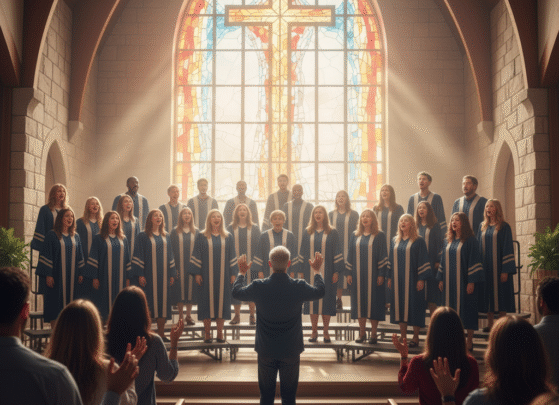
In choir singing, tone becomes a shared responsibility. You adjust your brightness, softness, and even your pronunciation so that the entire ensemble sounds unified. This is similar to pop-choir performances of “Shallow” or Lana Del Rey’s “Young and Beautiful,” where the magic lies in every voice blending into one shimmering wall of harmony.
By listening closely to those around you, you shape your tone so that it supports the collective sound rather than standing apart from it.
Tips for Singing | Listening as Your Most Powerful Skill
Listening behaves differently depending on your role.
As a soloist, you listen inward—tuning into your breath, emotional flow, and phrasing. Artists like Ed Sheeran exemplify this in live versions of “Perfect,” where each line is shaped with mindful intention. Solo worship calls for this kind of internal sensitivity, helping you stay connected to the spiritual message as you lead.
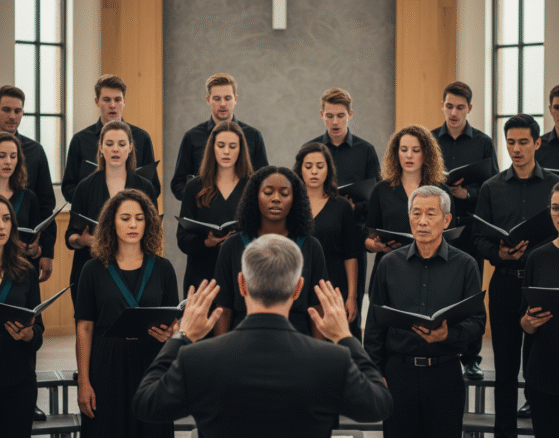
In a choir, listening becomes outward. You become hyper-aware of your section, neighboring harmonies, and the director’s cues. It feels similar to how choral groups perform “This Is Me” with perfect unity, where each singer listens not just to themselves but to the entire ensemble.
This outward listening creates balance—a crucial element in worship that relies on togetherness.
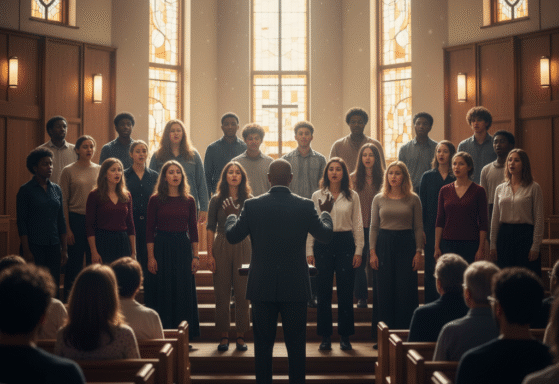
Emotional Delivery | Personal Reflection vs. Shared Expression
Solo worship performance feels intimate. Every lyric becomes a personal offering, and the congregation experiences the emotion through your voice alone. Think of performances like Miley Cyrus’s “When I Look at You,” where honesty and vulnerability guide the mood. In worship, these moments help people connect to the message on a deeply personal level.
Choir worship expands emotion through numbers. When multiple voices rise together—like in a choral rendition of “A Thousand Years”—the emotion becomes communal. The power comes not from individuality but from unity, and the atmosphere feels like an entire room breathing as one.
Each style touches hearts differently, and part of a singer’s maturity is understanding how to shift between these emotional expressions seamlessly.
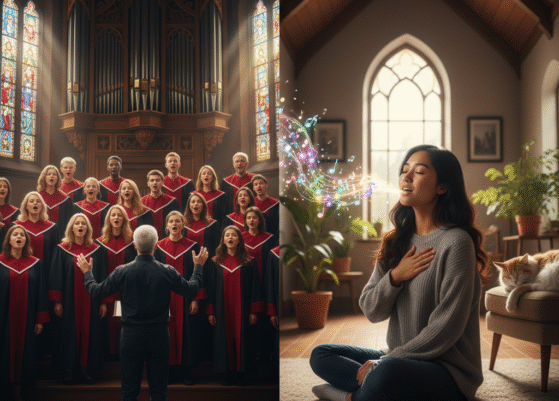
Tips for Singing: Stage Presence in Choir vs. Solo Worship
Stage presence is as much a part of worship as vocal technique.
A soloist carries the visual and emotional spotlight. Confidence, posture, facial expression, and connection all play a role. Singers like Adele demonstrate this beautifully—her calm presence during “Easy On Me” draws in audiences without any need for elaborate movement.
In choir settings, the power comes from synchronized presence. Posture aligns, expressions soften or brighten in unison, and the entire group feels like one body praising together. When a choir performs “You Will Be Found,” the visual harmony amplifies the emotional message.
Learning both types of presence helps worship singers grow in awareness, discipline, and connection.
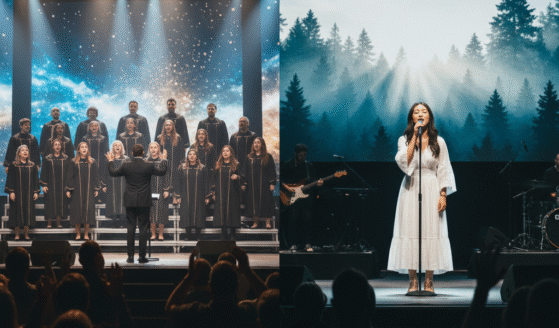
Musical Freedom vs. Structured Precision
Solo worship allows improvisation—stretching notes, adding emotion-filled pauses, and shaping the song naturally as you feel led. This is similar to how John Legend sometimes reshapes “All of Me” live, allowing emotion to dictate timing and intensity.
Choir worship embraces structure. Every harmony, every breath, every dynamic must align. This discipline helps build strong vocal habits that benefit solo singing as well.
Both worlds strengthen a singer in different ways: one through creative freedom, the other through collective discipline.
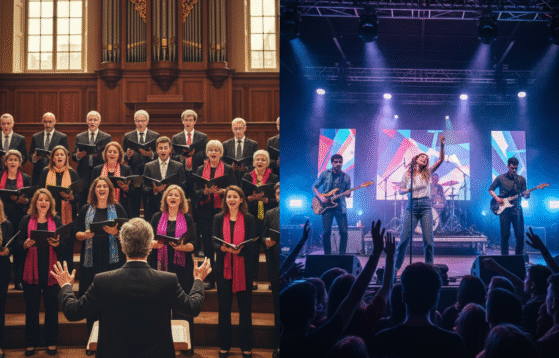
Growing Through Both Styles | A Singer’s Journey
Many of the world’s most successful artists have evolved through both group and solo singing. Beyoncé, for instance, grew her vocal identity during her Destiny’s Child years before stepping into powerful solo performances. Harry Styles moved from group harmonies in One Direction to his own expressive sound in songs like “Sign of the Times.”
Their paths show that singing in both environments builds layered skill sets that enrich one’s artistry.
In worship, this growth becomes even more meaningful. You learn to serve—sometimes through your individual voice, sometimes through the unity of many. Both roles invite humility, awareness, and emotional openness.
Final Thoughts: The Beauty of Both Worship Journeys
Whether you stand alone with a microphone or blend your voice with a hundred others, your role in worship carries purpose. Solo worship opens the door to personal testimony, guiding listeners through moments of reflection, while choir worship fills the room with unity and collective devotion, creating a powerful shared experience. At The Mystic Keys, our Worship Piano & Singing Lessons Online help singers navigate both worlds with confidence, emotional depth, and musical understanding, nurturing voices that can serve in any worship setting.
Both forms shape your voice and spirit in unique ways. Embrace them, learn from them, and let your singing—solo or in harmony—be an offering from the heart.
For more information and exciting resources about learning music, visit our website at The Mystic Keys. For more music content and exciting offers follow us on
Facebook, Instagram, YouTube, LinkedIn, Twitter, Pinterest, and Threads.